(7% discount is applied at checkout)
Cart is empty
Your go-to destination for cutting-edge server products
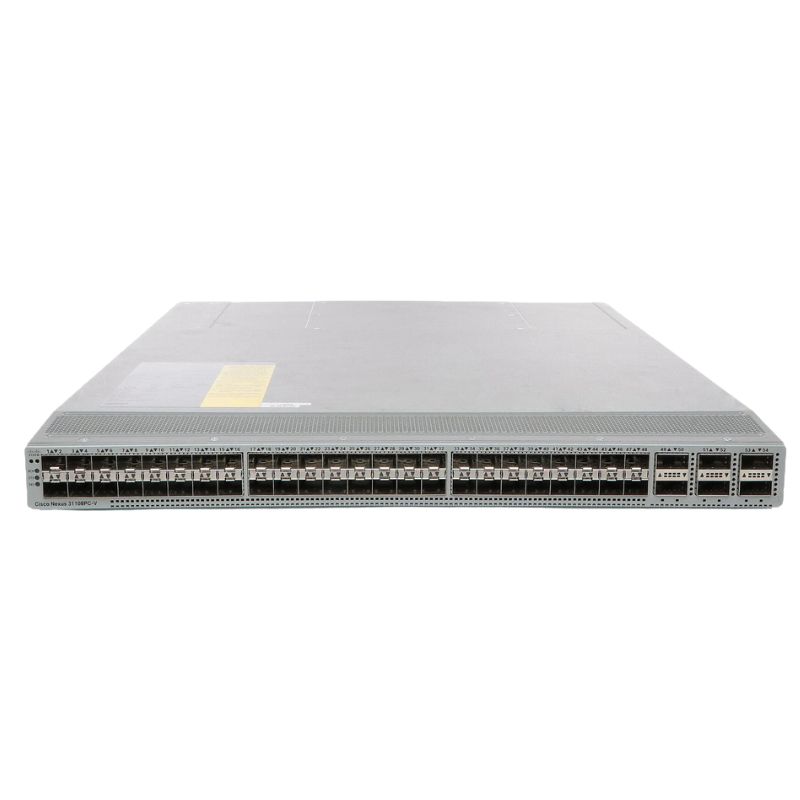


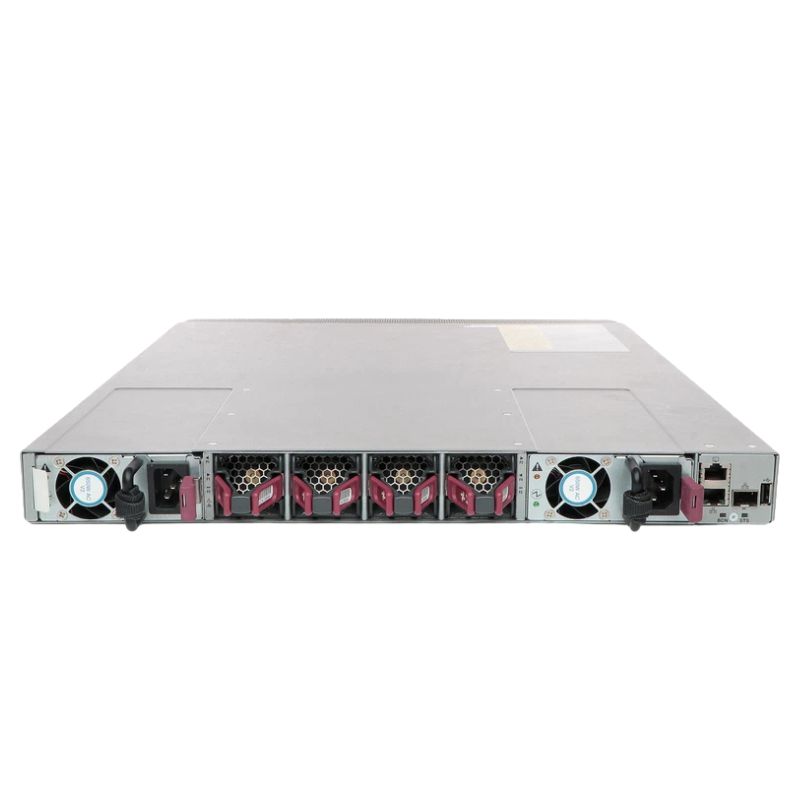
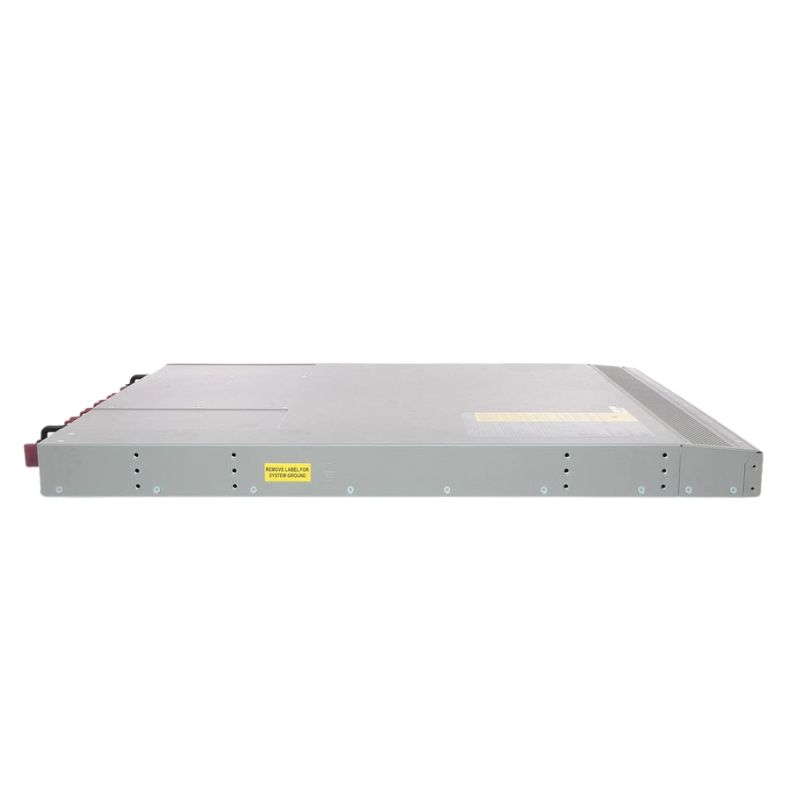
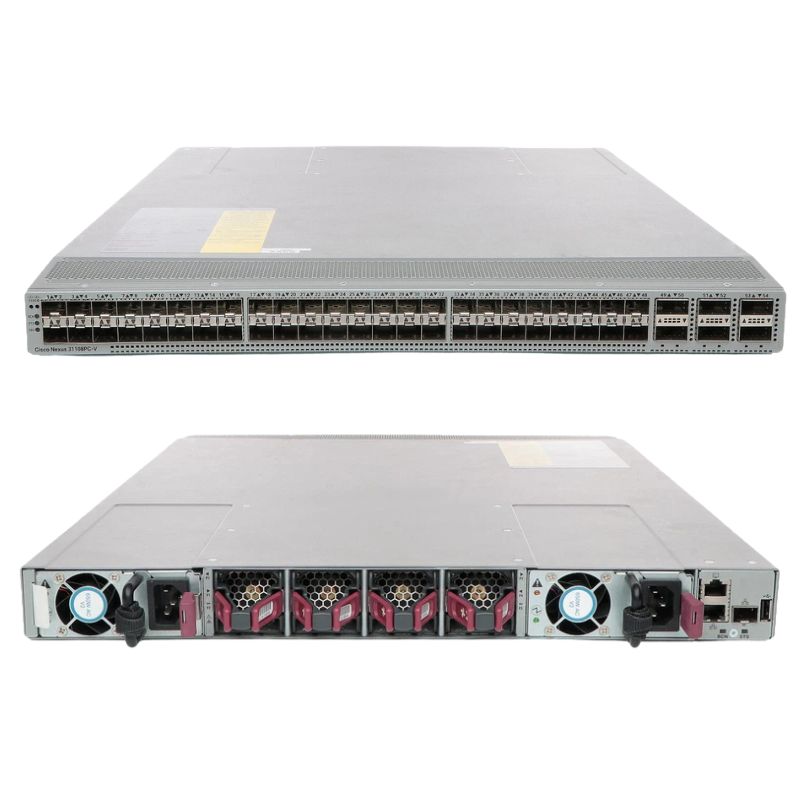
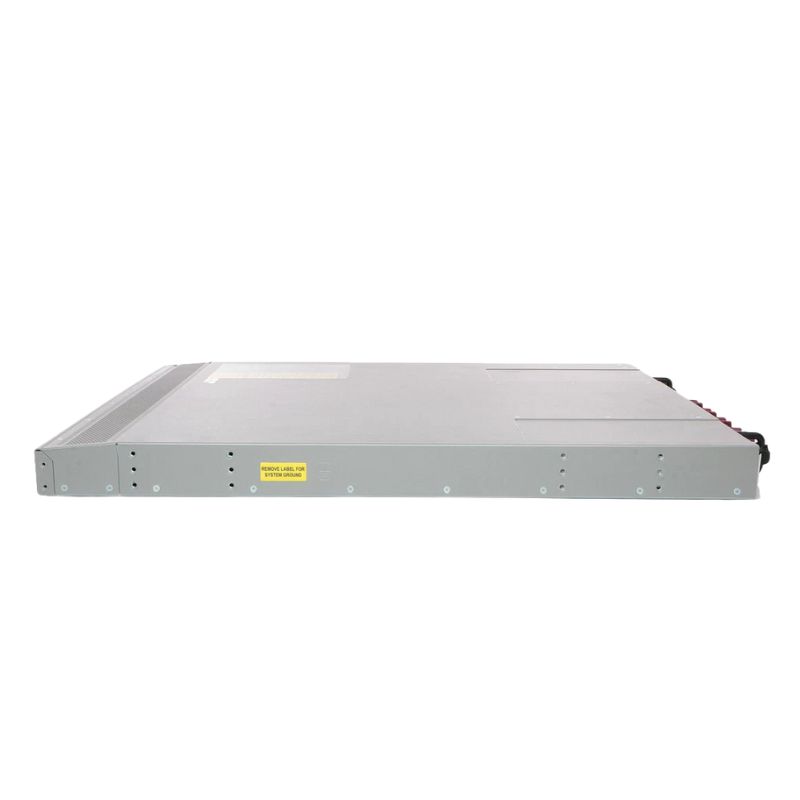
Cisco N9K-C93180YC-FX3 Nexus 48 Ports Manageable Switch. Excellent Refurbished with 1 year replacement warranty
| SKU/MPN | Warranty | Price | Condition | You save |
|---|---|---|---|---|
| N9K-C93180YC-FX3 | 1 Year Warranty | $6,145.00 | Excellent Refurbished | You save: $2,150.75 (26%) |
| N9K-C93180YC-FX3 | 1 Year Warranty | $7,670.00 | Factory-Sealed New Retail in Original Box (FSB) | You save: $2,684.50 (26%) |
The Cisco N9K-C93180YC-FX3 is a high-performance managed switch designed for modern enterprise and data center networks. Offering 48 advanced ports and cutting-edge features, it ensures seamless connectivity and scalability for demanding networking environments.
This switch supports a wide array of routing protocols to ensure flexible and reliable network operations:
The Cisco N9K-C93180YC-FX3 Nexus 93180YC-FX3 Switch category represents a modern class of high-performance, low-latency, and highly scalable data center network switches designed to meet the evolving demands of enterprise, cloud, and service provider environments. This category focuses on fixed-form-factor, top-of-rack switches that combine advanced Layer 2 and Layer 3 switching capabilities with high-density port configurations, flexible uplink options, and deep integration with software-defined networking architectures. Built as part of the Cisco Nexus 9000 Series, the 93180YC-FX3 stands out for its ability to support next-generation applications, virtualization, and hybrid cloud deployments while maintaining operational simplicity and reliability.
Within this category, the Cisco Nexus 93180YC-FX3 is engineered to deliver consistent performance under heavy workloads, making it suitable for environments where east-west traffic dominates. The switch supports 48 managed ports and provides a balanced combination of speed, scalability, and programmability. This makes the category ideal for organizations seeking to modernize their data center infrastructure without compromising on stability, security, or long-term investment protection.
The defining feature of the Cisco Nexus 93180YC-FX3 category is its 48-port managed configuration, which is optimized for top-of-rack deployments in high-density server environments. These ports are designed to accommodate a wide range of connectivity requirements, enabling seamless integration with servers, storage systems, and network appliances. The port density allows organizations to consolidate network connections efficiently, reducing cabling complexity and improving airflow within racks.
This category emphasizes flexibility, allowing data center architects to design networks that scale horizontally without introducing bottlenecks. The managed nature of the ports ensures full visibility and control over traffic flows, quality of service policies, and security enforcement. As a result, enterprises can maintain predictable performance even as application demands grow.
Switches in the Cisco Nexus 93180YC-FX3 category are designed to support multiple Ethernet speeds, enabling smooth transitions between legacy and next-generation infrastructure. This multi-speed capability allows organizations to protect existing investments while adopting higher bandwidth connections where needed. The ability to operate at different speeds on the same platform simplifies network upgrades and reduces the need for multiple switch models within the same environment.
This flexibility is particularly valuable in mixed workloads environments, where traditional enterprise applications coexist with bandwidth-intensive workloads such as big data analytics, virtualization, and containerized microservices. The category ensures that network performance can be tailored to specific application requirements without introducing unnecessary complexity.
The Cisco Nexus 93180YC-FX3 category is built around advanced Layer 2 and Layer 3 functionality that supports complex data center network designs. These switches are capable of handling large MAC address tables, extensive VLAN configurations, and advanced routing protocols, making them suitable for both traditional three-tier architectures and modern spine-leaf designs. The ability to perform high-speed routing at line rate ensures that traffic is forwarded efficiently, minimizing latency and packet loss.
In enterprise environments, this category supports critical features such as equal-cost multi-path routing, virtual port channels, and advanced multicast handling. These capabilities contribute to improved redundancy, load balancing, and overall network resilience, ensuring uninterrupted service delivery for mission-critical applications.
A key strength of the Cisco Nexus 93180YC-FX3 category lies in its native support for VXLAN and EVPN technologies. These technologies enable scalable network virtualization, allowing organizations to extend Layer 2 networks over Layer 3 infrastructure. This is essential for modern data centers that require mobility, segmentation, and multi-tenancy without the limitations of traditional VLAN-based designs.
By supporting VXLAN with EVPN control plane, this category enables efficient handling of broadcast, unknown unicast, and multicast traffic. This results in improved scalability and reduced operational overhead, making it easier to manage large-scale data center fabrics. Enterprises can deploy highly segmented networks that enhance security while maintaining flexibility for application deployment and migration.
Performance is a core focus of the Cisco Nexus 93180YC-FX3 category, with an architecture designed to deliver consistently low latency across all ports. This is particularly important for latency-sensitive applications such as real-time analytics, financial trading platforms, and high-performance computing workloads. The switch architecture ensures that packets are processed efficiently, even under peak traffic conditions.
By minimizing jitter and latency variations, this category supports predictable application performance, which is essential for service-level agreements and user satisfaction. The ability to handle high throughput without degradation makes these switches a reliable foundation for demanding enterprise and cloud workloads.
Reliability is another defining characteristic of the Cisco Nexus 93180YC-FX3 category. These switches are designed with redundant components, robust cooling systems, and advanced fault detection mechanisms to ensure continuous operation. Features such as hot-swappable power supplies and fans allow maintenance activities to be performed without service interruption.
In addition to hardware resilience, the category emphasizes software stability through mature network operating systems and consistent feature support. This combination of hardware and software reliability reduces downtime and operational risk, making it suitable for environments where network availability is critical to business operations.
The Cisco Nexus 93180YC-FX3 category operates on Cisco NX-OS, a feature-rich and highly reliable network operating system designed for data center environments. NX-OS provides a consistent command-line interface, advanced monitoring capabilities, and robust support for automation and programmability. This allows network administrators to manage large-scale deployments efficiently while maintaining precise control over network behavior.
With NX-OS, switches in this category support model-driven programmability using open standards such as YANG and REST APIs. This enables seamless integration with orchestration platforms and custom automation tools, reducing manual configuration tasks and minimizing the risk of human error.
Automation is a central theme within the Cisco Nexus 93180YC-FX3 category, reflecting the growing importance of DevOps practices in modern IT environments. These switches are designed to work seamlessly with automation frameworks, allowing rapid provisioning, configuration consistency, and automated troubleshooting. This is particularly valuable in dynamic environments where network changes are frequent and must be implemented quickly and accurately.
By enabling infrastructure as code approaches, this category helps organizations align network operations with application development cycles. The result is faster deployment times, improved agility, and a more responsive IT infrastructure that can adapt to changing business requirements.
Security is an integral component of the Cisco Nexus 93180YC-FX3 category, with built-in features designed to protect data center networks from internal and external threats. These switches support advanced access control mechanisms, traffic filtering, and policy enforcement to ensure that only authorized devices and applications can access network resources.
The category also supports integration with broader security architectures, allowing network security policies to be enforced consistently across the data center. This layered approach to security helps reduce the attack surface and enhances overall network resilience against evolving threats.
Micro-segmentation is a key capability within this category, enabling fine-grained control over traffic flows between workloads. By leveraging technologies such as VXLAN and policy-based networking, organizations can isolate applications and tenants at a granular level. This is especially important in multi-tenant environments and hybrid cloud deployments, where different workloads may have varying security requirements.
Policy-based networking simplifies security management by allowing administrators to define intent-based policies rather than manually configuring individual devices. This approach improves consistency, reduces configuration errors, and ensures that security policies evolve in line with application changes.
The Cisco Nexus 93180YC-FX3 category is optimized for deployment in spine-leaf architectures, which have become the standard for modern data centers. This design enables predictable performance and linear scalability, allowing organizations to add capacity by simply introducing additional switches. The fixed-form-factor design makes these switches ideal for top-of-rack roles, connecting servers to the broader data center fabric.
By supporting high-speed uplinks and advanced routing features, this category ensures that traffic can be distributed efficiently across the fabric. This scalability is essential for organizations experiencing rapid growth in data volumes, virtual machines, and containerized workloads.
Switches in the Cisco Nexus 93180YC-FX3 category are designed with long-term investment protection in mind. Support for modern protocols, high-speed interfaces, and software upgrades ensures that these switches remain relevant as data center technologies evolve. Organizations can adopt new features and capabilities through software updates, extending the useful life of their hardware investments.
This future-ready approach reduces the need for frequent hardware replacements and supports sustainable IT strategies. By choosing this category, enterprises can build a data center network that adapts to emerging technologies while maintaining consistent performance and reliability.
The Cisco Nexus 93180YC-FX3 category is well-suited for enterprise data centers and private cloud environments where performance, security, and manageability are top priorities. These switches provide the foundation for virtualized workloads, enabling efficient communication between servers and storage systems. Their advanced feature set supports complex enterprise requirements, including compliance, segmentation, and high availability.
In private cloud deployments, this category enables flexible resource allocation and rapid provisioning, supporting business agility and innovation. Enterprises can deploy new applications and services quickly while maintaining control over network policies and performance.
Service providers and colocation facilities also benefit from the capabilities offered by the Cisco Nexus 93180YC-FX3 category. The combination of high port density, scalability, and multi-tenancy support makes these switches ideal for environments serving multiple customers with diverse requirements. Advanced virtualization and segmentation features allow providers to offer secure, isolated network environments on shared infrastructure.
This category supports the delivery of reliable, high-performance network services, helping service providers meet customer expectations and service-level agreements. The ability to automate provisioning and management further enhances operational efficiency and reduces time to market for new services.


 Contact Us
 Information
 Catalog
 Solid State Drives (SSD)
 Network Switches
 Hard Disk Drives
 HBA & Controllers
 PC & Servers
 PC & Server Memory
 CPU & Processors
 Network Routers
 Power Supplies
 Tape Drives & Libraries
 Network Devices
 Computer & Network Cables