(7% discount is applied at checkout)
Cart is empty
Your go-to destination for cutting-edge server products
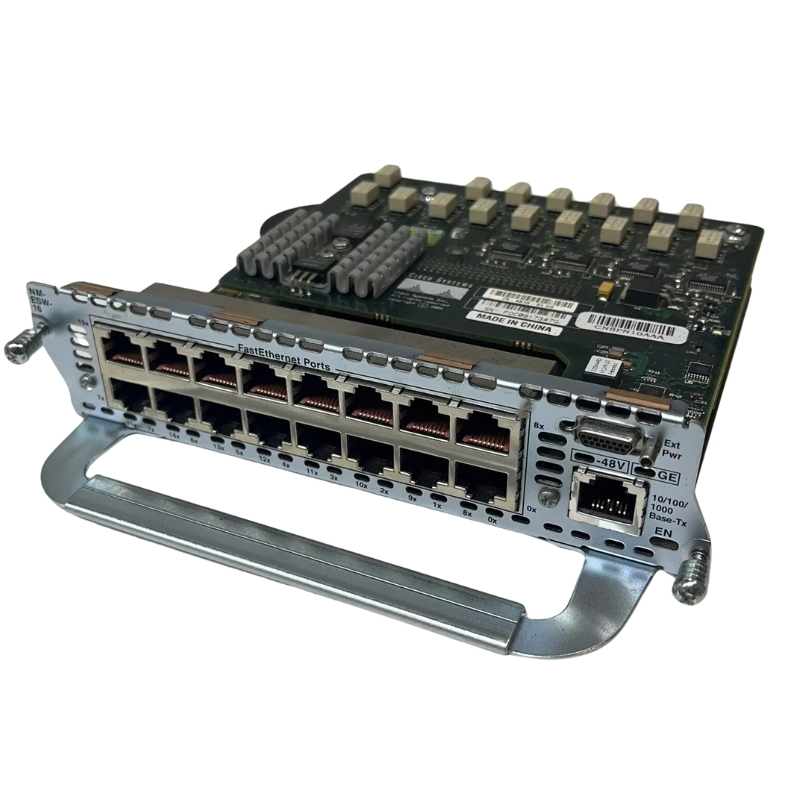


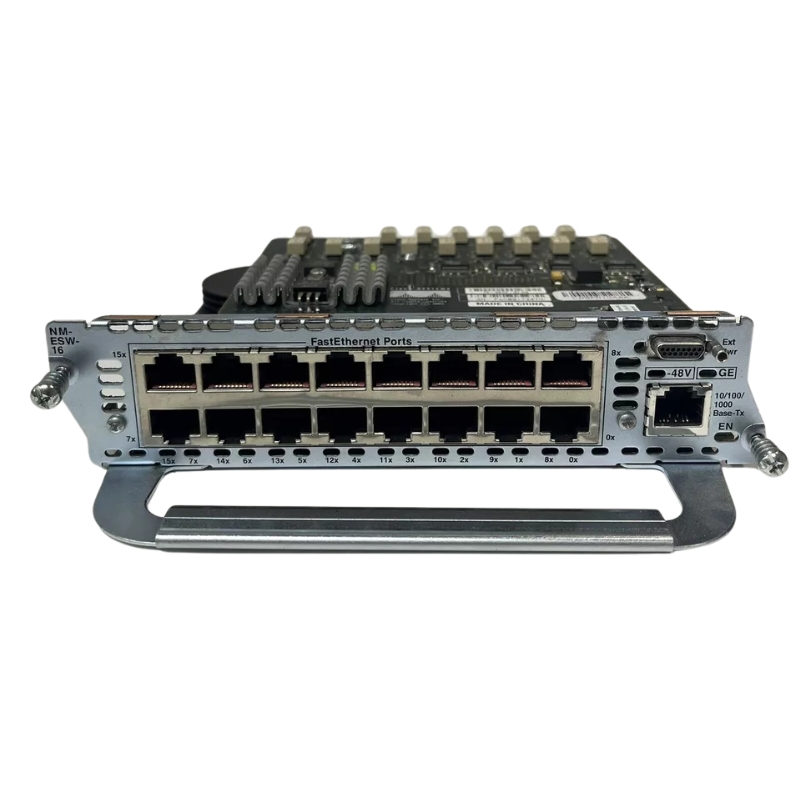
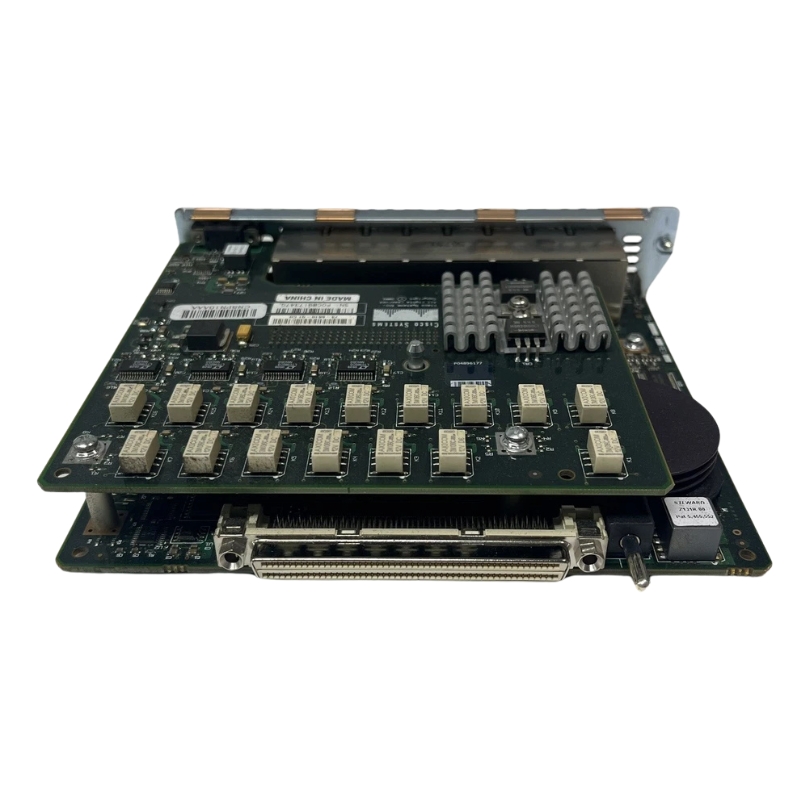
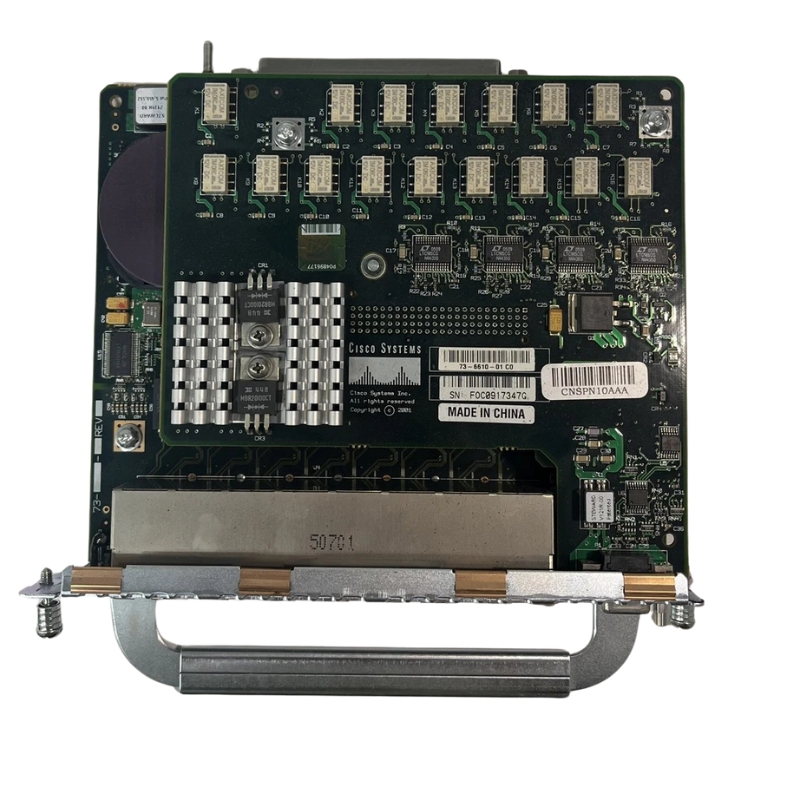
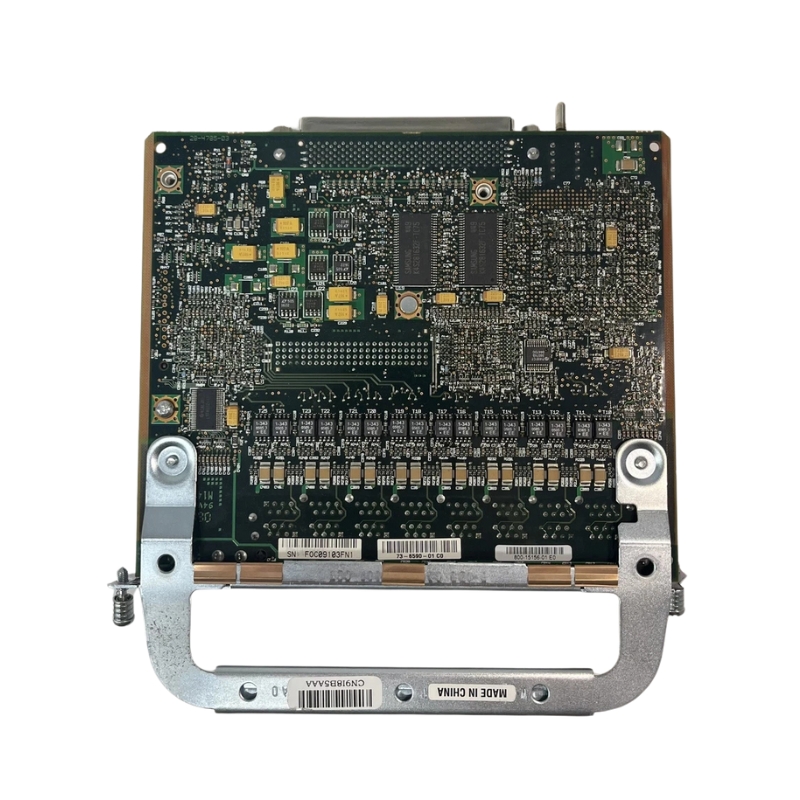
Cisco NM-16ESW-1GIG 16 Ports Ethernet Switch. Excellent Refurbished with 1 year replacement warranty
The Cisco NM-16ESW-1GIG is a high-performance Ethernet switch network module engineered to enhance LAN connectivity within compatible Cisco routers. Designed for scalability and reliability, this module integrates seamlessly into enterprise and branch office infrastructures where consistent network performance and flexible port density are required.
The Cisco NM-16ESW-1GIG 16 Ports Ethernet Switch belongs to a specialized category of modular Ethernet switching solutions designed for Cisco integrated services routers. This category focuses on network expansion modules that deliver enterprise-grade Layer 2 switching directly inside compatible router platforms. By combining routing and switching in a single chassis, this class of Ethernet switch modules reduces infrastructure complexity, optimizes rack space utilization, and streamlines network management for branch offices, campus edge deployments, and distributed enterprise environments.
Modular Ethernet switches such as the Cisco NM-16ESW-1GIG are engineered to support growing connectivity demands without requiring a standalone access switch. This category emphasizes scalability, flexibility, and seamless integration with Cisco IOS software, allowing organizations to extend Ethernet connectivity while maintaining consistent security policies, quality of service configurations, and centralized monitoring capabilities.
The NM-16ESW-1GIG module category is designed specifically for Cisco routers that support network modules, transforming these routers into multiport Ethernet switching platforms. This integrated approach provides localized switching at the branch level, reducing latency and minimizing unnecessary traffic backhaul to central switches. The category supports environments where both routing intelligence and access-layer switching are required within a compact, unified device.
Integrated switching modules in this category are commonly deployed in enterprise branch offices, retail locations, educational institutions, and remote sites where simplicity and reliability are critical. By embedding Ethernet switching within the router, network administrators can deploy fewer devices, reduce power consumption, and simplify cabling while maintaining enterprise-class network performance.
The defining characteristic of this category is the provision of sixteen Ethernet ports within a single network module. These ports enable direct connectivity for endpoints such as desktop computers, IP phones, printers, wireless access points, and industrial network devices. The high-density port configuration allows organizations to scale endpoint connectivity without expanding the physical network footprint.
This category emphasizes consistent port performance and reliable packet forwarding, ensuring that each connected device benefits from stable network access. The integration of Gigabit Ethernet uplink capabilities further enhances throughput, allowing aggregated traffic from multiple endpoints to flow efficiently into the routing plane.
Ethernet switch modules in this category are purpose-built for branch and edge networking scenarios. They provide localized switching close to end users, reducing congestion on core links and improving application responsiveness. This design is particularly beneficial for voice over IP deployments, collaborative applications, and cloud-based services that require low latency and predictable performance.
The category supports network designs where branch offices require autonomy while still adhering to centralized IT policies. Integrated management features allow administrators to maintain visibility and control across distributed locations without deploying additional standalone switches.
The Cisco NM-16ESW-1GIG category is focused on robust Layer 2 Ethernet switching functionality that adheres to industry standards. These modules support essential switching features required for enterprise networks, including MAC address learning, frame forwarding, and loop prevention mechanisms. Standards-based operation ensures compatibility with a wide range of network devices and infrastructure components.
By supporting established Ethernet standards, this category enables seamless interoperability within heterogeneous network environments. Organizations can integrate these modules into existing architectures without requiring specialized configurations or proprietary extensions.
Virtual LAN functionality is a core element of this category, enabling logical segmentation of network traffic within the same physical infrastructure. VLAN support allows organizations to separate departments, applications, or device types while maintaining centralized switching hardware. This capability enhances both security and performance by limiting broadcast domains and controlling traffic flow.
The category supports flexible VLAN configurations that can be aligned with organizational policies and compliance requirements. Network administrators can define multiple VLANs across the sixteen ports, ensuring efficient utilization of switching resources while maintaining clear separation between network segments.
Compliance with IEEE VLAN standards ensures that Ethernet switch modules in this category operate seamlessly with other standards-based switches. This adherence simplifies network design and allows for consistent VLAN tagging and trunking configurations across the infrastructure. The result is a cohesive switching environment that supports growth and future expansion.
Quality of Service functionality is an essential aspect of this Ethernet switch module category. It enables prioritization of latency-sensitive traffic such as voice and video over less critical data flows. By classifying and queuing traffic appropriately, the module helps maintain consistent application performance even during periods of high network utilization.
This category supports QoS mechanisms that align with enterprise policies, allowing administrators to enforce traffic priorities directly at the access layer. The ability to manage QoS within the integrated switching module reduces reliance on external switches and enhances end-to-end traffic control.
A key advantage of the Cisco NM-16ESW-1GIG category is its tight integration with Cisco IOS software. This integration provides a unified management experience, allowing administrators to configure, monitor, and troubleshoot switching functions using familiar Cisco command-line and management tools. The category emphasizes operational consistency across routing and switching domains.
By leveraging Cisco IOS, these Ethernet switch modules benefit from mature software features, regular updates, and extensive documentation. This integration reduces the learning curve for network teams and ensures that switching configurations align with broader network policies.
Centralized management is a defining feature of this category, enabling administrators to oversee switching and routing functions from a single interface. Configuration changes can be applied consistently across all ports, reducing the risk of misconfiguration and simplifying network maintenance.
Monitoring capabilities provide visibility into port status, traffic patterns, and error conditions. This level of insight allows proactive troubleshooting and performance optimization, ensuring reliable network operations across branch and edge deployments.
The category emphasizes consistency in configuration syntax and operational behavior across Cisco devices. This uniformity simplifies network audits, accelerates troubleshooting, and supports standardized deployment models. Organizations benefit from predictable behavior and reduced operational complexity.
The Cisco NM-16ESW-1GIG Ethernet switch module category is designed with scalability in mind. It allows organizations to expand network capacity incrementally by adding modules as connectivity requirements grow. This modular approach supports long-term network evolution without necessitating complete infrastructure replacement.
Scalability within this category extends beyond port count to include support for evolving network applications and traffic patterns. The integrated switching architecture is capable of handling increasing data volumes while maintaining stable performance.
Ethernet switch modules in this category are adaptable to a wide range of business scenarios. They can support traditional office environments, remote work hubs, and specialized deployments such as industrial automation or surveillance networks. This versatility makes the category suitable for organizations across multiple industries.
The ability to reconfigure ports, VLANs, and QoS settings ensures that the switching infrastructure can evolve alongside organizational requirements. This adaptability reduces the need for frequent hardware changes and supports cost-effective network growth.
Reliability is a cornerstone of the Cisco NM-16ESW-1GIG category. These Ethernet switch modules are engineered to meet enterprise uptime expectations, delivering consistent performance in demanding environments. The category emphasizes stable operation, predictable forwarding behavior, and robust hardware design.
Enterprise-grade performance ensures that mission-critical applications remain accessible and responsive. By integrating switching directly into the router, this category reduces potential points of failure and simplifies the overall network topology.
The category supports continuous network operations through features that enhance stability and fault tolerance. Integrated diagnostics and monitoring capabilities help identify potential issues before they impact users. This proactive approach to reliability is essential for distributed networks with limited on-site IT resources.
By maintaining consistent switching performance under varying load conditions, the Cisco NM-16ESW-1GIG category helps organizations deliver dependable connectivity to all connected devices.
Security considerations are integral to the design of this Ethernet switch module category. By enabling network segmentation, controlled access, and traffic monitoring at the access layer, these modules contribute to a comprehensive security posture. Integrated switching allows security policies to be enforced closer to endpoints.
The category supports security features that align with enterprise best practices, reducing the risk of unauthorized access and lateral movement within the network. This approach enhances overall network resilience and compliance.
Ethernet switch modules in this category can be configured to align with organizational security frameworks. By leveraging Cisco IOS capabilities, administrators can implement consistent access controls and monitoring mechanisms across all ports. This alignment ensures that security policies are applied uniformly throughout the network.
The Cisco NM-16ESW-1GIG 16 Ports Ethernet Switch category is well suited for a variety of deployment scenarios. Common use cases include branch office networking, where integrated switching reduces equipment count, and remote site deployments, where simplicity and reliability are paramount.
Educational institutions utilize this category to connect classrooms and administrative offices, while retail environments benefit from its ability to support point-of-sale systems, inventory devices, and wireless access points. Industrial and healthcare settings also leverage the category for its stability and centralized management capabilities.


 Contact Us
 Information
 Catalog
 Solid State Drives (SSD)
 Network Switches
 Hard Disk Drives
 HBA & Controllers
 PC & Servers
 PC & Server Memory
 CPU & Processors
 Network Routers
 Power Supplies
 Tape Drives & Libraries
 Network Devices
 Computer & Network Cables