(7% discount is applied at checkout)
Cart is empty
Your go-to destination for cutting-edge server products
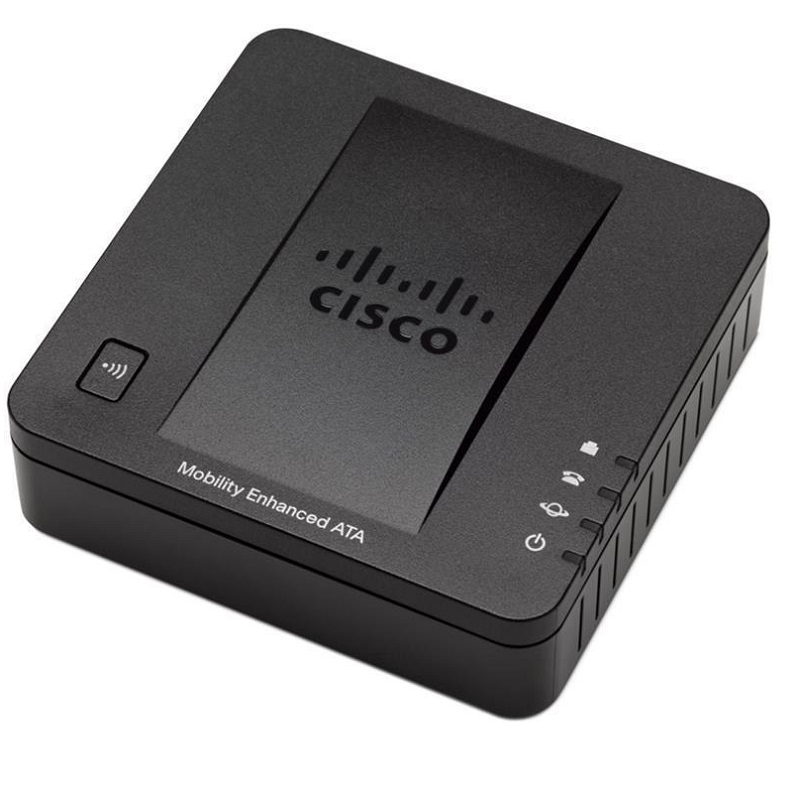


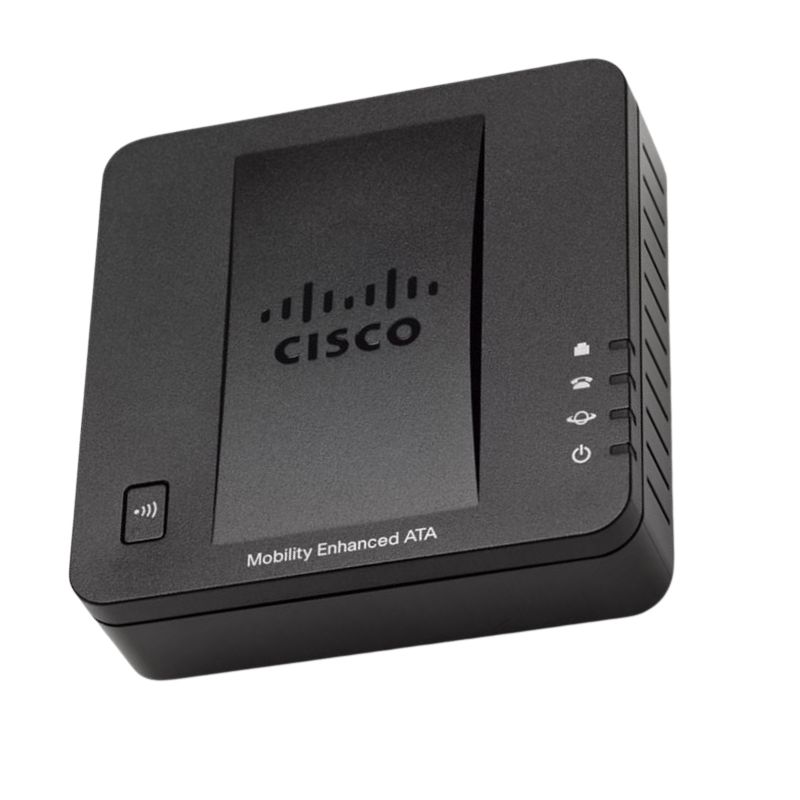
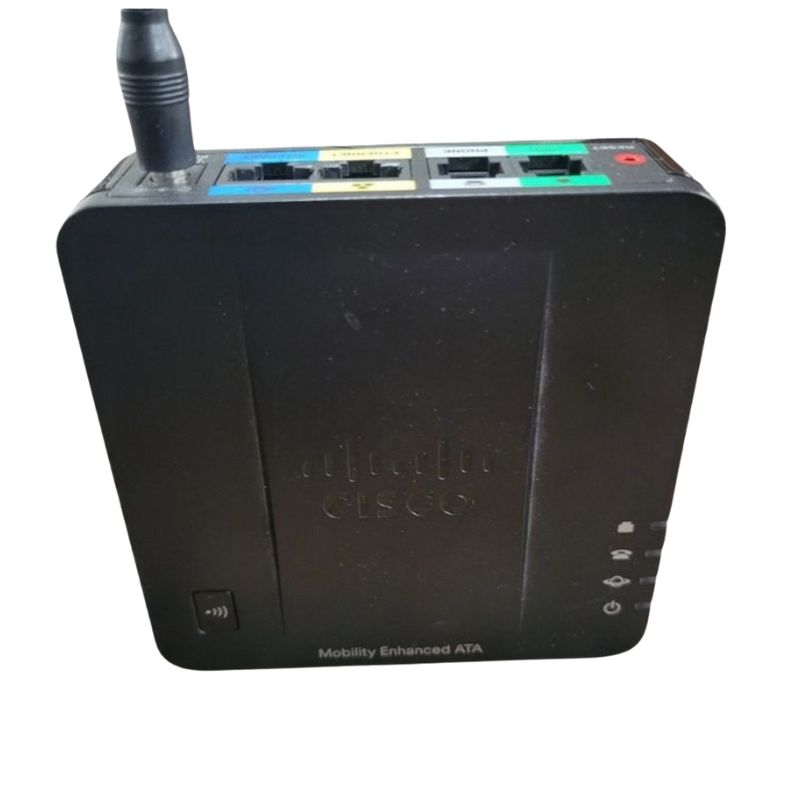
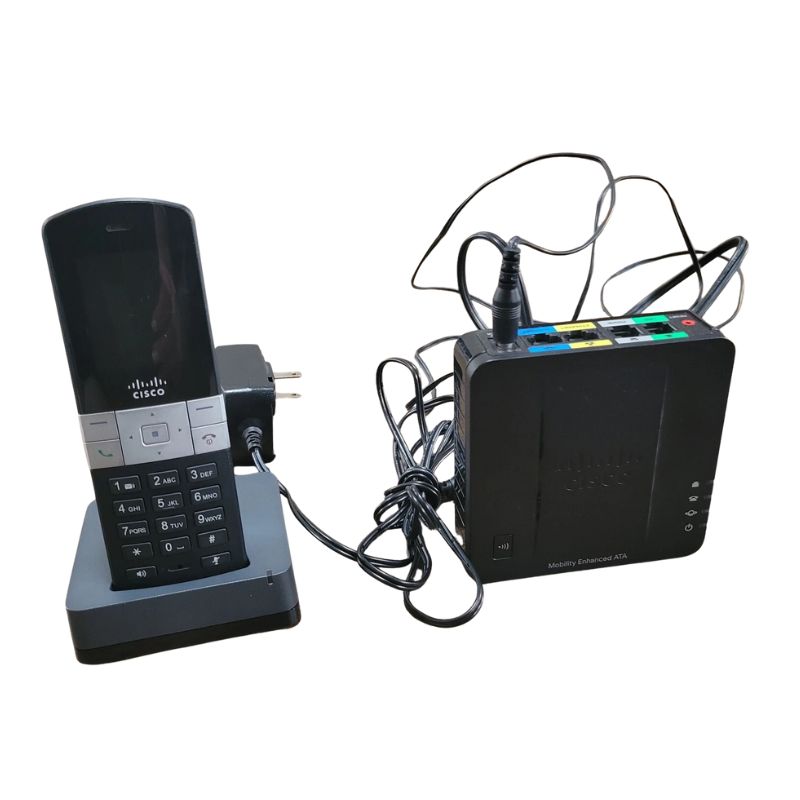
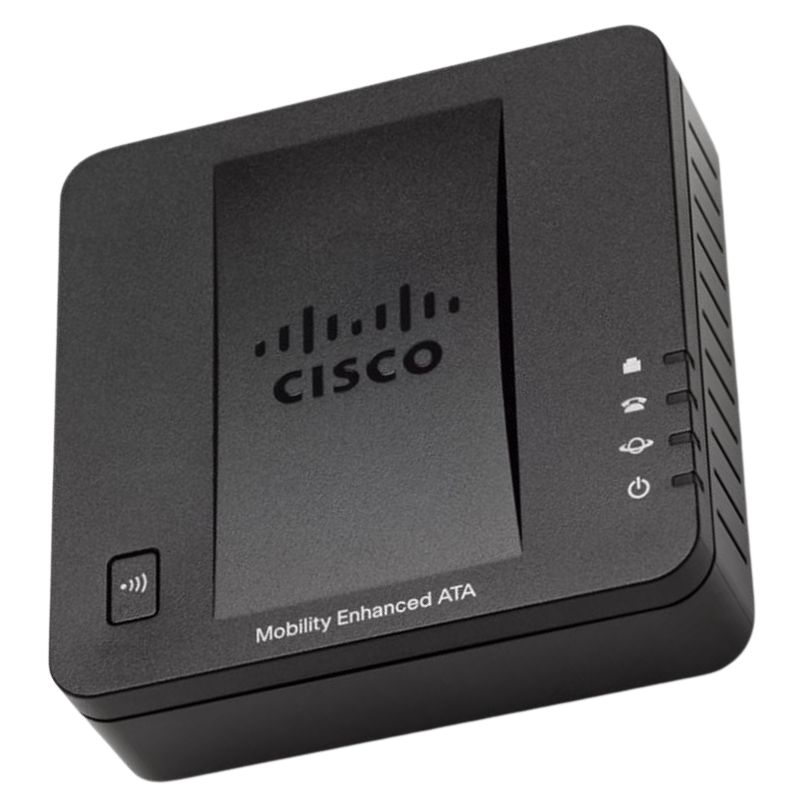
Cisco SPA232D-G1 Multi-Line DECT ATA VoIP Adapter. Factory-Sealed New in Original Box (FSB) with 1 year replacement warranty
The Cisco SPA232D-G1 Multi-Line DECT ATA VoIP Gateway is a reliable and feature-rich voice over IP solution designed to bridge traditional analog telephony systems with modern IP-based communication networks. Built for small businesses and enterprise communication environments, this Cisco VoIP adapter enables seamless integration of PSTN lines, analog phones, and DECT handset systems, ensuring smooth voice transmission, enhanced call quality, and flexible connectivity options.
The Cisco SPA232D-G1 Multi-Line DECT ATA VoIP Adapter is a specialized voice over IP (VoIP) integration device designed to bridge traditional analog telephony systems with modern IP-based communication networks. Developed within the enterprise communications ecosystem of this adapter provides a unified solution for small to medium-sized businesses seeking to modernize voice infrastructure without replacing existing analog handsets or DECT cordless phone systems.
This category of VoIP adapters is engineered to support hybrid telephony environments, enabling seamless interoperability between legacy PSTN-based devices and SIP-based VoIP platforms. The SPA232D-G1 model combines analog telephony adapter (ATA) functionality with DECT base station capabilities, making it suitable for office deployments requiring cordless mobility and multi-line voice handling.
The defining feature of the Cisco SPA232D-G1 is its dual-mode architecture. It operates both as a standard analog telephone adapter and as a DECT base station. This enables users to connect traditional analog phones while also pairing DECT cordless handsets for wireless communication across office environments. The convergence of these two technologies reduces infrastructure complexity while maintaining enterprise-grade voice quality.
The ATA layer is responsible for converting analog voice signals into digital packets suitable for transmission over IP networks. This includes support for multiple voice codecs, jitter buffering, and echo cancellation mechanisms that ensure stable call quality even under fluctuating network conditions.
The DECT subsystem provides wireless connectivity for compatible cordless handsets, enabling users to roam freely within coverage range while maintaining active SIP-based communication sessions. This is particularly beneficial in office environments such as retail floors, warehouses, and administrative departments.
The SPA232D-G1 supports multiple SIP accounts, allowing organizations to assign distinct lines for different departments or communication workflows. This multi-line capability enhances operational efficiency by separating inbound and outbound call routing based on predefined SIP configurations.
At the core of the Cisco SPA232D-G1 is Session Initiation Protocol (SIP), the industry standard for initiating, maintaining, and terminating real-time voice sessions. SIP compatibility ensures interoperability with leading IP-PBX systems, hosted VoIP providers, and unified communication platforms.
The device supports a range of audio codecs including G.711, G.729, and G.726, allowing administrators to balance bandwidth efficiency with call quality. G.711 provides high-fidelity audio for LAN-based deployments, while G.729 enables compressed voice transmission suitable for WAN or limited bandwidth environments.
QoS capabilities ensure voice traffic prioritization over data traffic within the network. By implementing packet classification and traffic shaping, the SPA232D-G1 minimizes latency, jitter, and packet loss, which are critical factors in maintaining call clarity in enterprise VoIP systems.
The device is designed for flexible deployment in both small office and distributed enterprise environments. It can operate behind NAT firewalls, integrate with VLAN configurations, and support DHCP or static IP addressing depending on network architecture requirements.
Small businesses often rely on analog phone systems due to cost constraints. The Cisco SPA232D-G1 provides a migration pathway to VoIP without requiring immediate replacement of existing handsets. This gradual transition model allows businesses to reduce capital expenditure while adopting modern communication technologies.
In shared office spaces, the DECT functionality allows multiple users to connect cordless handsets to a single base unit. This supports mobility within office premises while maintaining centralized call management through SIP registration.
For branch offices, the SPA232D-G1 enables centralized communication management by connecting remote analog systems to a central IP-PBX. This ensures unified dialing plans, internal extension mapping, and consistent call routing policies across geographically distributed sites.
Security is a critical consideration in VoIP deployments. The SPA232D-G1 supports encrypted signaling protocols and secure voice transport mechanisms to protect communication integrity. SIP over TLS and Secure RTP (SRTP) help safeguard voice data against interception and tampering.
The device incorporates authentication mechanisms for SIP registration, ensuring that only authorized endpoints can register with the VoIP server. This reduces exposure to unauthorized access and potential toll fraud attacks.
Configuration access is typically restricted through web-based administration portals secured with password protection and network-level restrictions. This ensures that only authorized IT personnel can modify system settings or provisioning profiles.
The SPA232D-G1 supports automated provisioning methods, enabling large-scale deployment in enterprise environments. Configuration profiles can be pushed from centralized management systems, reducing manual setup time and configuration errors.
For smaller deployments, administrators can manually configure SIP credentials, network parameters, and DECT handset pairing settings via a built-in web interface. This flexibility ensures compatibility across diverse deployment scenarios.
The DECT subsystem supports secure pairing with compatible cordless handsets. Once registered, handsets can be assigned to specific SIP lines or shared across multiple extensions depending on organizational requirements.
Voice quality in VoIP systems is highly dependent on network performance. The SPA232D-G1 includes jitter buffer optimization and packet delay compensation to maintain stable voice transmission even in congested network conditions.
Dedicated DSP (Digital Signal Processing) components handle real-time voice encoding, echo cancellation, and noise suppression. These hardware optimizations reduce CPU load on the network and ensure consistent audio performance across multiple simultaneous calls.
The device is engineered to maintain call stability even under high call concurrency scenarios. This makes it suitable for customer service environments, reception desks, and shared communication hubs.
The SPA232D-G1 integrates with a wide range of IP-PBX systems, including hosted cloud PBX platforms and on-premise VoIP servers. This interoperability allows businesses to select communication platforms without hardware constraints.
The device can be incorporated into unified communications ecosystems that combine voice, messaging, and collaboration tools. This enables streamlined communication workflows across enterprise applications.
Hybrid environments combining analog and digital telephony benefit significantly from the SPA232D-G1. It acts as a bridging device that allows coexistence of legacy systems with modern SIP infrastructure.
Organizations can scale communication infrastructure by deploying multiple SPA232D-G1 units across departments. Each unit can function independently or as part of a centralized VoIP network.
In distributed enterprises, the device supports consistent dialing plans and centralized call routing strategies, ensuring unified communication behavior across multiple office locations.


 Contact Us
 Information
 Catalog
 Solid State Drives (SSD)
 Network Switches
 Hard Disk Drives
 HBA & Controllers
 PC & Servers
 PC & Server Memory
 CPU & Processors
 Network Routers
 Power Supplies
 Tape Drives & Libraries
 Network Devices
 Computer & Network Cables