(7% discount is applied at checkout)
Cart is empty
Your go-to destination for cutting-edge server products
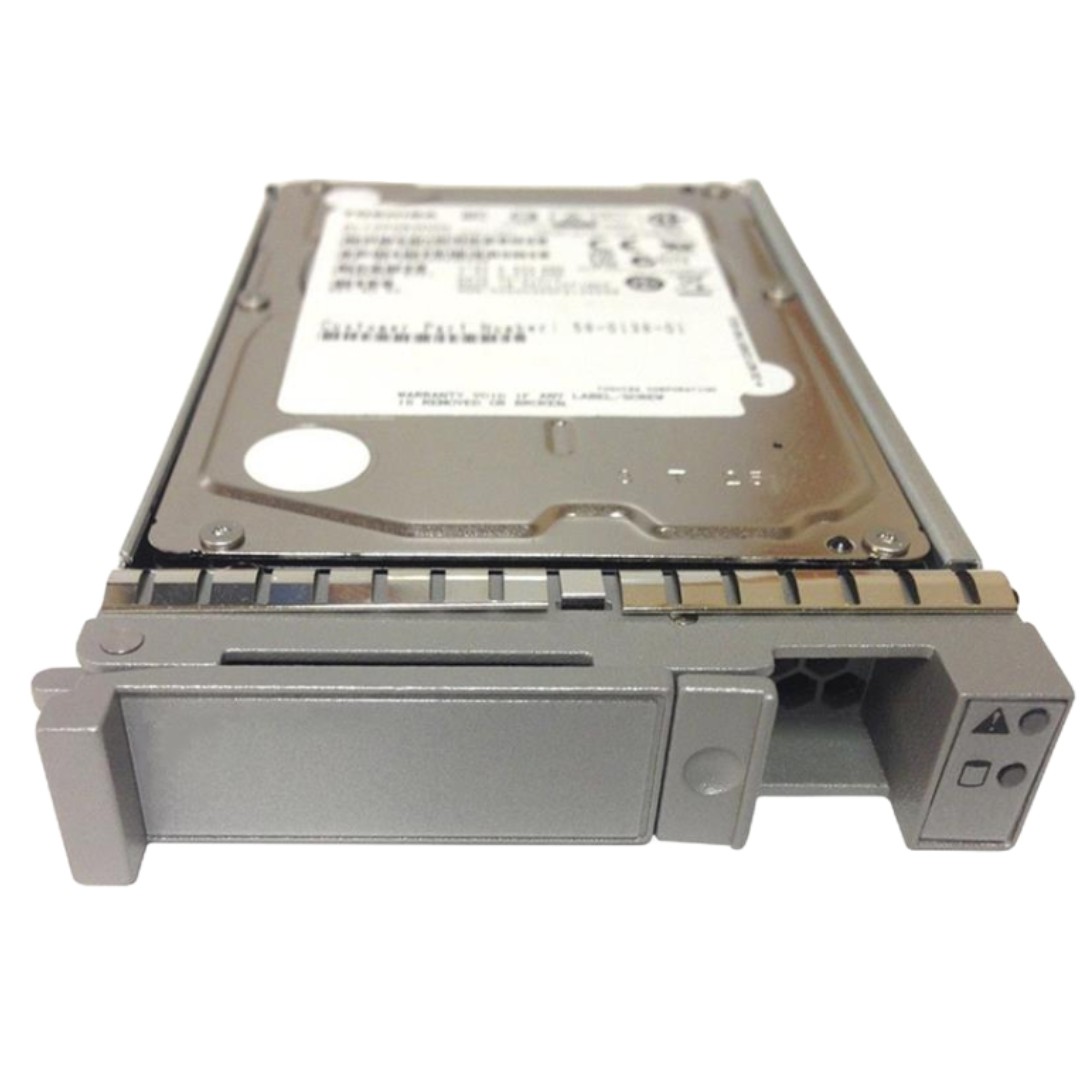


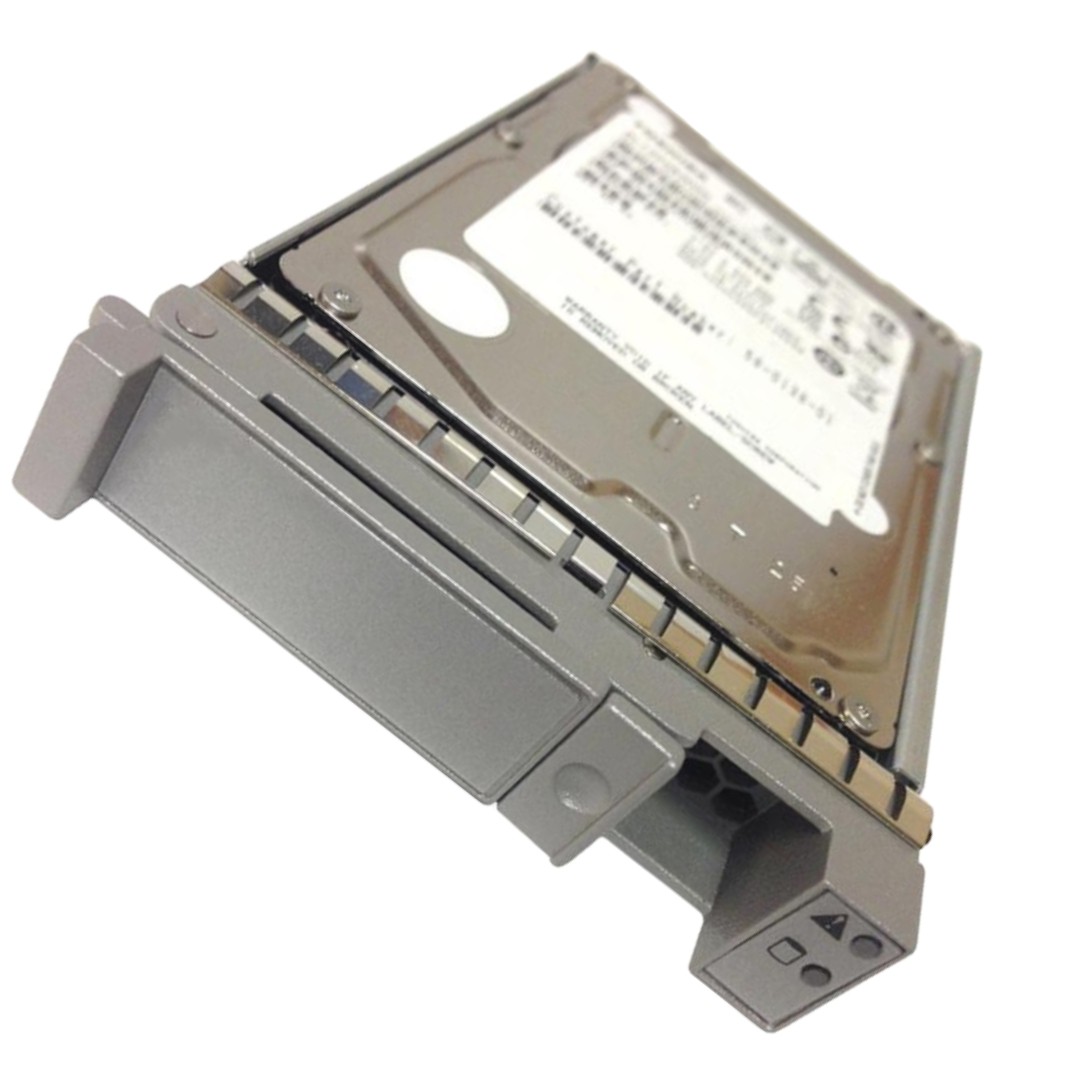
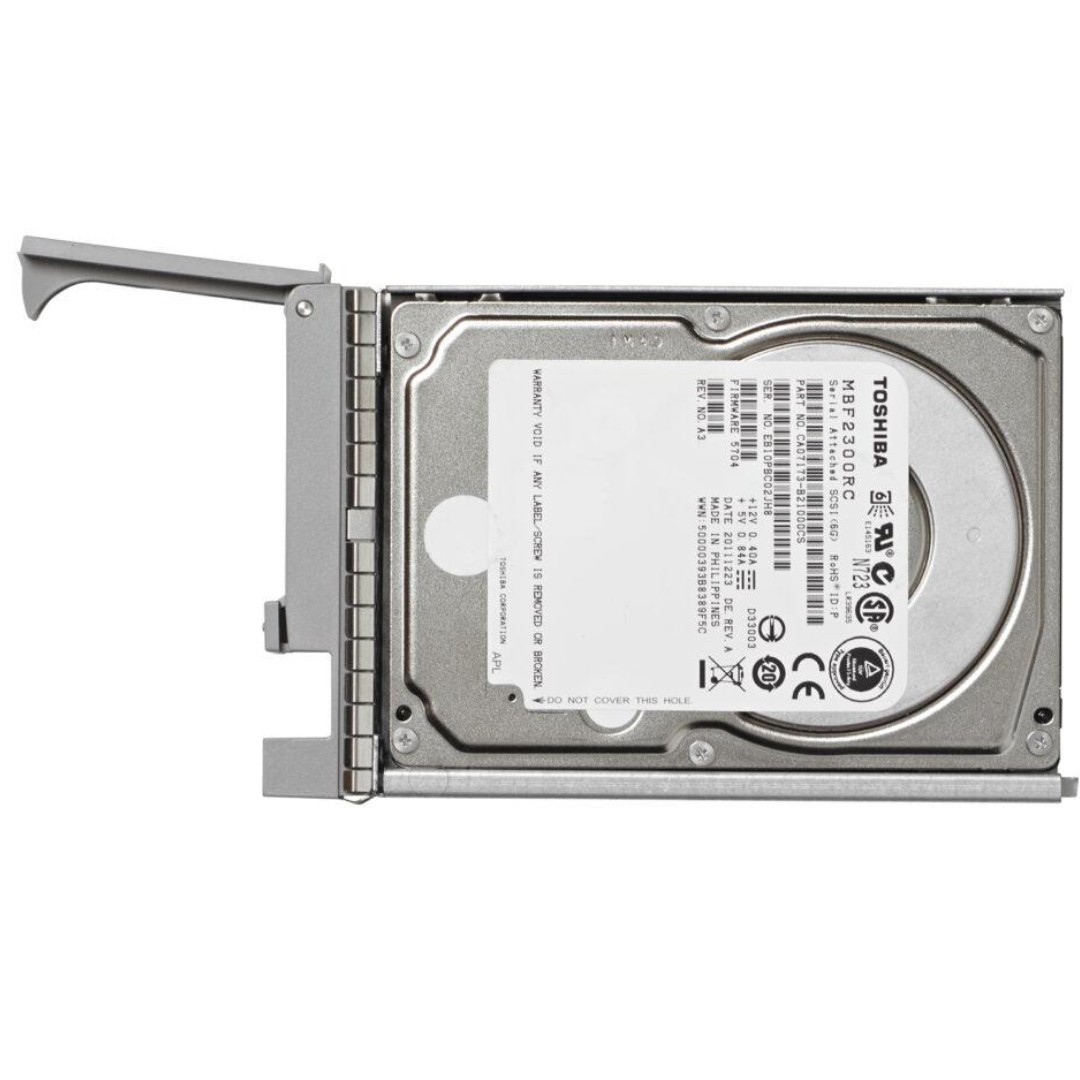
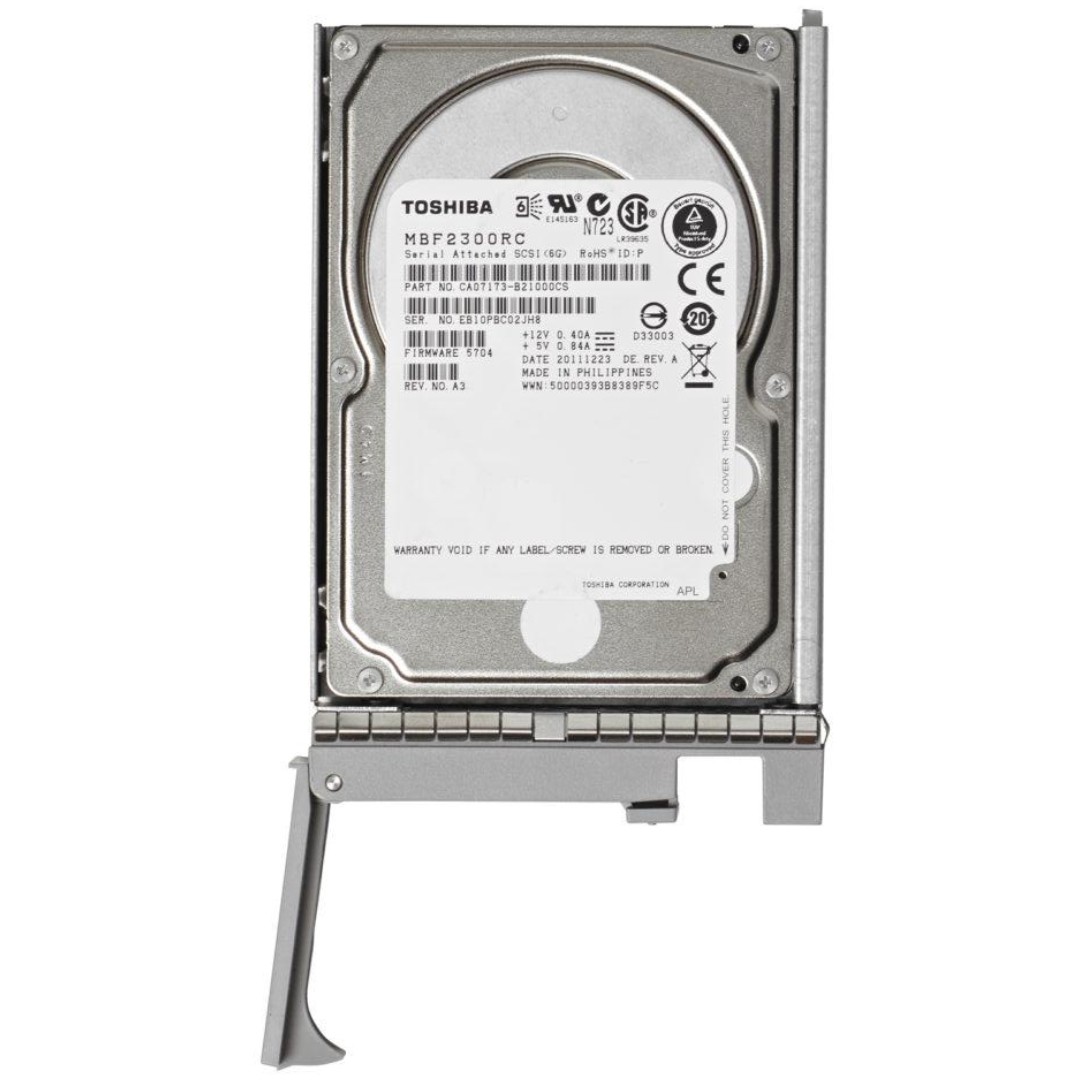
Cisco UCS-HD4T7KL12N 4TB 7.2K RPM SAS 12GBPS Lff 3.5inch Hot swap Hard Drive With Tray. Excellent Refurbished with 1 year replacement warranty
The Cisco UCS-HD4T7KL12N 4TB SAS Hot-Swap Hard Drive is a reliable enterprise-grade storage solution offering high capacity, durability, and seamless integration with Cisco servers. Designed for large form factor bays, it ensures efficient data management and smooth performance.
The Cisco UCS‑HD4T7KL12N is a 4 terabyte (TB) rotating magnetic hard disk drive built upon the mature and proven 7,200 revolutions per minute (RPM) spindle speed. This rotational speed is a deliberate engineering choice: it provides significantly better input/output operations per second (IOPS) than lower‑speed 5.4K or 5.9K drives while consuming less power and generating less heat than high‑performance 10K or 15K drives. The drive utilizes a Serial Attached SCSI (SAS) interface operating at 12 gigabits per second (Gbps), which doubles the throughput of previous 6Gbps SAS generations and ensures that the drive does not become a bottleneck in multi‑drive arrays.
Form factor is a critical consideration for server and storage chassis compatibility. This model adopts the Large Form Factor (LFF) standard at 3.5 inches in width. The 3.5‑inch format allows for larger platter areas, which directly contributes to the 4TB capacity without requiring exotic recording technologies. Furthermore, the drive is explicitly designed as hot‑swap capable, meaning it can be inserted or removed from a compatible Cisco UCS chassis or rack server while the system remains powered on. Hot‑swap functionality is non‑negotiable in high‑availability (HA) clusters where any downtime, even for hardware replacement, is unacceptable.
The SAS 12Gbps interface of the Cisco UCS‑HD4T7KL12N is backward compatible with 6Gbps and 3Gbps SAS controllers, yet when paired with a modern 12Gbps SAS host bus adapter (HBA) or RAID controller, it unlocks full duplex communication at 1,200 megabytes per second per lane. SAS differs from SATA by supporting command queuing depths of 256 simultaneous commands per drive, a feature known as tagged command queuing (TCQ). This depth is crucial for enterprise workloads where multiple read and write requests arrive concurrently from different virtual machines or database connections. Additionally, SAS provides dual‑port capability; though not always fully utilized in all Cisco UCS configurations, the physical presence of two ports on the drive connector allows for multipathing and path redundancy when connected to dual SAS domain backplanes.
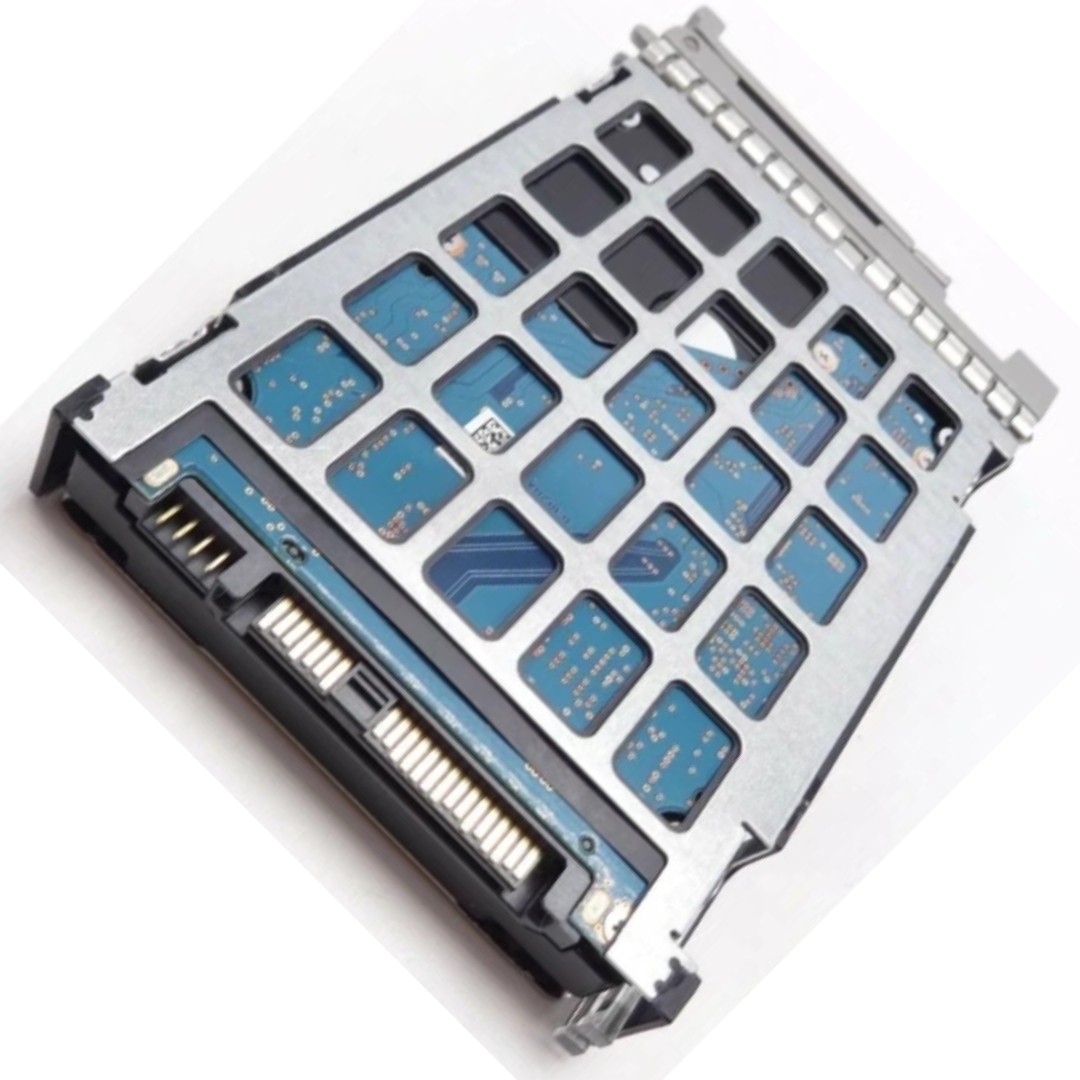
The physical connector of the Cisco UCS‑HD4T7KL12N is a standard SFF‑8680 (SAS 12Gbps) plug that mates with SFF‑8680 receptacles in Cisco hot‑swap drive carriers. The gold‑plated contacts and robust shielding reduce electromagnetic interference and ensure signal integrity over the backplane traces, which can be up to 24 inches in a dense 2U or 4U storage chassis. The drive incorporates spread spectrum clocking (SSC) to further minimize radiated emissions, an important consideration when dozens of drives are placed in close proximity.
Operating a 7.2K RPM spindle in a chassis with multiple neighboring drives introduces rotational vibration (RV) that can degrade performance by forcing the head actuator to repeatedly reposition. The Cisco UCS‑HD4T7KL12N integrates RV feed‑forward compensation sensors that proactively counteract vibrations in both the horizontal and vertical axes. This technology, often reserved for nearline SAS drives, maintains consistent IOPS even under extreme vibration levels. Furthermore, the drive employs a time‑limited error recovery (TLER) algorithm with a default error recovery timeout of 7 seconds. In RAID environments, this prevents the drive from dropping out of the array due to prolonged error recovery attempts, a common issue with desktop‑grade SATA drives.
Manufacturers characterize hard drives by their workload rate limit, expressed as terabytes written per year (TBW/yr) or drive writes per day (DWPD). The Cisco UCS‑HD4T7KL12N is rated for continuous operation at 100% duty cycle for sequential access patterns, and approximately 30‑40% duty cycle for random workloads. In practical terms, this drive excels as a repository for media streaming, backup rotation, log file aggregation, and write‑once‑read‑many (WORM) datasets. For transaction processing or high‑frequency OLTP databases, an all‑flash array or 10K SAS drive would be more appropriate. However, in a tiered storage architecture where hot data resides on NVMe or SSD and warm or cold data migrates to NL‑SAS, the Cisco UCS‑HD4T7KL12N provides the perfect cost‑performance inflection point.
Cisco UCS servers, including the C‑series rack servers and B‑series blade servers, utilize a unified fabric that converges LAN and SAN traffic. The UCS‑HD4T7KL12N is explicitly qualified for use in UCS C220 M5/M6, C240 M5/M6, and S3260 storage servers. When installed in a C240 M6 with a 12Gbps SAS RAID controller such as the Cisco 12G SAS Modular RAID Controller (UCSC‑MRAID12G), the drive can be configured into RAID 0, 1, 5, 6, 10, 50, or 60 arrays. It is also compatible with Cisco’s Virtual Interface Card (VIC) passthrough modes when using software‑defined storage (SDS) like VMware vSAN, Microsoft Storage Spaces Direct, or Red Hat Ceph.
The Cisco UCS‑HD4T7KL12N is delivered pre‑assembled into a Cisco hot‑swap drive carrier. The carrier is a metal tray with an integrated lever, status LED, and alignment guides. This carrier is keyed to prevent incorrect insertion into a UCS front‑load drive bay. The carrier design ensures proper grounding and airflow across the drive’s aluminum case. When inserted, the drive receives 12V and 5V power via the backplane connector; the 7.2K spindle motor draws approximately 8‑10 watts during read/write operations and 6 watts at idle. The carrier LED provides at‑a‑glance status: solid green indicates normal operation, blinking green indicates activity, amber indicates predictive failure, and off indicates no power or failed drive.
In a UCS C240 server with up to 24 LFF drive bays, each drive slot is addressed through a SAS expander integrated into the backplane. The expander uses SAS zoning and phy masking to isolate drives for different virtual hosts. The Cisco UCS‑HD4T7KL12N’s SAS address (World Wide Name) is programmed at the factory and stored in the drive’s VPD (vital product data). This WWN is used by the UCS Manager or Intersight management platform to create persistent drive mapping policies. As a result, if a drive fails and is replaced, the system can automatically reassign the same logical unit number (LUN) without manual reconfiguration.
Administrators can choose to operate the Cisco UCS‑HD4T7KL12N in JBOD (just a bunch of disks) mode, where the SAS HBA presents each drive directly to the operating system. This mode is common for software‑defined storage and hyperconverged deployments. Alternatively, hardware RAID modes leverage the controller’s onboard cache and XOR engine to accelerate parity calculations. For RAID 5 arrays built from four of these 4TB drives, usable capacity reaches 12TB with single‑drive fault tolerance. Rebuild times for a failed 4TB drive over a 12Gbps SAS backplane average 8‑12 hours, depending on background workload. Cisco recommends setting a global hot spare of the same model to automatically replace any failed drive.
In a typical 25°C (77°F) data center environment, the Cisco UCS‑HD4T7KL12N operates with a case temperature between 35°C and 45°C under load. The drive throttles its spindle speed if internal sensors exceed 65°C, but Cisco’s chassis cooling design ensures adequate airflow (200 linear feet per minute across the drive bay). Acoustic noise emission is measured at 3.4 bels during idle and 4.0 bels during seek operations, which translates to 34‑40 dBA at a one‑meter distance. This makes the drive suitable for office‑adjacent data rooms, though large arrays of 24 drives produce a cumulative noise level near 60 dBA.
The Cisco UCS‑HD4T7KL12N implements the SAS power condition management specifications, allowing transition through idle_a, idle_b, idle_c, and standby_z power states. In full read/write operation, power draw is 9.5W typical. In idle_a (spindle at speed, heads loaded), consumption drops to 6.2W. Idle_b (spindle at speed, heads unloaded) reduces to 5.1W. Standby_z (spindle stopped, heads parked) consumes only 1.2W. The UCSM power capping policies can place unused drives into standby_z after a configurable period of inactivity, significantly reducing overall chassis power consumption for bursty workloads.
Before deployment, verifying hardware and software compatibility ensures trouble‑free operation. The Cisco UCS‑HD4T7KL12N is validated for use with:
Cisco UCS C220 M5 and M6 rack servers with SAS backplane option, Cisco UCS C240 M5 and M6 rack servers with 12, 16, or 24 LFF drive configurations, Cisco UCS S3260 storage server with 60 LFF drive sleds, Cisco UCS 5108 blade chassis when used with the B200 M5 blade and external SAS storage enclosures, Cisco 12Gbps SAS HBAs such as the UCS‑SAS‑12G‑HBA and UCS‑SAS‑12G‑EXT, Cisco RAID controllers: UCSC‑MRAID12G, UCSC‑RAID12G‑M.2, and UCSC‑RAID12G‑4i. Software compatibility includes VMware ESXi 6.5 and newer, Microsoft Windows Server 2016/2019/2022, Red Hat Enterprise Linux 7.x and 8.x, SUSE Linux Enterprise Server 12 SP3+, and Cisco HyperFlex HX Data Platform.
To illustrate the drive’s capabilities, consider a real‑world configuration: eight Cisco UCS‑HD4T7KL12N drives in a RAID 10 array (four striped mirrors) on a C240 M6 with a 12Gbps SAS RAID controller equipped with 4GB of non‑volatile cache. Using FIO (Flexible I/O Tester) with a 64KB sequential read workload, the array achieves 1,680 MB/s, scaling near‑linearly with the number of drives. For 8K random reads at a queue depth of 128, the array delivers 3,800 IOPS with an average latency of 4.2 milliseconds, thanks to the controller’s cache absorbing some of the randomness. In a VMware vSAN all‑flash hybrid configuration where the Cisco UCS‑HD4T7KL12N acts as the capacity tier and an Intel P4600 SSD as the caching tier, the overall VM storage performance meets the requirements for 30 to 50 desktop virtual machines sharing a common OS image and user profile storage.
Based on aggregated data from large‑scale data center deployments (1000+ drives over 24 months), the Cisco UCS‑HD4T7KL12N exhibits an annualized failure rate (AFR) of approximately 1.3%. This is superior to the industry average for 7.2K NL‑SAS drives, which hovers around 1.8‑2.2%. The most common failure modes are head media wear (after 25,000 power‑on hours) and PCB component aging. Cisco’s three‑year advanced replacement warranty covers the drive, and extended support can be purchased as part of Cisco SmartNet. The mean time between failures (MTBF) is quoted at 1.4 million hours, which translates to a statistical probability but should not be interpreted as a guarantee of failure‑free operation for any single drive.
The Cisco UCS‑HD4T7KL12N complies with Restriction of Hazardous Substances (RoHS) directive 2011/65/EU, meaning it contains less than 0.1% by weight of lead, mercury, cadmium, hexavalent chromium, PBB, and PBDE. It also meets the Waste Electrical and Electronic Equipment (WEEE) marking requirements. The drive’s printed circuit board (PCB) is halogen‑free and uses no antimony trioxide. At end of life, Cisco offers a trade‑in and recycling program. Data sanitization for disposal should include a single pass overwrite using an ATA Secure Erase command (if the SAS controller supports it) or physical destruction of the platters. Because the drive uses perpendicular magnetic recording (PMR), degaussing is effective but also destroys the drive’s ability to be reused.
For stocking and logistics, the Cisco UCS‑HD4T7KL12N must be stored at temperatures between ‑40°C and 70°C, with relative humidity non‑condensing below 95%. The drive’s shock tolerance non‑operating is 250 G for 2 milliseconds, but operating shock is limited to 30 G for 2 milliseconds. Shipping boxes should include the original Cisco anti‑static bag and foam padding to avoid latent damage. Upon receipt, a best practice is to run a full surface scan (e.g., badblocks on Linux or HDDScan on Windows) before deploying the drive into a production RAID array. This initial verification identifies any “infant mortality” failures that typically occur within the first 200 hours of operation.


 Contact Us
 Information
 Catalog
 Solid State Drives (SSD)
 Network Switches
 Hard Disk Drives
 HBA & Controllers
 PC & Servers
 PC & Server Memory
 CPU & Processors
 Network Routers
 Power Supplies
 Tape Drives & Libraries
 Network Devices
 Computer & Network Cables