(7% discount is applied at checkout)
Cart is empty
Your go-to destination for cutting-edge server products
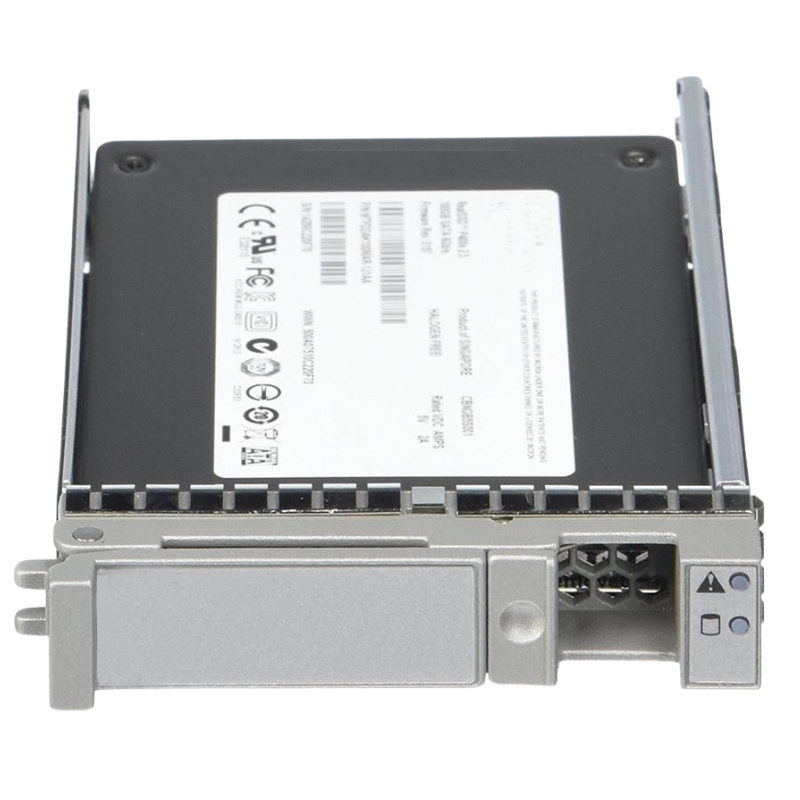


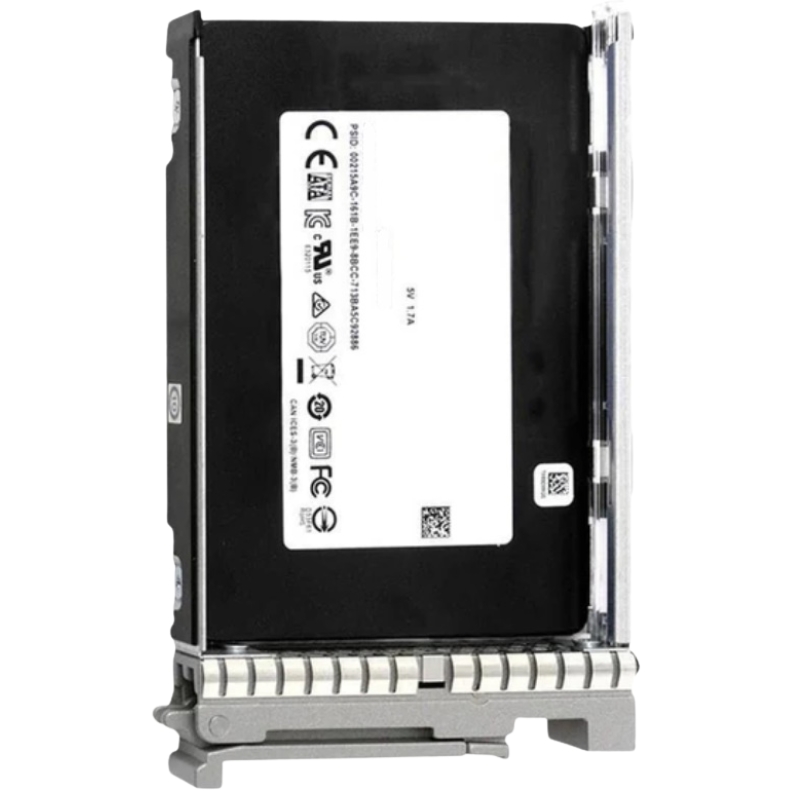
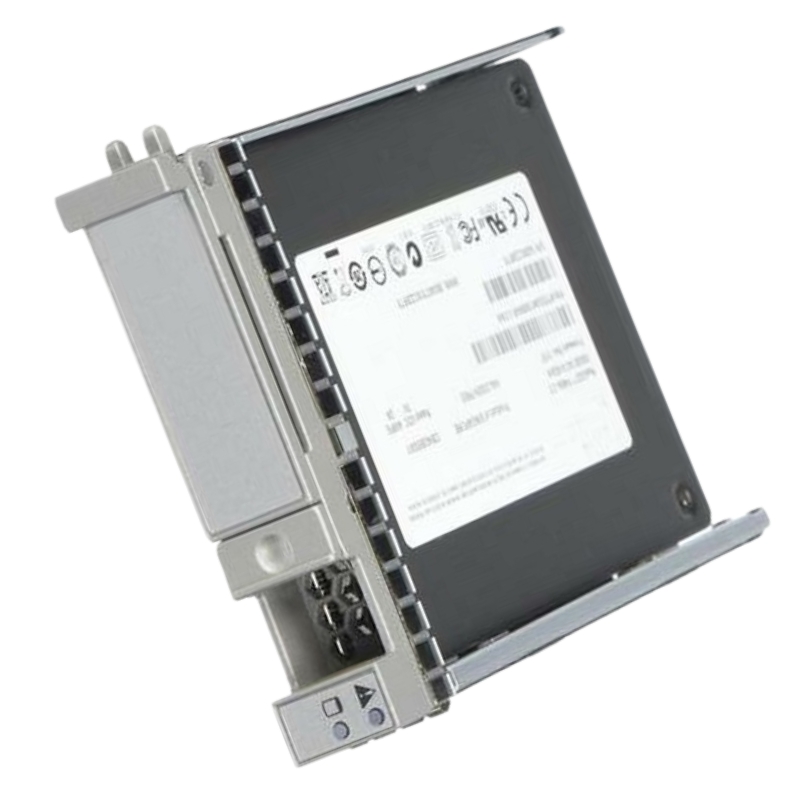
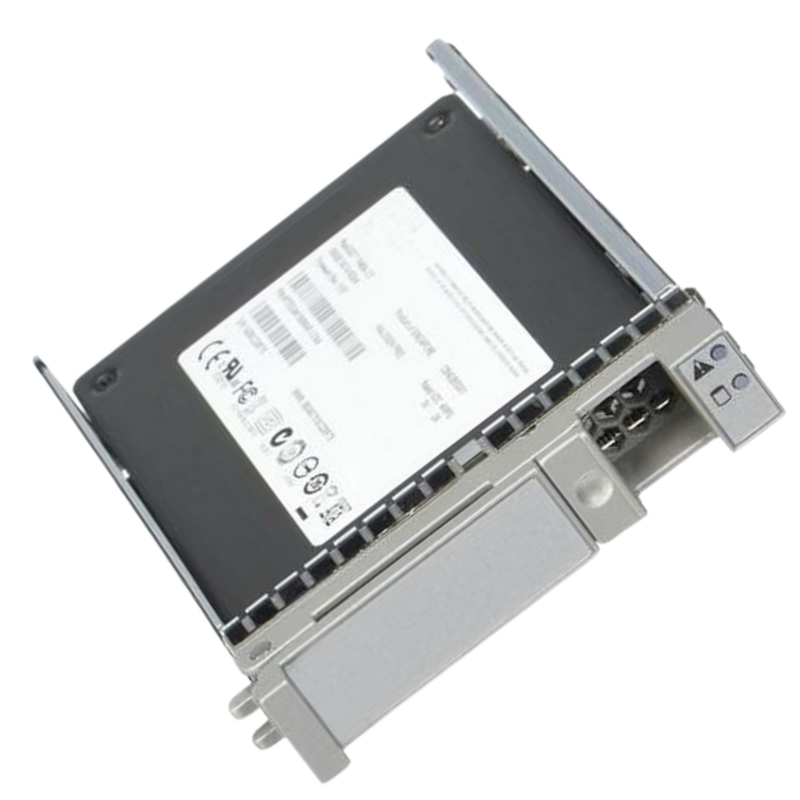
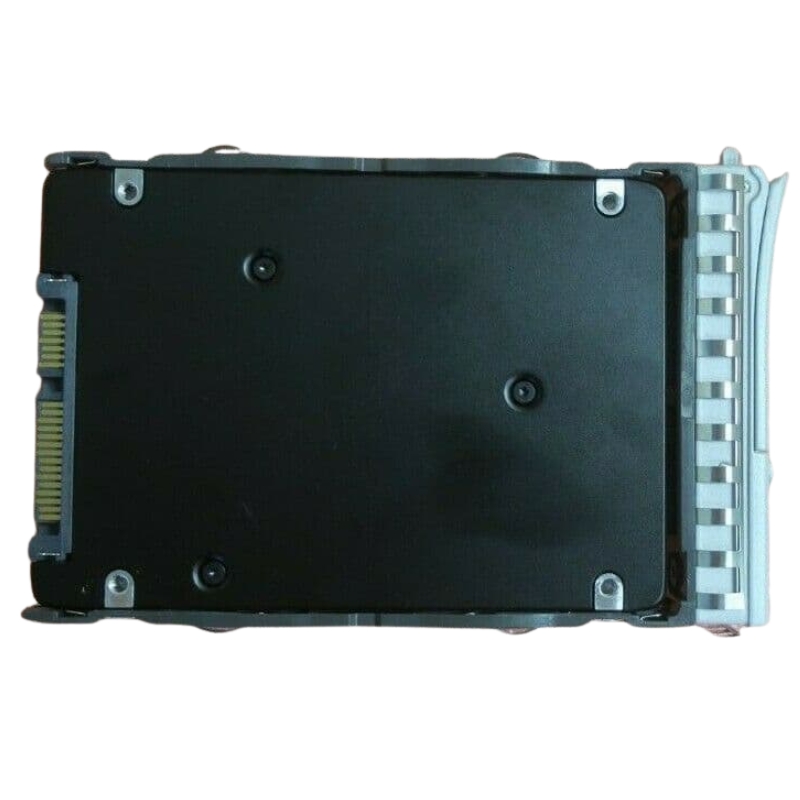
Cisco UCS-SD19TBMS4-EV 1.92TB SATA 6GBPS SSD Hot Swap Enterprise With Tray. Factory-Sealed New in Original Box (FSB) with 3 Years Warranty
Enhance your data center performance with the Cisco UCS-SD19TBMS4-EV, a high-capacity, hot-swappable solid-state drive designed for enterprise workloads. With a 1.92TB capacity and SATA 6Gb/s interface, this SSD ensures reliable storage with accelerated data transfer.
This SSD is fully compatible with a variety of Cisco UCS servers, ensuring seamless integration and optimal performance:
Enterprise storage has undergone a revolutionary transformation with the adoption of Solid State Drives (SSDs). Unlike traditional Hard Disk Drives (HDDs) that rely on spinning platters and mechanical read/write heads, SSDs use NAND flash memory to store data electronically. This fundamental difference eliminates mechanical latency, dramatically increasing input/output operations per second (IOPS) while reducing power consumption and heat generation. The Cisco UCS-SD19TBMS4-EV 1.92TB SATA 6Gbps SSD represents the pinnacle of this evolution, specifically engineered for the rigorous demands of enterprise workloads where consistent performance and reliability are non-negotiable.
While consumer SSDs and enterprise SSDs may appear similar superficially, they are engineered for fundamentally different operational environments. Enterprise SSDs like the Cisco UCS-SD19TBMS4-EV are built to handle constant, heavy workloads in 24/7 operational scenarios. They feature superior quality NAND flash with higher endurance ratings, advanced error correction codes (ECC), power-loss protection capacitors, and sophisticated wear-leveling algorithms. These features ensure data integrity and drive longevity under conditions that would rapidly degrade consumer-grade storage solutions.
The Cisco UCS-SD19TBMS4-EV offers a 1.92TB storage capacity, which represents an optimal balance between storage density and performance characteristics in enterprise environments. This capacity point is specifically calculated to provide substantial storage while maintaining consistent performance across the entire drive. The drive features a standard 2.5-inch form factor with hot-swap tray compatibility, ensuring seamless integration into existing Cisco UCS server infrastructure and storage arrays without requiring specialized mounting hardware or configuration.
The Serial ATA (SATA) 6Gbps interface, also known as SATA Revision 3.0, provides a maximum theoretical transfer rate of 600MB/s. While newer interfaces like NVMe offer higher bandwidth, SATA remains highly relevant in enterprise environments for numerous applications. The SATA interface provides excellent compatibility with existing infrastructure, predictable performance characteristics, and cost-effectiveness for workloads where extreme speed is not the primary requirement. The Cisco UCS-SD19TBMS4-EV leverages this mature, reliable interface to deliver consistent, dependable performance.
In practical deployment scenarios, the Cisco UCS-SD19TBMS4-EV delivers sustained read speeds typically between 500-550MB/s and write speeds of 450-500MB/s, depending on workload patterns and data compressibility. More importantly than peak throughput, enterprise SSDs are characterized by their consistent performance under varying load conditions and excellent random I/O performance, typically delivering tens of thousands of IOPS even with mixed read/write workloads. This consistency is crucial for maintaining service level agreements (SLAs) in business-critical applications.
The endurance of an enterprise SSD is quantified by its Terabytes Written (TBW) rating, which indicates the total amount of data that can be written to the drive over its operational lifetime. Enterprise-grade SSDs like the Cisco UCS-SD19TBMS4-EV feature significantly higher TBW ratings compared to consumer drives, often by an order of magnitude or more. This extended endurance is achieved through higher-grade NAND flash components, sophisticated wear-leveling algorithms, over-provisioning (additional NAND capacity not available to the user), and advanced write amplification reduction techniques.
The Cisco UCS-SD19TBMS4-EV is engineered with exceptional reliability metrics, typically featuring a Mean Time Between Failures (MTBF) rating of 2 million hours or higher. This translates to an Annualized Failure Rate (AFR) of approximately 0.44% or lower, meaning statistically less than one half of one percent of drives would be expected to fail under normal operating conditions within a year. These reliability figures are validated through extensive testing under accelerated life conditions and continuous monitoring of field deployment performance.
The hot-swap capability of the Cisco UCS-SD19TBMS4-EV is a critical feature for maintaining continuous operations in enterprise environments. Hot-swapping allows for the removal and replacement of drives without powering down the entire system or interrupting services running on other components. This capability enables proactive maintenance, capacity expansion, and failed drive replacement while maintaining system availability. The included tray ensures proper alignment, secure connection, and efficient thermal management during insertion and removal operations.
Enterprise SSDs implement sophisticated power-loss protection circuits to prevent data corruption in the event of unexpected power interruption. The Cisco UCS-SD19TBMS4-EV incorporates capacitors or similar energy storage devices that provide sufficient temporary power to complete any in-progress write operations and flush data from volatile caches to non-volatile NAND memory. This protection ensures data consistency and prevents the metadata corruption that can occur when writes are interrupted mid-operation, a crucial feature for maintaining filesystem integrity.
Modern NAND flash memory is susceptible to bit errors that increase as the memory cells undergo program/erase cycles. The Cisco UCS-SD19TBMS4-EV employs sophisticated Error Correction Codes (ECC), typically based on Low-Density Parity-Check (LDPC) algorithms, to detect and correct these errors transparently. Advanced ECC enables the drive to maintain data integrity even as the NAND flash ages and raw bit error rates naturally increase over the drive's operational lifetime, significantly extending usable life compared to less sophisticated correction methods.
Beyond basic error correction, enterprise SSDs implement end-to-end data protection schemes. These systems maintain checksums or parity information as data moves through various internal components of the drive, including the DRAM cache, controller, and NAND flash interfaces. This protection detects and in some cases corrects errors that might occur during internal data transfer, providing an additional layer of assurance beyond what is typically available in consumer-grade storage devices.
The Cisco UCS-SD19TBMS4-EV 1.92TB SSD excels in virtualization environments where multiple virtual machines compete for storage resources. The consistent low-latency performance and high IOPS capabilities of these drives prevent the "I/O blender" effect that can occur when numerous VMs generate simultaneous, random storage requests. This makes them ideal for VMware vSphere, Microsoft Hyper-V, and other hypervisor platforms, particularly for hosting operating system disks, application binaries, and databases that benefit from fast storage access.
Database systems, both relational (SQL) and non-relational (NoSQL), derive significant performance benefits from enterprise SSD storage. The Cisco UCS-SD19TBMS4-EV dramatically reduces query response times for OLTP (Online Transaction Processing) systems by minimizing storage latency, which is often the primary bottleneck in database performance. For OLAP (Online Analytical Processing) and data warehouse applications, these drives accelerate data loading operations and complex query processing, enabling faster business intelligence and analytics.
Using the Cisco UCS-SD19TBMS4-EV as a boot drive for physical servers provides significantly faster boot times compared to traditional HDDs, reducing server provisioning and maintenance windows. More importantly, it ensures that operating system paging and temporary file operations don't become performance bottlenecks during periods of high memory pressure. The reliability characteristics also reduce the risk of boot drive failure, which can cause extended server downtime even when data is stored on separate storage systems.
In modern storage architectures, different classes of storage are often deployed in tiers based on performance requirements and cost considerations. The Cisco UCS-SD19TBMS4-EV typically occupies the performance tier in such architectures, hosting frequently accessed "hot" data, while less performance-critical "warm" or "cold" data resides on higher-capacity, lower-cost HDDs or archive storage. Automated tiering software can dynamically move data between tiers based on access patterns, optimizing both performance and cost.
The Cisco UCS-SD19TBMS4-EV is designed specifically for seamless integration with Cisco Unified Computing System (UCS) infrastructure. Cisco UCS Manager provides unified, embedded management of all software and hardware components in the UCS environment, including these enterprise SSDs. This integration enables centralized inventory management, firmware updates, health monitoring, and policy-based configuration without requiring separate management tools or complex integration efforts. The drives are automatically recognized and optimally configured within the UCS management framework.
Within Cisco UCS, storage configuration can be incorporated into service profiles and templates, enabling consistent, repeatable deployment of storage resources. The Cisco UCS-SD19TBMS4-EV can be specified within these profiles to ensure that applications receive the appropriate storage performance characteristics. This approach enables "stateless computing" where server identity, configuration, and storage are abstracted from the physical hardware and can be rapidly deployed or reconfigured as operational requirements evolve.
SATA provides a cost-effective, high-compatibility storage interface suitable for a wide range of enterprise applications. While offering lower maximum bandwidth compared to SAS or NVMe, SATA SSDs like the Cisco UCS-SD19TBMS4-EV deliver excellent performance for many workloads at a compelling price point. The SATA ecosystem benefits from extensive industry adoption, mature drivers, and broad compatibility with existing infrastructure.
SAS interfaces offer higher theoretical bandwidth (12Gbps or 22.5Gbps in newer implementations), full duplex operation (simultaneous read/write), and enhanced connectivity options through expanders. SAS drives typically command a price premium over SATA and are often deployed in performance-sensitive applications where the additional capabilities justify the cost. Many enterprise storage arrays utilize SAS backplanes even with SATA drives, leveraging the enhanced connectivity features of the SAS infrastructure.
NVMe represents the current performance pinnacle for solid-state storage, utilizing the PCIe interface to dramatically reduce latency and increase bandwidth compared to SATA or SAS. NVMe drives are ideal for the most performance-sensitive applications but come at a significant cost premium and may require specific infrastructure support. The Cisco UCS-SD19TBMS4-EV occupies an important position in the storage hierarchy, delivering substantial performance improvements over HDDs while remaining more cost-effective than NVMe solutions for many workloads.
Selecting between SATA, SAS, and NVMe storage involves evaluating specific workload requirements against budget constraints. The Cisco UCS-SD19TBMS4-EV SATA SSD represents an optimal choice for read-intensive and mixed-use workloads where consistent performance is more important than maximum theoretical throughput. Applications with primarily sequential access patterns, moderate write requirements, and budget considerations are particularly well-suited to this class of storage. The drive provides substantial performance uplift over HDDs while avoiding the cost premium of SAS or NVMe alternatives where their additional capabilities would not be fully utilized.


 Contact Us
 Information
 Catalog
 Solid State Drives (SSD)
 Network Switches
 Hard Disk Drives
 HBA & Controllers
 PC & Servers
 PC & Server Memory
 CPU & Processors
 Network Routers
 Power Supplies
 Tape Drives & Libraries
 Network Devices
 Computer & Network Cables