(7% discount is applied at checkout)
Cart is empty
Your go-to destination for cutting-edge server products
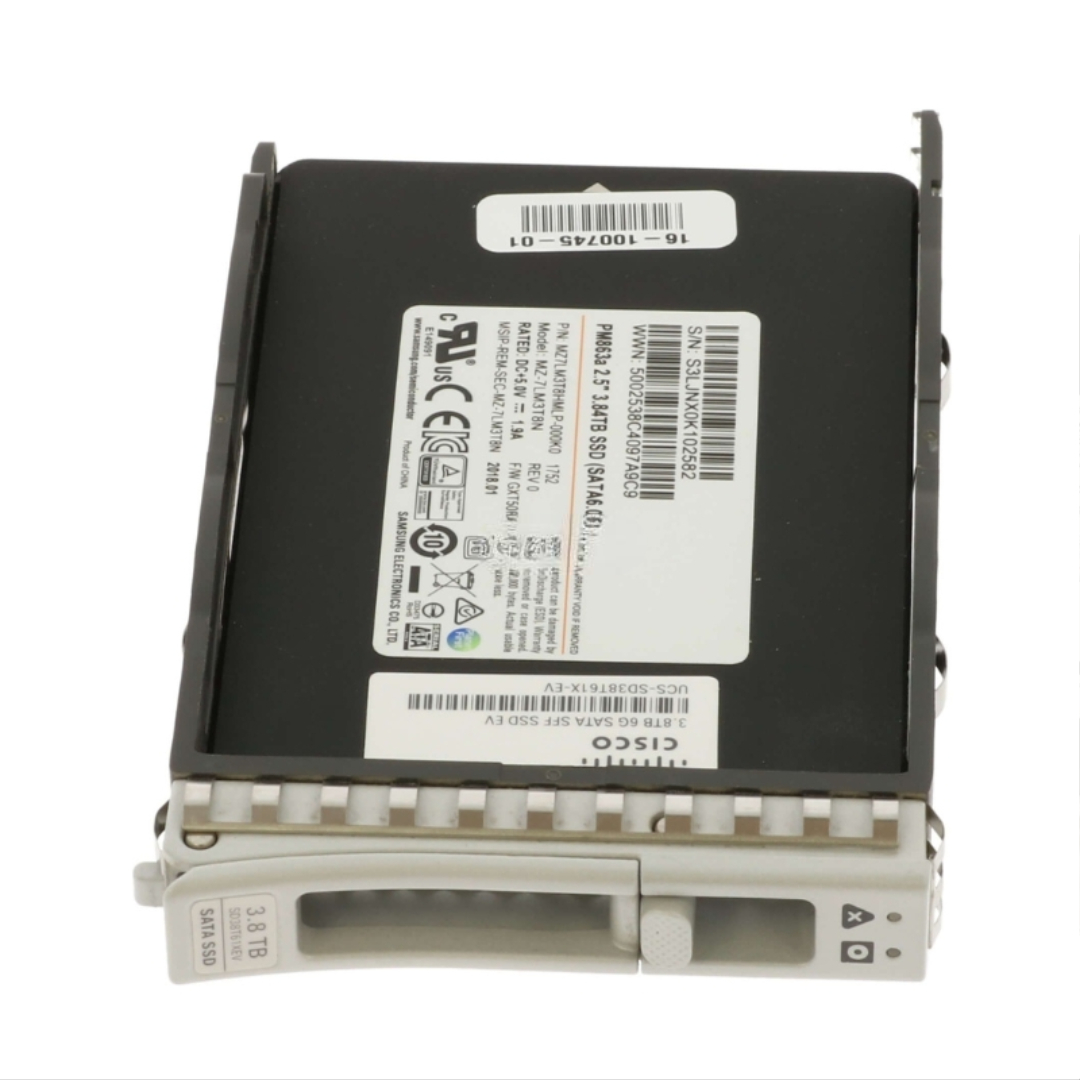


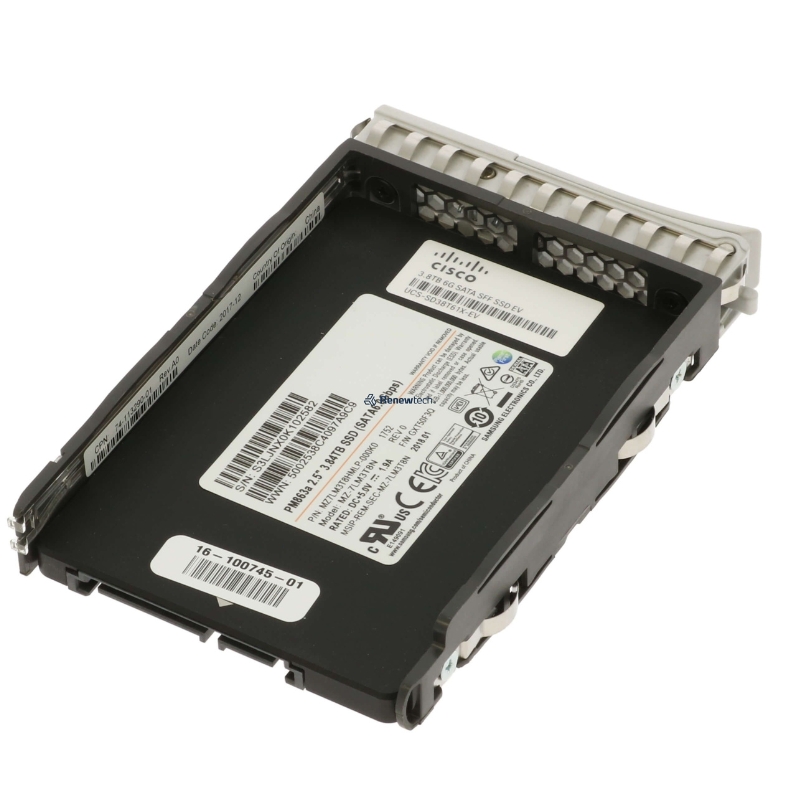
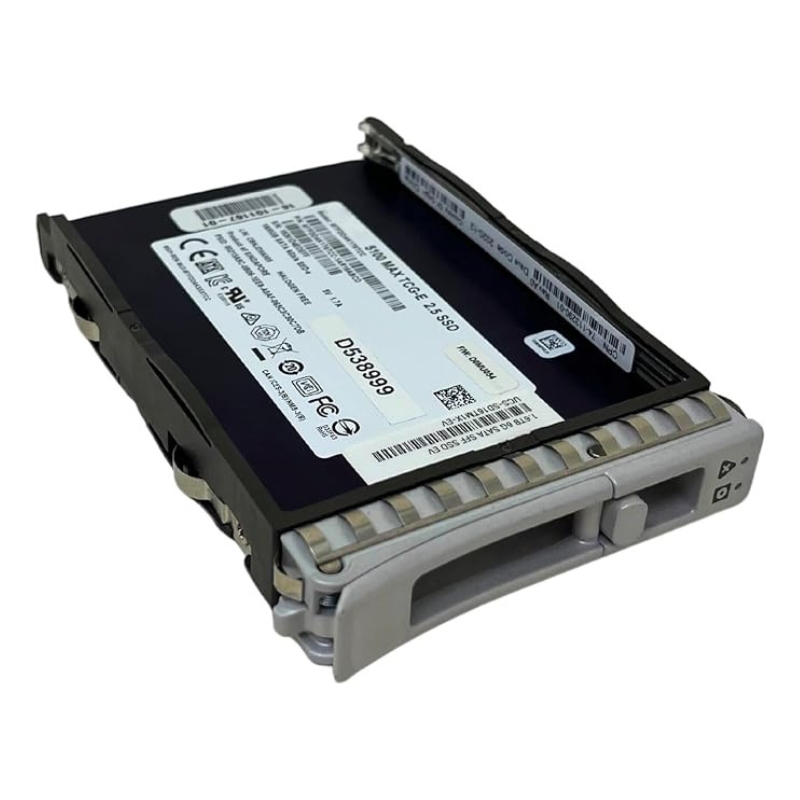
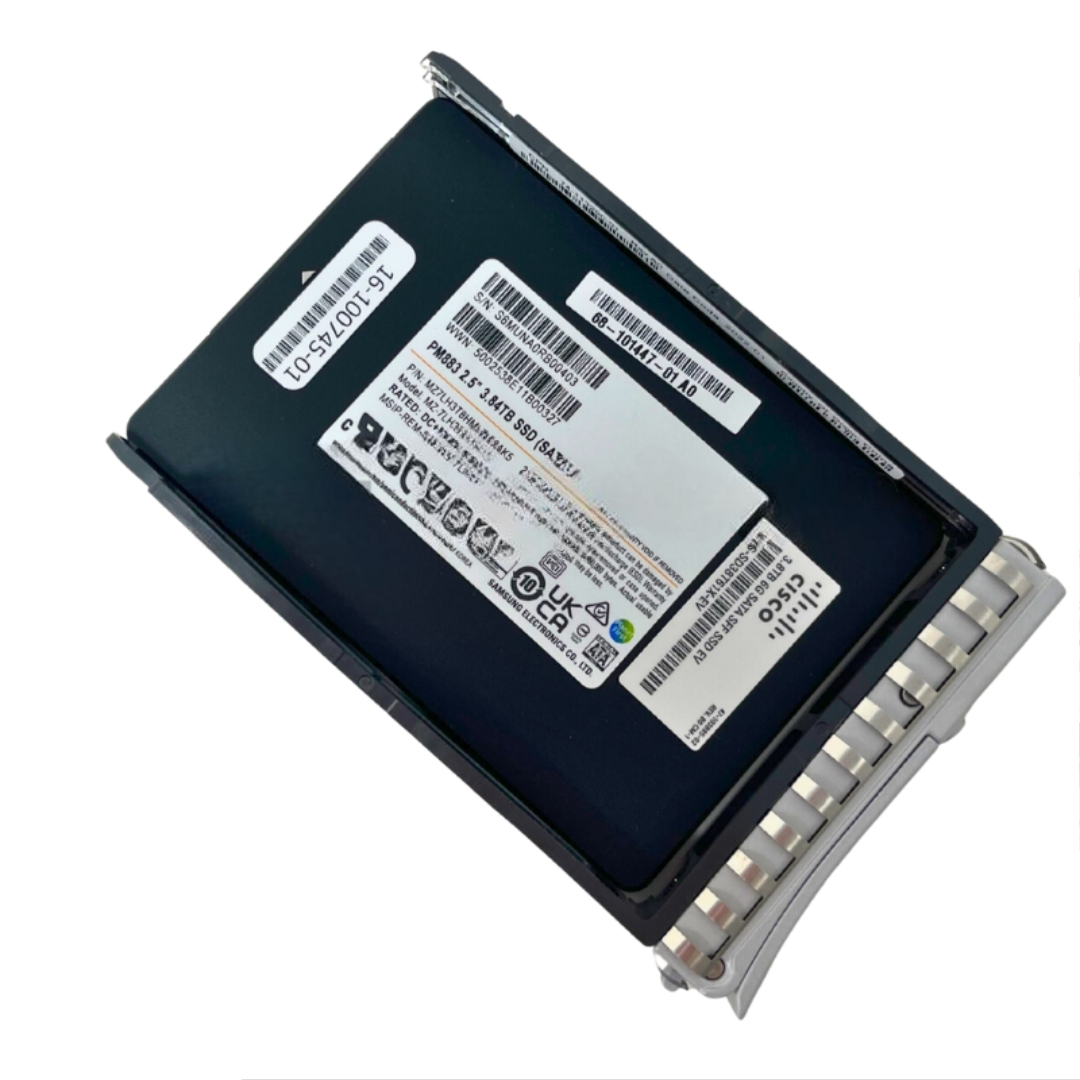
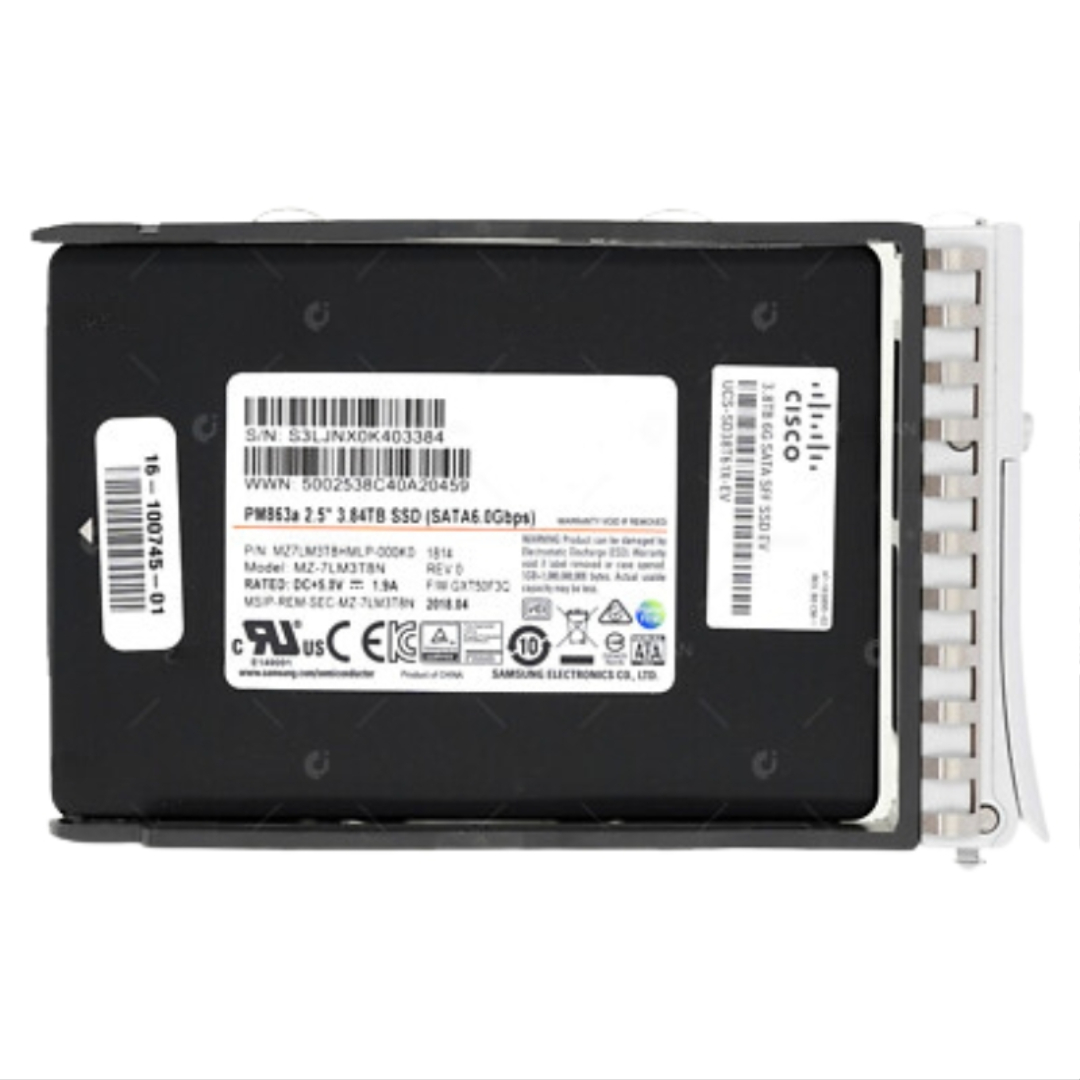
Cisco UCS-SD38T6I1X-EV 3.8TB SATA 6GBPS Enterprise Value Hot Swap 2.5Inch Solid State Drive with Tray. Excellent Refurbished with 1 year replacement warranty
Discover the Cisco UCS-SD38T6I1X-EV — a high-capacity, enterprise-grade 2.5-inch solid-state drive (SSD) with 3.8 TB of usable storage. Designed for datacenter servers and cloud platforms, this hot-swapable SATA 6 Gb/s drive delivers reliable performance, efficient data throughput and easy serviceability with a removable tray.
This Cisco SSD is validated for a wide range of UCS rack and blade servers — ideal for organizations standardizing on Cisco hardware. Compatible systems include multiple C220, C240, C480 and Smartplay Select configurations (all 2.5" SFF variants).
(Complete model list for procurement and validation purposes.)
The Cisco UCS SATA SSD Enterprise Value series represents a crucial category of storage solutions designed specifically for enterprise environments where reliability, performance, and cost-effectiveness intersect. These solid-state drives deliver the perfect balance of capacity, endurance, and value for a wide range of data center applications.
Enterprise Value SSDs occupy a strategic position in the storage hierarchy, offering superior performance and reliability compared to consumer-grade SSDs while remaining more cost-effective than highest-end enterprise models. This makes them ideal for read-intensive workloads and applications where consistent performance matters more than extreme write endurance.
These drives excel in environments with predominantly read-oriented operations, moderate write requirements, and predictable access patterns. The Enterprise Value classification indicates optimized cost-per-gigabyte while maintaining enterprise-grade features like power-loss protection, enhanced error correction, and advanced wear leveling.
The Cisco UCS-SD38T6I1X-EV is a 3.8TB SATA 6Gbps Enterprise Value Hot Swap 2.5-inch Solid State Drive that delivers exceptional performance for enterprise storage applications. This drive combines high capacity with the reliability features demanded in data center environments.
With 3.8TB of usable storage capacity, this drive provides substantial space for enterprise applications while maintaining the standard 2.5-inch form factor that ensures compatibility with existing server infrastructure. The inclusion of a hot-swap tray enables seamless installation and replacement in compatible Cisco UCS systems.
The drive conforms to the 2.5-inch industry standard with 15mm z-height, making it compatible with most enterprise server and storage systems designed for high-capacity drives. The included tray ensures proper mounting and alignment within Cisco UCS chassis and facilitates easy hot-swap capabilities during maintenance operations.
Utilizing the SATA 6Gbps interface, this drive delivers maximum theoretical transfer speeds of up to 600MB/s, fully leveraging the SATA III specification. The Enterprise Value designation indicates optimized performance characteristics for read-intensive workloads while maintaining consistent latency profiles under varying load conditions.
The SATA interface provides broad compatibility with existing server infrastructure while offering sufficient bandwidth for many enterprise workloads. Native Command Queuing (NCQ) support enables improved command processing efficiency, and built-in error correction mechanisms ensure data integrity during transfer operations.
As an Enterprise Value drive, the UCS-SD38T6I1X-EV offers balanced endurance characteristics suitable for moderate write workloads. The drive incorporates advanced NAND management technologies that optimize write amplification and extend the practical lifespan under typical enterprise usage patterns.
Enterprise Value SSDs typically feature MTBF ratings measured in millions of hours, significantly exceeding consumer-grade alternatives. This reliability metric, combined with comprehensive monitoring capabilities, ensures predictable performance and reduced total cost of ownership through extended service intervals.
The hot-swap functionality represents a critical feature for enterprise environments where system uptime is paramount. This capability allows administrators to replace drives without powering down the entire system, maintaining continuous operation during maintenance and expansion procedures.
Hot-swap capability enables non-disruptive maintenance, capacity upgrades, and failed component replacement. The included tray ensures proper electrical sequencing during insertion and removal, preventing damage to the drive or backplane while maintaining system integrity throughout the process.
The specifically designed tray provides secure mounting, proper alignment with backplane connectors, and integrated handling features for safe installation and removal. Color-coded indicators and secure locking mechanisms prevent accidental disconnection during normal operation.
Enterprise SSDs incorporate power loss protection circuits that safeguard data during unexpected power interruptions. This feature ensures that in-flight writes are completed and data in the drive's cache is preserved, maintaining data integrity across power cycle events.
Advanced power management circuits combined with capacitor-based energy storage provide sufficient hold-up time to complete pending write operations and flush cache contents to non-volatile storage. This protection extends to both user data and critical metadata essential for drive operation.
The drive implements sophisticated error correction codes (ECC) that detect and correct bit errors occurring during normal operation. This technology compensates for the inherent characteristics of NAND flash memory and ensures data reliability throughout the drive's operational lifespan.
Low-Density Parity Check codes provide robust error correction capabilities that adapt to changing NAND characteristics as the drive ages. This adaptive approach maintains consistent data integrity while minimizing the performance impact typically associated with strong ECC implementations.
The Enterprise Value classification makes these drives particularly suitable for read-intensive applications where the majority of operations involve data retrieval rather than writing. This characteristic aligns with many common enterprise storage scenarios.
In database environments, Enterprise Value SSDs provide excellent performance for query processing, reporting, and analytics workloads where read operations dominate. The consistent low latency improves query response times while the capacity supports large dataset storage.
For Online Transaction Processing systems with moderate write requirements and Online Analytical Processing systems with predominantly read patterns, these drives offer balanced performance at attractive price points compared to write-optimized alternatives.
Virtualized environments benefit from the high IOPS and low latency characteristics of Enterprise Value SSDs, particularly for host operating system storage, application templates, and virtual machines with moderate storage requirements.
Virtual Desktop Infrastructure deployments leverage these drives for master image storage and user data, where the read-intensive nature of concurrent desktop operations matches well with the drive's performance characteristics.
Web servers, content management systems, and media delivery platforms generate predominantly read workloads that align with Enterprise Value SSD capabilities. The high capacity supports large content repositories while maintaining fast access times.
In storage systems with automated tiering, Enterprise Value SSDs serve as an economical performance tier between high-end NVMe drives and traditional hard disk drives, optimizing storage costs while maintaining acceptable performance levels.
While newer NVMe interfaces offer higher theoretical performance, SATA 6Gbps continues to provide sufficient bandwidth for many enterprise workloads, particularly when balanced against cost considerations and compatibility requirements.
The SATA 6Gbps interface supports sequential read speeds approaching the theoretical limit of 600MB/s, with write performance typically slightly lower due to NAND programming characteristics. These speeds adequately support large file transfers and streaming workloads.
In practical deployment scenarios, the drive delivers consistent sequential performance for backup operations, media streaming, and large dataset processing, with minimal performance degradation over time thanks to advanced garbage collection algorithms.
Random I/O performance, measured in Input/Output Operations Per Second (IOPS), significantly exceeds traditional hard drives, with Enterprise Value SSDs typically delivering tens of thousands of IOPS depending on workload characteristics and queue depths.
For typical 4K random operations, these drives provide substantial performance improvements over mechanical storage, reducing application latency and improving overall system responsiveness for transactional workloads.
Enterprise Value SSDs feature endurance specifications measured in Drive Writes Per Day (DWPD) or Total Bytes Written (TBW) over the warranty period, providing clear guidelines for appropriate workload deployment.
The UCS-SD38T6I1X-EV offers endurance characteristics suitable for moderate write workloads, typically expressed as a fraction of the drive's capacity that can be written per day over the warranty period while maintaining data integrity.
By matching the drive's endurance rating to expected workload characteristics, organizations can ensure adequate lifespan while optimizing storage costs. Enterprise Value drives strike this balance for many common enterprise applications.
Sophisticated flash management algorithms optimize NAND usage patterns to extend drive lifespan and maintain performance consistency throughout the operational lifetime.
Dynamic and static wear leveling algorithms distribute write operations evenly across all available NAND blocks, preventing premature wear on frequently written areas and extending the overall drive endurance.
Comprehensive bad block management identifies and retires failing NAND blocks, replacing them with spare capacity from the over-provisioned area. This proactive approach maintains data integrity as the drive ages.
Enterprise SSDs operate within specified temperature, humidity, and vibration tolerances that ensure reliable operation in data center environments with varying conditions.
These drives support extended temperature ranges typically from 0°C to 70°C, with built-in thermal monitoring and throttling mechanisms that protect components during elevated temperature conditions.
Integrated temperature sensors and adaptive performance characteristics maintain operation within safe thermal limits, while environmental specifications ensure compatibility with data center cooling infrastructures.
Understanding the performance, cost, and compatibility differences between storage interfaces helps organizations select the appropriate technology for specific workload requirements.
SATA offers broad compatibility, attractive cost-per-gigabyte, and sufficient performance for many enterprise workloads. The ubiquity of SATA infrastructure reduces deployment complexity and simplifies spare parts management.
SATA SSDs deliver optimal value for capacity-oriented workloads, read-intensive applications, and environments where cost sensitivity outweighs the need for maximum performance.
SAS interfaces provide dual-port capability for high availability, full-duplex operation, and typically higher queue depths. However, these advantages come with increased cost and may not be necessary for all applications.
NVMe drives offer significantly higher performance through PCIe interfaces but command premium pricing and require specific infrastructure support. The performance advantage may not justify the additional cost for many workloads.
Cisco offers SSDs in multiple endurance and performance tiers to match specific workload requirements and budget considerations.
The Enterprise Value tier provides the optimal balance for organizations seeking enterprise reliability and features at accessible price points, particularly for read-intensive applications.
Selection between value, mainstream, and performance tiers should consider workload characteristics, performance requirements, endurance needs, and total cost of ownership across the deployment lifecycle.


 Contact Us
 Information
 Catalog
 Solid State Drives (SSD)
 Network Switches
 Hard Disk Drives
 HBA & Controllers
 PC & Servers
 PC & Server Memory
 CPU & Processors
 Network Routers
 Power Supplies
 Tape Drives & Libraries
 Network Devices
 Computer & Network Cables