(7% discount is applied at checkout)
Cart is empty
Your go-to destination for cutting-edge server products
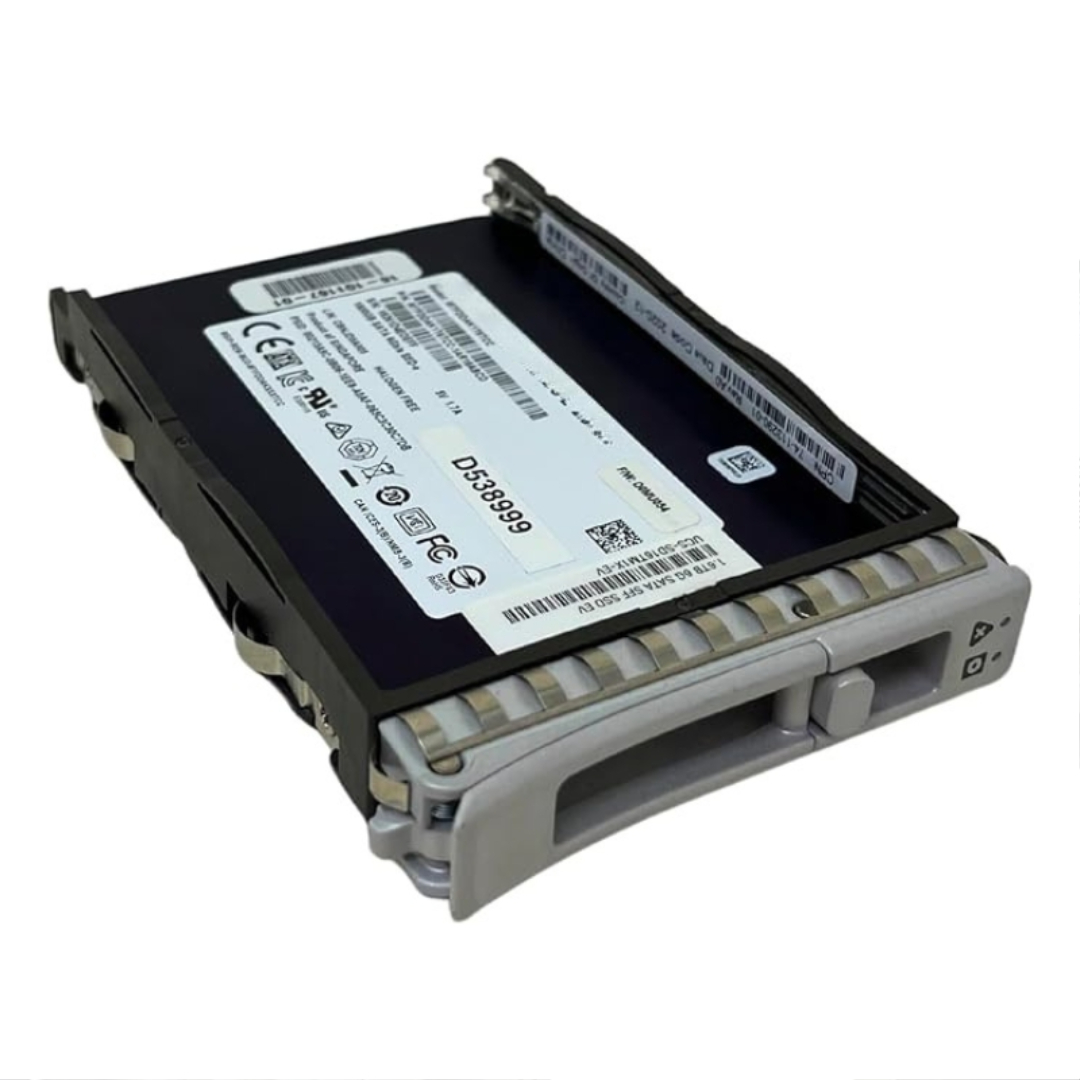


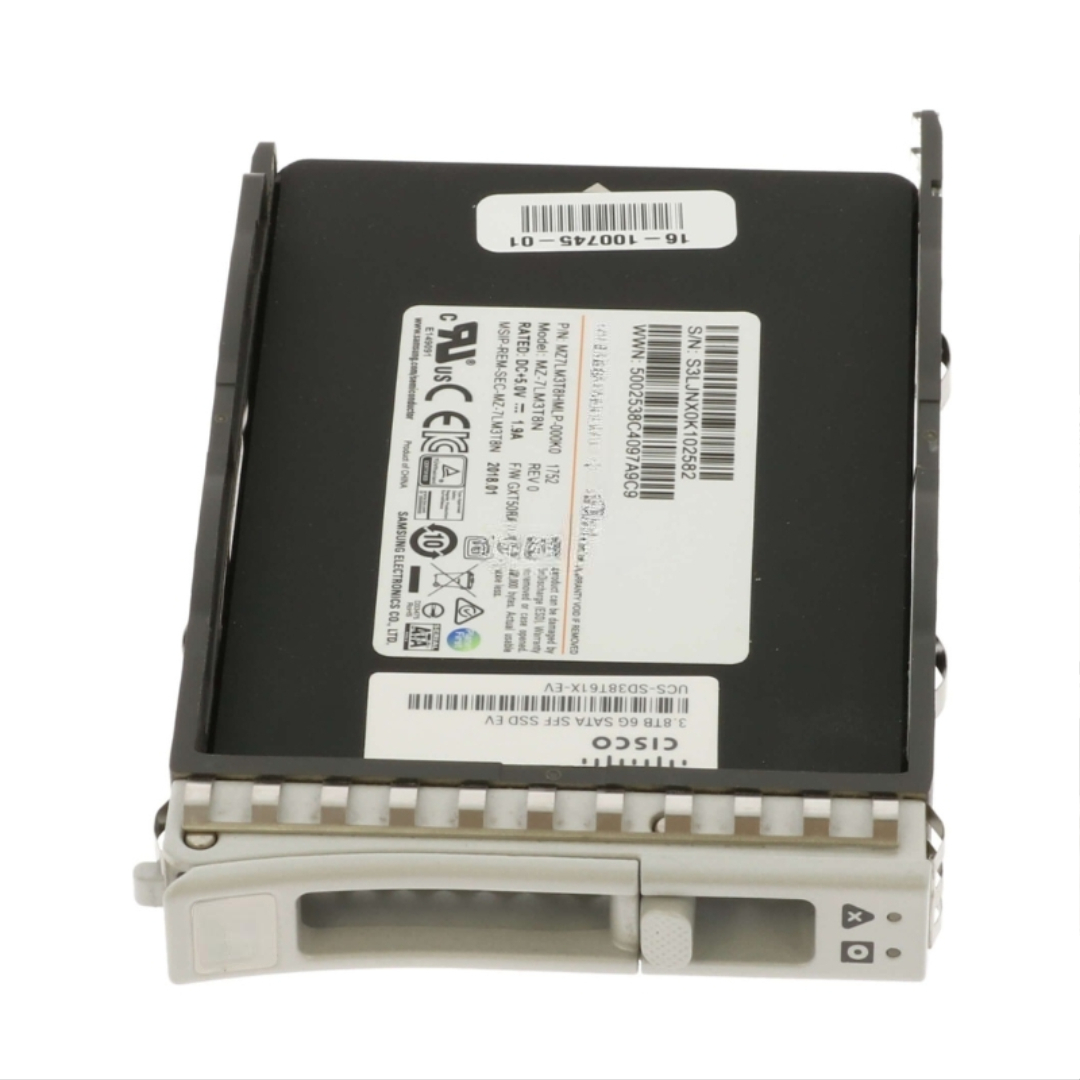
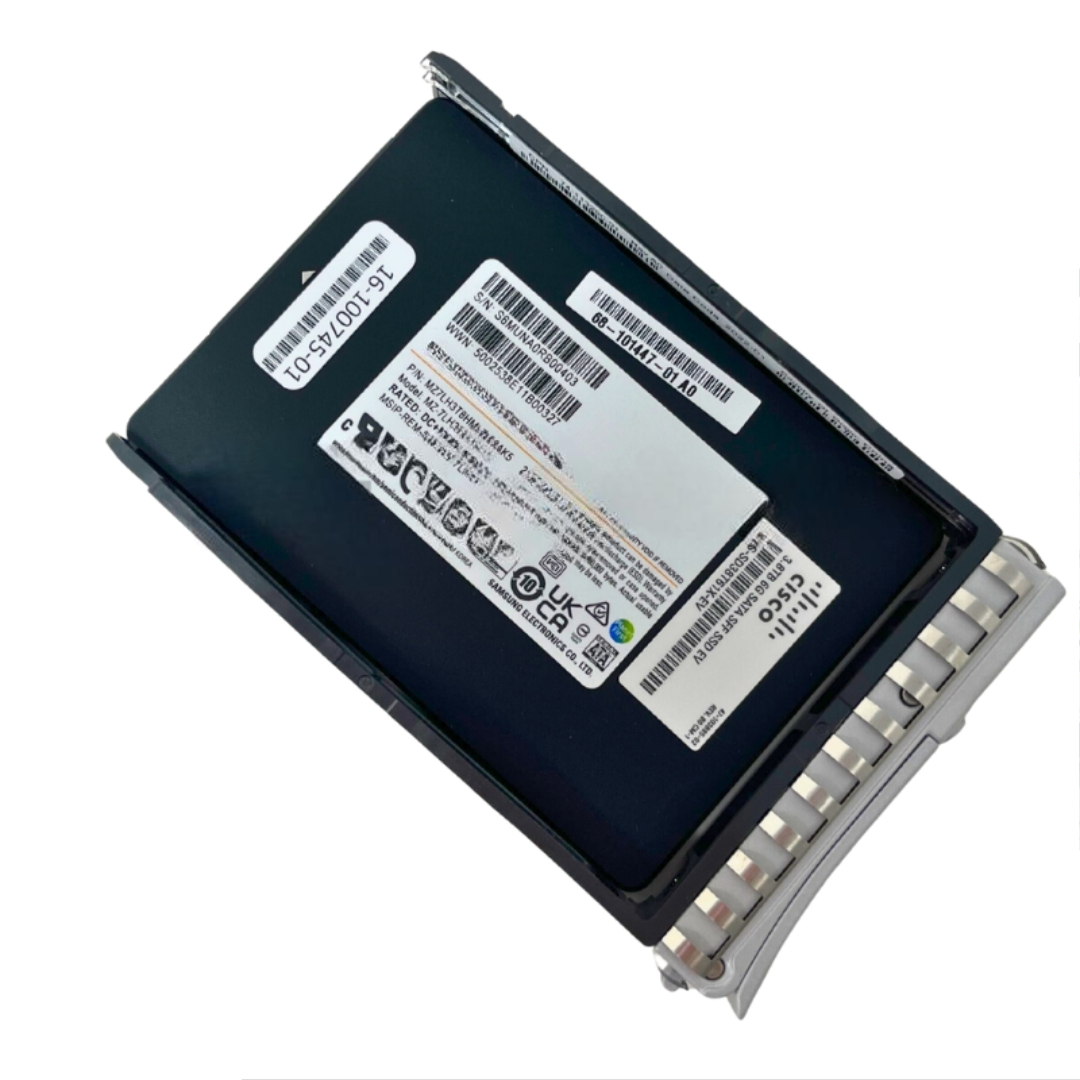
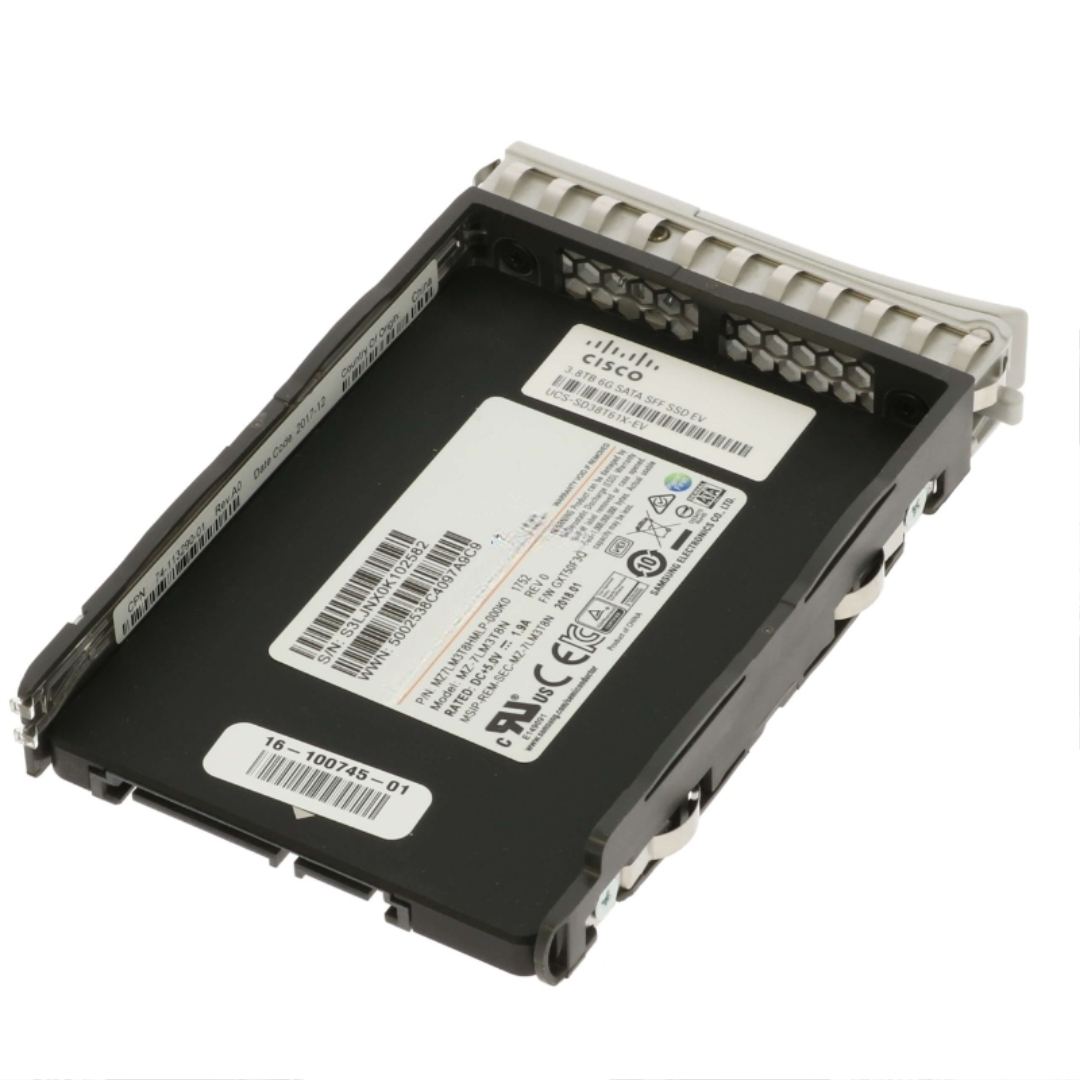
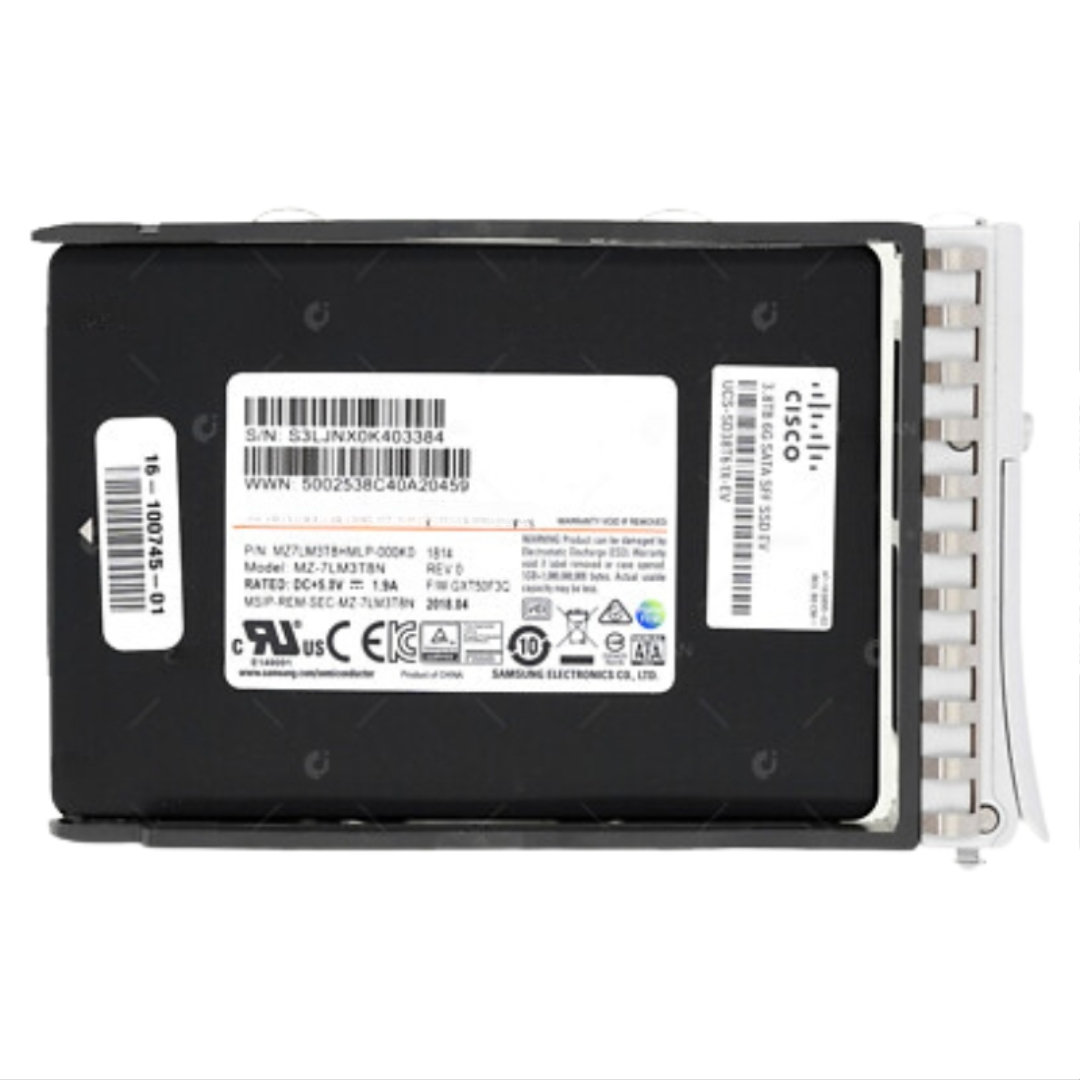
Cisco UCS-SD38TB121X-EV Enterprise Value Hot Swap 3.8TB SSD MLC SAS 12GBPS SFF. Excellent Refurbished with 1 year replacement warranty
Discover the Cisco UCS-SD38TB121X-EV, a high-performance 3.8TB hot-swap SAS solid-state drive built for enterprise servers. Engineered for demanding read-intensive workloads, this 2.5-inch SFF MLC SSD combines reliability, rapid data throughput, and easy serviceability.
Ideal for data center servers and virtualization platforms that require dependable, low-latency storage — especially read-heavy applications and large scale server deployments.
Certified or commonly used with the following Cisco rack and blade systems:
Cisco UCS Enterprise Value SAS SSDs represent a critical category within data center storage infrastructure, designed to deliver optimal performance, reliability, and value for enterprise workloads. These solid-state drives bridge the gap between cost-sensitive deployments and performance-intensive applications, offering enterprise-grade features without premium pricing. The UCS-SD38TB121X-EV specifically embodies this balance with its 3.8TB capacity, MLC NAND technology, and 12Gb/s SAS interface, making it ideal for organizations seeking to accelerate their storage performance while maintaining budget consciousness.
Within the Cisco UCS storage ecosystem, Enterprise Value SSDs occupy a strategic position between entry-level read-intensive drives and premium performance-optimized models. This positioning addresses the needs of organizations requiring consistent performance for mixed workloads without the expense of write-optimized storage. The category serves as a workhorse solution for virtualized environments, database applications, and general-purpose server storage where both read and write performance matter, but extreme write endurance isn't the primary concern.
The Enterprise Value classification indicates these drives are engineered for workloads with moderate write patterns, typically characterized by read-to-write ratios between 70:30 and 50:50. This makes them suitable for a wide range of enterprise applications including Microsoft Exchange servers, collaborative platforms, virtual desktop infrastructure (VDI), and medium-sized database instances where cost-per-gigabyte and consistent performance are key considerations.
The Cisco UCS-SD38TB121X-EV integrates multiple advanced technologies to deliver enterprise-class storage performance. With a formatted capacity of 3.8TB, this drive utilizes Multi-Level Cell (MLC) NAND flash memory configured to optimize both endurance and performance. The 12Gb/s SAS interface ensures compatibility with modern server architectures while providing sufficient bandwidth for demanding storage operations.
This 3.8TB drive employs the 2.5-inch Small Form Factor (SFF) design, making it compatible with most enterprise server platforms and storage arrays. The SFF specification (2.5-inch) enables high-density configurations, allowing data centers to maximize storage capacity within limited physical space. The 3.8TB capacity point represents a sweet spot for many enterprise applications, providing substantial storage while maintaining performance characteristics that might degrade at higher capacity points in some architectures.
The 12Gb/s SAS (Serial Attached SCSI) interface represents the current generation of SAS technology, delivering significant performance improvements over previous 6Gb/s SAS implementations. This dual-ported interface provides redundant pathways for data, ensuring continuous availability even in the event of a controller failure. The SAS protocol maintains full compatibility with SATA devices while offering enhanced features including expanded command sets, superior error recovery, and improved queueing capabilities.
MLC (Multi-Level Cell) NAND flash technology stores two bits of data per memory cell, striking an optimal balance between cost, performance, and endurance. While not offering the extreme write endurance of SLC (Single-Level Cell) technology, MLC provides significantly better endurance than TLC (Triple-Level Cell) alternatives, making it well-suited for enterprise environments with moderate write requirements. Cisco's implementation includes advanced wear-leveling algorithms and over-provisioning to extend the drive's operational lifespan.
The UCS-SD38TB121X-EV delivers consistent high performance with sequential read speeds exceeding 1,000 MB/s and sequential write speeds typically ranging between 800-900 MB/s. Random performance metrics show impressive results with IOPS (Input/Output Operations Per Second) reaching up to 180,000 for read operations and 60,000 for write operations depending on workload characteristics and queue depth. This performance level ensures responsive application behavior even under substantial load.
Enterprise applications are particularly sensitive to storage latency, and the UCS-SD38TB121X-EV addresses this requirement with consistent low-latency performance. Average read latency typically measures below 120 microseconds, while write latency remains under 50 microseconds for most operations. These low latency figures contribute to improved application responsiveness and reduced transaction times for database and virtualization workloads.
Cisco implements advanced QoS capabilities within these drives to ensure predictable performance across mixed workloads. These features include I/O prioritization, bandwidth management, and latency smoothing algorithms that prevent "noisy neighbor" scenarios in multi-tenant environments. The drive maintains consistent performance profiles even as utilization approaches maximum capacity, thanks to sophisticated garbage collection and background maintenance processes.
With an endurance rating typically expressed in Drive Writes Per Day (DWPD), the Enterprise Value classification indicates these drives can withstand approximately 1-3 full drive writes per day over their warranty period. This endurance level suits them for applications with moderate write patterns while providing sufficient headroom for periodic intensive write operations. The actual endurance varies based on write amplification factors and workload characteristics, but generally provides years of reliable service in typical enterprise environments.
Cisco designs the UCS-SD38TB121X-EV with comprehensive reliability features to meet the demanding availability requirements of enterprise data centers. With a Mean Time Between Failures (MTBF) rating typically exceeding 2 million hours, these drives demonstrate exceptional reliability. Advanced error correction, bad block management, and sophisticated wear-leveling algorithms work together to ensure data integrity and extend the operational lifespan of the drive.
The hot-swap capability represents a critical feature for maintaining system availability. This functionality allows administrators to replace failed drives without powering down the entire system, minimizing service disruption. The UCS-SD38TB121X-EV incorporates both electrical and mechanical design elements to support safe hot-swap operations, including staggered pin connections, proper LED indicators, and robust connector design that withstands repeated insertion and removal cycles.
Multiple layers of data protection safeguard information stored on the UCS-SD38TB121X-EV. These include power-loss protection circuits that prevent data corruption during unexpected power failures, end-to-end data path protection that verifies data integrity throughout the transfer process, and advanced ECC (Error Correcting Code) algorithms that detect and correct multi-bit errors. These features work in concert to deliver the data integrity expected in enterprise storage environments.
The UCS-SD38TB121X-EV excels in virtualized environments where multiple virtual machines contend for storage resources. Its consistent performance profile ensures that I/O-intensive VMs don't negatively impact neighboring workloads. The 3.8TB capacity provides substantial space for VM images, snapshots, and associated data while delivering the random I/O performance necessary for responsive virtual desktop and server infrastructure.
Medium to large database instances benefit significantly from the balanced performance characteristics of these Enterprise Value SSDs. The combination of good read and write performance supports mixed database workloads including OLTP (Online Transaction Processing) and reporting systems. The low latency reduces query response times, while the endurance characteristics accommodate typical database write patterns including transaction logs and index updates.
Enterprise collaboration platforms such as Microsoft SharePoint and messaging systems like Microsoft Exchange represent ideal use cases for these drives. These applications typically exhibit moderate write patterns with bursty characteristics during peak usage periods. The UCS-SD38TB121X-EV provides sufficient performance headroom to handle concurrent user access while maintaining responsive performance during backup and maintenance operations.
Intermediate data processing stages in analytics pipelines benefit from the high sequential throughput and random I/O capabilities of these SSDs. While ultra-high-performance applications might require NVMe storage, many business intelligence workloads find the SAS SSD performance more than adequate at a significantly lower cost point. The drives can efficiently handle data transformation, intermediate result sets, and frequently accessed reference data.
When compared to performance-optimized SSDs within the Cisco portfolio, the Enterprise Value category trades some write performance and endurance for significantly better cost efficiency. Performance-optimized drives typically feature higher DWPD ratings (3-10+), more aggressive performance profiles, and technologies like power-loss protection with larger capacitors. The Enterprise Value classification provides approximately 70-80% of the performance at 50-60% of the cost, representing an excellent value proposition for appropriate workloads.
While NVMe technology offers superior performance with lower latency and higher throughput, SAS SSDs maintain important advantages in certain scenarios. The dual-ported nature of SAS provides inherent high availability, while the longer cable lengths supported by SAS infrastructure offer greater deployment flexibility. For many enterprise workloads, the performance of 12Gb/s SAS SSDs remains sufficient, with the technology offering better cost efficiency and proven reliability in large-scale deployments.
The MLC NAND technology used in the UCS-SD38TB121X-EV provides better endurance and consistent performance compared to TLC (Triple-Level Cell) alternatives. While TLC drives continue to improve and offer compelling cost-per-gigabyte advantages, MLC maintains superiority in write-intensive scenarios and applications requiring consistent performance under varying workload conditions. The choice between these technologies depends on specific workload requirements and total cost of ownership calculations.
The 3.8TB capacity point represents an optimal balance between performance, reliability, and cost efficiency. Higher capacity drives often exhibit performance degradation, particularly for write operations, while lower capacity drives may not provide sufficient storage density for modern applications. The 3.8TB capacity allows organizations to consolidate workloads while maintaining performance characteristics that might be compromised at higher capacity points in similar drive families.


 Contact Us
 Information
 Catalog
 Solid State Drives (SSD)
 Network Switches
 Hard Disk Drives
 HBA & Controllers
 PC & Servers
 PC & Server Memory
 CPU & Processors
 Network Routers
 Power Supplies
 Tape Drives & Libraries
 Network Devices
 Computer & Network Cables