(7% discount is applied at checkout)
Cart is empty
Your go-to destination for cutting-edge server products
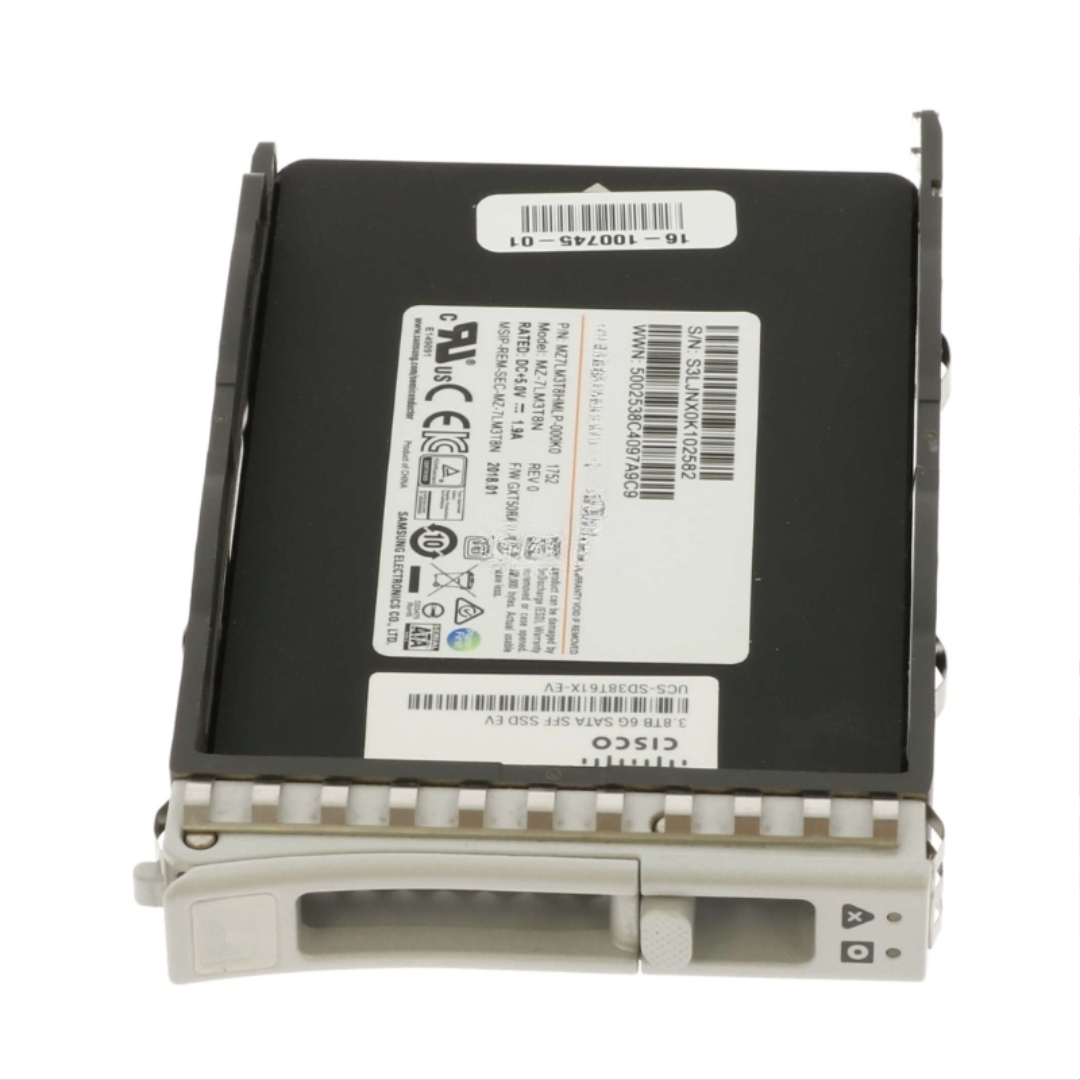


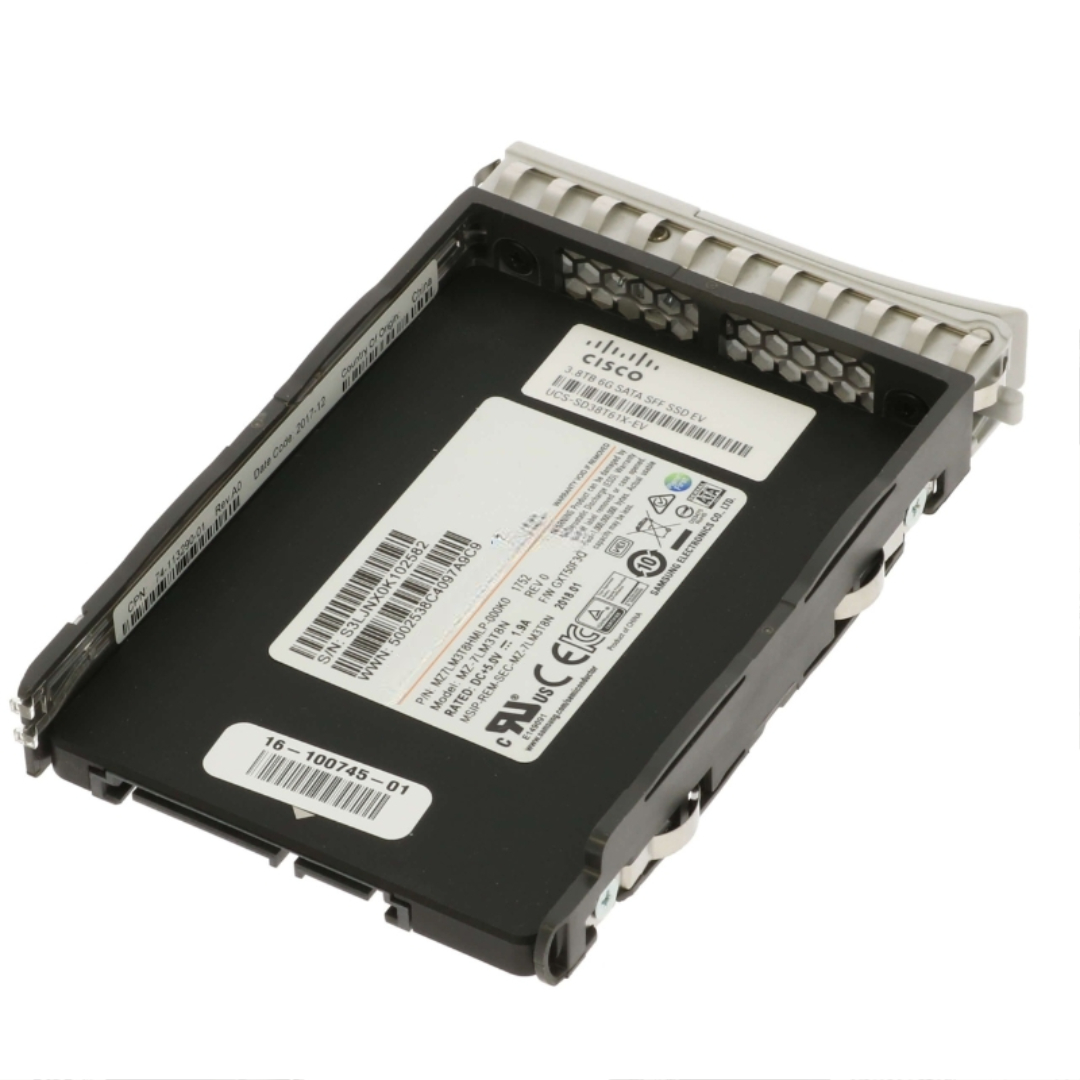
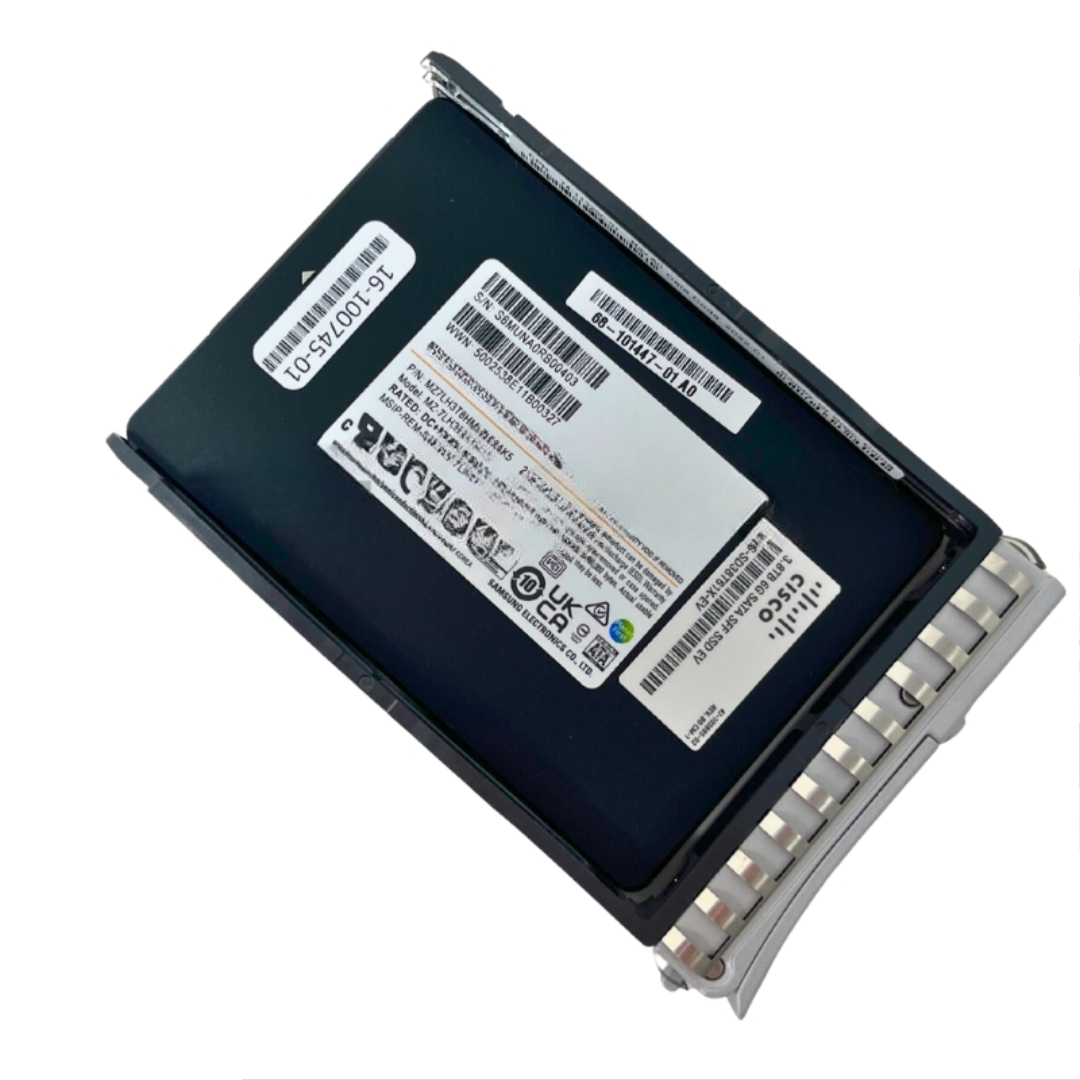
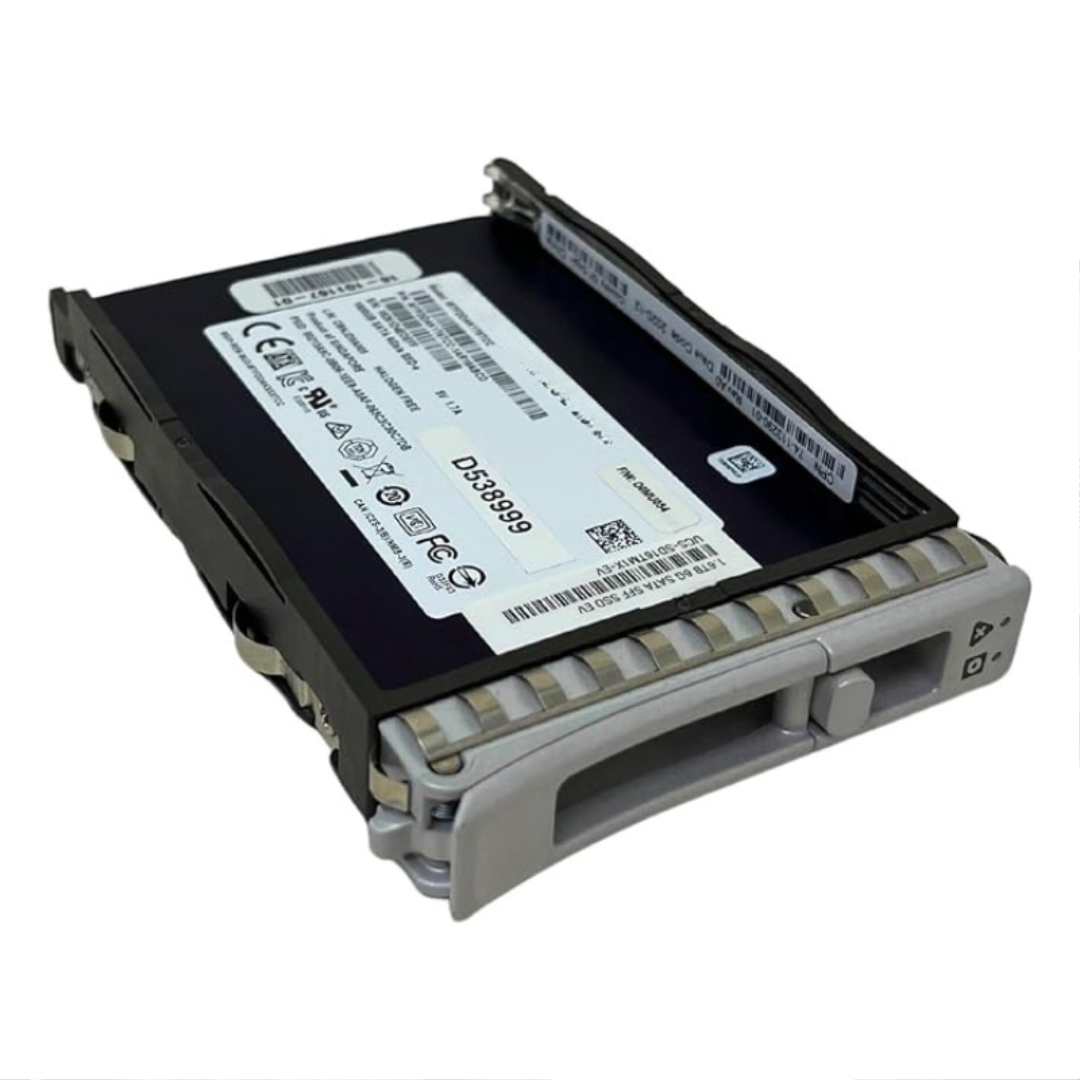
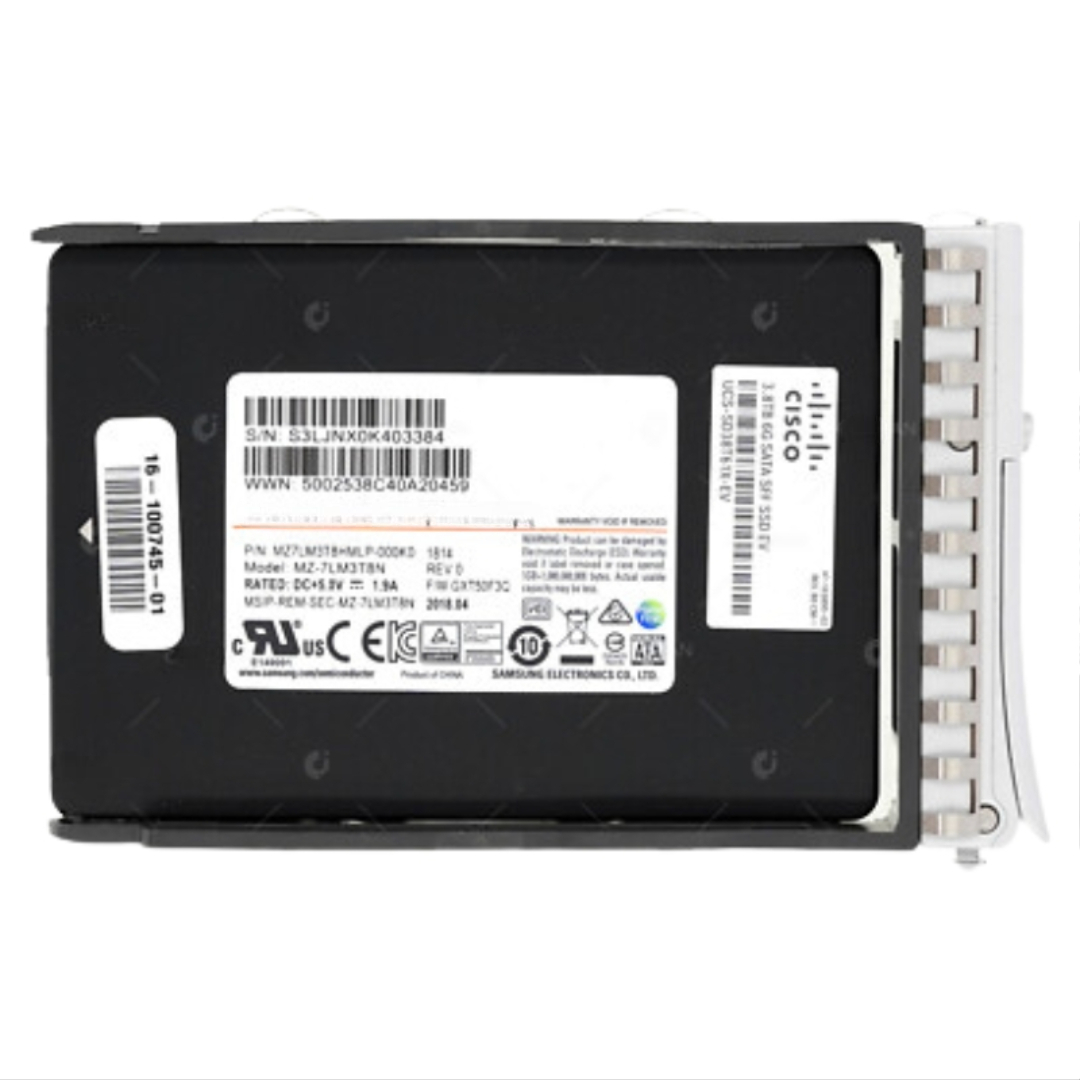
Cisco UCS-SD38TBE1NK9 3.8TB Solid State Drive SATA 6GBPS SFF Enterprise Value. Excellent Refurbished with 1 year replacement warranty
Discover the Cisco UCS-SD38TBE1NK9, a high-capacity 3.8TB enterprise solid-state drive engineered for reliable data storage and accelerated performance. Optimized for datacenters and business-critical systems, this 2.5-inch SFF SATA III drive delivers secure, hot-swappable storage with enterprise-grade durability.
The Cisco 3.8TB SATA SSD boosts application responsiveness and shortens I/O wait times, making it an excellent choice for virtualization, databases, and transactional workloads.
With hardware-based encryption and enterprise protection features, the drive helps meet data security and compliance requirements while simplifying secure storage management.
The UCS-SD38TBE1NK9 is engineered to fit standard 2.5-inch SFF bays and integrates seamlessly with Cisco UCS environments and a wide range of enterprise servers, storage arrays, and hyperconverged platforms.
The Cisco UCS-SD38TBE1NK9 belongs to the Enterprise Value Solid State Drive category, specifically designed for organizations seeking the performance benefits of flash storage without the premium cost associated with higher-end enterprise SSDs. These drives represent a crucial middle ground in storage hierarchies, delivering substantial performance improvements over traditional hard disk drives while maintaining cost-efficiency for specific workload types.
Enterprise Value SSDs occupy a strategic position between entry-level consumer-grade SSDs and high-performance enterprise SSDs. They incorporate enterprise-grade reliability features and endurance specifications that far exceed consumer models, while offering a more accessible price point than mission-critical enterprise SSDs designed for the most demanding workloads.
These drives are engineered for moderate write-intensive applications where consistent performance matters more than peak performance. Typical use cases include read-heavy database operations, virtual desktop infrastructure (VDI), medium-duty application hosting, and warm storage tiers where access frequency is moderate but performance degradation cannot be tolerated.
The Cisco UCS-SD38TBE1NK9 offers 3.8TB of raw storage capacity in a 2.5-inch Small Form Factor (SFF) design. This form factor is specifically engineered for high-density server environments where maximizing storage per rack unit is critical. The SFF design allows for efficient utilization of chassis space in Cisco UCS servers and blades.
Utilizing the SATA 6Gbps interface, this drive provides a balanced approach to storage connectivity. While not offering the peak theoretical speeds of SAS or NVMe interfaces, the SATA 6Gbps specification delivers sufficient bandwidth for many enterprise applications while maintaining broad compatibility with existing server infrastructure and storage controllers.
As an Enterprise Value SSD, the UCS-SD38TBE1NK9 is rated for specific write endurance measured in Drive Writes Per Day (DWPD). This specification indicates how many times the entire drive capacity can be written to per day over the warranty period, typically ranging from 0.5 to 1 DWPD for this category, making it suitable for moderate write workloads.
The drive employs enterprise-grade Multi-Level Cell (MLC) or Triple-Level Cell (TLC) NAND flash technology optimized for enterprise workloads. This technology balances cost, performance, and endurance characteristics to meet the demands of value-oriented enterprise storage applications while maintaining data integrity and reliability.
The UCS-SD38TBE1NK9 delivers consistent sequential read performance typically ranging between 500-550 MB/s, approaching the theoretical maximum of the SATA 6Gbps interface. Sequential write performance generally ranges from 450-500 MB/s, providing balanced performance for data transfer operations, backup applications, and large file processing workloads.
For random operations, which are critical for database and virtualization workloads, this drive offers substantial performance improvements over traditional hard drives. Random read performance typically reaches 70,000-90,000 IOPS (Input/Output Operations Per Second), while random write performance generally achieves 15,000-25,000 IOPS, depending on queue depth and block size.
Enterprise Value SSDs maintain consistently low latency compared to mechanical drives, with typical read latencies under 150 microseconds and write latencies under 250 microseconds. Quality of Service (QoS) metrics ensure predictable performance under varying workload conditions, making these drives suitable for multi-tenant environments and consolidated workloads.
Unlike consumer-grade SSDs that may throttle performance under sustained workloads, the UCS-SD38TBE1NK9 maintains consistent performance levels during extended operation. Advanced wear-leveling algorithms, over-provisioning, and sophisticated flash management techniques prevent performance degradation over the drive's operational lifetime.
The drive incorporates advanced error correction code (ECC) mechanisms capable of correcting multiple bit errors per page. This sophisticated ECC implementation ensures data integrity even as NAND flash cells approach their endurance limits, providing an essential layer of protection against data corruption in enterprise environments.
Enterprise Value SSDs include power loss protection circuits that ensure data in transit is safely written to non-volatile memory during unexpected power failures. This capability prevents data corruption and maintains filesystem integrity, a critical feature for business-critical applications where data consistency is paramount.
Advanced wear-leveling algorithms distribute write operations evenly across all available NAND flash blocks, preventing premature wear on frequently written areas. Dynamic and static wear leveling work in concert to maximize drive lifespan while maintaining consistent performance throughout the drive's operational life.
The UCS-SD38TBE1NK9 implements end-to-end data protection, where checksums are maintained from the host interface through the drive's internal data path to the NAND flash media. This comprehensive approach detects and corrects data corruption that might occur during internal transfer operations within the drive itself.
For virtualized environments, the UCS-SD38TBE1NK9 provides an excellent balance of performance and capacity for host boot images, virtual machine storage, and VDI workloads. The consistent low latency significantly improves virtual machine responsiveness compared to traditional hard drives, while the capacity points support reasonable VM density per drive.
Medium-duty database applications, including development instances, reporting databases, and departmental applications, benefit substantially from the performance characteristics of Enterprise Value SSDs. The random read performance accelerates query operations, while the write endurance accommodates typical transaction volumes for these workload types.
As organizations implement tiered storage strategies, the 3.8TB capacity point makes this drive suitable for warm storage tiers where data remains actively referenced but doesn't require the highest performance tier. This includes compliance archives, historical data sets, and backup repositories where access frequency is moderate but performance remains important.
In hyperconverged infrastructure deployments, Enterprise Value SSDs can serve as capacity tiers alongside higher-performance caching tiers. This configuration provides an optimal balance of performance and storage economics while maintaining the all-flash performance characteristics that modern applications increasingly require.
Compared to entry-level or consumer-grade SSDs, the UCS-SD38TBE1NK9 offers significantly higher endurance, power-loss protection, consistent performance under sustained workloads, and comprehensive data protection features. These differences make consumer SSDs unsuitable for enterprise applications where data integrity and predictable performance are required.
While Performance-tier SSDs offer higher IOPS, lower latency, and greater endurance, these advantages come at a substantially higher cost per gigabyte. Enterprise Value SSDs provide 70-80% of the performance at 40-60% of the cost, representing an optimal price-to-performance ratio for many enterprise workloads.
The SATA interface provides cost advantages and broader compatibility compared to SAS interfaces, while SAS offers dual-port redundancy and slightly higher queue depths. For many applications, the practical performance difference is minimal, making SATA-based Enterprise Value SSDs an economically attractive option.
The drive employs a sophisticated multi-core controller architecture that balances computational resources between host interface management, flash translation layer operations, error correction, and wear leveling algorithms. This balanced approach ensures consistent performance across varying workload types without resource contention.
The Flash Translation Layer (FTL) serves as the abstraction layer between the host's logical block addressing and the physical NAND flash organization. Enterprise Value SSDs implement advanced FTL algorithms that optimize write amplification, garbage collection efficiency, and read disturb management, directly impacting both performance and endurance.
Enterprise SSDs include significant over-provisioning—additional NAND flash capacity beyond the advertised user capacity. This over-provisioning improves write performance, reduces write amplification, and extends drive endurance by providing spare area for garbage collection and wear leveling operations.


 Contact Us
 Information
 Catalog
 Solid State Drives (SSD)
 Network Switches
 Hard Disk Drives
 HBA & Controllers
 PC & Servers
 PC & Server Memory
 CPU & Processors
 Network Routers
 Power Supplies
 Tape Drives & Libraries
 Network Devices
 Computer & Network Cables