(7% discount is applied at checkout)
Cart is empty
Your go-to destination for cutting-edge server products
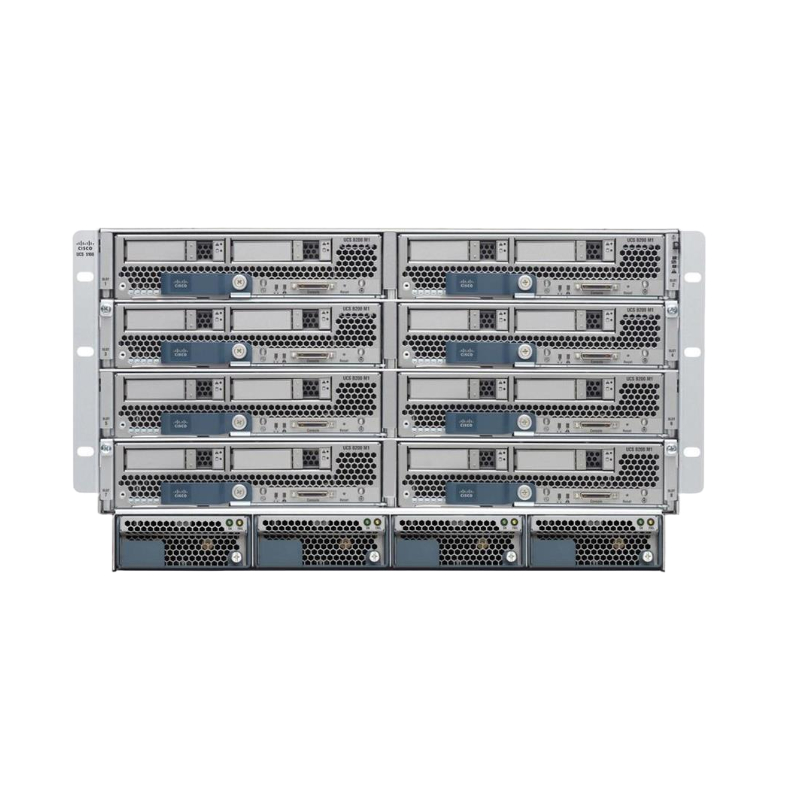


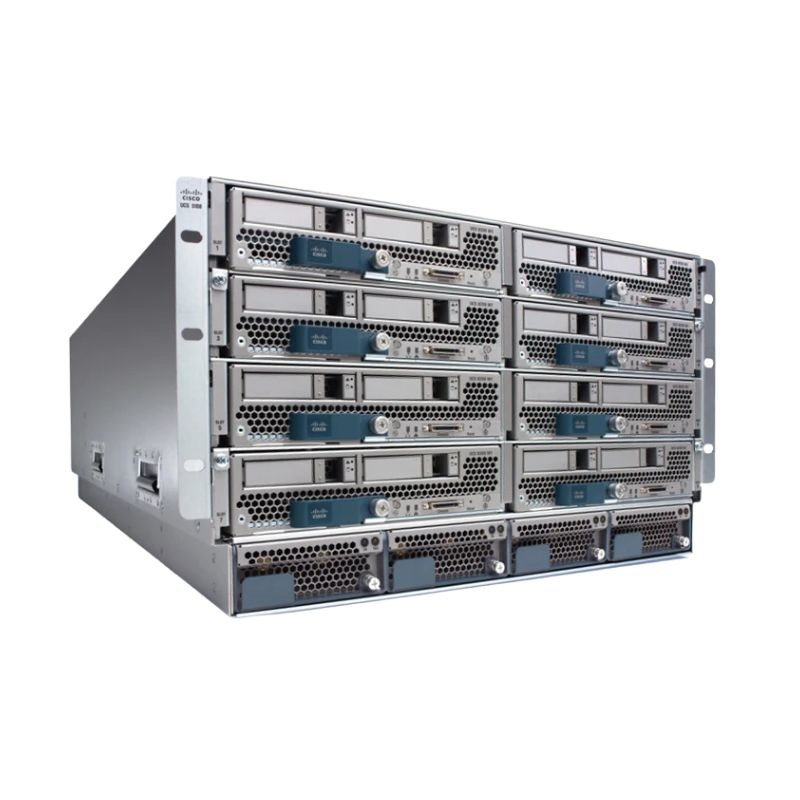
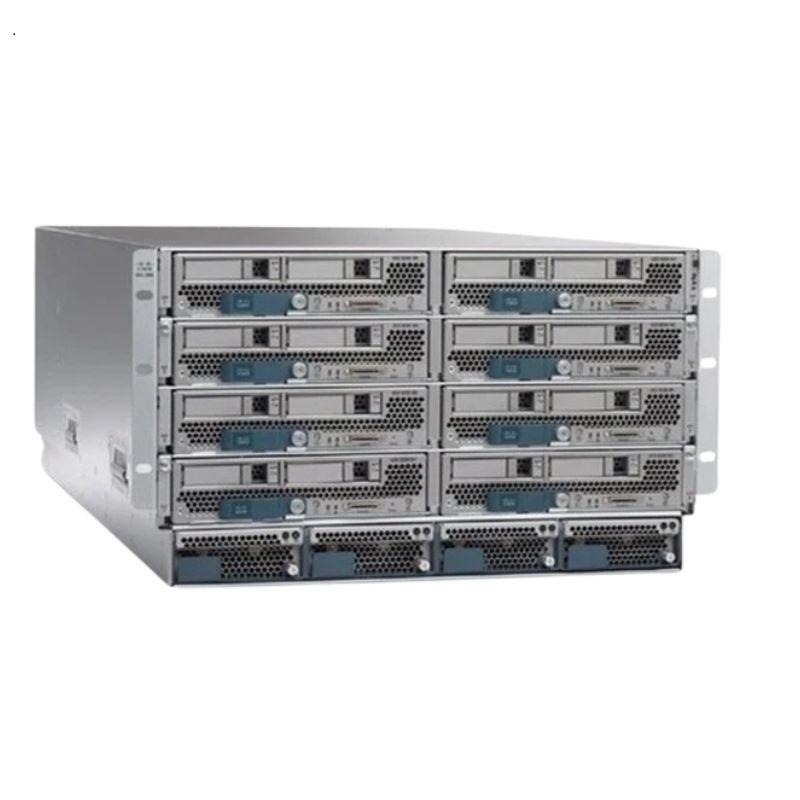
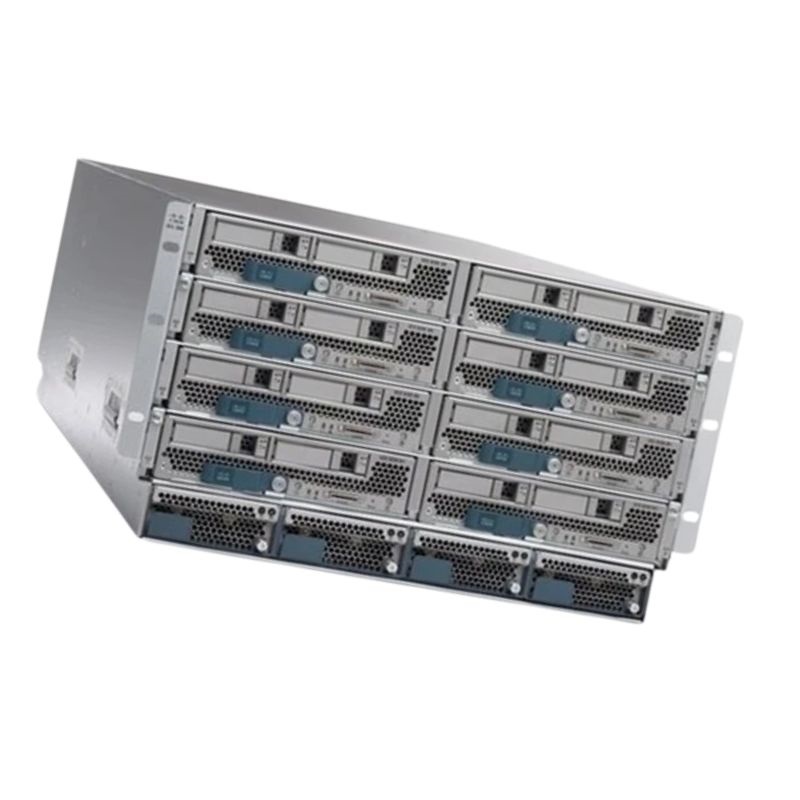
Cisco UCS-SP-5108-AC UCS SP Select 5108 AC2 Chassis with 2208 IO 4x SFP Cable 3m. Excellent Refurbished with 1 year replacement warranty
The Cisco UCS-SP-5108-AC is a robust and enterprise-grade unified computing system chassis designed to deliver scalable performance, enhanced network integration, and optimized data center efficiency. Built as part of Cisco’s UCS (Unified Computing System) portfolio, this chassis supports demanding workloads while maintaining flexibility for modern IT infrastructures.
The Cisco UCS-SP-5108-AC UCS SP Select 5108 AC2 Chassis with 2208 I/O and 4x SFP Cable 3m represents a high-density unified computing chassis engineered for modern enterprise data center environments requiring scalable compute consolidation, flexible network integration, and simplified infrastructure management. Developed within the unified computing ecosystem of this chassis is part of the Cisco UCS blade server architecture designed to reduce operational complexity while increasing performance efficiency and virtualization readiness across mission-critical workloads.
This chassis platform is widely recognized for its modular design, enabling organizations to deploy multiple blade servers within a single enclosure while maintaining centralized power, cooling, and network connectivity. The UCS 5108 AC2 chassis supports advanced I/O modules such as the Cisco 2208 series, which enhances fabric connectivity and improves bandwidth distribution across compute nodes. The inclusion of 4x SFP cables (3 meters) ensures optimized uplink connectivity between the chassis and upstream network fabric interconnects.
The Cisco UCS 5108 AC2 chassis is engineered to support high-density blade computing environments where space optimization and thermal efficiency are essential. The enclosure design allows multiple server blades to coexist within a single rack unit footprint, significantly reducing data center space requirements while increasing compute density per rack. This architectural approach aligns with enterprise demands for scalable virtualization platforms and cloud-ready infrastructure deployment.
A defining characteristic of the UCS-SP-5108-AC chassis is its shared power and cooling architecture. The system leverages redundant AC power modules to ensure uninterrupted performance in mission-critical deployments. Intelligent cooling fans dynamically adjust airflow based on system temperature and workload intensity, enabling energy-efficient operation while maintaining optimal thermal thresholds for blade components.
The chassis integrates a redundant power subsystem that distributes electrical load evenly across all installed blade servers. This design enhances system reliability and minimizes downtime risks associated with power supply failures. Enterprises benefit from improved fault tolerance and continuous uptime even under high computational demand scenarios.
The thermal design of the chassis supports adaptive fan speed control, ensuring that airflow is dynamically adjusted according to internal temperature sensors. This reduces unnecessary power consumption while maintaining consistent cooling performance across densely populated blade configurations.
The inclusion of the Cisco 2208 I/O module within the UCS-SP-5108-AC chassis enhances network throughput and simplifies data traffic management between blade servers and upstream network fabrics. The I/O module functions as a central aggregation point for internal blade communications, reducing the need for multiple discrete network adapters per server blade.
Cisco UCS architecture utilizes fabric extender technology to streamline network operations. The 2208 I/O module operates as an extension of the upstream fabric interconnect, ensuring consistent policy enforcement, reduced latency, and simplified network configuration. This approach eliminates traditional network complexity by centralizing management at the fabric layer.
By leveraging high-speed internal switching capabilities, the 2208 I/O module minimizes latency between compute nodes and external networks. This is particularly beneficial for workloads requiring real-time processing, such as financial applications, virtualization clusters, and cloud-native environments.
The architecture ensures efficient bandwidth allocation across blade servers, dynamically distributing network resources based on workload demand. This improves overall system performance and reduces bottlenecks in high-throughput environments.
The inclusion of 4x SFP (Small Form-Factor Pluggable) cables with a 3-meter length enhances the chassis’ ability to connect to external network switching infrastructure. These optical cables are designed to support high-speed data transmission, ensuring stable and reliable connectivity between the UCS chassis and upstream network devices.
The 3-meter SFP cable configuration allows flexible rack placement and structured cabling design within enterprise environments. This flexibility is essential for data centers that require optimized cable management, reduced signal degradation, and efficient physical layout planning.
SFP-based connectivity ensures high signal integrity even in dense networking environments. The optical transmission medium reduces electromagnetic interference, resulting in stable and predictable data transfer performance across enterprise workloads.
The multi-port SFP configuration allows organizations to scale network capacity as computing demand increases. Additional uplinks can be integrated seamlessly without requiring major infrastructure redesign.
The Cisco UCS-SP-5108-AC chassis is widely deployed in virtualization environments where multiple virtual machines operate across blade server nodes. Its architecture is optimized for hypervisor platforms, enabling efficient resource allocation and workload balancing across physical and virtual layers.
Organizations implementing private cloud infrastructures benefit from the chassis’ ability to centralize compute, storage, and networking resources. This consolidation reduces operational overhead while increasing agility in workload provisioning and resource scaling.
The chassis supports multi-tenant environments where different business units or applications share physical infrastructure while maintaining logical isolation. This improves resource utilization and enhances operational efficiency in enterprise data centers.
Redundant architecture and distributed computing capabilities ensure that workloads can be dynamically migrated or redistributed in case of hardware failures, maintaining service continuity.
The UCS 5108 chassis supports multiple blade server configurations, enabling organizations to scale compute resources without replacing the underlying infrastructure. This modular approach significantly reduces capital expenditure and simplifies long-term infrastructure planning.
As enterprise workloads grow, additional chassis units can be integrated into existing UCS domains, enabling linear scalability. This ensures predictable performance scaling without introducing architectural complexity.
Cisco UCS Manager allows administrators to manage multiple chassis instances under a single unified domain, streamlining provisioning, monitoring, and lifecycle management across distributed infrastructure.
New blade servers and I/O modules can be added without disrupting ongoing operations, ensuring continuous service availability and minimal downtime during expansion processes.
The Cisco UCS platform integrates centralized management capabilities through UCS Manager, allowing administrators to configure, monitor, and maintain chassis components from a single interface. This reduces administrative overhead and improves operational consistency across data center environments.
Infrastructure policies can be defined centrally and applied automatically across blade servers within the chassis. This ensures standardized configuration, improves compliance adherence, and reduces manual configuration errors.
New server deployments within the chassis can be automated using predefined service profiles, enabling rapid provisioning of compute resources for enterprise applications.
The chassis architecture is designed to optimize compute resource distribution across multiple blade servers. This ensures balanced processing loads and reduces performance bottlenecks in high-demand environments.
The integration of advanced I/O modules and SFP connectivity ensures efficient data movement between compute nodes and external networks, reducing latency and increasing throughput.
The system supports acceleration for virtualization workloads, database processing, and enterprise application hosting, making it suitable for diverse IT environments.
Dynamic resource allocation ensures that CPU, memory, and network bandwidth are efficiently distributed based on real-time workload demands.


 Contact Us
 Information
 Catalog
 Solid State Drives (SSD)
 Network Switches
 Hard Disk Drives
 HBA & Controllers
 PC & Servers
 PC & Server Memory
 CPU & Processors
 Network Routers
 Power Supplies
 Tape Drives & Libraries
 Network Devices
 Computer & Network Cables