(7% discount is applied at checkout)
Cart is empty
Your go-to destination for cutting-edge server products
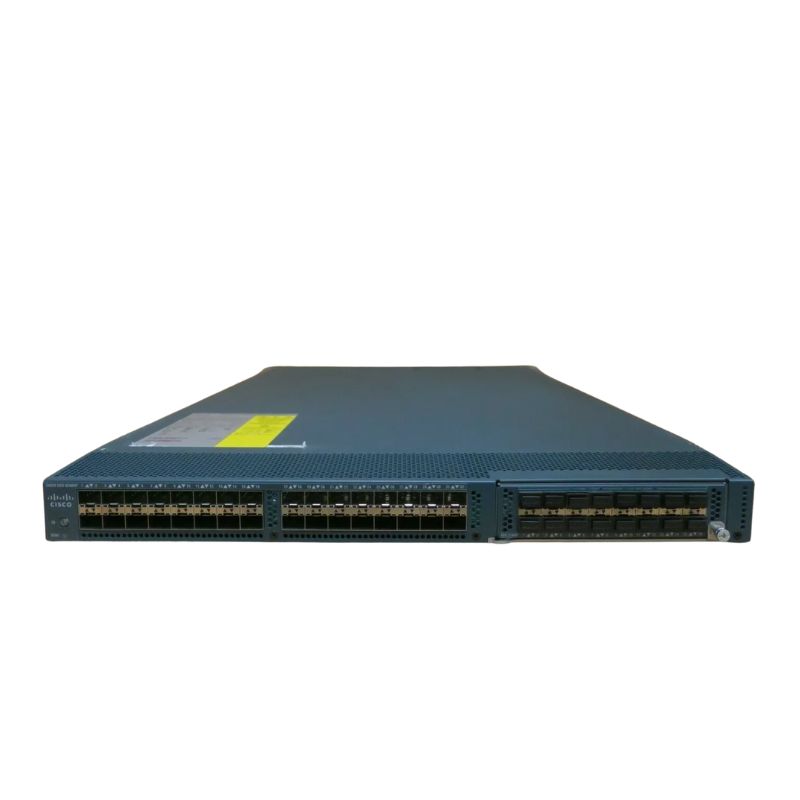


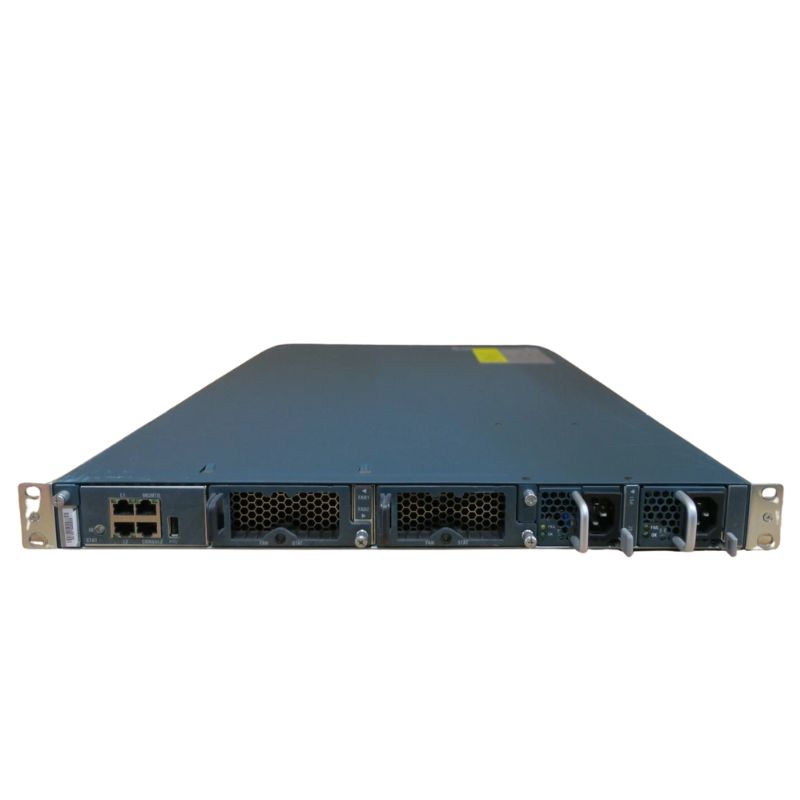
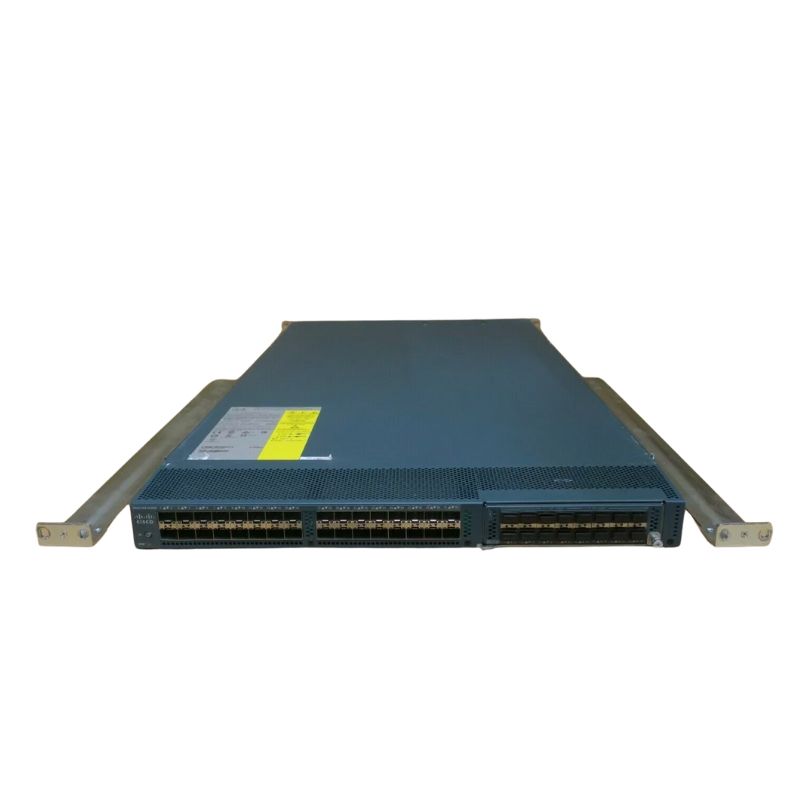
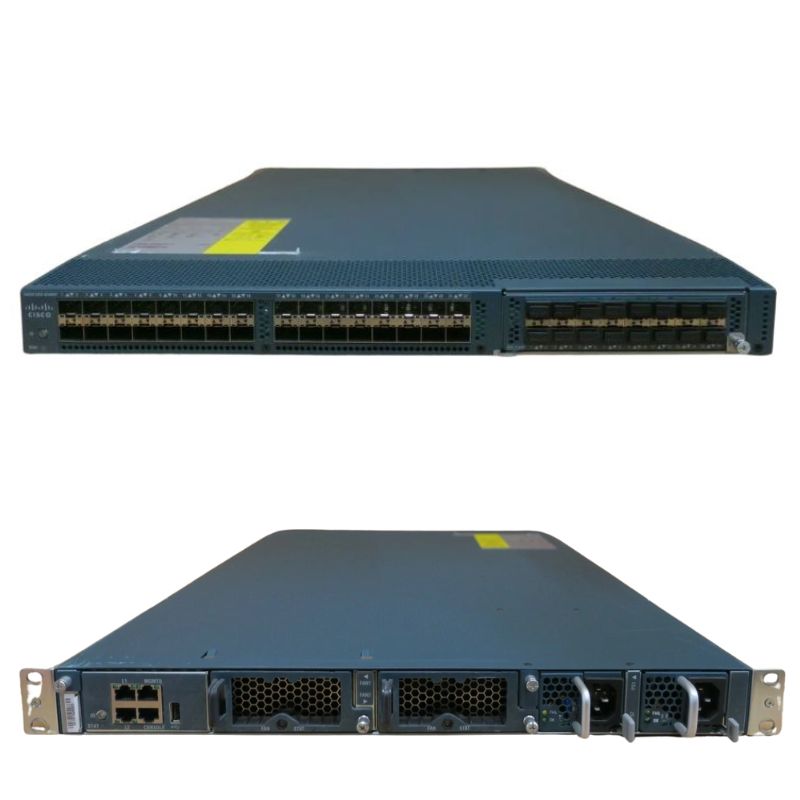
Cisco UCS-SP7-INFR-FI48 UCS 6248UP 48 Ports Interconnect Managed Switch. Excellent Refurbished with 1 year replacement warranty
The Cisco UCS-SP7-INFR-FI48 is a high-performance UCS 6248UP Fabric Interconnect designed to deliver reliable, scalable, and enterprise-grade network connectivity. This managed switch is optimized for modern data center environments, ensuring efficient traffic handling, simplified management, and robust infrastructure support.
This Cisco managed switch is engineered with a dense port layout to support high-speed connectivity while maintaining a compact physical footprint suitable for enterprise racks.
Designed for easy administration, this Cisco UCS switch provides dedicated management access to simplify monitoring and configuration tasks.
Built for demanding workloads, the Cisco UCS 6248UP Fabric Interconnect ensures seamless data transfer with exceptional switching performance.
The UCS-SP7-INFR-FI48 is not merely a switch; it is the fabric extender controller and unified management point for an entire UCS domain. Its architecture eliminates the traditional network access layer by integrating I/O resources directly into the chassis through Fabric Extenders (FEX), such as the 2200 Series, creating a lossless, low-latency, flat network. This revolutionary design collapses multiple tiers of complexity, reducing points of management, power/cooling requirements, and cabling by up to 90% compared to legacy architectures.
The system's intelligence is derived from the synergy of its hardware and the embedded UCS Manager software.
Each of the 48 ports on the 6248UP is "unified," meaning it can be configured individually as either a 10 Gigabit Ethernet port for IP traffic or a Fibre Channel over Ethernet (FCoE) port for storage traffic. This flexibility allows data centers to seamlessly integrate with existing IP networks and SANs (via FCoE NPV mode to upstream MDS or Nexus switches) without requiring separate, dedicated hardware for each traffic type.
UCS Manager, residing on the fabric interconnects, provides a single pane of glass for all system configuration, provisioning, and troubleshooting. Its service profile technology abstracts server identity—network settings, firmware, BIOS settings, and SAN identities—from the physical hardware. This enables stateless computing, where any server can assume any identity in minutes, revolutionizing provisioning, recovery, and lifecycle management.
The UCS-SP7-INFR-FI48 is always deployed in redundant, active-active pairs to ensure no single point of failure for network connectivity or management. This paired configuration is fundamental to the system's resilience.
The fabric interconnect operates primarily in two distinct modes, each suited for different network integration strategies.
This is the default and most common mode. In end-host mode, the fabric interconnect appears as a host to the upstream network switches. It uses a pair of distributed, active-active virtual port channels (vPCs) to the core network, providing a loop-free, highly available topology. The fabric interconnect learns the MAC and WWN addresses of the servers behind it and advertises them to the upstream switches, but it does not participate in spanning-tree protocols. This simplifies network operations, contains failure domains, and provides deterministic traffic paths.
In this mode, the fabric interconnect operates as a standard Layer 2 and Layer 3 switch, running spanning tree and learning all MAC addresses from both the server and network sides. This mode is less common and typically used for specific integration scenarios with storage arrays or non-Ethernet networks, as it reintroduces some of the complexities that UCS aims to eliminate.
Each UCS blade server or rack server has dual fabric connections—one to Fabric Interconnect A and one to Fabric Interconnect B. In the event of a complete path failure (link, adapter, or entire fabric interconnect), traffic automatically and seamlessly fails over to the surviving path with no disruption to applications. This is managed at the vNIC/vHBA level within the service profile.
The Cisco UCS-SP7-INFR-FI48 is packed with features that enhance performance, security, and operational agility for modern data centers.
By implementing Data Center Bridging (DCB) standards—Priority Flow Control (PFC), Enhanced Transmission Selection (ETS), and Data Center Bridging Exchange (DCBX)—the 6248UP creates a true lossless Ethernet fabric. This is critical for converging storage (FCoE) and high-performance computing traffic alongside standard IP data, as dropped frames are unacceptable for these workloads.
The fabric interconnect is deeply integrated with VMware, Microsoft Hyper-V, and other hypervisors.
This groundbreaking feature, also known as Cisco Adapter-FEX, extends the UCS fabric directly into the hypervisor. It bypasses the virtual switch (vSwitch) to give each virtual machine its own unique virtual NIC (vNIC) that is presented and managed directly by the UCS fabric interconnect. This provides per-VM policy enforcement, visibility, QoS, and security, simplifying network management for virtualized environments.
The 6248UP supports extensive segmentation for multi-tenant or multi-application environments. It can handle up to 4000 VLANs and 256 Virtual SANs (VSANs for FC/FCoE traffic), allowing clean isolation of development, production, DMZ, and other network segments.
Centralized management inherently improves security posture.
Role-Based Access Control (RBAC): Integrates with Active Directory, TACACS+, and RADIUS to provide fine-grained administrative control.
Certificate Management: Built-in support for PKI for secure communication between components.
Port Security and ACLs: Controls MAC address learning and applies access control lists at the fabric level.
Comprehensive Telemetry: Detailed statistics, SPAN, and Ethanalyzer tools for deep visibility and troubleshooting.
The Cisco UCS 6248UP 48-Port Fabric Interconnect is designed for specific, mission-critical environments.
Organizations building private clouds require agility, density, and automated provisioning. The 6248UP, with its service profiles and centralized management, allows IT to deliver infrastructure-as-a-service (IaaS) by enabling rapid, error-free deployment and reprovisioning of server resources from a template-driven model.
VDI deployments demand high-density server resources and predictable, high-performance network I/O for bursty workloads. The UCS system with the 6248UP provides a scalable, easily managed platform for hosting hundreds or thousands of virtual desktops, with the ability to quickly scale compute and network resources in lockstep.
For running large-scale SAP, Oracle, Microsoft SQL Server, and other tier-1 applications, the deterministic performance, low latency, and high availability of the UCS fabric are paramount. The lossless fabric ensures storage traffic (via FCoE) is delivered reliably alongside application traffic.
UCS service profiles can be easily replicated across geographically dispersed UCS domains. The 6248UP's high-performance links can be used with technologies like OTV or ACI to stretch Layer 2 domains for seamless workload mobility and disaster recovery orchestration.
Understanding where the 6248UP fits relative to other Fabric Interconnects is crucial for selection.
The 6296UP offers 96 unified ports, doubling the port density and total system scalability (up to 40 chassis). The 6248UP, with 48 ports, is the ideal choice for mid-sized to large deployments, while the 6296UP targets the largest-scale implementations.
The newer 6300 Series (e.g., 6332-16UP) offers increased port speeds (40G/100G uplinks), higher scalability, and support for next-generation UCS hardware like the M5/M6 generation blades and racks. The 6200 Series, including the 6248UP, remains a powerful, cost-effective platform for supporting B-series M2-M4 and C-series M2-M4 servers, and is extensively deployed in production environments worldwide.


 Contact Us
 Information
 Catalog
 Solid State Drives (SSD)
 Network Switches
 Hard Disk Drives
 HBA & Controllers
 PC & Servers
 PC & Server Memory
 CPU & Processors
 Network Routers
 Power Supplies
 Tape Drives & Libraries
 Network Devices
 Computer & Network Cables