(7% discount is applied at checkout)
Cart is empty
Your go-to destination for cutting-edge server products
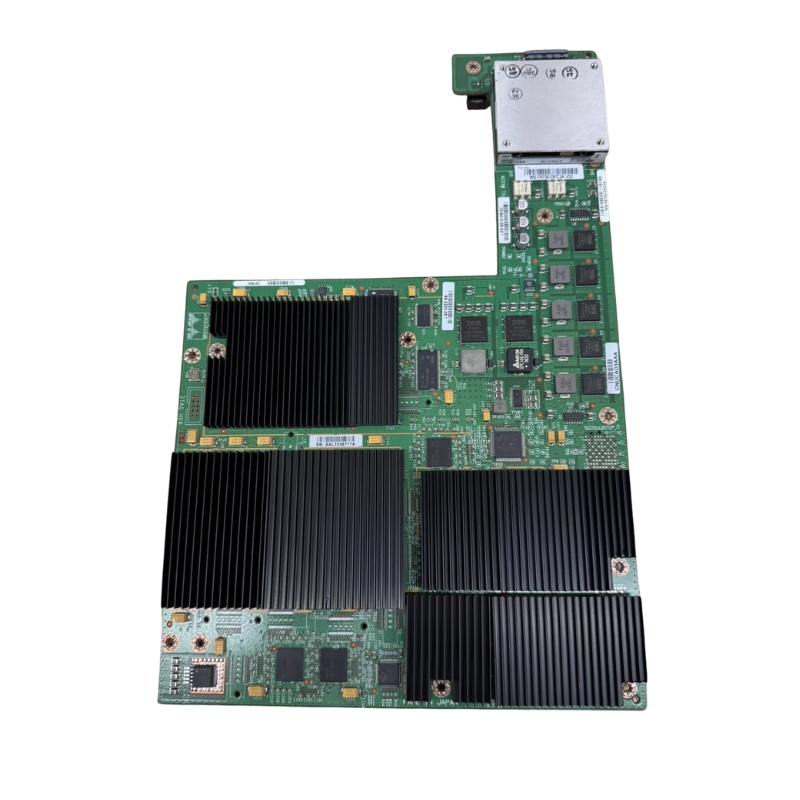


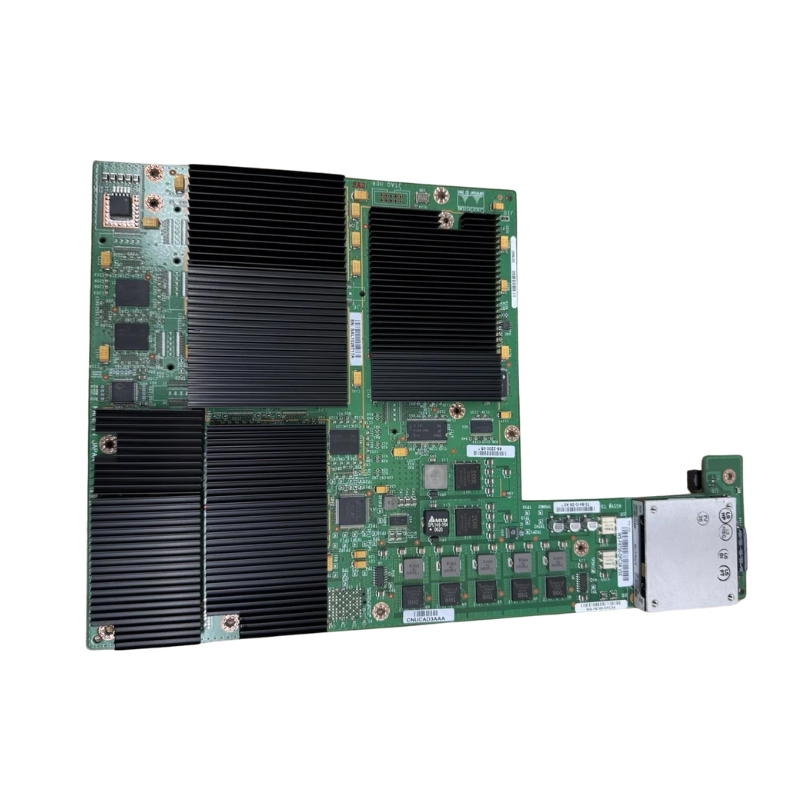
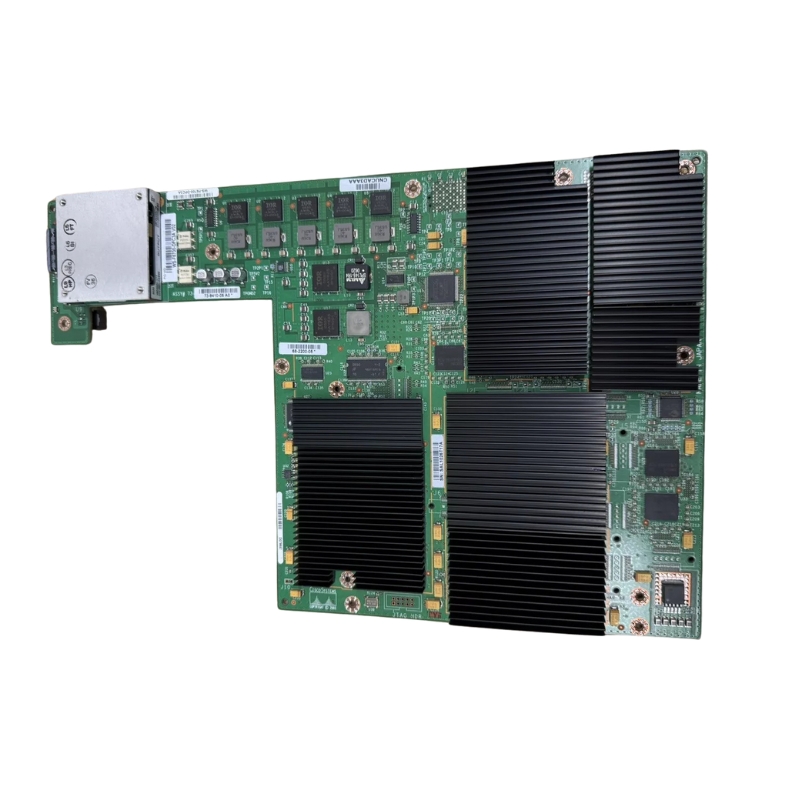
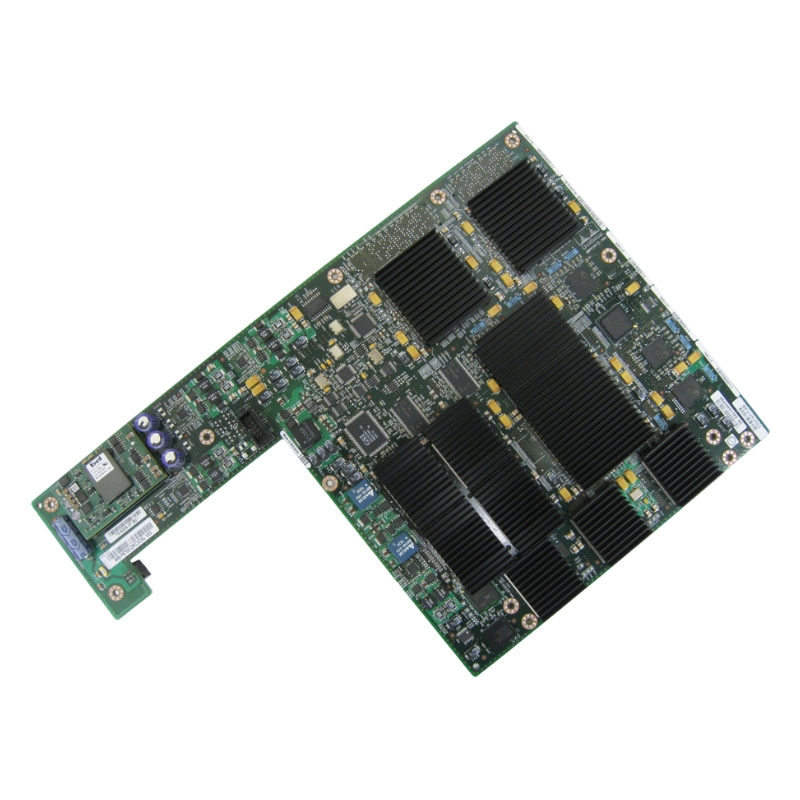
Cisco WS-F6700-DFC3A Catalyst Distributed Forwarding Card. Excellent Refurbished with 1 year replacement warranty
The Cisco WS-F6700-DFC3A Catalyst Distributed Forwarding Card is designed to significantly enhance packet processing efficiency within enterprise-class switching environments. Built for the Cisco Catalyst 6500 Series architecture, this advanced forwarding module improves scalability, accelerates traffic handling, and supports high-density Ethernet deployments across complex network infrastructures.
The Cisco WS-F6700-DFC3A Catalyst Distributed Forwarding Card is a critical hardware component designed to extend the distributed forwarding capabilities of Cisco Catalyst modular switching systems, particularly within high-performance platforms such as the Catalyst 6500 and Cisco 7600 Series routers. This card operates as a dedicated forwarding engine that enables local switching decisions to be made directly on line cards, reducing dependence on centralized supervisor processing and significantly improving scalability in large enterprise and service provider networks.
Within distributed forwarding architectures, the WS-F6700-DFC3A plays a fundamental role in enabling each equipped line card to independently perform Layer 2 and Layer 3 packet forwarding decisions. This architectural model eliminates bottlenecks that would otherwise occur if all packets were required to traverse a central switching engine. By decentralizing forwarding logic, the Catalyst system achieves predictable latency, higher throughput, and improved resilience under heavy traffic loads.
Distributed Forwarding Cards such as the WS-F6700-DFC3A implement hardware-based forwarding tables that mirror routing and switching information from the supervisor engine. These tables include entries for MAC addresses, IP routing prefixes, access control policies, and quality-of-service classifications. Once synchronized, the DFC allows packets to be processed locally on the line card without requiring constant communication with the central supervisor.
This model contrasts sharply with centralized switching architectures, where each packet must be processed by a central engine. In high-density environments, centralized architectures often suffer from performance degradation due to processing contention. The distributed approach eliminates this limitation by scaling processing capability linearly with the number of installed line cards equipped with DFC modules.
The WS-F6700-DFC3A therefore represents a foundational element in achieving non-blocking performance across large modular chassis deployments.
The WS-F6700-DFC3A is built around specialized application-specific integrated circuits (ASICs) optimized for high-speed packet forwarding operations. These ASICs are responsible for executing lookup operations across multiple forwarding tables simultaneously, enabling rapid decision-making for incoming and outgoing traffic streams.
The hardware architecture includes high-speed memory components that store replicated forwarding information derived from the supervisor engine. This includes Layer 2 CAM tables for MAC address resolution and Layer 3 routing tables for IP prefix matching. The synchronization process ensures consistency across the switching domain, allowing seamless forwarding even in dynamic routing environments where topology changes frequently occur.
Buffer management systems within the card handle transient traffic bursts, ensuring that packets are queued efficiently during congestion scenarios without introducing significant latency or packet loss. This is particularly important in environments where voice, video, and mission-critical data traffic coexist.
One of the most significant advantages of deploying the WS-F6700-DFC3A is the reduction of processing load on the central supervisor engine. By offloading forwarding decisions to line card-level hardware, the supervisor is freed to focus on control plane tasks such as routing protocol convergence, topology management, and policy enforcement.
This separation of responsibilities enhances overall system efficiency and stability. In large enterprise networks with thousands of active endpoints, the volume of packet forwarding decisions can be substantial. Without distributed forwarding, the supervisor engine would become a performance bottleneck under such conditions.
With the DFC architecture in place, forwarding performance scales with the number of installed line cards, enabling predictable and consistent throughput regardless of network size.
The WS-F6700-DFC3A integrates tightly with the chassis-based architecture of Catalyst 6500 and Cisco 7600 systems. Each line card equipped with a DFC communicates with the central switching fabric through high-speed backplane connections, ensuring that packet forwarding remains synchronized across the entire system.
The supervisor engine maintains authoritative routing and switching tables, which are periodically distributed to all DFC-equipped line cards. This ensures consistency in forwarding decisions even as network topology changes occur due to dynamic routing updates or policy modifications.
Fabric connectivity within these platforms is designed to support high-throughput, low-latency communication between modules, enabling efficient load balancing and traffic distribution across multiple forwarding engines.
When a packet enters a line card equipped with the WS-F6700-DFC3A, it undergoes a series of hardware-based processing stages. The ingress ASIC first identifies the packet type and extracts relevant header information. This includes MAC addresses, IP headers, and transport layer metadata.
The DFC then performs lookup operations against its locally stored forwarding tables to determine the appropriate egress interface. If the destination is reachable within the same line card or switching domain, the packet is forwarded directly without involving the supervisor engine.
For inter-line-card traffic, the packet is sent across the switching fabric to the appropriate destination module. This process is highly optimized to minimize latency and ensure deterministic forwarding behavior across the chassis.
The WS-F6700-DFC3A is designed to support environments where traffic volumes scale into multi-terabit ranges. In such deployments, the ability to distribute forwarding responsibilities across multiple line cards is essential for maintaining performance.
Service provider networks, in particular, benefit from this architecture due to the high volume of aggregated traffic flowing through core and edge routers. By enabling line-rate forwarding on each module, the DFC ensures that performance remains consistent even under extreme load conditions.
This scalability is achieved without requiring proportional increases in supervisor processing capacity, making the architecture both cost-effective and operationally efficient.
High availability is a core requirement in enterprise and service provider networks, and the WS-F6700-DFC3A contributes to system resilience through distributed redundancy. In dual-supervisor configurations, forwarding state is synchronized across active modules to ensure continuity during failover events.
If a line card or forwarding engine experiences a failure, traffic can be rerouted through alternative paths within the chassis without requiring full system disruption. The distributed nature of the architecture ensures that no single point of failure can impact the entire forwarding domain.
State preservation mechanisms maintain routing and switching consistency, allowing the system to recover quickly from hardware or software interruptions.
The WS-F6700-DFC3A supports advanced Quality of Service mechanisms implemented directly in hardware. This includes traffic classification based on IP precedence, Differentiated Services Code Point markings, and access control policies.
Once classified, packets are placed into appropriate hardware queues that determine forwarding priority. This ensures that latency-sensitive applications such as voice and video receive preferential treatment over less critical data traffic.
Queue management systems within the DFC handle congestion scenarios by applying scheduling algorithms that maintain fairness while preserving priority handling for critical flows.
Security policies are enforced directly within the WS-F6700-DFC3A hardware, enabling high-speed filtering of traffic based on access control lists and security rules. This eliminates the need for centralized packet inspection, reducing latency while maintaining strong security enforcement.
ACLs are distributed to the DFC during synchronization processes, ensuring that all line cards apply consistent security policies. This is essential in environments where regulatory compliance and internal security segmentation are required.
Hardware-based enforcement also reduces the risk of performance degradation caused by complex security policies in high-throughput environments.
The WS-F6700-DFC3A supports rapid convergence by quickly updating forwarding tables in response to changes in routing protocols such as OSPF, EIGRP, and BGP. When topology changes occur, the supervisor engine recalculates routing paths and distributes updated entries to all DFC modules.
This ensures that forwarding decisions remain accurate and up to date, minimizing packet loss and routing inconsistencies during network transitions. Fast convergence is critical in environments where uptime and service continuity are essential.
Troubleshooting in distributed forwarding environments involves analyzing both control plane and data plane behavior. The WS-F6700-DFC3A provides diagnostic capabilities that allow administrators to inspect forwarding table consistency, hardware utilization, and packet flow patterns.
By comparing expected routing behavior with actual forwarding outcomes, network engineers can identify misconfigurations, hardware failures, or policy conflicts. This level of visibility is essential for maintaining optimal network performance in complex modular systems.
The WS-F6700-DFC3A Catalyst Distributed Forwarding Card represents a foundational component in building scalable, high-performance enterprise and service provider networks. Its ability to distribute forwarding intelligence across multiple line cards enables architectures that can scale efficiently while maintaining predictable performance characteristics.
By combining hardware acceleration, distributed processing, and tight integration with Cisco Catalyst switching platforms, the DFC architecture supports modern networking requirements including cloud connectivity, large-scale virtualization, and mission-critical application delivery.


 Contact Us
 Information
 Catalog
 Solid State Drives (SSD)
 Network Switches
 Hard Disk Drives
 HBA & Controllers
 PC & Servers
 PC & Server Memory
 CPU & Processors
 Network Routers
 Power Supplies
 Tape Drives & Libraries
 Network Devices
 Computer & Network Cables