(7% discount is applied at checkout)
Cart is empty
Your go-to destination for cutting-edge server products
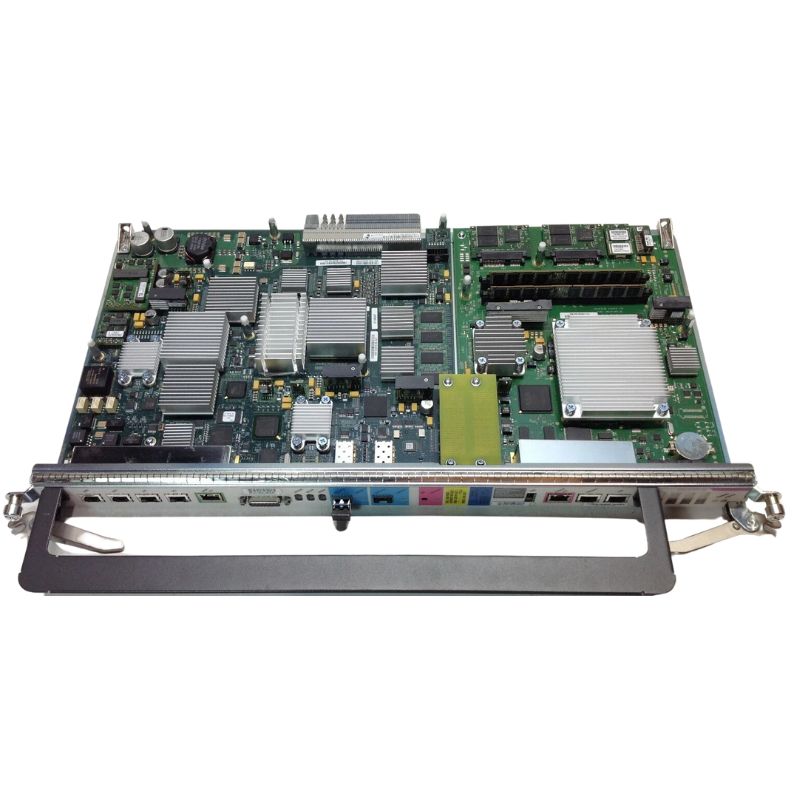


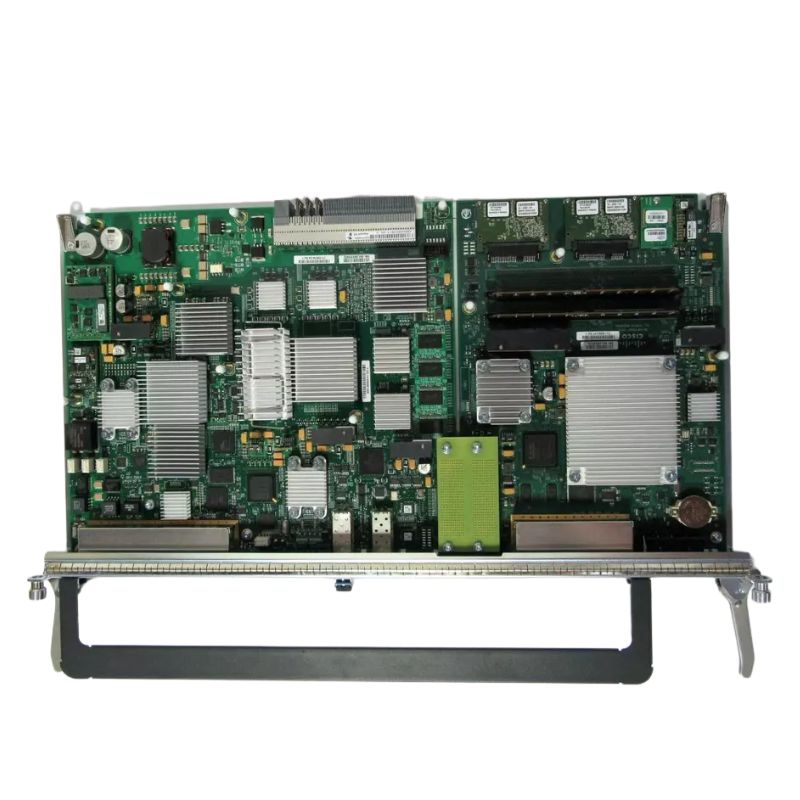
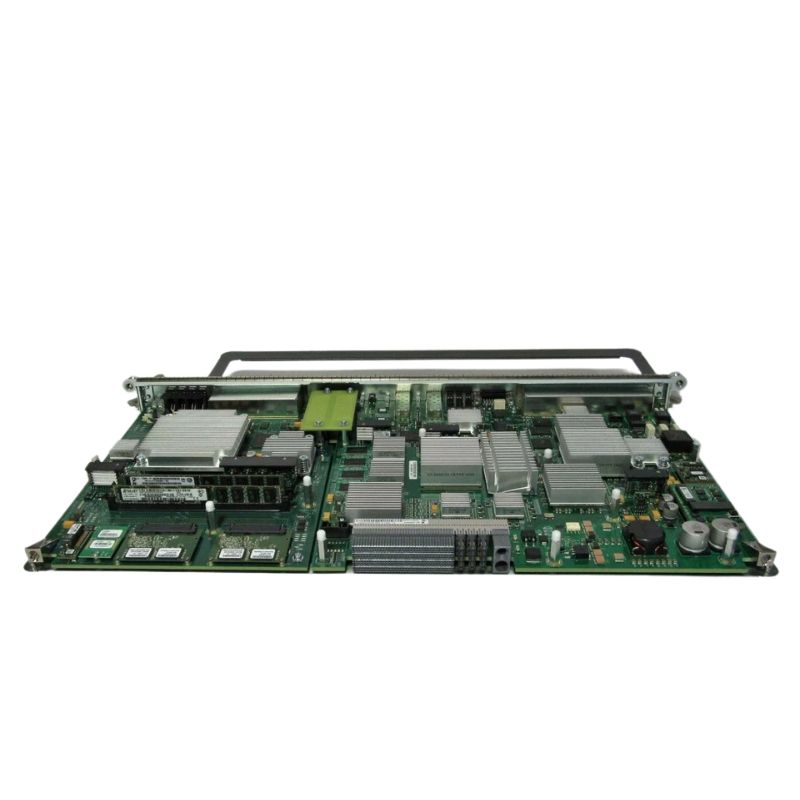
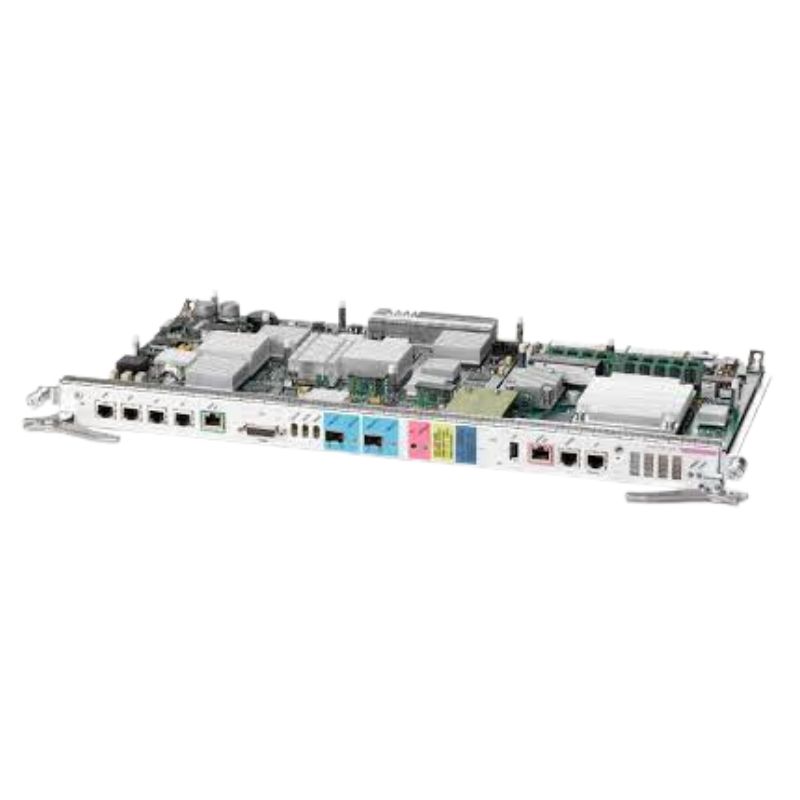
Cisco CRS-8-PRP-12G CRS Series 4/8-Slot LC Route Processor. Excellent Refurbished with 1 year replacement warranty
Cisco CRS-8-PRP-12G CRS Series 4/8-Slot Line Card Processor
The Cisco CRS-8-PRP-12G Performance Route Processor is a mission-critical networking component designed for Cisco Carrier Routing System (CRS) platforms. Engineered to provide advanced routing intelligence, control plane processing, and network management capabilities, this route processor delivers exceptional reliability and scalability for service provider networks, telecommunications infrastructures, and large-scale enterprise environments. With 12 GB of memory, multiple Gigabit Ethernet interfaces, and comprehensive chassis compatibility, the CRS-8-PRP-12G helps organizations maintain efficient and uninterrupted network operations.
The Cisco CRS-8-PRP-12G CRS Series 4/8-Slot LC Route Processor is a critical control-plane component engineered for deployment within Cisco Carrier Routing System infrastructures. Designed to support high-capacity service provider networks, internet exchange environments, large-scale enterprise backbones, and cloud connectivity platforms, this route processor delivers the intelligence, scalability, and operational stability required by modern routing architectures. As network traffic continues to expand due to cloud adoption, video streaming, mobile broadband, and digital transformation initiatives, advanced route processing capabilities have become fundamental to maintaining network performance and service continuity.
Within a Cisco CRS environment, the route processor serves as the central management and control component responsible for routing calculations, protocol operations, system coordination, configuration management, and network intelligence functions. The CRS-8-PRP-12G provides the computational resources necessary to support extensive routing tables, complex policy management, and high-volume control-plane activities while maintaining carrier-grade reliability.
Modern carrier-grade routers separate data forwarding functions from control-plane processing. The route processor manages routing decisions, network topology awareness, protocol communication, and system administration while forwarding hardware handles packet movement across interfaces. This architectural separation enables optimized performance and efficient resource allocation throughout the routing platform.
The Cisco CRS-8-PRP-12G functions as the command center of the routing system, continuously analyzing network information and maintaining awareness of route availability, path optimization opportunities, traffic engineering requirements, and service policies.
Carrier networks depend on intelligent route selection to ensure optimal traffic flow across global infrastructures. The route processor evaluates routing information received from multiple protocols and determines the most efficient forwarding paths based on administrative policies, path metrics, and service requirements.
As network conditions change, the route processor recalculates routing decisions and distributes updates throughout the system. This capability ensures traffic continuity even during link failures, topology changes, maintenance activities, or unexpected network events.
The Cisco CRS-8-PRP-12G is specifically engineered for integration with Cisco Carrier Routing System platforms. These routers are widely deployed by telecommunications providers, internet service providers, content delivery networks, and hyperscale infrastructure operators that require extreme scalability and high availability.
The route processor works seamlessly with CRS fabric modules, line cards, switching subsystems, and operating software to create a unified routing architecture capable of supporting massive traffic volumes.
The route processor is designed for deployment within CRS Series 4-slot and 8-slot systems. This flexibility allows service providers to scale infrastructure according to traffic requirements while maintaining consistent operational practices across different chassis sizes.
As traffic demand increases, organizations can expand capacity through modular chassis upgrades while continuing to utilize route processing technologies that maintain architectural consistency throughout the network.
Internet routing tables continue to grow as global connectivity expands. The Cisco CRS-8-PRP-12G is designed to support extensive routing databases required by modern service provider environments. This capability enables operators to maintain visibility across global networks while ensuring efficient traffic forwarding.
The ability to process and manage large route tables is essential for internet service providers, cloud providers, and telecommunications operators that exchange routing information with numerous peers and transit providers.
Carrier-grade networks typically operate multiple routing protocols simultaneously. The route processor manages interactions among routing technologies while ensuring stable operation and efficient route convergence. These capabilities support diverse networking requirements across complex infrastructures.
Rapid route convergence minimizes service disruptions and enables networks to recover quickly from failures. The processing capabilities integrated into the CRS-8-PRP-12G help reduce convergence times while maintaining network stability during topology changes.
Telecommunications providers require continuous network operation with minimal downtime. The Cisco CRS-8-PRP-12G is engineered to support carrier-grade availability objectives by providing robust operational stability and fault tolerance capabilities.
Network outages can affect millions of users, making reliability a critical requirement. Route processor architecture is therefore designed to withstand demanding operational environments while maintaining continuous service delivery.
High-availability deployments frequently utilize redundant route processors to eliminate single points of failure. Redundancy mechanisms allow one processor to assume operational responsibilities if another component experiences an issue.
Synchronization between route processors ensures continuity of routing information, system configurations, and operational status data. This capability supports seamless failover processes and minimizes disruption during maintenance or unexpected events.
Modern service provider environments generate significant control-plane activity due to routing updates, policy changes, network monitoring functions, subscriber management systems, and traffic engineering processes. The Cisco CRS-8-PRP-12G provides the computational resources required to manage these demanding workloads.
As networks expand and customer demands increase, route processors must efficiently handle growing volumes of control information without affecting operational performance.
Traffic engineering, quality of service implementation, route filtering, security enforcement, and peering policies all require substantial processing resources. The CRS-8-PRP-12G supports these sophisticated policy frameworks while maintaining routing efficiency.
Network operators can implement advanced optimization strategies that maximize resource utilization, improve customer experiences, and maintain service-level agreements across diverse traffic types.
Internet service providers rely on scalable routing platforms to manage traffic exchanged across global networks. The route processor supports extensive routing operations that facilitate communication among customers, cloud providers, content networks, and international carriers.
Maintaining connectivity across geographically distributed infrastructures requires continuous route analysis, policy enforcement, and path optimization. The CRS-8-PRP-12G plays a central role in supporting these activities.
Service providers exchange routing information with numerous external networks. The route processor manages these relationships while ensuring efficient traffic distribution and route selection across interconnected infrastructures.
Border Gateway Protocol remains the foundation of internet routing. The processing capabilities of the CRS-8-PRP-12G support extensive BGP operations required for modern internet connectivity.
Cloud computing environments generate enormous traffic volumes that require scalable routing infrastructure. The route processor enables efficient communication among cloud regions, data centers, enterprise customers, and internet exchange points.
As organizations increasingly adopt hybrid and multi-cloud strategies, route processors must support dynamic routing environments capable of adapting to changing connectivity demands.
Large-scale data centers require high-performance routing systems to connect computing resources, storage platforms, and external networks. The CRS-8-PRP-12G contributes to maintaining reliable communication pathways across these infrastructures.
Efficient route selection enhances application performance by minimizing latency, improving resource accessibility, and ensuring consistent service delivery across distributed environments.
Network security depends on consistent policy implementation throughout routing infrastructures. The route processor manages routing policies, access controls, route filtering mechanisms, and traffic management strategies designed to protect network resources.
Through centralized control-plane intelligence, operators can implement sophisticated security measures while maintaining operational efficiency.
Routing instability can negatively affect network performance and availability. The Cisco CRS-8-PRP-12G incorporates mechanisms that help maintain stable routing operations even during periods of significant network change.
By continuously monitoring routing activities and network status, the route processor contributes to overall system reliability and operational predictability.
Route processors provide administrators with centralized visibility into network operations, system performance, routing status, and infrastructure health. This visibility supports effective management of large-scale routing environments.
Operational teams benefit from streamlined monitoring capabilities that simplify troubleshooting, maintenance planning, and performance optimization activities.
Modern network environments increasingly utilize automation frameworks to improve efficiency and reduce operational complexity. The CRS-8-PRP-12G supports integration with management systems that facilitate automated provisioning, configuration management, and network orchestration.
Automation capabilities enable organizations to respond more quickly to changing business requirements while maintaining consistency across extensive network infrastructures.
Global network traffic continues to grow due to emerging technologies, connected devices, streaming services, and cloud-based applications. The Cisco CRS-8-PRP-12G provides the processing foundation necessary to support ongoing infrastructure expansion.
Service providers require routing platforms capable of adapting to future requirements without extensive architectural redesign. The route processor contributes to long-term scalability objectives by supporting evolving routing demands.
Modular routing architectures help organizations maximize infrastructure investments. The CRS Series route processor supports upgrade strategies that extend platform lifespan while enabling technology evolution.


 Contact Us
 Information
 Catalog
 Solid State Drives (SSD)
 Network Switches
 Hard Disk Drives
 HBA & Controllers
 PC & Servers
 PC & Server Memory
 CPU & Processors
 Network Routers
 Power Supplies
 Tape Drives & Libraries
 Network Devices
 Computer & Network Cables