(7% discount is applied at checkout)
Cart is empty
Your go-to destination for cutting-edge server products
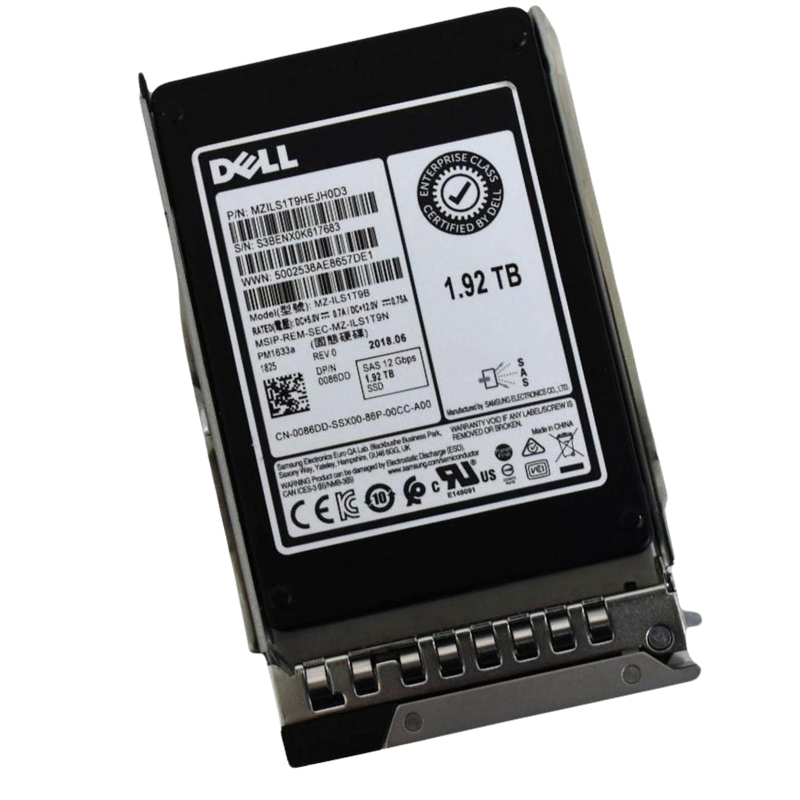


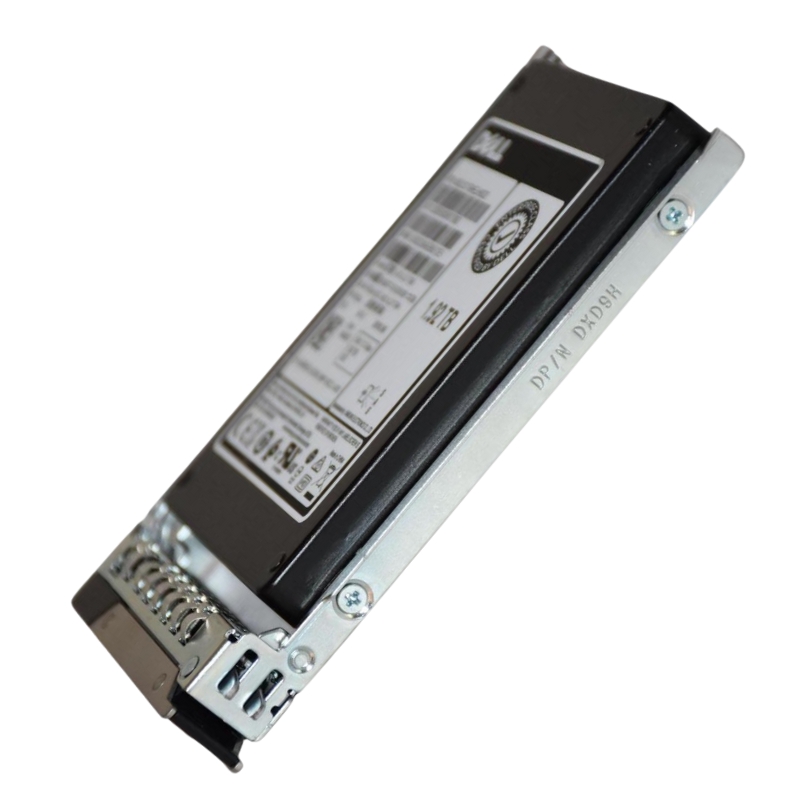
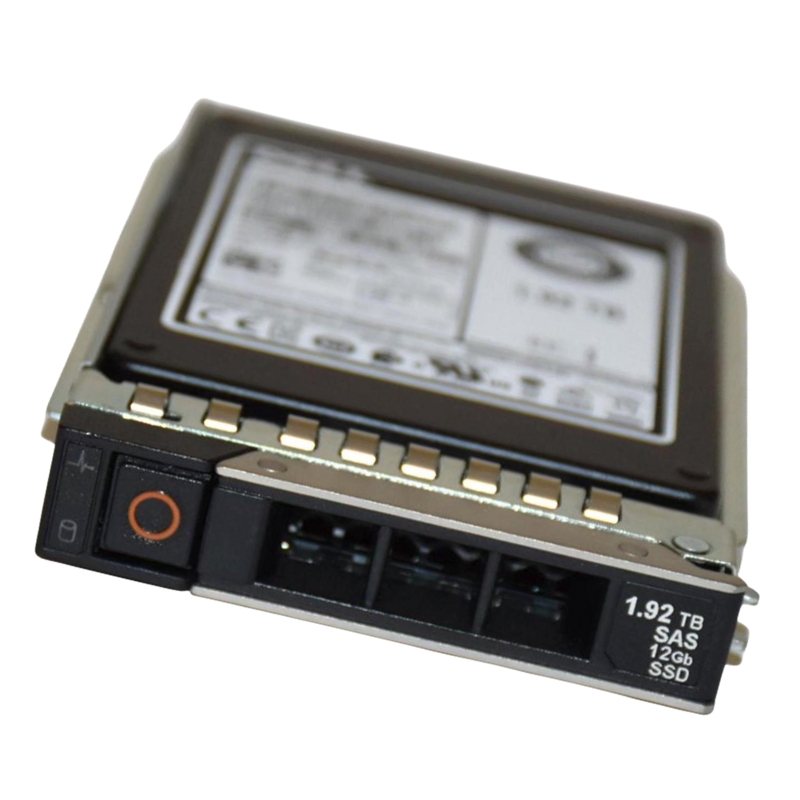
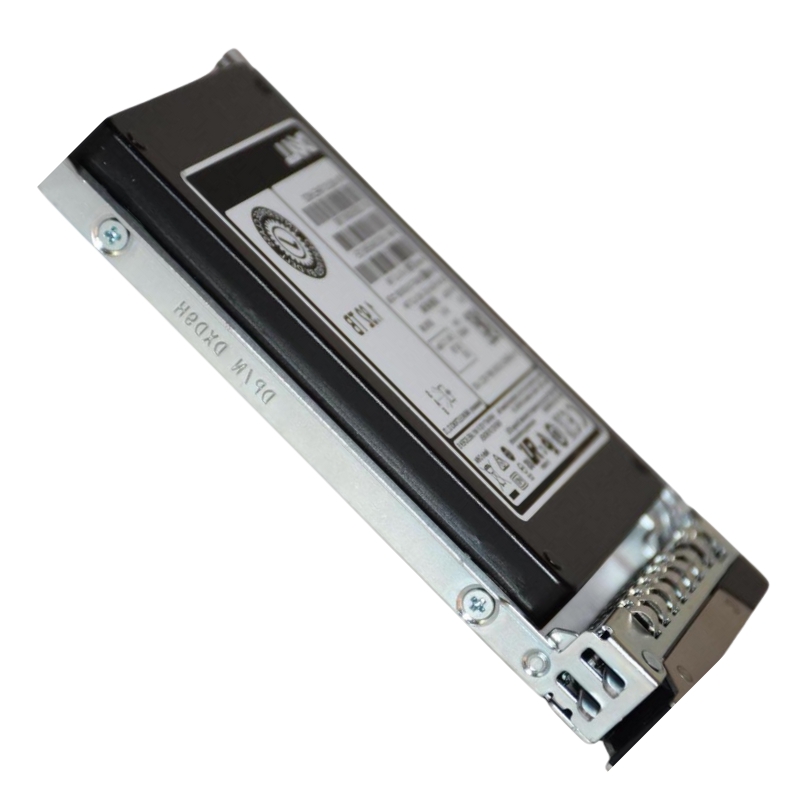
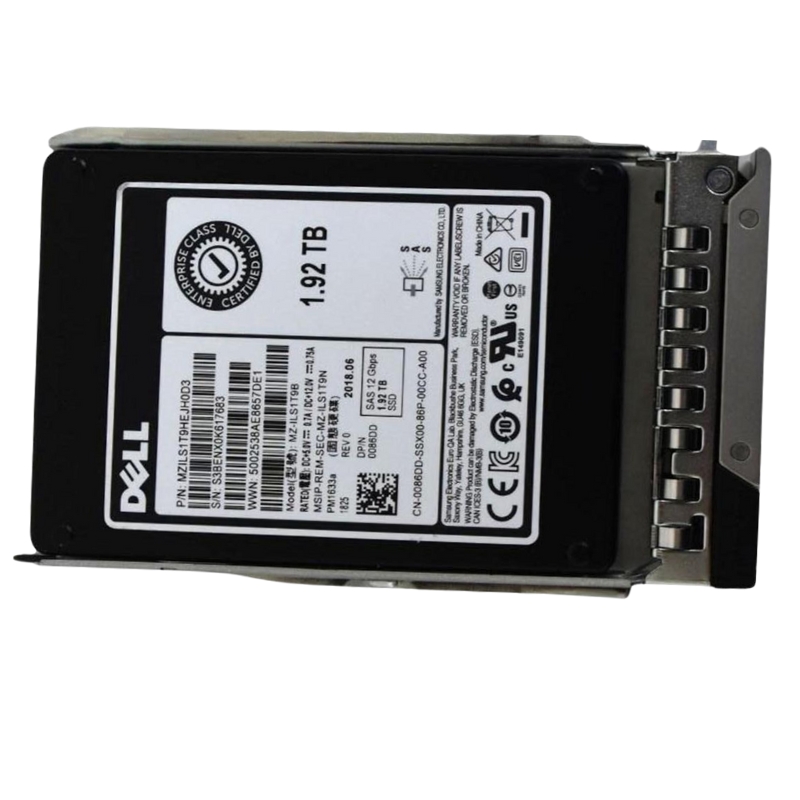
Dell 1N61H 1.92TB SAS 12GBPS Mixed Use 512n 2.5-inch Hot Plug Solid State Drive. Excellent Refurbished with 1 year replacement warranty
| SKU/MPN | Warranty | Price | Condition | You save |
|---|---|---|---|---|
| 1N61H | 1 Year Warranty | $1,187.00 | Excellent Refurbished | You save: $415.45 (26%) |
| 1N61H | 1 Year Warranty | $2,232.00 | New Sealed in Box (NIB) | You save: $781.20 (26%) |
This Dell internal SSD, identified by part number 1N61H, is designed to offer high-performance storage solutions for a variety of systems. Below are the key features and specifications of this model.
This SSD is compatible with a range of PowerEdge systems:
Dell 1N61H 1.92TB SAS 12Gbps Mixed Use 512n 2.5-inch Hot Plug Solid State Drive represents a class of enterprise storage designed to balance endurance, performance, and reliability for mixed workload environments. This category focuses on drives that serve both read-intensive and write-moderate applications, delivering the throughput, low latency, and endurance characteristics necessary for virtualization, database acceleration, cached storage layers, and tiered all-flash arrays. Each paragraph that follows expands on why this category is important for modern data centers, what technical features define it, and how procurement and deployment decisions can be optimized to extract long-term value.
Drives in this category are defined first and foremost by their interface and protocol: SAS at 12Gbps provides a robust, enterprise-grade transport layer that scales well in multi-controller systems, supports multipath I/O, and integrates with a wide range of server and array controllers used in datacenter infrastructures. The 1N61H 1.92TB capacity point is positioned for customers needing substantial usable capacity per slot while preserving the IOPS and endurance benefits of flash versus spinning media. Mixed use endurance profiles are engineered to sustain a balanced mix of random reads and writes without sacrificing predictable performance over the drive lifetime. The 512n sector format compatibility ensures straightforward integration with legacy and modern file systems and storage controllers that expect 512-byte logical sectoring.
Enterprise buyers evaluating this category should consider both sequential throughput and random IOPS profiles. Sequential throughput is critical for tasks like bulk backup restores, large dataset ingest, and streaming workloads, while random IOPS drive application responsiveness for databases and VDI environments. Mixed-use SAS SSDs like the Dell 1N61H class are tuned to deliver consistent random IOPS under sustained load, reducing tail latency and improving Quality of Service for multi-tenant and latency-sensitive applications.
Latency is a decisive metric for evaluating solid state drives for enterprise deployment. Drives in the mixed use 12Gbps SAS category are optimized to keep read and write latencies low under mixed loads, which helps maintain service level objectives for databases, transaction processing, and interactive services. Quality of Service features at the drive and controller level—such as TRIM support, efficient background garbage collection, and firmware-level prioritization—help stabilize latency during heavy cleaning cycles and when drives near their write amplification thresholds.
Endurance in mixed use drives is expressed through workload-specified drive write per day (DWPD) or total terabytes written (TBW) over the warranty period. Drives in this category balance endurance with cost-per-gigabyte, making them attractive for environments where both reads and writes occur frequently but ultra-high endurance is not strictly necessary. Data integrity features such as end-to-end data protection, power-loss protection capacitors, and advanced error correction codes (ECC) are included to minimize the risk of silent data corruption and ensure reliable write completion in the event of unexpected power events.
Power-loss protection is critical in enterprise SSDs; category-class drives commonly include onboard capacitors and firmware behavior designed to flush volatile caches to nonvolatile storage during sudden power events. This reduces the risk of partial writes or metadata corruption that can lead to rebuild errors in arrays and degraded storage pool health. Organizations with stringent data integrity requirements should prioritize drives that explicitly advertise robust power-loss protection and validated recovery paths.
Wear-leveling algorithms and strong ECC are foundational for the longevity of SSDs in mixed use deployments. The drives routinely shuffle writes across NAND dies to prevent hotspots and maximize usable lifespan. SMART telemetry and vendor-specific health reporting allow administrators to monitor metrics like remaining useful life, program/erase cycles, and media errors—data that integrates into storage management systems and informs replacement planning to avoid unexpected failures.
The 1N61H 2.5-inch form factor is a standard in enterprise blade, rack and tower servers as well as storage enclosures, delivering an efficient balance of density and thermal management. The hot-plug capability simplifies maintenance and replacement in active systems without service interruption, which is a core advantage for datacenter operations requiring high availability. SAS 12Gbps offers compatibility with existing SAS backplanes and controllers while providing headroom for throughput-critical applications compared to older 6Gbps interfaces.
Hot-plugging simplifies maintenance downtime planning and reduces the operational risk associated with drive swaps. Drives in this category are engineered for front-access trays and common enterprise sleds, and they cooperate with controller firmware for safe removal, path failover, and rebuild orchestration. Administrators should confirm that their server or enclosure firmware supports SMART passthrough and that the hot-swap process triggers appropriate array-level healing without data loss.
Compatibility with SAS expanders, backplanes and HBA/RAID controllers is essential; the 12Gbps physical layer often requires updated expanders and cables to realize full throughput. When integrating drives into heterogeneous environments, IT teams should validate controller firmware compatibility and driver support matrixes to avoid performance throttling or unexpected behavior under mixed vendor ecosystems.
Mixed use SAS SSDs at the 1N61H 1.92TB capacity are well suited to a wide spectrum of enterprise workloads. They shine in virtual server farms running many small VMs, medium-size databases with moderate write requirements, application acceleration tiers, and hybrid flash-rotational arrays that use SSDs as caching or tiering layers. Their balance of capacity, performance and endurance makes them an economical choice where dense all-flash capacity is needed without the premium associated with ultra-high endurance drives.
VDI environments typically produce unpredictable, bursty I/O patterns across many users. Drives in this category help absorb boot storms and login storms while maintaining acceptable latencies for interactive sessions. The 1.92TB capacity enables a higher number of desktops per drive when used as part of a storage pool, reducing total cost of ownership for virtual desktop deployments.
Mixed workload SSDs offer an excellent fit as database acceleration layers where the workload is not exclusively write-heavy. They reduce query response times, speed transaction throughput and decrease resource contention on spinning disks when used in tiered architectures or as persistent caching layers in front of bulk storage tiers.
Applications that operate at high concurrency—such as web servers, API front ends, and media delivery platforms—benefit from lower latencies and consistent performance under mixed read/write patterns. The SAS interface and enterprise-grade firmware reduce the impact of high queue depths on tail latency, improving end-user experience for real-time services.
Capacity planning must consider both usable capacity and the need for spare capacity used by the drive for internal maintenance activities. Overprovisioning not only improves endurance and reduces write amplification but also maintains consistent performance as the drive ages. Vendors sometimes provide recommended overprovisioning percentages for mixed-use drives; incorporating those guidelines into pool sizing helps preserve drive health and predictable I/O performance.
Choosing RAID levels influences both usable capacity and resilience to drive failures. In all-flash arrays and hybrid systems, rebuilds can stress remaining drives and controllers. Drives in this category benefit from RAID controllers that support background data integrity checks, adaptive rebuild throttling, and prioritization that reduce performance impact during recovery windows. Designing for faster rebuilds through hot spares and parallel rebuild operations reduces exposure to multi-drive failures in high-availability environments.
Energy consumption and thermal dissipation are important cost factors for dense server and storage deployments. SSDs in the 2.5-inch form factor typically consume less power and generate less heat than 3.5-inch HDDs at equivalent usable capacity, but enterprise SSD power profiles still vary. Sizing storage racks for power and cooling with the drive population in mind helps avoid overcommitment that could necessitate throttling or emergency rebalancing.
Security is essential for modern storage devices. Many enterprise-class drives include hardware-based encryption (self-encrypting drive or SED options), secure erase capabilities, and support for enterprise key management standards. These features help organizations meet regulatory obligations for data-at-rest protection and simplify decommissioning processes by enabling cryptographic erase methods that reduce the risk of data remanence.
Hardware encryption reduces CPU overhead and ensures that data written to the media is protected against unauthorized extraction. Integration with KMIP-compliant key management systems and validation against common compliance frameworks streamlines audits and reduces the burden on IT teams during decommissioning or repurposing events.
Secure erase capabilities and documented procedures for physical destruction or cryptographic erase are essential elements of data lifecycle policies. Drives intended for redeployment or resale must be sanitized in compliance with organizational and regulatory standards to ensure that data cannot be recovered by subsequent owners.


 Contact Us
 Information
 Catalog
 Solid State Drives (SSD)
 Network Switches
 Hard Disk Drives
 HBA & Controllers
 PC & Servers
 PC & Server Memory
 CPU & Processors
 Network Routers
 Power Supplies
 Tape Drives & Libraries
 Network Devices
 Computer & Network Cables