(7% discount is applied at checkout)
Cart is empty
Your go-to destination for cutting-edge server products
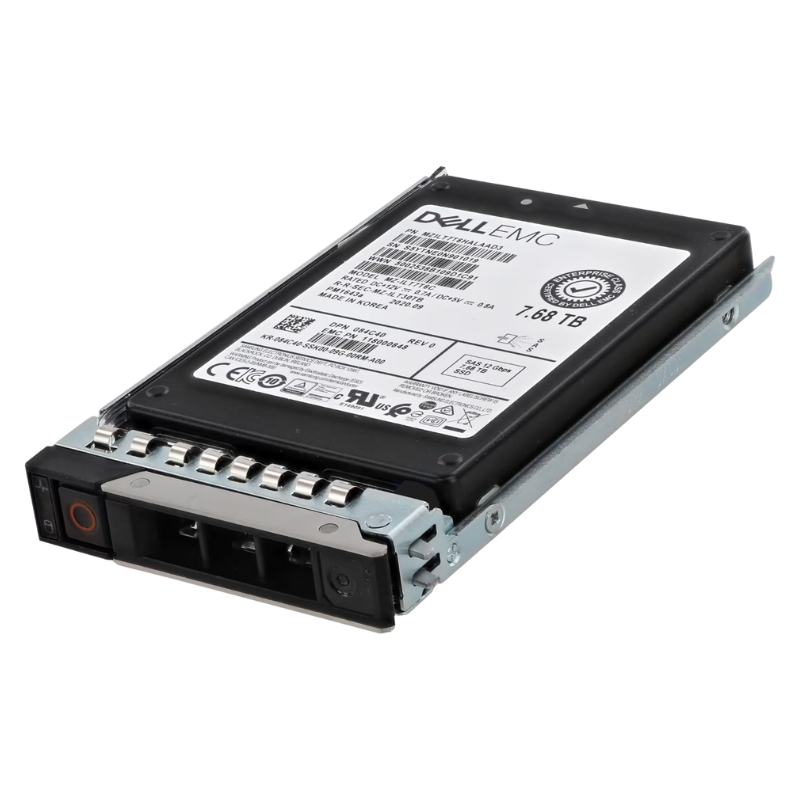


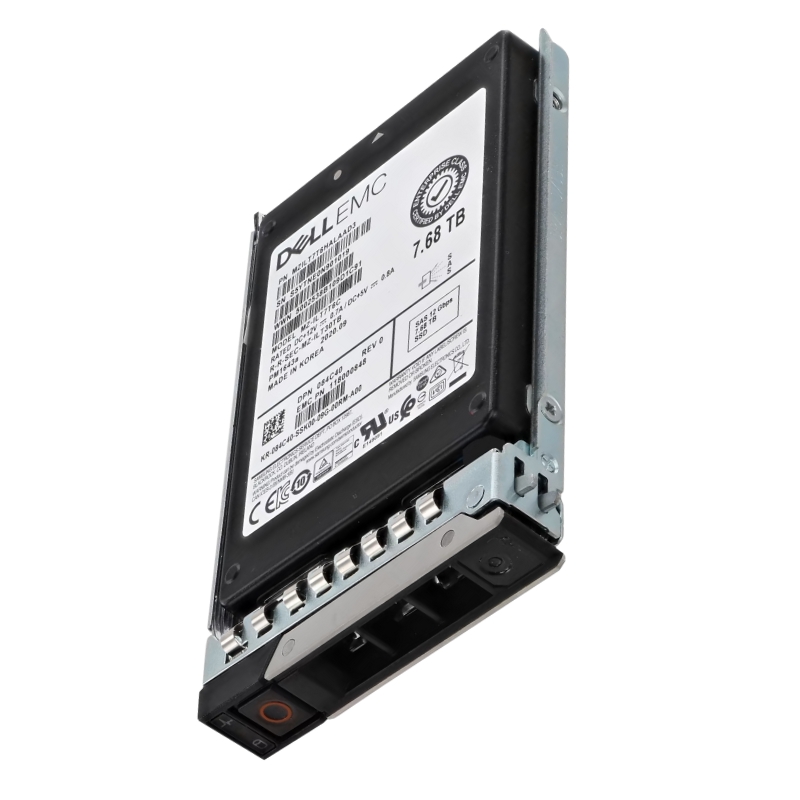
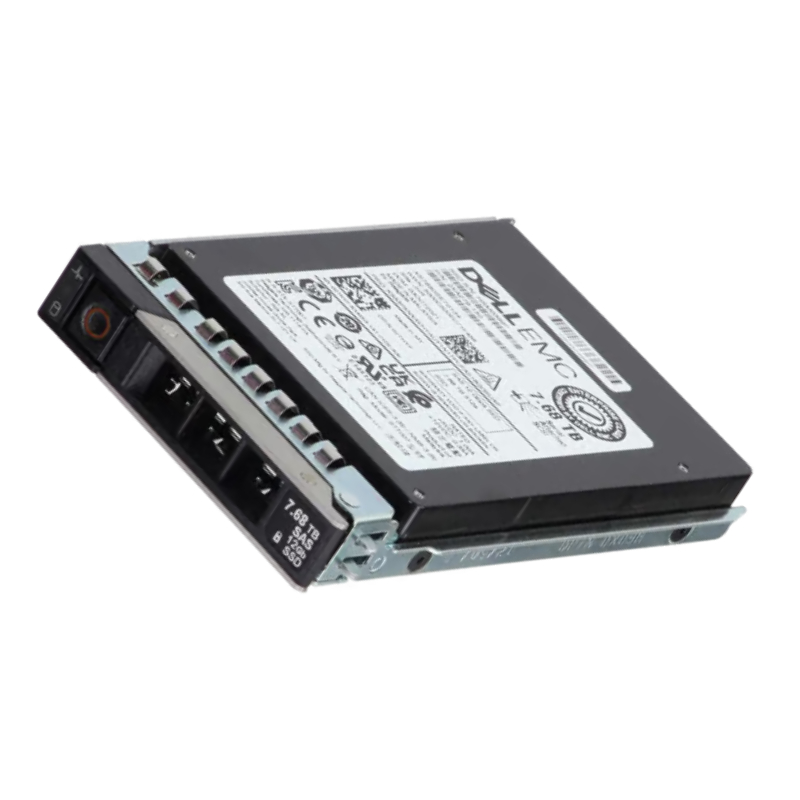
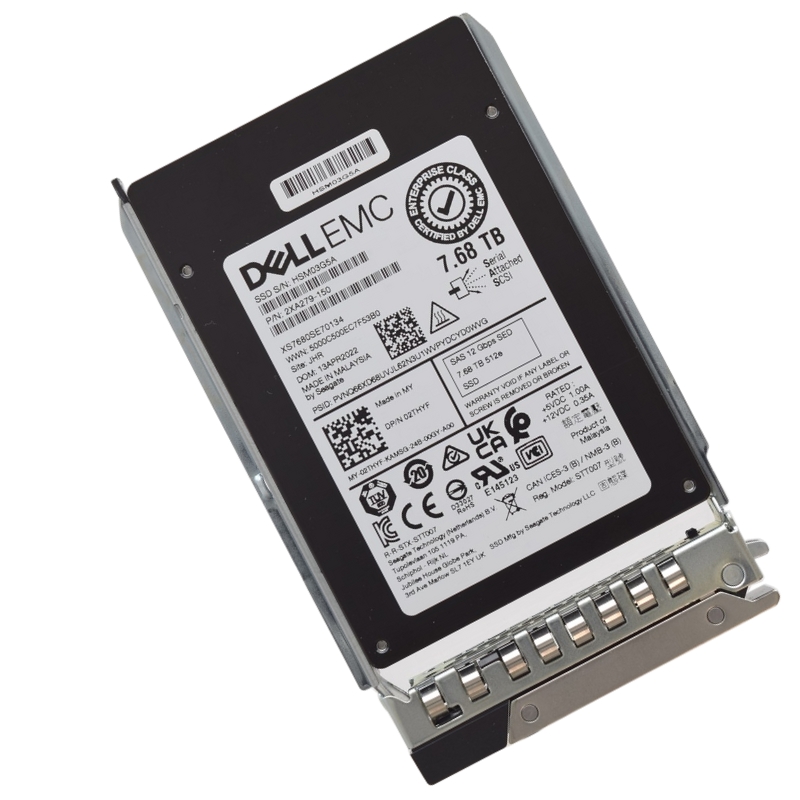
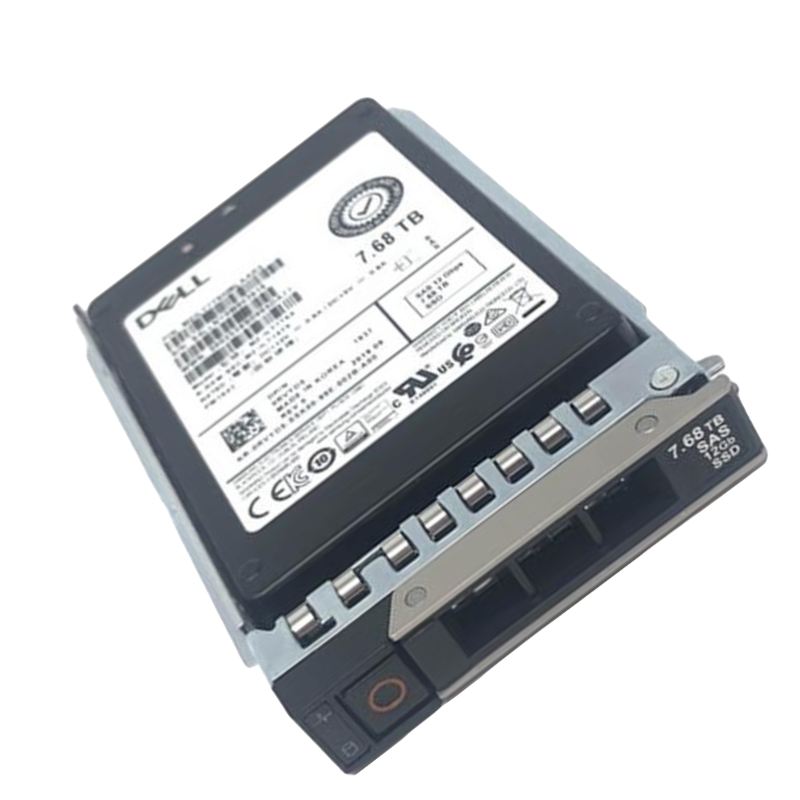
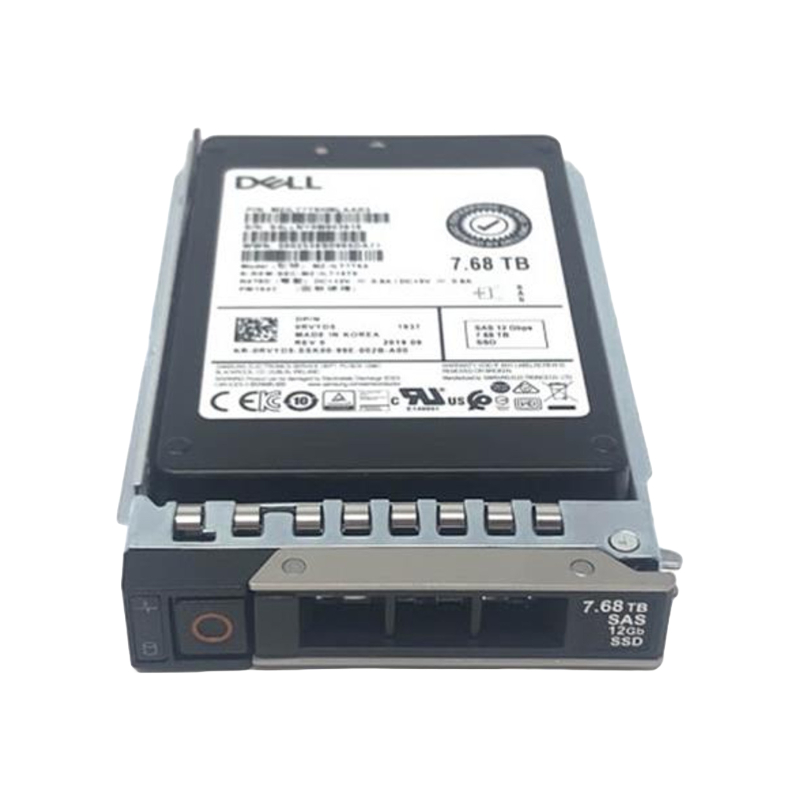
Dell 2THYF 7.68TB SAS 12GBPS Read Intensive SED TLC SSD. New (System) Pull with 1 year replacement warranty
| SKU/MPN | Warranty | Price | Condition | You save |
|---|---|---|---|---|
| 2THYF | 1 Year Warranty | $3,118.00 | New (System) Pull | You save: $1,091.30 (26%) |
| 2THYF | 1 Year Warranty | $3,699.00 | New Sealed in Box (NIB) | You save: $1,294.65 (26%) |
Explore the Dell-certified 7.68TB Self-Encrypting SAS Solid-State Disk, engineered for read-intensive workloads and compatible with 14G, 15G, and 16G PowerEdge servers. This hot-plug TLC SSD offers secure data handling and exceptional performance.
Dell 2THYF 7.68TB SAS 12Gbps Read Intensive SED TLC SSD represents a category of high-capacity, read-optimized solid state drives engineered for enterprise storage tiers where read performance, data security, and long-term reliability matter. Designed to serve read-heavy workloads in datacenter arrays, virtualization hosts, and archival gateways, this class of SAS SSD blends the robustness of Serial Attached SCSI (SAS) at 12Gbps with modern NAND technology, hardware-based self-encryption, and capacity points that reduce rack-level device counts while preserving performance predictability.
Read-intensive SAS SSDs are purpose-built to maximize sustained read throughput and to minimize latency under typical enterprise read patterns. The Dell 2THYF 7.68TB model fits into this niche by prioritizing sequential and random read consistency, offering predictable IOPS and low tail latencies for operations such as large-scale data analytics, content delivery, virtual desktop infrastructure (VDI) read storms, and cold-tier database queries. Enterprise architects evaluating drives in this category should expect strong read throughput at the interface limit of SAS 12Gbps when installed on compatible host bus adapters or storage controllers.
Read-intensive drives are tuned to deliver a high ratio of read IOPS to write IOPS, meaning that while random write endurance is present, the firmware and NAND provisioning emphasize rapid retrieval and low-variance response times for reads. System designers will notice that these drives maintain stability across mixed tenant workloads by delivering consistent read latencies even as device capacity is heavily utilized. This predictability is particularly valuable in multi-tenant virtualized environments and content delivery nodes where inconsistent storage latencies can cascade into application-level performance problems.
Hardware-based Self-Encrypting Drive (SED) functionality is a defining attribute of this category, providing enterprise-class protection for data at rest without imposing CPU overhead on host systems. The Dell 2THYF series with SED features supports secure erasure, cryptographic block protection, and industry-standard management interfaces for encryption key lifecycle integration with enterprise key management solutions. Organizations requiring regulatory compliance and secure decommissioning benefit from the drive’s ability to cryptographically erase data quickly and verifiably, reducing the operational cost and complexity of media sanitization.
TLC (Triple-Level Cell) NAND underpins the cost-efficiency of high-capacity SSDs like the 7.68TB class, offering substantially higher density per die and lower cost per terabyte compared to MLC or SLC alternatives. Drives in this category are often characterized as read-intensive because TLC technology provides ample read performance while the write endurance is calibrated for workloads that perform many more reads than writes. For workloads where writes remain modest relative to reads—such as streaming archives, backup targets, or analytical query engines—TLC-based enterprise SSDs offer an excellent balance of capacity, performance, and value.
Manufacturers publish endurance metrics (often expressed in drive writes per day, or DWPD, and in total terabytes written, TBW) tailored to the expected read/write mix. Read-intensive SSDs typically advertise lower DWPD values than mixed-use or write-intensive models but compensate by delivering elevated sequential and random read efficiency. System planners should match drive endurance to application write patterns, favoring read-intensive SSDs for archival reads, content distribution, and read-cache layers while reserving higher-endurance models for heavy transactional logging or caching layers with high sustained write volumes.
SAS 12Gbps is an established enterprise interface that couples broad platform compatibility with proven host-side management features like dual-port resilience, SCSI command support, and enterprise-grade error handling. Drives in the Dell 2THYF category are designed to operate with server and storage platforms that support the SAS command set and 12Gbps physical layer, enabling use in both direct-attach and SAN front-end roles. Compatibility considerations extend to hot-swap trays, backplane compatibility, and firmware expectations from major server OEMs and storage array vendors.
One advantage of SAS class drives is the availability of dual-port operation that supports multipath I/O and path failover, which is critical for enterprise storage availability. When deployed in redundant storage architectures or clustered filesystems, the dual-port SAS interface enables non-disruptive path reroute and improves mean-time-to-recovery during host or HBA maintenance activities. System integrators designing fault-tolerant topologies will appreciate the resiliency benefits inherent to SAS SSDs in this category.
There is a wide array of deployment scenarios where a 7.68TB SAS 12Gbps Read Intensive SED TLC SSD excels. Typical environments include read-caching tiers in hybrid arrays, large-scale virtual desktop environments that generate heavy read activity, high-density backup-to-disk appliances, analytics platforms performing columnar reads, and content delivery servers hosting large media libraries. In each use case the drive’s capacity reduces the number of devices required to achieve desired storage pools, lowering controller overhead and improving power and cooling economics per terabyte.
Hybrid storage arrays blend high-performance flash tiers with high-capacity magnetic tiers. Read-intensive SAS SSDs often serve as the “cold-to-warm” flash tier that accelerates read hits while providing an economical path to large flash capacity. Administrators can tune caching policies to prefer these drives for read acceleration, benefiting from reduced seek times and significantly improved read throughput compared to rotating media.
Enterprise SSDs are accompanied by telemetry and SMART attributes that allow system administrators to monitor drive health, remaining life, error rates, and other key operational indicators. Drives in the Dell 2THYF category are engineered for long mean time between failures (MTBF) and come with firmware features that provide wear-leveling, bad block management, and power-loss protection to mitigate the risk of data corruption. Integrating these devices into existing monitoring frameworks provides early warning signs and enables planned replacements before failures impact application availability.
High-capacity SSDs can generate non-trivial amounts of heat when under heavy I/O. System designers must account for thermal throttling thresholds, drive placement within chassis airflow streams, and overall datacenter cooling capacity. The SAS 12Gbps interface and enterprise-class SSDs are typically optimized for predictable thermal behavior, but proper rack and chassis design—combined with ambient temperature monitoring—will sustain peak performance and extend device longevity. Power consumption per terabyte is another key metric, where high-density SSDs tend to lower watts-per-terabyte compared to equivalent rotating media arrays.
Using larger-capacity drives reduces the physical device count necessary to reach a given usable capacity target, which directly impacts rack space, cabling complexity, and serviceability. When modeling total cost of ownership, enterprises often factor in not only the drive acquisition cost per terabyte but also long-term operational costs such as power, cooling, maintenance, and replacement cycles. Drives in this category are optimized to provide a compelling balance across these vectors.
Enterprises commonly deploy SAS SSDs behind RAID controllers or in software-defined storage stacks. Read-intensive drives integrate with standard RAID levels—such as RAID 1, 5, 6, 10, and beyond—where RAID choices are made based on desired performance, capacity efficiency, and redundancy. The predictable read performance of these SSDs allows RAID rebuild times to be more manageable compared with spinning disks, although rebuild behavior should still be validated to ensure acceptable rebuild windows and to avoid undue stress on remaining drives.
These drives support storage-level snapshotting and replication workflows used in backup and disaster recovery architectures. Because they deliver fast read access, snapshot-based restores and test clones complete quickly, accelerating recovery time objectives and enabling more frequent test restores as part of an organization’s backup validation strategy. Administrators should align snapshot retention and replication cadence with the drive’s endurance profile and the broader capacity management plan.
When comparing read-intensive SAS SSDs to mixed-use or write-intensive SSDs, key differentiators include endurance rating, price per terabyte, firmware tuning, and workload suitability. Read-intensive drives typically offer the best cost-per-terabyte for read-heavy workloads, while mixed-use models balance read and write endurance, and write-intensive models prioritize high sustained write throughput and endurance for logging and caching. Understanding these distinctions enables procurement teams to match drive class to workload, optimizing both performance and budget.


 Contact Us
 Information
 Catalog
 Solid State Drives (SSD)
 Network Switches
 Hard Disk Drives
 HBA & Controllers
 PC & Servers
 PC & Server Memory
 CPU & Processors
 Network Routers
 Power Supplies
 Tape Drives & Libraries
 Network Devices
 Computer & Network Cables