(7% discount is applied at checkout)
Cart is empty
Your go-to destination for cutting-edge server products
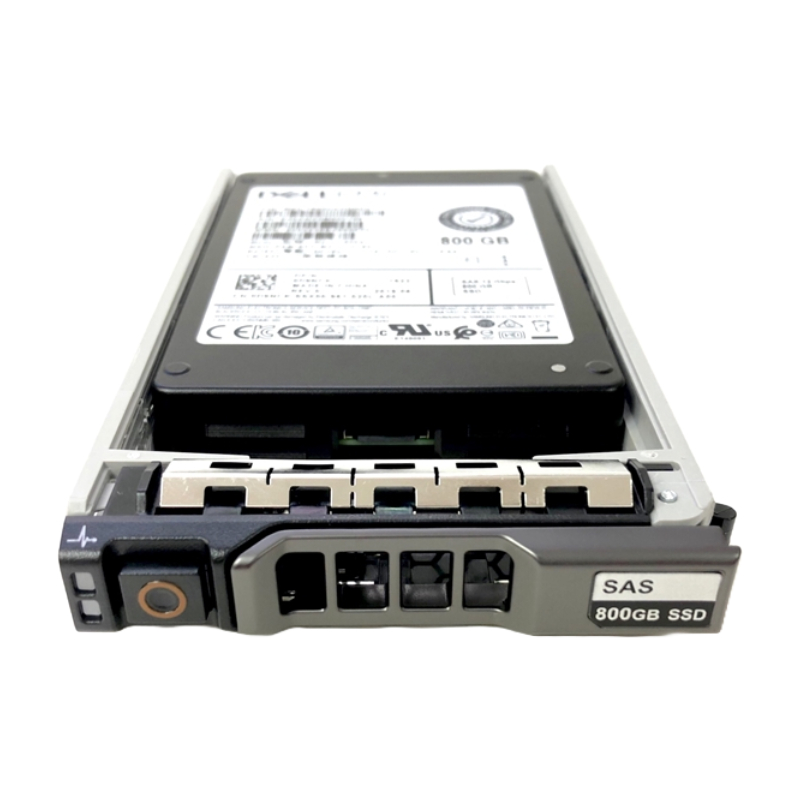


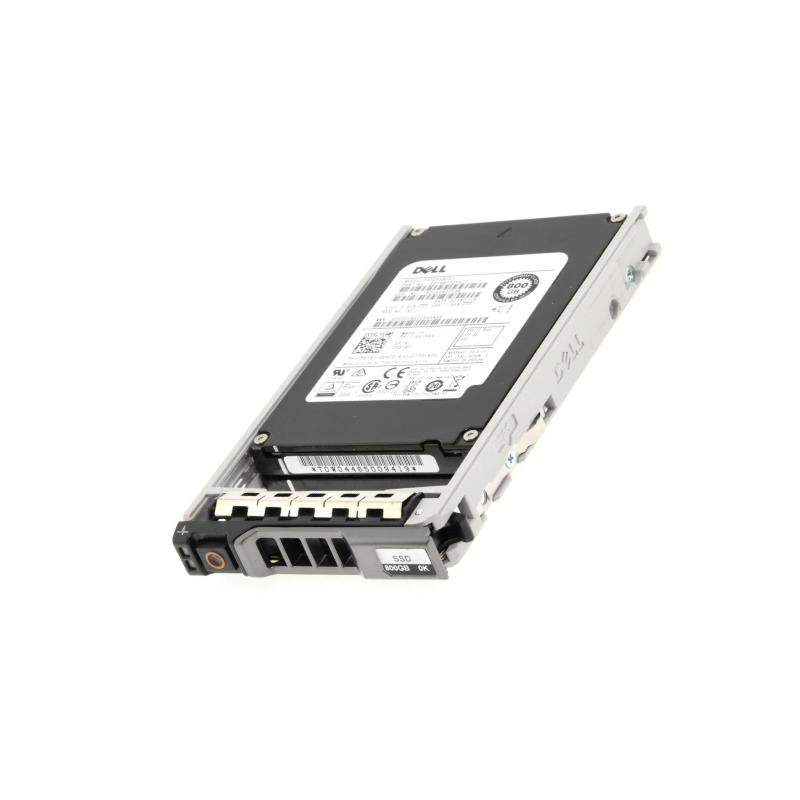
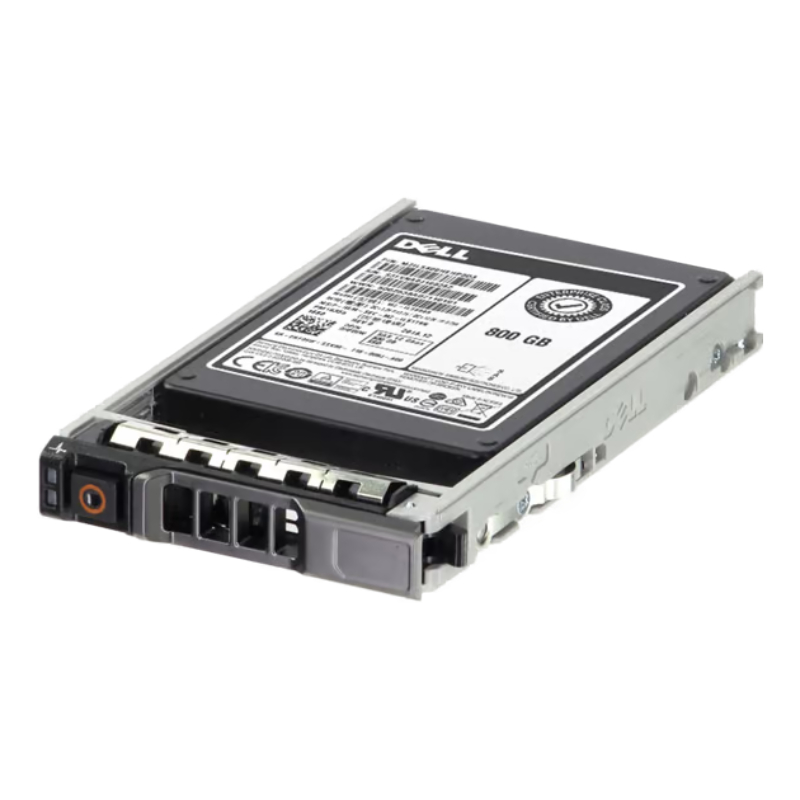
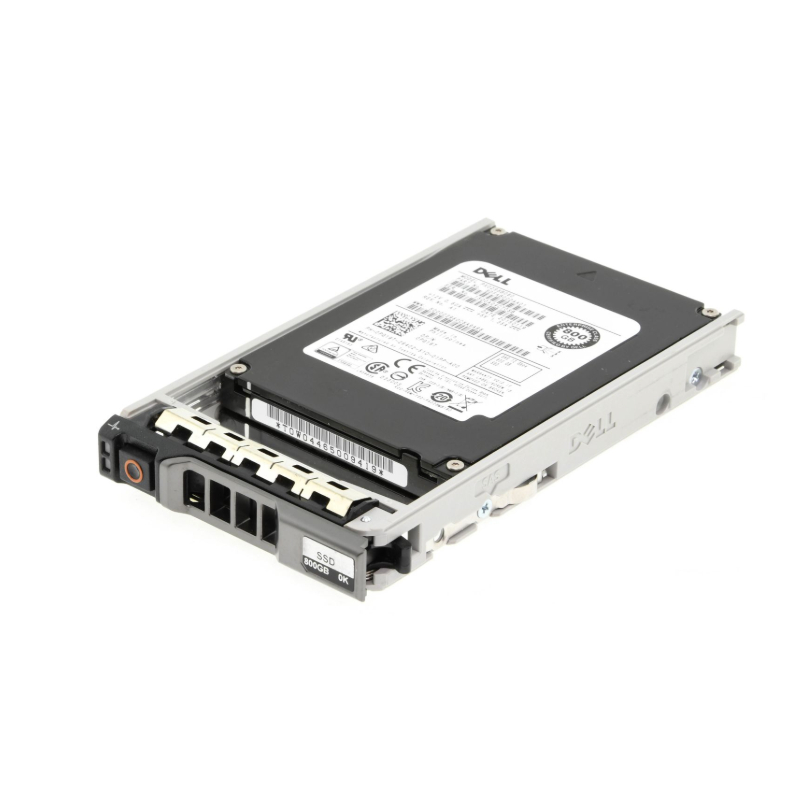
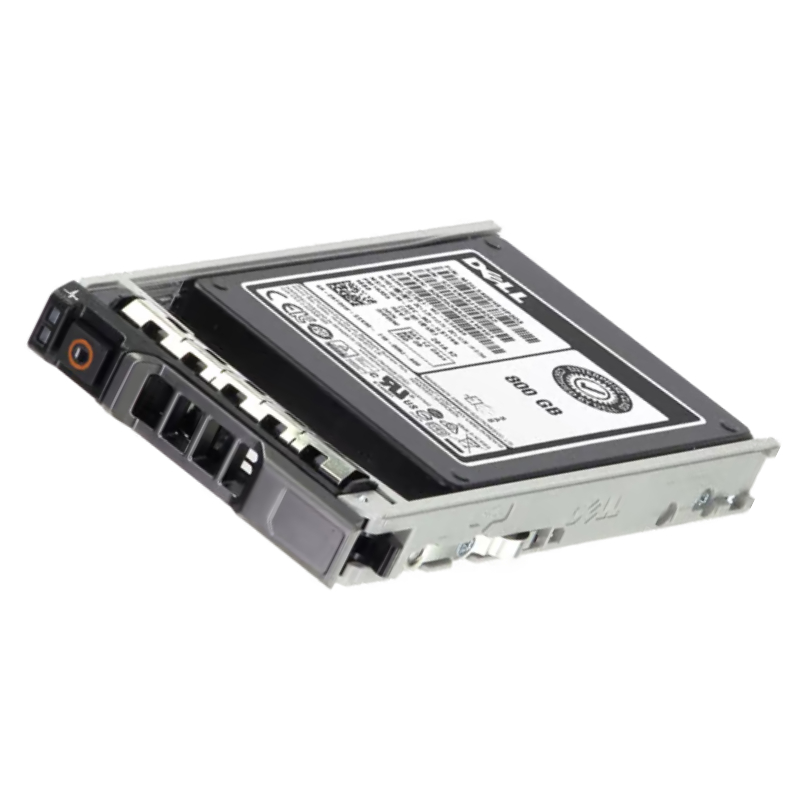
Dell 400-AZIL Hot Plug 800GB SAS 12GBPS Solid State Drive. Excellent Refurbished with 1 Year Replacement Warranty
| SKU/MPN | Warranty | Price | Condition | You save |
|---|---|---|---|---|
| 400-AZIL | 1 Year Warranty | $409.00 | Excellent Refurbished | You save: $143.15 (26%) |
| 400-AZIL | 1 Year Warranty | $940.00 | New Sealed in Box (NIB) | You save: $329.00 (26%) |
The Dell 400-AZIL 800GB Mixed Use TLC SAS 12Gbps Solid State Drive delivers exceptional storage performance and reliability for enterprise-class environments. Designed for PowerEdge 14G servers, this 2.5-inch hot-plug SSD offers fast data access, enhanced endurance, and seamless scalability for demanding workloads. It’s an ideal solution for businesses looking to improve their data center efficiency and application performance.
This enterprise-grade drive features an 800GB storage capacity, making it suitable for mixed-use workloads that require both read and write intensity. The 2.5-inch form factor provides compact integration and efficient space utilization within high-density server configurations.
The Dell 400-AZIL SSD uses TLC (Triple-Level Cell) NAND technology optimized for mixed-use environments. It provides consistent performance and durability, ideal for workloads such as virtualization, databases, and online transaction processing. Advanced wear-leveling algorithms and error correction codes (ECC) ensure data integrity over time.
This SSD is engineered for superior performance across a wide range of Dell PowerEdge and PowerVault systems. Its compatibility ensures optimized data throughput, reduced latency, and simplified maintenance across server deployments.
The Dell 400-AZIL 800GB SSD is purpose-built to deliver faster boot times, improved system responsiveness, and reduced application load times. With 12Gbps SAS connectivity, it ensures consistent and stable data transfer rates even under heavy workloads.
This SSD is classified as a Mixed Use (MU) drive, meaning it’s designed for applications requiring balanced read/write operations. It’s suitable for tasks such as:
Built-in advanced error correction technology and end-to-end data protection safeguard your information from corruption or loss. These features make it ideal for mission-critical operations that require consistent uptime and data integrity.
The hot-swap design enables easy installation and replacement without shutting down the server, allowing for continuous operation and minimal downtime. This is especially advantageous in data centers where system availability is essential.
The Dell 400-AZIL SAS SSD delivers enterprise-grade endurance with a balanced cost-performance ratio. It provides long-term value through reduced downtime, extended lifespan, and lower maintenance requirements. Its robust design meets Dell’s stringent quality standards, ensuring optimal compatibility and reliability in PowerEdge servers.
Ideal for high-transaction environments, the SSD excels in:
The modular 2.5-inch form factor makes it easy to scale storage capacity as business demands grow. The hot-swap feature allows flexible upgrades and quick replacements, ensuring minimal operational disruption during maintenance or expansion.
With reduced latency and faster response times, the Dell 400-AZIL 800GB TLC SSD supports high-efficiency data center operations. It contributes to lower power consumption, improved storage density, and enhanced system reliability—crucial for maintaining competitive enterprise environments.
The Dell 400-AZIL is an enterprise-class 2.5-inch solid state drive designed specifically for mixed-use workloads in demanding server and storage environments. With an 800GB capacity and utilizing TLC (Triple-Level Cell) NAND flash memory with a SAS 12Gbps interface, this drive represents a balance of performance, endurance, and reliability for data centers and business-critical applications.
Recognized by part numbers 400-AZIL, 0T2MR4, and CN0T2MR4, this drive is engineered specifically for Dell PowerEdge servers and PowerVault storage systems. As a genuine Dell component, it ensures full compatibility, firmware optimization, and seamless integration with Dell's management tools including OpenManage and iDRAC.
The Serial Attached SCSI (SAS) 12 gigabits per second interface represents the enterprise standard for high-performance storage connectivity. Unlike consumer-grade SATA interfaces, SAS provides full-duplex communication, meaning data can be read and written simultaneously without performance degradation.
One of the most critical enterprise features of SAS technology is dual-port capability. The Dell 400-AZIL SSD supports two independent pathways to the storage controller, enabling redundant connections for mission-critical applications. This architecture eliminates single points of failure and allows for maintenance operations without system downtime.
While SATA SSDs may offer cost advantages, SAS provides significantly higher reliability, enhanced error recovery, and better queue management. The SAS interface maintains consistent performance under heavy workload conditions where SATA drives might experience performance degradation.
Triple-Level Cell (TLC) NAND stores three bits of data per memory cell, providing an optimal balance of cost, capacity, and endurance. Enterprise TLC (eTLC) implementations like that in the 400-AZIL incorporate advanced wear-leveling algorithms, over-provisioning, and sophisticated error correction to deliver reliability comparable to more expensive MLC alternatives.
The "Mixed Use" designation indicates this SSD is engineered to handle balanced combinations of read and write operations. Unlike read-intensive SSDs that prioritize read performance, or write-intensive SSDs optimized for heavy write workloads, mixed-use drives provide consistent performance across varied application demands.
The Dell 400-AZIL delivers enterprise-grade performance with sequential read speeds up to 1,000 MB/s and sequential write speeds up to 800 MB/s. Random performance reaches up to 160,000 IOPS (Input/Output Operations Per Second) for read operations and 45,000 IOPS for write operations, making it suitable for demanding database and virtualization workloads.
Consistent low latency is a hallmark of enterprise SSDs. The 400-AZIL maintains average read latency below 150 microseconds and write latency below 25 microseconds, ensuring responsive performance for latency-sensitive applications.
With a endurance rating of 10 full drive writes per day (DWPD) over its 5-year warranty period, the 400-AZIL can withstand significant write workloads. This translates to approximately 14.6 petabytes written (PBW) over the drive's lifespan, ensuring long-term reliability in write-intensive environments.
The drive features an impressive 2 million hours MTBF rating, significantly exceeding consumer SSD specifications. This reliability metric demonstrates the engineering focus on continuous operation in 24/7 data center environments.
With an UBER rating of 1 sector per 10^17 bits read, the 400-AZIL provides exceptional data integrity. This advanced error correction capability ensures data reliability even under challenging operating conditions.
Enterprise environments require protection against data corruption during unexpected power loss. The Dell 400-AZIL incorporates advanced power loss protection circuits that provide sufficient holdup time to complete in-progress writes and commit data from volatile cache to non-volatile memory.
Comprehensive data integrity features include cyclic redundancy check (CRC) protection for both data and command paths, ensuring corruption detection throughout the entire data pathway from host to NAND flash memory.
The drive employs sophisticated flash management techniques including wear leveling, bad block management, garbage collection, and read disturb management. These algorithms work collectively to extend drive lifespan and maintain consistent performance throughout the drive's operational life.
Enterprise SSDs maintain additional capacity beyond the advertised user space. This over-provisioning improves write performance, enhances garbage collection efficiency, and extends the drive's endurance by distributing write operations across more physical NAND cells.
Enterprise workloads can generate significant heat, potentially impacting performance and reliability. The 400-AZIL incorporates thermal monitoring and throttling mechanisms to maintain optimal operating temperatures while minimizing performance impact.
The consistent low latency and high IOPS capabilities make the Dell 400-AZIL ideal for virtualization hosts running VMware vSphere, Microsoft Hyper-V, or other hypervisors. The drive can efficiently handle multiple virtual machines with varying workload patterns simultaneously.
Relational databases like Microsoft SQL Server, Oracle Database, and MySQL benefit from the mixed-use characteristics of the 400-AZIL. Transaction processing, which combines frequent reads with write commits, matches perfectly with the drive's performance profile.
Both Online Transaction Processing (OLTP) and Online Analytical Processing (OLAP) environments benefit from the drive's balanced performance characteristics. The fast random read performance accelerates query processing, while strong write capabilities handle transaction logging efficiently.
For public and private cloud deployments, the 400-AZIL provides the consistent performance necessary for multi-tenant environments. The drive's quality of service (QoS) characteristics ensure predictable latency for critical applications.
In HPC environments where storage performance can become a bottleneck, the SAS 12Gbps interface and low latency characteristics of the 400-AZIL help maintain computational efficiency, particularly for data-intensive applications.
The 400-AZIL is certified for use across multiple generations of Dell PowerEdge servers including the 13th generation and newer. Specific compatibility includes PowerEdge R740xd, R740, R640, and other 2.5-inch drive capable models.
For external storage expansion, the drive integrates seamlessly with Dell PowerVault ME4 Series storage arrays, providing performance tier storage for mixed workload environments.
The 2.5-inch small form factor with hot-plug capability allows installation in Dell's dedicated Express Flash bays, which are optimized for SSD performance with direct PCIe connectivity to the system board.
Comprehensive driver support includes Windows Server, Linux distributions (Red Hat Enterprise Linux, SUSE Linux Enterprise Server, Ubuntu Server), VMware ESXi, and other enterprise operating systems. Dell provides certified drivers and firmware updates through their support portal.
Integration with Dell OpenManage systems management allows comprehensive monitoring of drive health, performance metrics, and predictive failure analysis. The drive supports S.M.A.R.T. attributes specifically extended for enterprise SSD monitoring.
The drive conforms to the 2.5-inch small form factor with a 15mm z-height, compatible with enterprise server drive bays. The hot-plug capability enables replacement and expansion without system shutdown, critical for maintaining service availability.
While marketed as an 800GB drive, the actual physical capacity is approximately 894GB, with the additional space dedicated to over-provisioning. The drive uses 512e (512 byte emulation) sector formatting, providing compatibility with legacy systems while maintaining modern capacity efficiency.
Rated for continuous operation in data center environments with operating temperatures from 0°C to 70°C. The drive can withstand non-operating shock up to 1,000 G/0.5ms and vibration up to 2.17 G RMS, ensuring resilience during transportation and handling.
Typical active power consumption ranges from 5-8 watts during operation, with idle power as low as 3.5 watts. The power-efficient design helps reduce overall data center power and cooling requirements compared to traditional hard disk drives.
The SAS 12Gbps interface is backward compatible with 6Gbps and 3Gbps SAS infrastructures, allowing deployment in existing environments. The interface uses the SFF-8639 connector standard for enterprise drives.
While NVMe offers higher theoretical performance through PCIe connectivity, SAS provides established infrastructure, dual-port reliability, and cost-effective performance for many enterprise workloads. The choice depends on specific application requirements and existing infrastructure investments.
Mixed-use drives like the 400-AZIL command a premium over read-intensive models due to their enhanced write endurance and performance. Organizations should evaluate their actual workload mix rather than defaulting to the lowest-cost SSD option.
The move to TLC NAND in enterprise environments represents the maturation of flash technology. Modern TLC with appropriate over-provisioning and advanced controllers can deliver MLC-class endurance with significantly better cost-per-gigabyte economics.
While the initial acquisition cost of enterprise SAS SSDs exceeds consumer alternatives, the total cost of ownership calculation must include factors such as reduced power consumption, decreased rack space requirements, lower administrative overhead, and improved application performance.
For optimal performance, deploy multiple 400-AZIL drives in RAID configurations appropriate to the workload. RAID 10 provides excellent performance for write-intensive applications, while RAID 5 offers capacity efficiency for read-heavy workloads.
Before procurement, analyze existing storage workloads to determine the appropriate balance between read-intensive, write-intensive, and mixed-use drives. Monitoring tools can provide insights into I/O patterns, queue depths, and latency requirements.
While the 400-AZIL is designed for Dell systems, verification of specific server generations and firmware levels is recommended before deployment. Dell's compatibility matrices provide detailed guidance for specific configurations.
After deployment, conduct appropriate performance validation using tools such as FIO or IOMeter to establish baseline performance characteristics. Real-world workload testing provides more valuable insights than theoretical maximum specifications.


 Contact Us
 Information
 Catalog
 Solid State Drives (SSD)
 Network Switches
 Hard Disk Drives
 HBA & Controllers
 PC & Servers
 PC & Server Memory
 CPU & Processors
 Network Routers
 Power Supplies
 Tape Drives & Libraries
 Network Devices
 Computer & Network Cables