
(7% discount is applied at checkout)
Cart is empty
Your go-to destination for cutting-edge server products
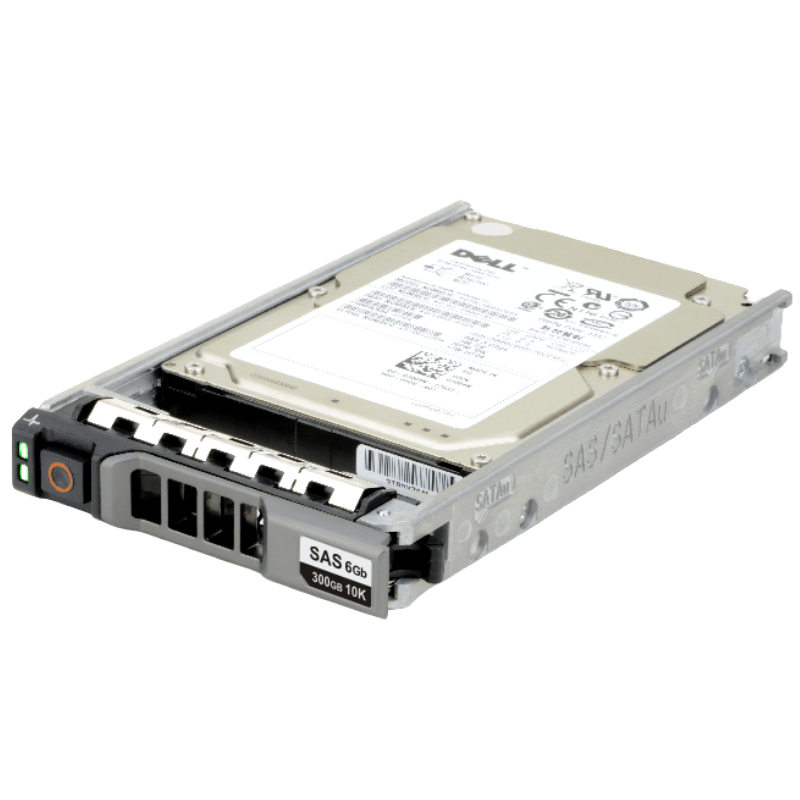
Dell 740Y7 300GB 10K RPM SAS 6GBPS Hard Drive With Tray. Excellent Refurbished with 1 year replacement warranty
The Dell 740Y7 internal hard disk is engineered for enterprise-grade environments that demand reliability, speed, and consistent data handling. With a 300GB storage capacity and a high rotational speed of 10,000 RPM, this drive is optimized for servers and storage arrays requiring rapid data access and dependable performance.
The Dell 740Y7 300GB 10K RPM SAS-6Gbps Internal Hard Disk Drive represents a specialized segment within enterprise-grade storage solutions designed for reliability, performance, and consistent data throughput. This category of hard drives is widely utilized in mission-critical IT environments where data integrity and speed are paramount. Built with enterprise standards in mind, these drives are engineered to handle continuous workloads, making them ideal for servers, storage arrays, and high-demand computing environments.
Unlike consumer-grade storage devices, SAS (Serial Attached SCSI) drives such as the Dell 740Y7 emphasize durability, fault tolerance, and advanced command queuing. The 10,000 RPM spindle speed offers a significant performance advantage over traditional 7,200 RPM drives, enabling faster data access times and reduced latency for transactional workloads. The 6Gbps interface ensures efficient data transfer, supporting modern server architectures and enterprise storage frameworks.
Drives within this category are designed to deliver consistent and predictable performance under heavy workloads. The 10K RPM rotational speed enhances read and write operations, making these drives particularly effective in environments such as database management systems, virtualization platforms, and transactional applications. With lower seek times and improved IOPS (Input/Output Operations Per Second), the Dell 740Y7 category ensures smooth data handling even during peak operational periods.
The 10,000 RPM spindle speed is a defining characteristic of this category. Higher rotational speeds translate directly into faster access to stored data, reducing delays and improving system responsiveness. For enterprise systems that rely on rapid data retrieval, such as financial systems or customer databases, this speed advantage becomes a critical factor in maintaining operational efficiency.
The SAS-6Gbps interface provides superior reliability and scalability compared to SATA alternatives. It supports dual-port connectivity, allowing for redundancy and failover capabilities in enterprise storage systems. This ensures continuous data access even in the event of hardware failures, a key requirement in mission-critical applications.
The Dell 740Y7 300GB hard drive is commonly deployed in enterprise servers and data centers where consistent performance and reliability are essential. Its design makes it suitable for a wide range of applications that require high-speed data access and dependable storage infrastructure.
Database environments benefit significantly from the high IOPS and low latency provided by 10K RPM SAS drives. The Dell 740Y7 ensures that queries are processed quickly, improving overall system efficiency and user experience. This makes it an ideal choice for transactional databases, ERP systems, and CRM platforms.
Virtualized environments often run multiple operating systems and applications simultaneously. The performance capabilities of this drive category allow for seamless operation of virtual machines, reducing bottlenecks and ensuring consistent performance across workloads.
In storage arrays, the Dell 740Y7 contributes to balanced performance and reliability. Its compatibility with RAID configurations enhances data protection while maintaining high throughput, making it a valuable component in scalable storage solutions.
One of the key advantages of the Dell 740Y7 category is its robust build quality. These drives are engineered for 24/7 operation, ensuring long-term reliability in demanding environments. Features such as error correction, vibration resistance, and thermal management contribute to their durability.
Enterprise SAS drives incorporate advanced error correction mechanisms to maintain data integrity. These features minimize the risk of data corruption and ensure accurate data retrieval, which is critical for applications that handle sensitive or mission-critical information.
The Dell 740Y7 is designed to handle higher workload capacities compared to consumer drives. This makes it suitable for environments where large volumes of data are processed continuously, such as cloud computing platforms and data analytics systems.
The Dell 740Y7 hard drive is designed for seamless integration with Dell servers and storage systems. Its compatibility extends to various enterprise platforms, ensuring flexibility in deployment. The standard 2.5-inch form factor allows it to fit into a wide range of server configurations, maximizing storage density and efficiency.
This drive is optimized for Dell PowerEdge servers and similar enterprise systems. Its firmware and hardware design ensure compatibility with RAID controllers and storage management tools, enabling efficient system administration and monitoring.
Hot-swapping is a critical feature in enterprise environments, allowing drives to be replaced without shutting down the system. The Dell 740Y7 supports this functionality, minimizing downtime and ensuring continuous operation.
While SATA drives are commonly used in consumer and entry-level systems, SAS drives like the Dell 740Y7 offer several advantages that make them more suitable for enterprise use. These include higher reliability, better performance, and enhanced scalability.
SAS drives provide faster data transfer rates and lower latency compared to SATA drives. This results in improved system performance, especially in environments with high data access demands.
The SAS interface supports larger storage arrays and more complex configurations. This makes it easier to scale storage infrastructure as business needs grow, ensuring long-term flexibility and cost efficiency.
The Dell 740Y7 category continues to play a vital role in modern IT infrastructure, particularly in scenarios where a balance between cost and performance is required. While SSDs are gaining popularity, 10K RPM SAS drives remain a reliable and cost-effective solution for many enterprise applications.
Many organizations implement hybrid storage systems that combine SSDs and HDDs. In such setups, the Dell 740Y7 serves as a high-performance tier for frequently accessed data, complementing the speed of SSDs while providing greater storage capacity.
Although primarily designed for performance, these drives can also be used in backup systems where reliability is crucial. Their durability ensures that data remains and accessible over extended periods.
The Dell 740Y7 offers a range of features that enhance its performance and reliability. These features are specifically designed to meet the demands of enterprise environments.
The 6Gbps SAS interface ensures efficient data transfer, reducing bottlenecks and improving overall system performance. This is particularly beneficial in environments with high data throughput requirements.
Enterprise-grade firmware enhances drive performance and compatibility with server systems. It ensures smooth operation and reduces the risk of compatibility issues.
Despite its high performance, the Dell 740Y7 is designed to be energy-efficient. This helps reduce operational costs and supports environmentally sustainable IT practices.


 Contact Us
 Information
 Catalog
 Solid State Drives (SSD)
 Network Switches
 Hard Disk Drives
 HBA & Controllers
 PC & Servers
 PC & Server Memory
 CPU & Processors
 Network Routers
 Power Supplies
 Tape Drives & Libraries
 Network Devices
 Computer & Network Cables