(7% discount is applied at checkout)
Cart is empty
Your go-to destination for cutting-edge server products
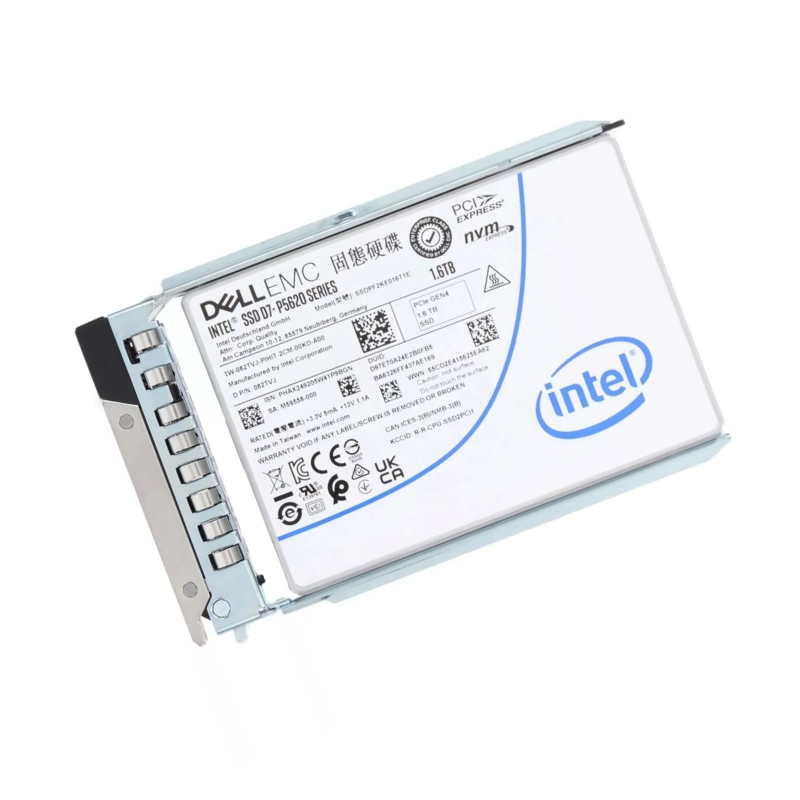


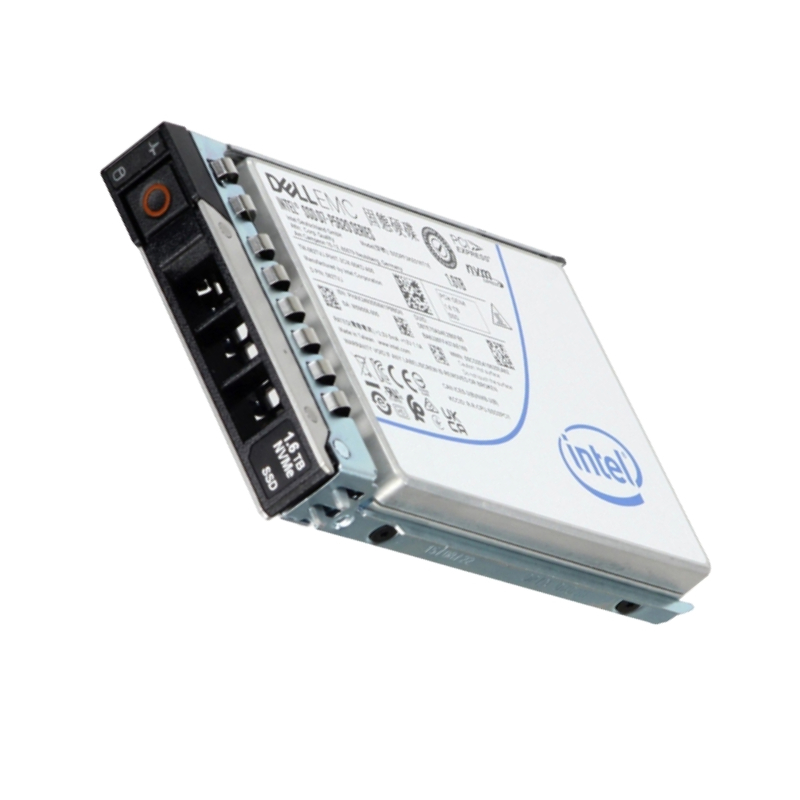
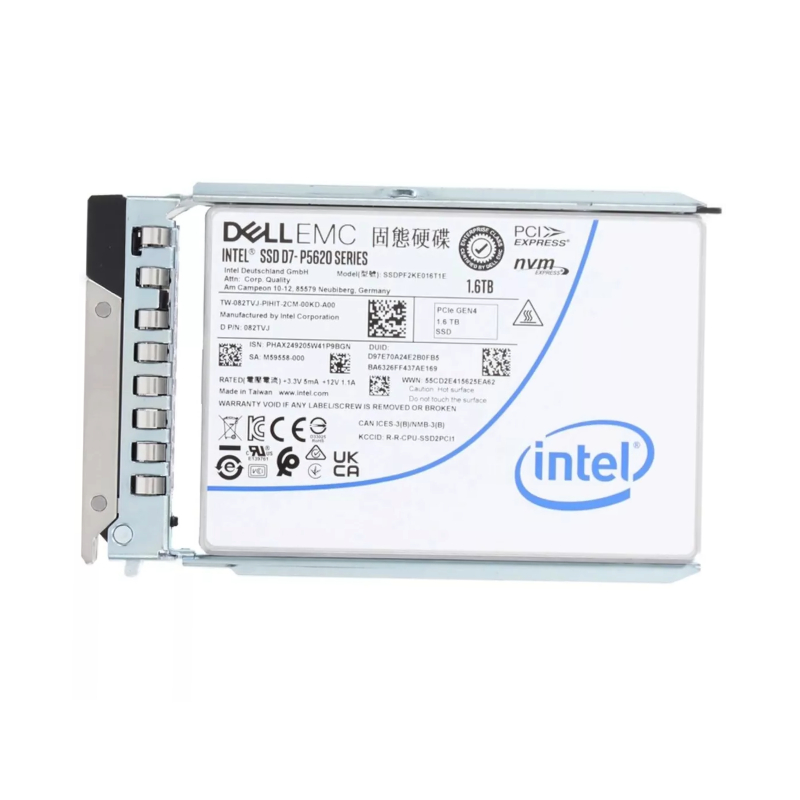
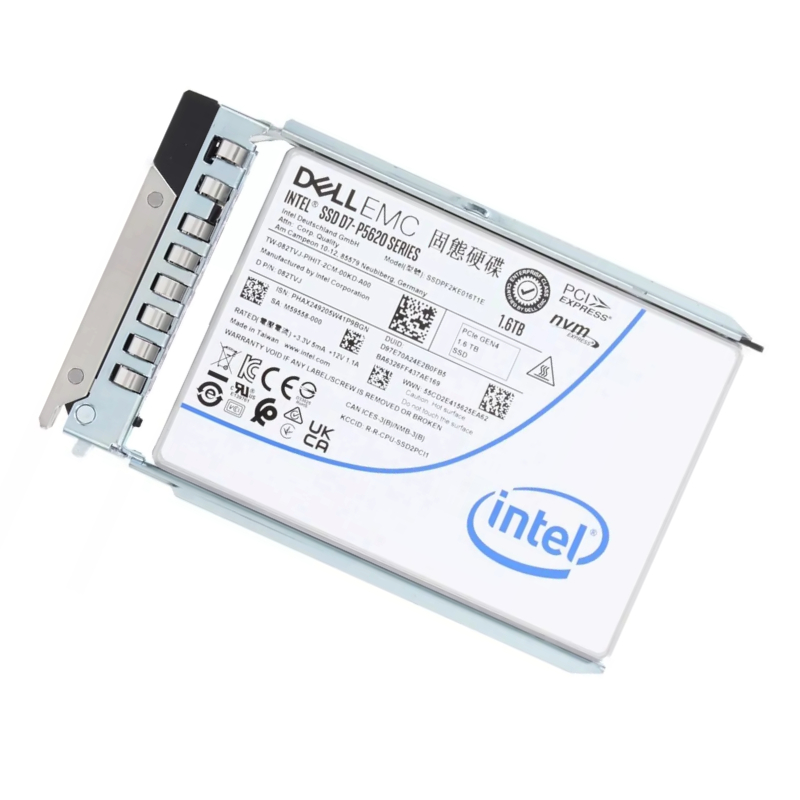
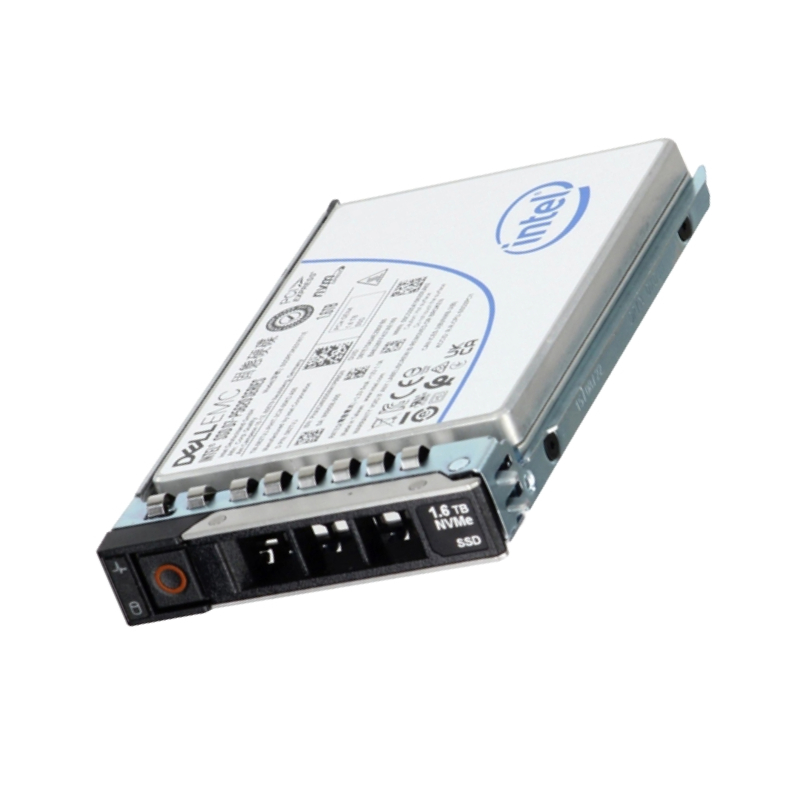
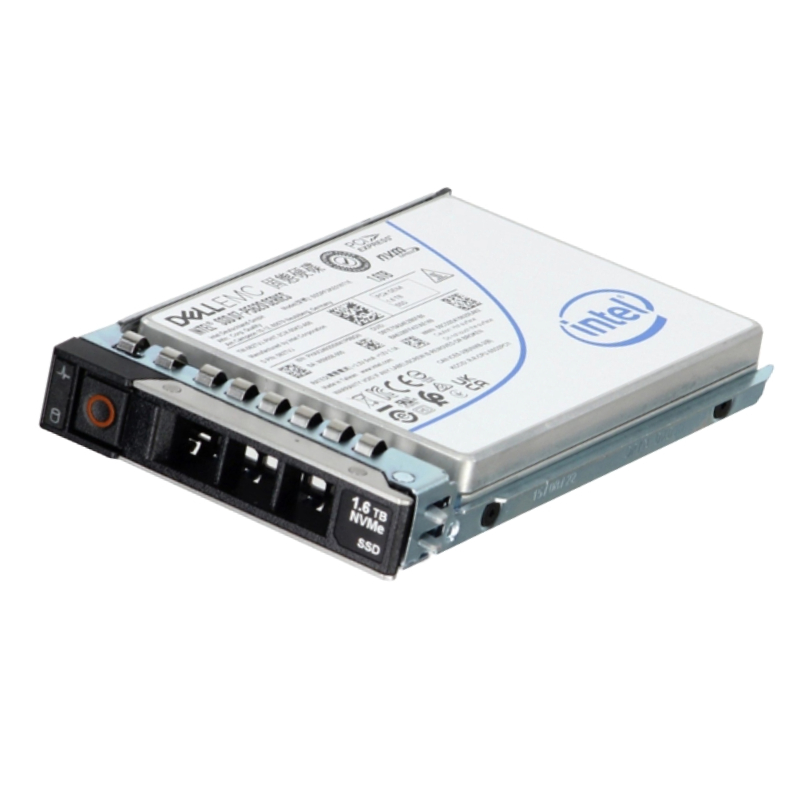
Dell 82TVJ 1.6TB NVMe U.2 PCI-E Gen4 TLC 3D Nand Mixed Use SSD. Excellent Refurbished with 1 year replacement warranty
Unleash enterprise-grade performance with the Dell 82TVJ 1.6TB SSD, engineered for high-speed data processing and superior endurance in mixed-use environments. Built with TLC 3D NAND technology and optimized for NVMe interface, this drive delivers exceptional efficiency and long-lasting reliability.
The 82TVJ Dell 1.6TB NVMe U.2 PCIe Gen4 SSD series stands as a high‑performance line tailored for enterprise, data center, and intensive mixed‑use applications. This category of storage solutions is engineered to offer a balance of sustained throughput, random I/O resilience, data integrity, and endurance. Within this class, products share a foundation in TLC 3D NAND architecture, NVMe protocol, and U.2 15mm dual-port connectivity, making them ideal candidates for server deployments, caching layers, database acceleration, and hybrid storage tiers.
Within data centers, these SSDs are often deployed in:
Workloads in scientific computing, AI model training, big data analytics, and real-time inference benefit from the low-latency, high-random I/O capabilities of this class.
Cloud providers and service operators can use these drives to support multitenant Virtual Machines (VMs), block storage, or database-as-a-service platforms because they handle unpredictable and bursty I/O patterns gracefully.
These SSDs operate on a four-lane PCIe Generation 4 interface (x4), delivering superior raw throughput compared to previous generations. The Gen4 lanes offer twice the per-lane throughput of Gen3, enabling sequential read/write ceilings well beyond 5,000 MB/s in optimized systems.
NVMe (Non-Volatile Memory Express) extends benefits such as deep queueing, low command latency, and support for multiple submission/completion queues. This protocol is pivotal in unlocking the true performance potential of modern NAND flash arrays.
The U.2 (formerly SFF-8639) 15mm design provides ample headroom for sophisticated controller, DRAM cache, power conditioning, and thermal dissipation systems. It’s broadly compatible with existing U.2 server trays and guides.
Internally, these drives typically contain:
This class uses Triple-Level Cell (TLC) 3D NAND that stacks memory cells in multiple vertical layers—commonly 144 layers or beyond in advanced designs. The 3D structure improves density, endurance, and cost efficiency.
While TLC NAND is less durable in pure write-intensive tasks compared to SLC or MLC, the firmware in mixed-use SSDs intelligently balances wear, over-provisioning, and garbage collection to ensure stable performance across diverse workloads.
The queue depth management in enterprise NVMe environments allows these drives to maintain sub-millisecond latencies even under high contention. The NVMe stack supports multiple Hardware Submission and Completion Queues (SQ/CQ), allowing parallelism for multi-core systems.
Under long-duration writes, the drive may engage internal thermal throttling or pacing mechanisms to ensure stability. A robust thermal solution in server chassis often aids in maintaining peak throughput.
Because many enterprise workloads blend read and write, the mixed-use design ensures consistent IOPS across diverse ratios (e.g., 70/30 reads to writes, or 50/50 splits) without steep performance drops.
Mixed‑use SSDs in this category are validated for demanding endurance cycles under a range of I/O patterns. Internal wear-leveling algorithms, over-provisioning, and intelligent error correction maintain drive longevity even under rigorous use.
Enhanced power-loss mechanisms guard against data corruption in the event of unexpected power failure. The drive can commit in-flight data from volatile cache to nonvolatile memory before shutdown.
Built-in AES‑256 hardware encryption secures all data at rest without host overhead. Key management, secure block erasure, and encryption support make this SSD suitable for compliance-driven environments.
Internal ECC, CRC checks, and path protection ensure that every bit is validated from the host interface to the NAND itself. This reduces undetected bit-level errors and maintains data integrity.
While 1.6 TB is a favored mid-to-high capacity point, this product line may include lower or higher tiers (e.g. 800 GB, 3.2 TB) depending on product families. Each tier adheres to the same architecture but scales differently in parallelism and over-provisioning.
Some enterprises may prefer U.3, EDSFF (E1.S / E3.S) or other emerging form factors for their next-generation infrastructure. However, the U.2 15mm interface remains widely adopted in legacy and modern servers.
Beyond mixed-use, SSD lines often segment into read-intensive (for mostly reads) or write-intensive (for logging, caching) variants. The 82TVJ line emphasizes balanced performance to address fluctuating workloads effectively.
Ensure your server or storage controller supports NVMe over PCIe Gen4 and has U.2 connectors. Firmware and BIOS should be updated to recognize high-speed drives and provide proper lane configuration.
These SSDs generate heat under sustained throughput. Use appropriate airflow, heatsinks, or server tray designs to maintain optimal junction temperatures and prevent thermal throttling.
Reserving a portion of capacity (e.g., leaving 10–20% unallocated) improves longevity and sustained performance. This additional buffer aids with garbage collection and wear-leveling without user-visible impact.
Some buyers focus on raw throughput; others emphasize random I/O responsiveness. The 82TVJ product class strikes a balance by offering strong sequential bandwidth without compromising random I/O under load.
Evaluate drive lifetime in drive writes per day (DWPD) or total bytes written (TBW) metrics for your workload. Ensure the mixed-use class meets or exceeds your anticipated write cycles over the device’s service lifetime.
The ability to maintain low, predictable latency under heavy queue depths is critical. Drives in this category are engineered to limit tail latencies and avoid performance cliffs in real-world settings.
While synthetic benchmarks may show the full 5,300 MB/s read or 1,900 MB/s write peaks, real-world performance often intermixes workloads, causing slight adjustments in measurable throughput. In production, expect stable, high-bandwidth performance sustained over longer durations.
In tests mimicking database, VM, or web service loads (e.g. 70% reads / 30% writes), drives in this line typically maintain a large fraction (70–90%) of their peak IOPS, thanks to firmware optimization.
In crowded request queues (depth of 64 or more), the SSD maintains sub-millisecond latencies for the majority of operations. Tail 99th-percentile latency often remains within acceptable enterprise bounds.
Manufacturers and third-party labs often validate the drive through prolonged write-heavy workloads, error-injection tests, and power-fail simulations to certify compliance with enterprise standards.
Use these SSDs as intermediate cache or performance tiers between ultra-fast (but expensive) flash and high-capacity, slower media. Their balanced performance makes them versatile as both read-accelerators and write buffers.
In next-generation NVMe-over-Fabrics or NVMe-over-TCP platforms, these drives can serve as high-speed media targets in NVMe zones, supporting disaggregated storage models.
With strong random I/O capabilities, these drives can also host operating systems, logs, swap files, or index structures that require fast, low-latency access.
Design arrays with appropriate RAID levels (RAID-5, RAID-6, erasure coding) and include spare drives. Leave headroom for over-provisioning so that controllers and the drives themselves can manage wear without sacrificing application I/O.
As manufacturers push 200+ layer 3D NAND, future iterations of this SSD class may offer higher capacities, better endurance, and higher per-die performance, further reducing cost per gigabyte.
While this line uses TLC, some future variants might leverage QLC (quad-level cell) or even PLC (penta-level cell), provided firmware and error correction mature to keep performance and reliability acceptable for enterprise use.
Expect migration toward EDSFF (E1.S, E3.S) or future NVMe form factors. Meanwhile, backward compatibility with U.2 remains important for data center continuity.
Next-generation drives may provide deeper telemetry, machine-learning-based failure prediction, smarter garbage collection, and self-optimization—making them more autonomous and adaptive in production.


 Contact Us
 Information
 Catalog
 Solid State Drives (SSD)
 Network Switches
 Hard Disk Drives
 HBA & Controllers
 PC & Servers
 PC & Server Memory
 CPU & Processors
 Network Routers
 Power Supplies
 Tape Drives & Libraries
 Network Devices
 Computer & Network Cables