(7% discount is applied at checkout)
Cart is empty
Your go-to destination for cutting-edge server products
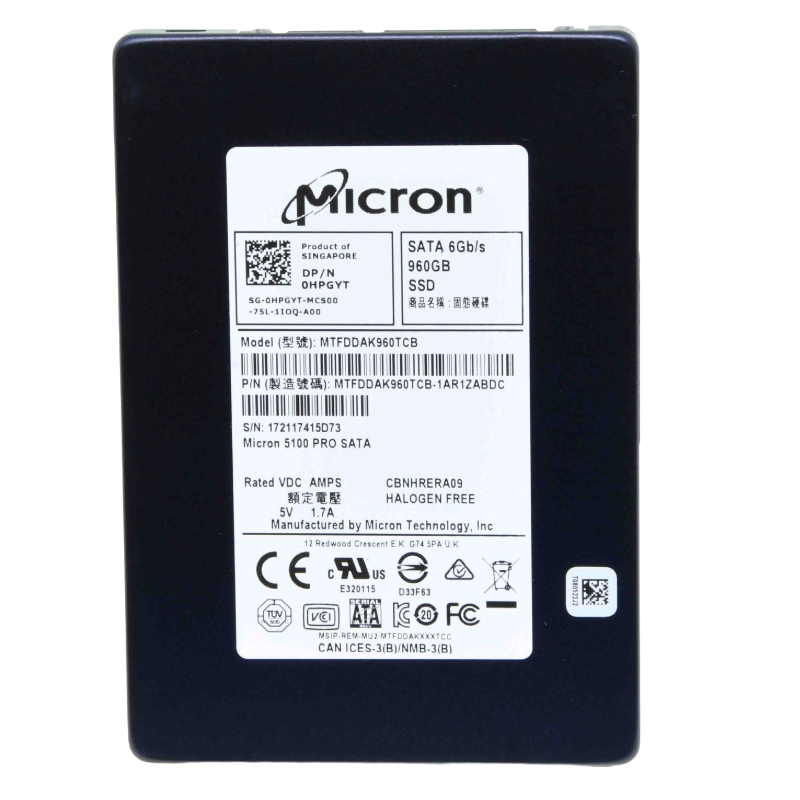


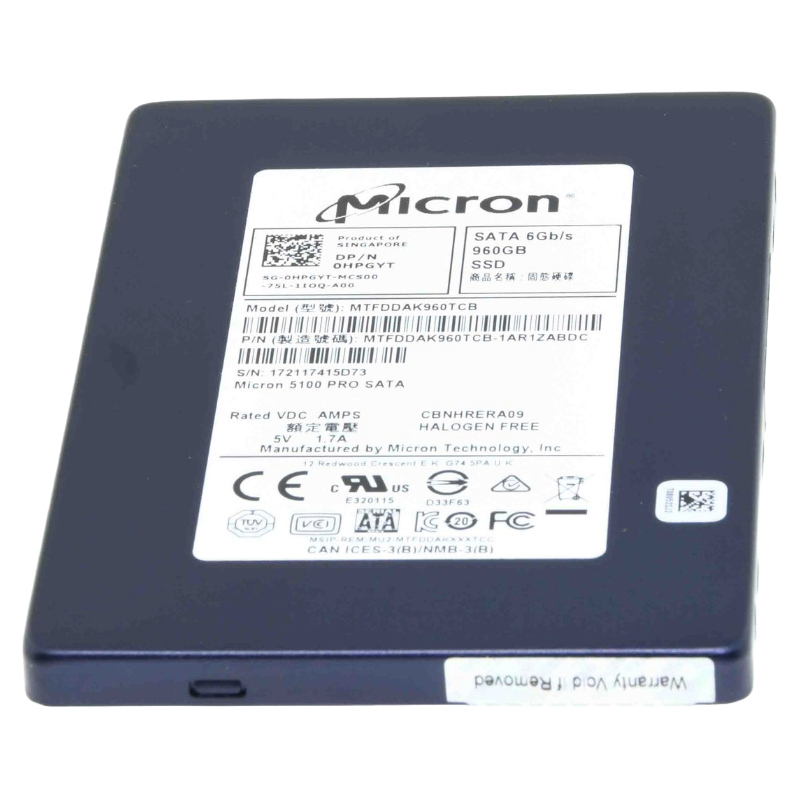
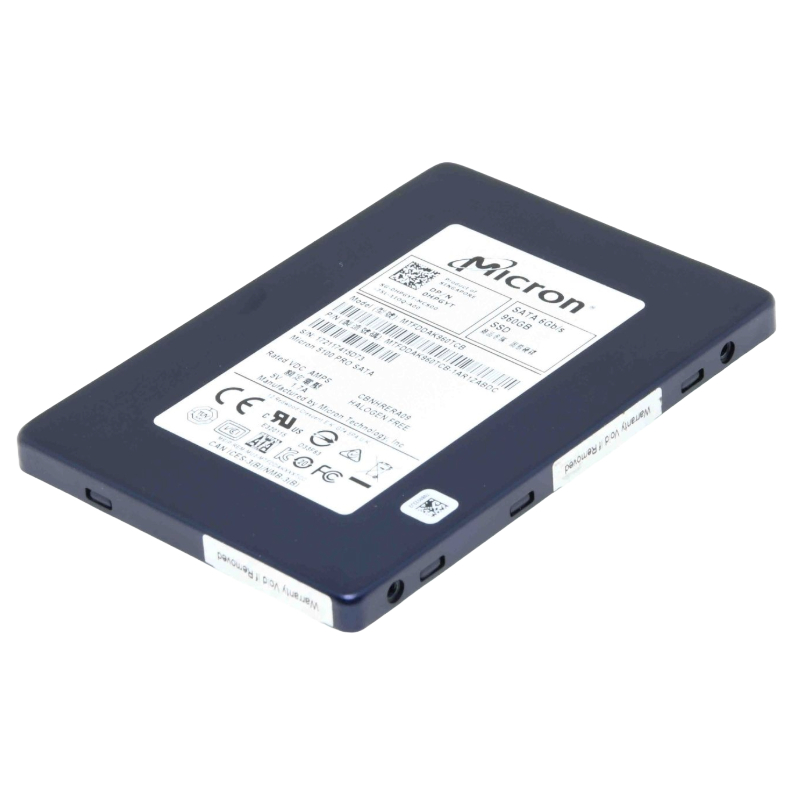
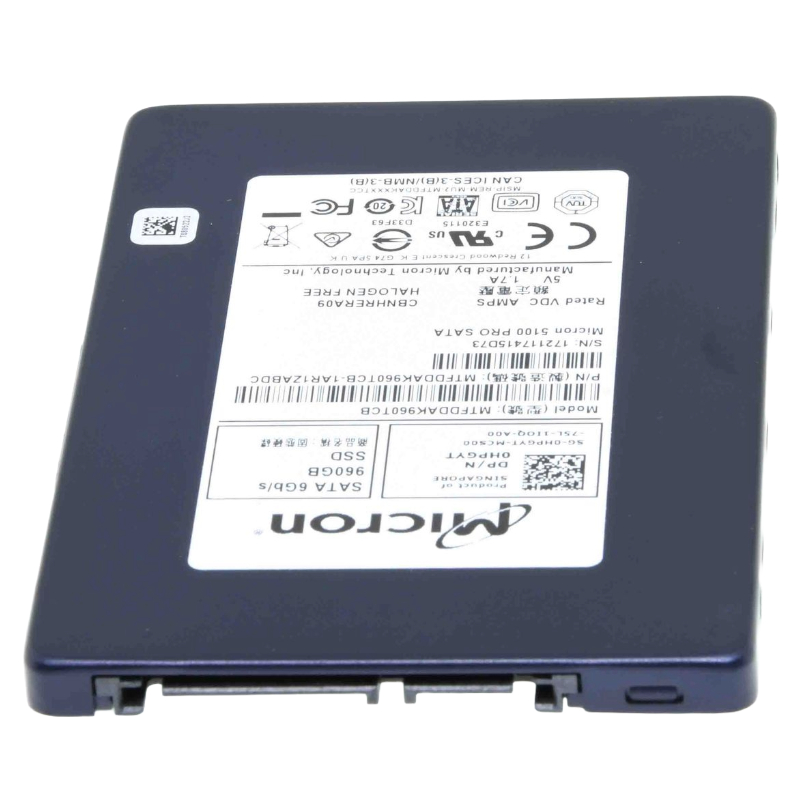
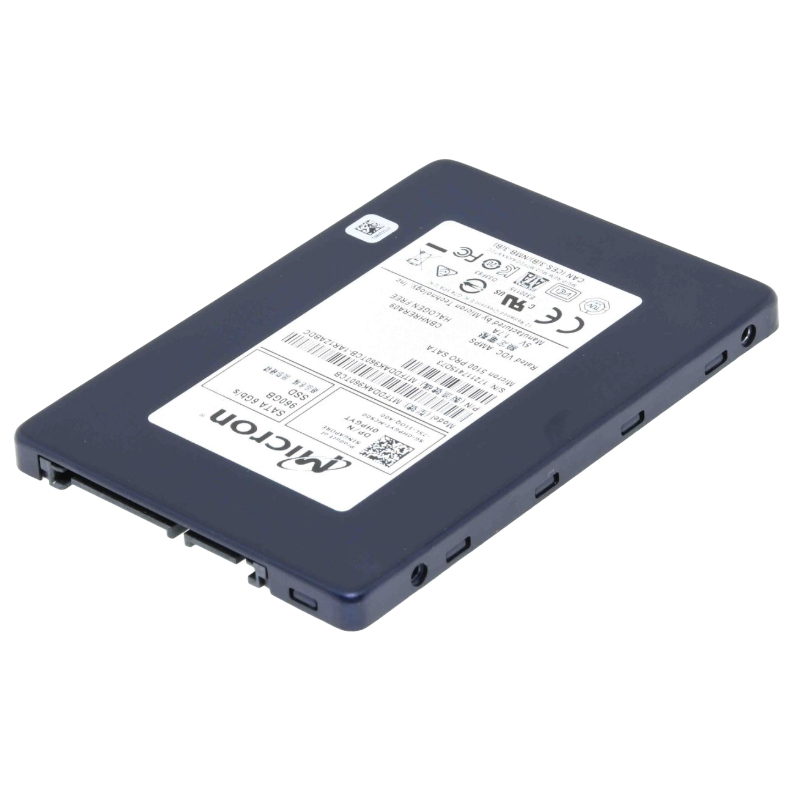
Dell HPGYT 960GB SATA 6GBPS Enterprise 2.5 Inch Solid State Drive. Excellent Refurbished with 1 year replacement warranty
The **HPGYT Dell 960 GB SATA 6 Gbps 2.5‑inch SSD family** occupies a precise niche combining high capacity, standardized interface, and robust performance. This category encompasses drives engineered for demanding server workloads, storage arrays, virtualization hosts, and data center environments.
Robust Business-Class Storage Solution
Featuring a high-speed SATA 6.0 Gbps interface, this drive delivers stable and rapid data flow, compatible with a wide array of server hardware. Ideal for data-intensive operations requiring consistent performance and low latency.
Thanks to hot-plug capabilities, this Dell enterprise SSD enables on-the-fly replacements and upgrades without server downtime – a key advantage in critical infrastructure environments.
Built to handle heavy workloads and 24/7 operations, the HPGYT drive ensures long-term durability with consistent performance metrics. It's optimized for mission-critical environments where data access speed and stability are non-negotiable.
The Dell HPGYT SSD brings together long-lasting endurance, trusted Dell engineering, and industry-standard performance. Perfect for IT infrastructures requiring both capacity and speed within a 2.5-inch chassis.
Built to follow the SATA/600 protocol, the HPGYT SSD ensures wide compatibility across a broad spectrum of storage arrays and server configurations. Whether upgrading existing infrastructure or expanding storage, it fits seamlessly.
In the domain of **enterprise-grade solid state drives**, the **HPGYT Dell 960 GB SATA 6 Gbps 2.5‑inch SSD family** occupies a precise niche combining high capacity, standardized interface, and robust performance. This category encompasses drives engineered for demanding server workloads, storage arrays, virtualization hosts, and data center environments. The drives in this class are optimized for sustained throughput, reliability under continuous use, and compatibility with enterprise infrastructure.
The hallmark specification of this series is its **960 GB storage capacity**, which offers a strong balance between usable density and performance buffer. Many data center workloads demand high-capacity drives to reduce the number of physical devices, and 960 GB provides that mid-tier sweet spot. Coupled with the **2.5-inch form factor**, these SSDs integrate seamlessly into standard server bays, blade enclosures, and chassis designed for enterprise storage. The compact footprint allows denser deployment, easier cooling, and compatibility across a breadth of platforms.
These SSDs utilize the **SATA III / SATA/600 standard**, capable of transferring up to 6 gigabits per second (Gbps). While newer protocols such as NVMe offer higher theoretical speeds, **SATA 6 Gbps remains ubiquitous** across legacy servers and many enterprise systems. For many applications, the throughput and latency offered by this SATA interface suffice for transactional workloads, caching layers, boot volumes, and backup arrays.
Among the primary performance indicators, the **maximum sequential read throughput** is rated at up to **540 MB/s**, while **sequential write throughput** reaches up to **520 MB/s**. These figures represent sustained transfer performance under ideal sequential workloads, ideal for large file movements, database backups, or streaming large data blocks.
In enterprise usage, **random read/write IOPS** (input/output operations per second) and latency metrics can matter more than raw sequential numbers. Though the published specs focus on large-block transfers, the internal controller, firmware optimization, and NAND type all contribute to delivering low-latency response times for small block random IO. This ensures efficient database queries, virtual machine disk access, and transactional workloads.
In enterprise design, **power-fail protection** is vital. These drives often include on-board capacitors or firmware mechanisms to flush internal volatile buffers to NAND in case of unexpected power loss, protecting against data corruption. Coupled with **end-to-end data path protection**, the HPGYT family ensures data integrity in hostile environments.
The HPGYT 960 GB SATA SSDs serve well as **boot drives and OS volumes** in enterprise servers. Their performance, reliability, and low-latency access make them ideal for hosting operating systems, hypervisor images, and system-level caching partitions.
In virtualized environments where **VMs frequently read and write small blocks of data**, the low latency and consistent performance of these SSDs help maintain host responsiveness. They also support environments like VMware, Hyper-V, or Nutanix where density, reliability, and predictable behavior are essential.
Workloads such as **OLTP (Online Transaction Processing)**, high-speed caching, and analytical query engines benefit from the random I/O capabilities and the throughput headroom of the HPGYT series. The drives can sustain moderate bursts while maintaining performance consistency.
In multi-tier storage architectures, these SSDs make excellent caching or journaling tiers. Placed between fast NVMe or RAM-tier layers and slower HDD-based bulk storage, they act as a buffer or write-accelerator, absorbing spikes in load and improving overall system efficiency.
Although NVMe and PCIe-based SSDs deliver higher throughput and lower latency, they may not always justify their cost or compatibility requirements in every scenario. The **HPGYT Dell 960 GB SATA SSD** offers a compelling balance: broad compatibility, mature platform support, and sufficient performance for many enterprise mid-tier workloads.
Within the storage hierarchy, the 960 GB class slots between smaller high-performance drives (e.g., 480 GB or 800 GB) and larger bulk drives (1.6 TB, 3.2 TB). This middle ground enables cost-effective density without incurring performance losses from overextended drives.
These SSDs are designed and branded by **Dell (EMC division)** under the model family **HPGYT**, often cross-referenced with part numbers like **118000520**. In procurement, using both model and part number ensures compatibility with Dell’s firmware and qualification matrix.
The drives conform to the SATA/600 protocol, meaning 6 gigabits per second signaling. This alignment ensures backward and forward compatibility with host controllers that support SATA 3 (6.0 Gbps) and often negotiate down to 3.0 Gbps if needed, making them versatile across generations.
Hot-pluggable design implies connectors and firmware logic that allow insertion or removal during system operation. The drive’s internal architecture supports safe removal without corrupting data, which is crucial for systems requiring high availability.
Beyond sequential numbers, high-quality controllers and firmware logic aim to maintain low latencies (often sub-millisecond) under mixed workloads. This delivers reliability for small-block reads/writes, which are more representative of real-world usage in databases and VM systems.
Enterprise SSD controllers embed intelligent wear-leveling algorithms that evenly distribute write and erase cycles across all NAND cells. Combined with **over-provisioned capacity**, this extends the usable life of the drive and stabilizes performance as the drive ages.
To mitigate bit errors and ensure integrity, these SSDs incorporate **error correction codes (ECC)**, **bad block management**, and path-to-path data verification. In many models, on-board cache flush mechanisms guard against partial writes in the event of power interruptions.
Always maintain updated firmware aligned with Dell’s recommendations. Firmware updates often include **performance optimizations, bug fixes, and wear-leveling enhancements**. When mixing drives in a single server, ensure they share compatible firmware versions to avoid unexpected behavior.
While SSDs generate less heat than spinning disks, under heavy, sustained load they can warm. Deploy them in properly cooled enclosures and maintain airflow across drive arrays. Avoid stacking or obstructing vent paths in dense server sleds.
In mission-critical environments, pair these drives with hardware RAID or software redundancy (RAID 1, 5, 6, or 10) to protect against device failure. Ensure the RAID controller or software stack is compatible with SSD wear-leveling and TRIM/trim-like commands if supported.
Benchmarks often show that real-world sustained throughput hovers close to the published ceilings (540 MB/s read, 520 MB/s write) when the drive is fresh and the workload is sequential. Under mixed random workloads, the delta narrows; legacy SATA bridges and host controllers may also limit speeds.
A hallmark of enterprise-class SSDs is consistency — delivering **tight latency variance (i.e., low “tail latencies”)** under heavy mixed loads. The Dell HPGYT class is optimized to maintain predictable QoS under bursty transactional traffic common in database and virtualization contexts.
The HPGYT line may include variants at differing capacities—for example, 480 GB, 800 GB, or 1.92 TB—each adhering to the same interface, controller architecture, and enterprise-grade firmware family. The 960 GB model sits midrange in the lineup, offering a balance between performance and cost.
Some enterprises deploy versions of HPGYT or similar EMC-labeled SSDs using SAS or Near-SAS interfaces for higher redundancy and multi-port support. However, the 6 Gbps SATA variant remains among the most cost-efficient and broadly compatible for mixed deployments that do not demand multi-lane redundancy.
The 960 GB drive offers a cost-effective midpoint where you're not paying a large premium for incremental capacity while retaining plenty of headroom for wear-leveling and over-provisioning. This balance is ideal for many enterprise storage strategies.
These drives are engineered to deliver **consistent throughput** over their service life, avoiding performance degradation or “slowdown phases.” With proper monitoring, they can reliably outlast many application-level refresh cycles.
The SATA 6 Gbps interface imposes a theoretical bandwidth ceiling (~600 MB/s before overhead). While the rated speeds (540/520 MB/s) approach this limit, workloads demanding multi-gigabyte per second throughput may be constrained.
Advanced NVMe-based SSDs or multi-lane architectures may outperform these drives in absolute benchmarks. In cutting-edge deployments, system architects must weigh cost, compatibility, and performance requirements before choosing SATA-based enterprise drives over NVMe alternatives.
As the drive accumulates write cycles, internal wear leveling, garbage collection, and error correction overhead can introduce minor performance variance. Proper over-provisioning and monitoring help mitigate these effects over long operational periods.
Organizations can scale out by adding additional HPGYT drives to RAID arrays or grouped volumes. Because the architecture is consistent across variants, mixing 960 GB models with sibling capacities (if firmware-compatible) is straightforward.
In environments adopting NVMe or next-gen SSDs, the HPGYT drives can still coexist as caching layers, slower-tier volumes, or secondary storage. Their continued viability within a broader storage topology makes them resilient to evolving architectures.
In large-scale deployments, stagger drive refresh cycles rather than replacing entire banks at once. This approach spreads costs, maintains service continuity, and avoids bulk disruptions.
Even high-reliability SSDs are not immune to failure. Ensure that data on HPGYT drives is backed up or mirrored via redundant systems. Incorporate these drives into your broader disaster recovery and failover architecture.
Alternate phrases such as “enterprise-class SATA SSDs,” “Dell EMC HPGYT line,” “960 gigabyte solid-state drives,” or “server-grade 2.5″ SATA drives” help the page rank for more varied search queries. Sprinkle these throughout headings, lists, and paragraph bodies.
Incorporate **JSON-LD or microdata** for `Product` instances listed under the category, with attributes for name, capacity, interface, part number, and performance. This structured data can help search engines present enhanced listings (rich cards, comparison highlights) in search results.


 Contact Us
 Information
 Catalog
 Solid State Drives (SSD)
 Network Switches
 Hard Disk Drives
 HBA & Controllers
 PC & Servers
 PC & Server Memory
 CPU & Processors
 Network Routers
 Power Supplies
 Tape Drives & Libraries
 Network Devices
 Computer & Network Cables