(7% discount is applied at checkout)
Cart is empty
Your go-to destination for cutting-edge server products
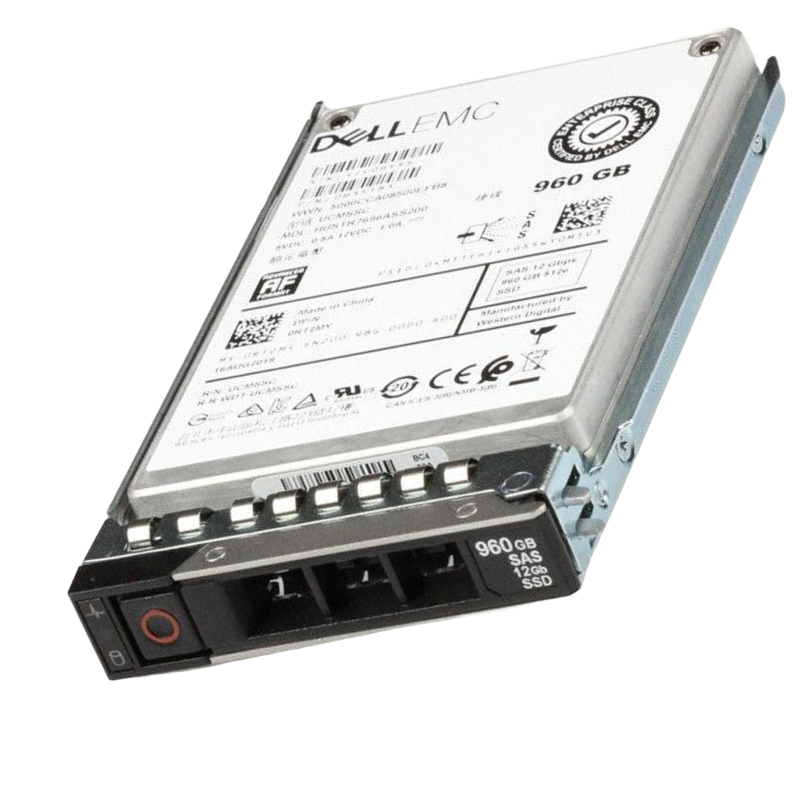


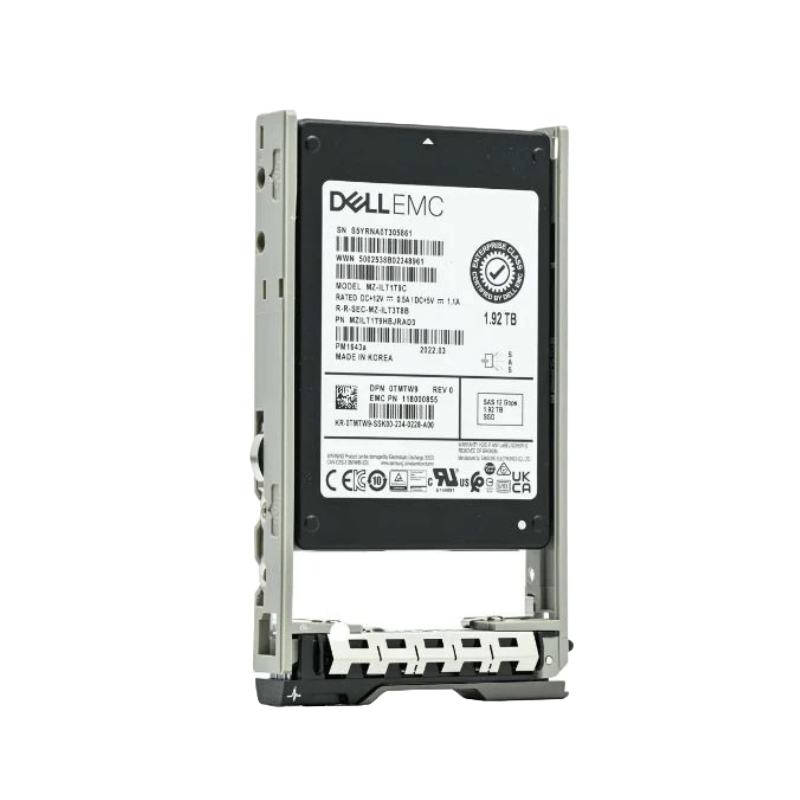
Dell TMTW9 1.92TB SAS 12GBPS SSD TLC Read Intensive. Excellent Refurbished with 1 year replacement warranty
| SKU/MPN | Warranty | Price | Condition | You save |
|---|---|---|---|---|
| TMTW9 | 1 Year Warranty | $522.00 | Excellent Refurbished | You save: $182.70 (26%) |
| TMTW9 | 1 Year Warranty | $1,425.00 | New Sealed in Box (NIB) | You save: $498.75 (26%) |
The Dell TMTW9 1.92TB SAS 12Gbps SSD is engineered for read-intensive workloads, offering exceptional reliability and performance for data center environments. Designed with a hot-swappable 2.5-inch SFF form factor, this drive ensures seamless integration into a wide range of Dell PowerEdge servers.
This compatibility list is not exhaustive. Additional Dell PowerEdge and Powervault systems may support this SSD. Tray label may be absent in some shipments.
The Dell TMTW9 1.92TB SAS-12GBPS Read Intensive 1dwpd TLC SFF Hot-Plug Solid State Drive with tray for PowerEdge Server represents a focused category of enterprise-grade storage devices engineered to deliver consistent, predictable read performance while balancing endurance and cost. This category targets data centers, cloud service providers, virtualization hosts, and enterprise application servers where read-heavy workloads — including database queries, analytics, virtual desktop infrastructure (VDI) read caches, content delivery, and web serving — dominate. The drives use a 12 Gbps SAS interface designed to integrate seamlessly into Dell PowerEdge chassis, leveraging SAS signaling and enterprise features such as dual-port connectivity, robust error handling, and advanced thermal management. The TMTW9 SKU typifies a class of read-intensive SSDs that optimize total cost of ownership by using triple-level cell (TLC) NAND to increase density while offering sufficient drive writes per day (1dwpd) for many real-world enterprise read-centric workloads. Because these drives come in a small form factor (SFF) and are hot-pluggable with an included tray, they streamline deployment into existing server arrays and make replacement or scaling straightforward for administrators managing large fleets of PowerEdge servers.
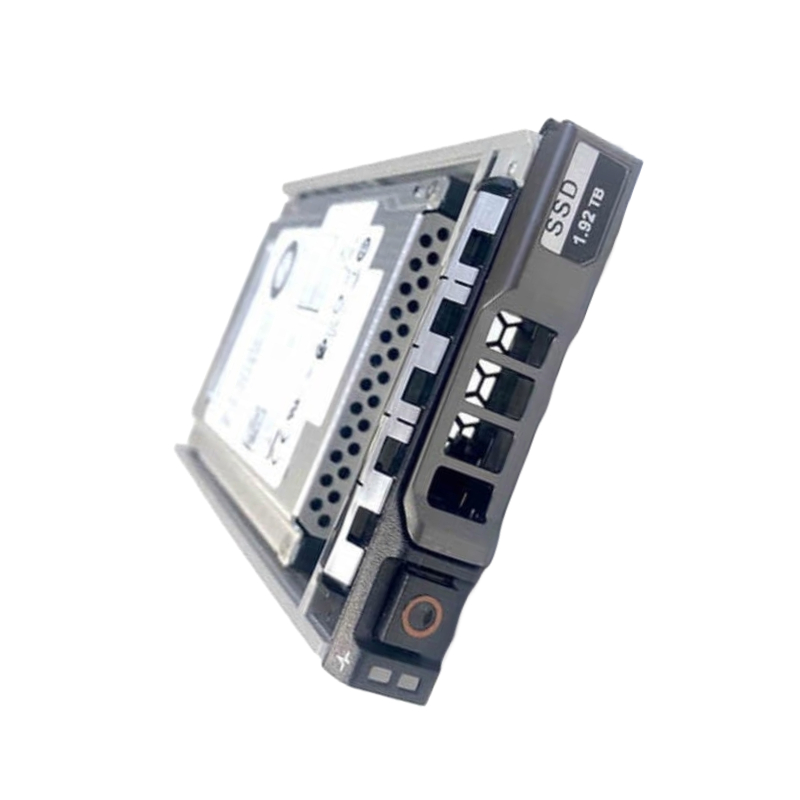
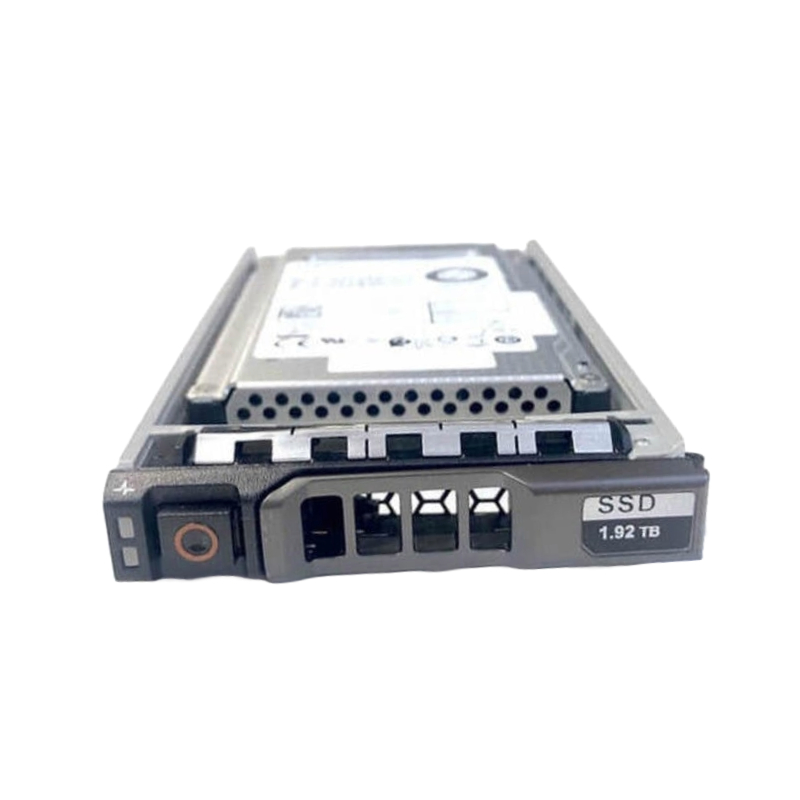
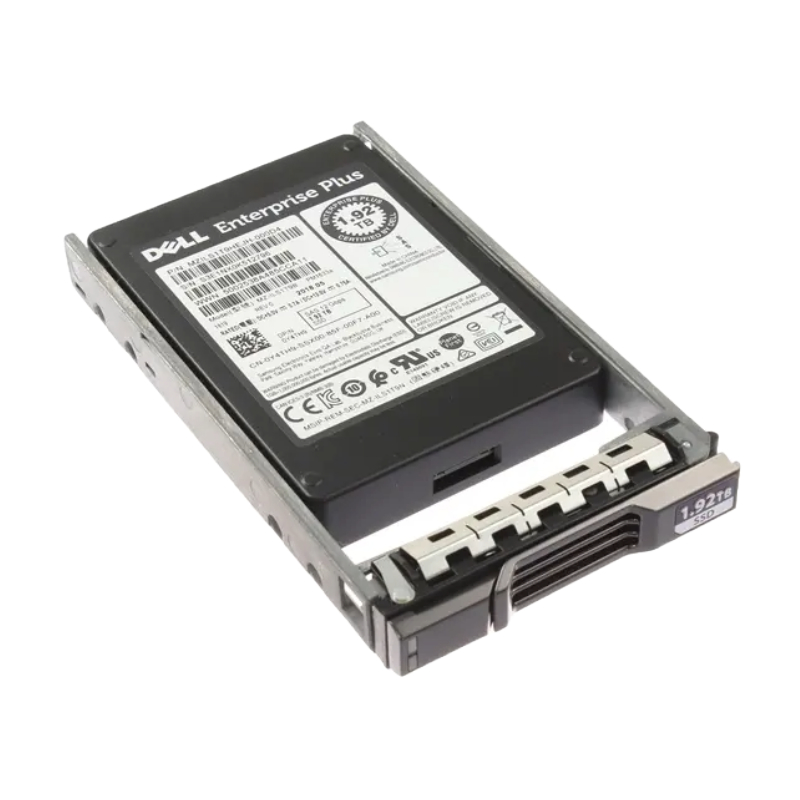
The small form factor (SFF) design of the TMTW9 1.92TB drive emphasizes dense server storage deployment. SFF drives are the standard for modern rack and tower servers where maximizing bay density without sacrificing cooling or serviceability is essential. The hot-plug capability means server administrators can replace or install drives without powering down systems, reducing maintenance windows and preserving uptime. The shipping tray included with the drive ensures physical compatibility with PowerEdge sleds and caddies, simplifying the integration process during large-scale rollouts. The mechanical design adheres to enterprise specifications for shock and vibration tolerance, making the drives robust under the constant mechanical stresses of data center environments. In combination with PowerEdge backplanes and controller firmware, the SFF hot-plug drive becomes part of a resilient hardware platform that helps deliver continuous service for critical workloads.
These drives use the SAS 12Gbps interface to provide consistent low-latency access and higher sustained throughput compared to legacy 6Gbps options. SAS links are favored in enterprise applications for their reliability, multipath support, and advanced signaling that is less prone to data integrity issues. The TMTW9’s read-optimized profile pairs well with SAS controllers and RAID configurations used in PowerEdge servers; administrators routinely combine these SSDs with mixed-tier HDDs or NVMe for caching to design balanced architectures. The enterprise-grade controller firmware on TMTW9 drives typically implements features such as power loss protection, background media management, and logical block mapping that sustain performance under real-world conditions where IO bursts and varying queue depths are common. Measured in IOPS and sequential throughput, the SAS 12Gbps link ensures the drive can handle high volumes of small random reads and medium-sized sequential operations characteristic of scale-out applications and virtualized environments.
Triple-level cell (TLC) NAND is chosen in this category to increase capacity at a competitive price point. By programming three bits per cell, TLC enables higher raw capacities such as 1.92TB in a compact SFF package. To make TLC suitable for enterprise usage, the drive’s controller and firmware include sophisticated wear-leveling algorithms, over-provisioning strategies, and error-correcting code (ECC) mechanisms that work together to extend usable life and preserve data integrity. The drive’s endurance rating of 1 drive write per day (1dwpd) is calibrated to read-dominant workloads; for many production scenarios where writes are moderate, this level of endurance is ample while providing a cost-effective alternative to higher-endurance SLC or MLC enterprise SSDs. The net effect is an SSD that balances capacity, cost, and reliability for infrastructure where read operations dominate and writes are predictable or managed through application architecture and caching layers.
Read-intensive SSDs like the TMTW9 are ideal for a broad array of enterprise tasks. High-performance cache layers in database clusters, read-heavy virtual machine images in VDI farms, and content repositories for media streaming services all benefit from predictable low-latency reads. Search indexes and analytics platforms that perform many concurrent lookups will see performance improvements when backed by read-optimized SSDs. Because these environments often require many drives to scale horizontally, the economics of TLC-based read intensive SSDs allow architects to deploy larger aggregate SSD capacities at a lower per-GB cost compared to higher-endurance alternatives. When paired with a tiered storage strategy — for example, NVMe for the highest write bursts, SAS SSDs for active read datasets, and HDDs for cold archival storage — the TMTW9 class forms a compelling layer in a balanced storage hierarchy.
Compatibility with PowerEdge servers is a core selling point for this category. The drives are validated for use with Dell’s server families, meaning they are tested against server backplanes, RAID controllers, and system firmware to ensure predictable behavior in enterprise deployments. Integration extends beyond physical fit: management tools such as iDRAC and OpenManage can report drive health, SMART attributes, and firmware revision levels, enabling administrators to proactively monitor wear and performance. Firmware updates delivered by Dell streamline the update cycle to ensure interoperability, resolve potential bugs, and enable feature enhancements that can impact drive behavior in clustered environments. The availability of a standardized tray and sled ensures that swap-out operations are consistent across global fleets, simplifying logistics for IT teams running multi-site operations.
Enterprise SSDs in this category include features designed to protect data integrity and maintain drive availability. Power loss protection mechanisms guard against data corruption during unexpected outages, while robust ECC corrects for bit errors that can accumulate during NAND program/erase cycles. Background media management routines such as garbage collection, wear leveling, and bad block remapping maintain long-term performance and consistency. Many drives also support TRIM and SMART reporting, allowing intelligent storage layers to coordinate with the drive for efficient space reclamation and predictive failure analysis. In highly available architectures, dual-port SAS configurations and multipath IO setups further reduce the risk of single points of failure, enabling continuous access even in the event of link-level issues.
To extract maximum performance, implement best practices such as aligning application IO patterns with drive capabilities, provisioning adequate over-provisioning for sustained performance, and using RAID and controller settings suited to SSD devices. Avoid using legacy HDD-oriented tuning defaults that may cause unnecessary write amplification on TLC-based SSDs. Consider controller queue depth and queue management strategies to prevent uneven IO distribution. Use firmware updates recommended by the server vendor, and monitor drive metrics to detect early signs of contention or thermal issues. When designing RAID groups, balance rebuild times against usable capacity — SSD rebuilds complete faster than HDDs, but rebuild storms can still stress the system if not accounted for. Finally, testing under realistic load scenarios before production deployment will reveal any configuration adjustments needed to harmonize drive behavior with application demands.
Understanding where the TMTW9 category fits relative to other storage media helps architects choose the right mix. NVMe SSDs offer lower latency and higher parallelism due to the PCIe interface, making them preferable for write-intensive and ultra-low-latency workloads. MLC-based enterprise SSDs generally offer higher endurance at a higher price per gigabyte and are suited for write-heavy transactional systems. HDDs remain cost-effective for high-capacity cold storage but cannot match SSDs on latency or random IOPS. The SAS 12Gbps TLC-based TMTW9 class sits in the middle: lower-cost per GB than NVMe and MLC while providing enterprise features and suitable performance for read-heavy tasks. Enterprises often adopt hybrid strategies combining these technologies to optimize both performance and cost across different data life-cycle stages.
Use cases where the TMTW9 1.92TB Read Intensive SSD shines include virtual machine image stores for VDI, read replica nodes in distributed databases, content delivery caches for media and web content, search index stores, and analytics workloads that perform many lookups. The drives also fit well as part of hybrid storage pools where frequently accessed “hot” data is kept on SSD tiers while colder datasets live on high-capacity spinning disks. For organizations seeking to lower average query latency and improve responsiveness for end-users or automated services, adding a layer of read-optimized SAS SSDs is a proven architectural pattern that yields measurable improvements without the higher cost of all-NVMe architectures.


 Contact Us
 Information
 Catalog
 Solid State Drives (SSD)
 Network Switches
 Hard Disk Drives
 HBA & Controllers
 PC & Servers
 PC & Server Memory
 CPU & Processors
 Network Routers
 Power Supplies
 Tape Drives & Libraries
 Network Devices
 Computer & Network Cables