(7% discount is applied at checkout)
Cart is empty
Your go-to destination for cutting-edge server products
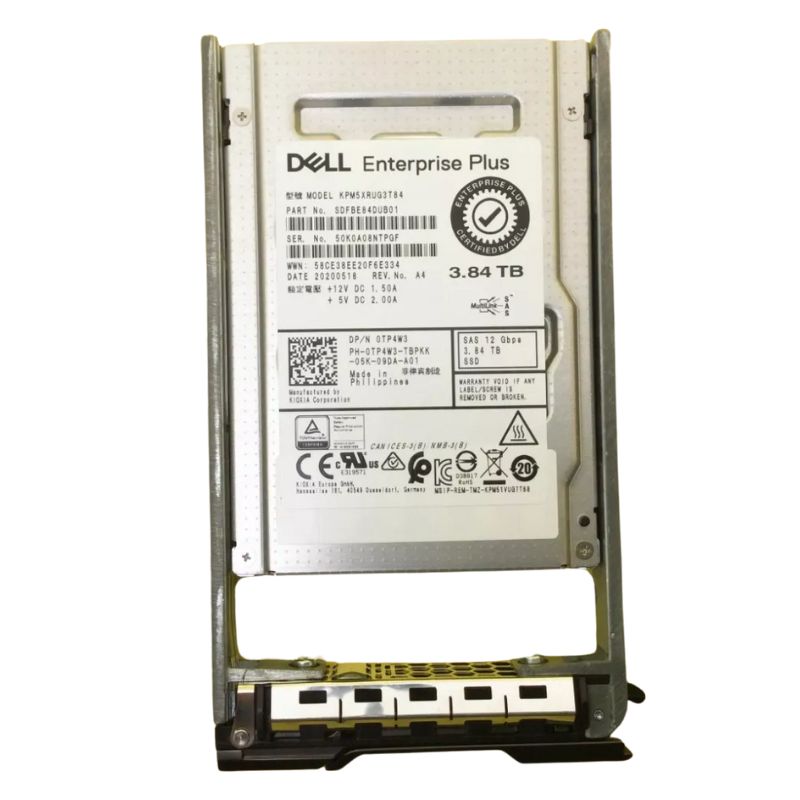


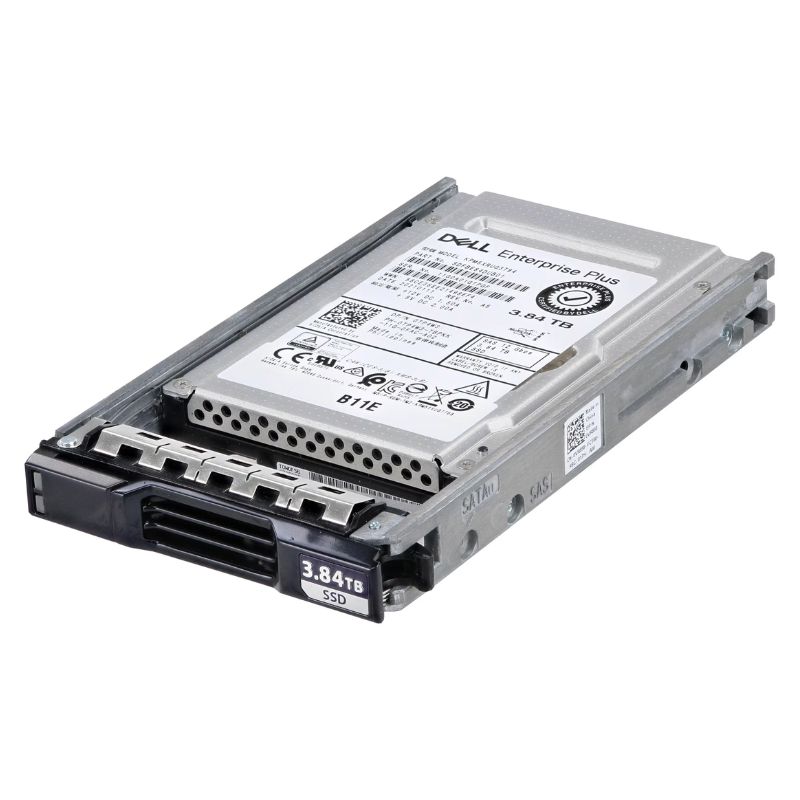
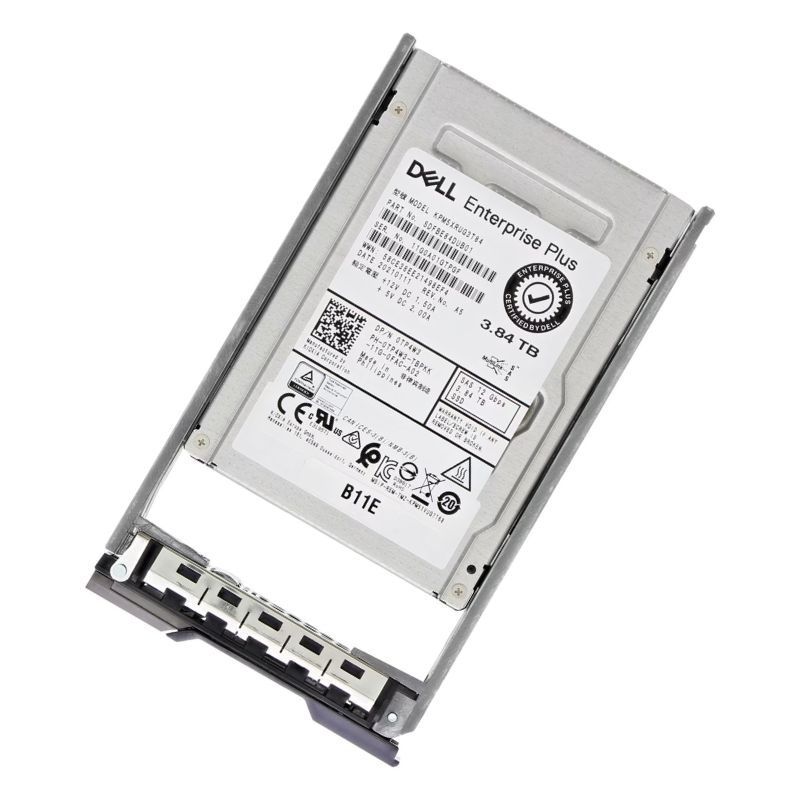
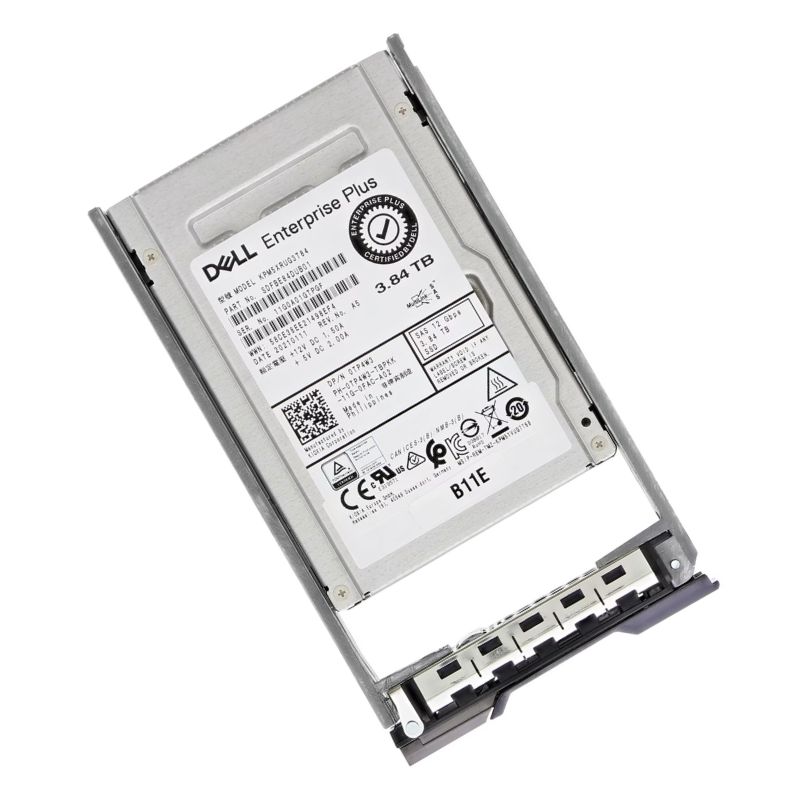
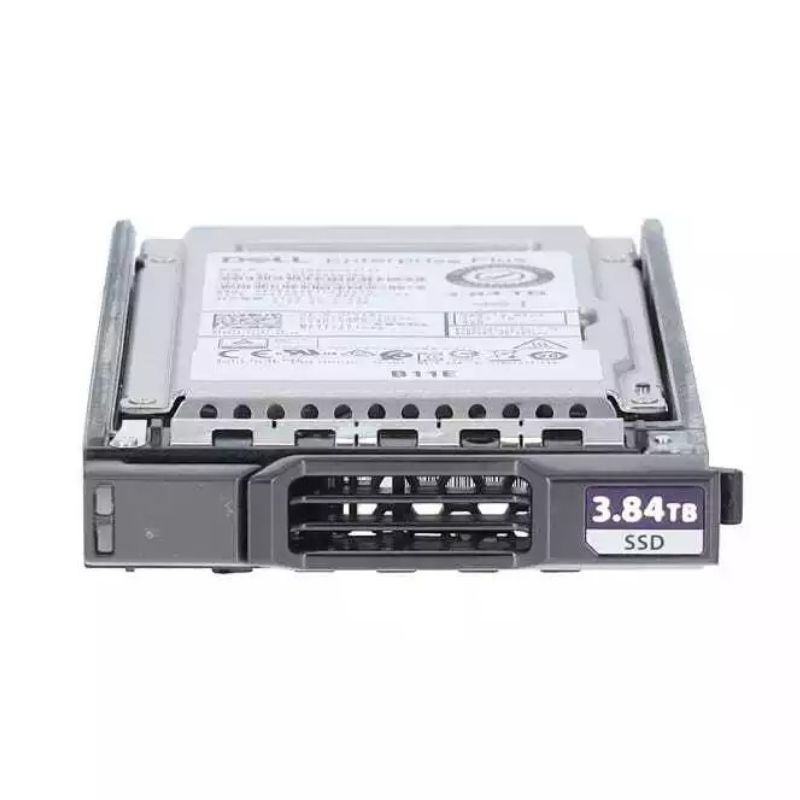
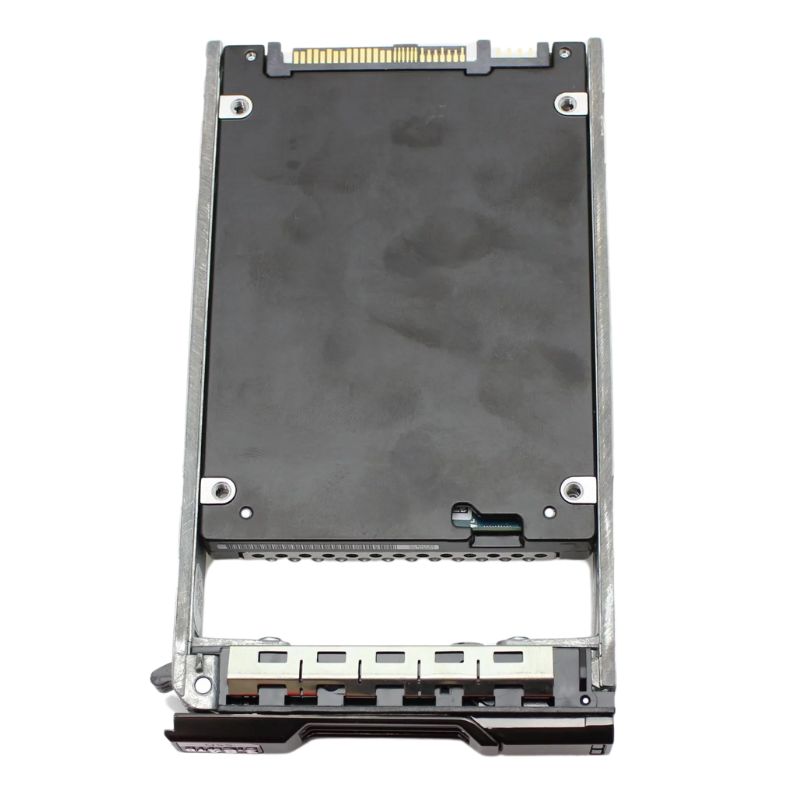
Dell TP4W3 3.84TB Solid State Drive SAS 12GBPS TLC Read Intensive. Excellent Refurbished with 1 year replacement warranty
The Dell TP4W3 3.84TB SAS-12Gbps Read-Intensive BICS Flash TLC Advanced Format 512e Hot-Plug Certified Solid State Drive with tray for Compellent Storage System represents a focused product category built for enterprise environments where read-centric workloads must be supported with predictable latency, strong data integrity and compatibility with existing SAS storage ecosystems. This category description explores the attributes that make these drives well suited to tiered storage arrays, hybrid flash architectures and read-optimized caching layers inside Compellent and other Dell EMC storage platforms. Readers will find technical detail that highlights the 3.84TB effective capacity, the SAS 12Gbps interface, the read-focused endurance profile, the use of triple-level cell (TLC) BICS Flash media, and the Advanced Format 512e logical sector layout, all packaged in a hot-pluggable SFF tray certified for seamless integration into Dell Compellent controllers. The emphasis throughout is on performance for read-heavy application profiles, deployment flexibility, and the management features that storage administrators expect when consolidating workloads onto modern flash-enabled tiers.
At the heart of the category are several technical characteristics that combine to create the product's value proposition. The SAS-12Gbps interface is engineered for enterprise-level throughput and reliability, delivering a sustained host interface speed that supports multiple simultaneous I/O streams with low overhead and consistent completion times. The 3.84TB logical capacity positions the drive as a large single-device flash tier option within dense storage arrays, allowing architects to reduce overall device counts while retaining hot data in faster tiers. BICS Flash TLC media provides an efficient cost-to-capacity ratio by storing three bits per cell, optimized by enterprise-grade controller algorithms and over-provisioning to maintain endurance sufficient for read-intensive workloads. Advanced Format 512e logical sector emulation is essential for legacy compatibility in environments where alignment, sector emulation and host expectations must be preserved to avoid performance penalties in storage arrays and host operating systems. The hot-plug certified tray ensures that maintenance, upgrades and replacements can be performed without system downtime, an essential feature in production Compellent deployments where availability is a primary requirement.
The SAS-12Gbps interface standard is a defining feature of the category, offering backward compatibility with earlier SAS generations while providing headroom for demanding workloads. SAS remains prevalent in enterprise arrays because of its dual-port architecture, enterprise-class signalling and support for multipath configurations that improve redundancy and path failover. Drives in this category leverage these attributes to provide resiliency in high-availability storage pools. When combined with modern HBA and controller firmware that understand queue depth optimization and NCQ-like behaviors for SAS, these drives can sustain high read IOPS with low latency and consistent tail latencies, which is crucial for front-end database services, virtualization hosts and read-caching layers in tiered Compellent arrays.
The 3.84TB capacity positions the TP4W3 series within a practical range for flash-first tiers and high-performance caching layers. From a storage architecture perspective, higher per-drive capacity reduces the number of drives required to achieve a target usable capacity, simplifying RAID group configurations and lowering per-TB overhead for parity-based redundancy schemes. The small form factor (SFF) tray used by Dell simplifies density planning and enables more drives per chassis, which in turn supports greater aggregate throughput per storage shelf. This matters for architects who must balance rack space, power and cooling constraints with performance goals. The drive's tray and hot-plug design allow technicians to perform field service operations quickly and to swap drives without halting host operations, an operational advantage when maintaining production arrays that must remain online.
Triple-level cell (TLC) NAND is widely adopted across enterprise flash categories when vendors can apply sophisticated controller firmware and enterprise-level over-provisioning to offset the inherent endurance limitations compared to SLC or MLC. The TP4W3 category explicitly targets read-intensive workloads, which aligns the endurance characteristics to scenarios where read I/O dominates and write amplification is controlled through host-level caching, write coalescing and the storage system's own tiering algorithms. Read-optimized SSDs often feature firmware that prioritizes garbage collection cycles during idle windows, adaptive wear leveling tuned to minimize unnecessary writes, and error correction thresholds appropriate for TLC media operating within an enterprise context. This combination yields predictable lifespan metrics for use cases like content delivery, data analytics read caches, virtualization boot volumes and archive retrieval tiers.
Advanced Format 512e designates a logical sector emulation where physical sectors are larger (commonly 4KiB) but the drive presents a 512-byte emulation to the host. For enterprise arrays such as Compellent, this emulation can be critical for compatibility with firmware, host drivers and storage management tooling that expect 512-byte sectors. Proper alignment of file systems and RAID stripe boundaries with 512e drives reduces read-modify-write penalties and maintains predictable performance. Drives in this category are often validated with alignment and performance testing across a range of host operating systems and controller firmware revisions to ensure that the advantage of larger physical sectors is realized without introducing unexpected performance regressions in older host environments.
Certification for the Dell Compellent Storage System is a pivotal selling point for this category. Compellent arrays rely on tiering intelligence, thin provisioning, and granular data progression; certified drives ensure that the storage controller can implement tiered policies and block-level movement without compatibility issues. Certification typically covers firmware compatibility, tray and backplane mechanical fit, thermal characteristics under sustained workloads and integration with the Compellent health-monitoring stack. Administrators gain confidence that firmware updates, telemetry reporting and SMART attributes will be recognized and handled correctly by the array software, helping to prevent false-positive failures and ensuring the drives behave as expected within the storage ecosystem.
Workload suitability for the TP4W3 category centers on applications and deployment models where reads far outnumber writes and where capacity-per-drive is important. Typical examples include read-caching for database front-ends, virtual desktop infrastructure (VDI) boot/steady-state workloads where many users perform read-heavy operations, content streaming and media delivery systems that serve large volumes of static content, and analytic platforms that run repeated scans or queries across datasets. In hybrid arrays, these drives can serve as the high-speed tier for hot data while colder datasets remain on SATA or nearline HDD tiers. For cloud and service providers, this category is attractive where density, consistent read latency and enterprise-level reliability are required across many tenants and diverse workloads.
When evaluating drives in this category, key performance metrics include sustained sequential read throughput, random read IOPS at varying queue depths, 99th percentile latency during mixed read/write patterns and the drive's behaviour under sustained, steady-state conditions when over-provisioning and garbage collection are active. Enterprise buyers focus on tail latency as much as average throughput because worst-case response times can directly affect application SLAs. Drives designed for read-intensive roles often demonstrate strong random read IOPS and maintain consistent latency even when background housekeeping tasks occur. The SAS-12Gbps interface ensures the host link is not a bottleneck for most practical workloads, allowing the drive firmware and NAND configuration to be the primary determinants of application-level performance.
Within the broader enterprise SSD landscape, the TP4W3 3.84TB SAS-12Gbps read-intensive class sits between high-endurance, mixed-use NVMe or SAS drives optimized for heavy write cycles and lower-cost consumer-class SSDs inadequate for enterprise services. The category is purpose-built for organizations that need substantial read throughput and strong capacity per drive without paying for the higher write endurance that comes with SLC or enterprise MLC designs. Compared with NVMe offerings, SAS-12Gbps drives provide an attractive upgrade path for arrays that do not yet leverage NVMe fabrics or for customers who prefer the dual-port redundancy and mature management ecosystem of SAS. Within Dell's product stack, these drives are a pragmatic choice for Compellent customers seeking to accelerate read-dominant workloads while leveraging existing controller investments.


 Contact Us
 Information
 Catalog
 Solid State Drives (SSD)
 Network Switches
 Hard Disk Drives
 HBA & Controllers
 PC & Servers
 PC & Server Memory
 CPU & Processors
 Network Routers
 Power Supplies
 Tape Drives & Libraries
 Network Devices
 Computer & Network Cables