(7% discount is applied at checkout)
Cart is empty
Your go-to destination for cutting-edge server products
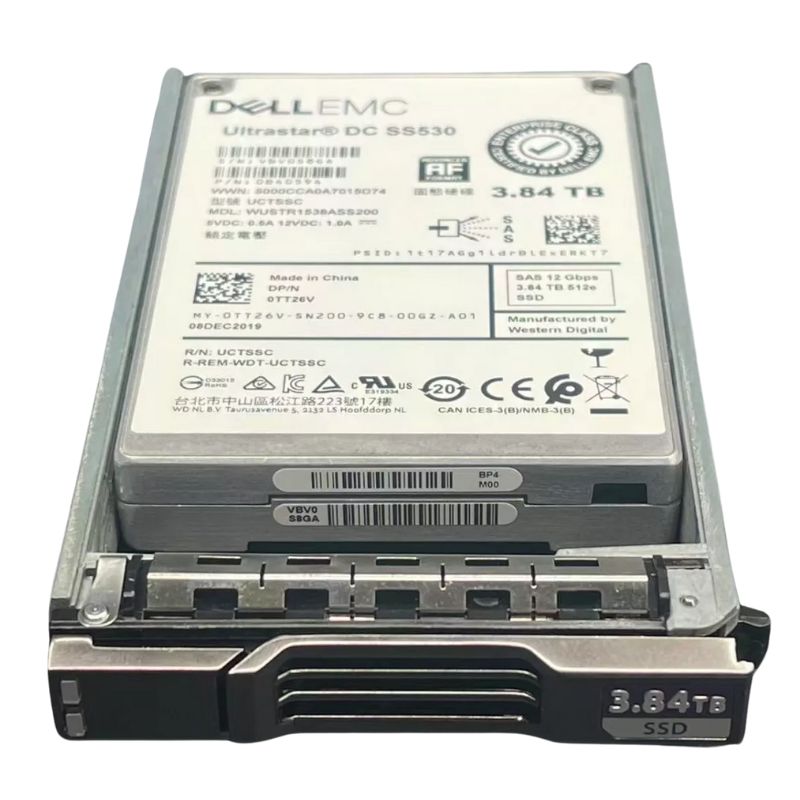


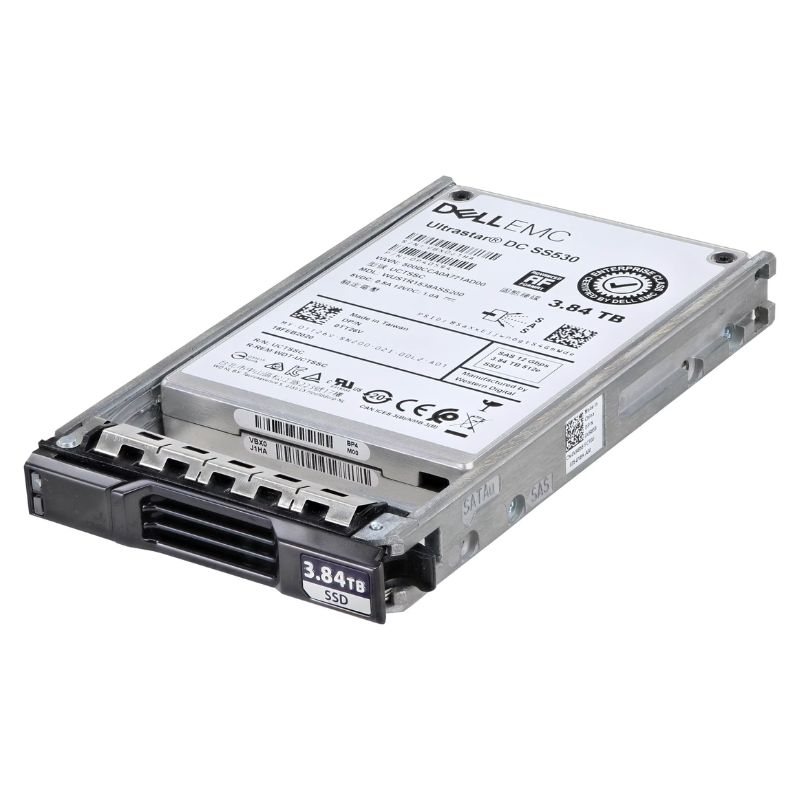
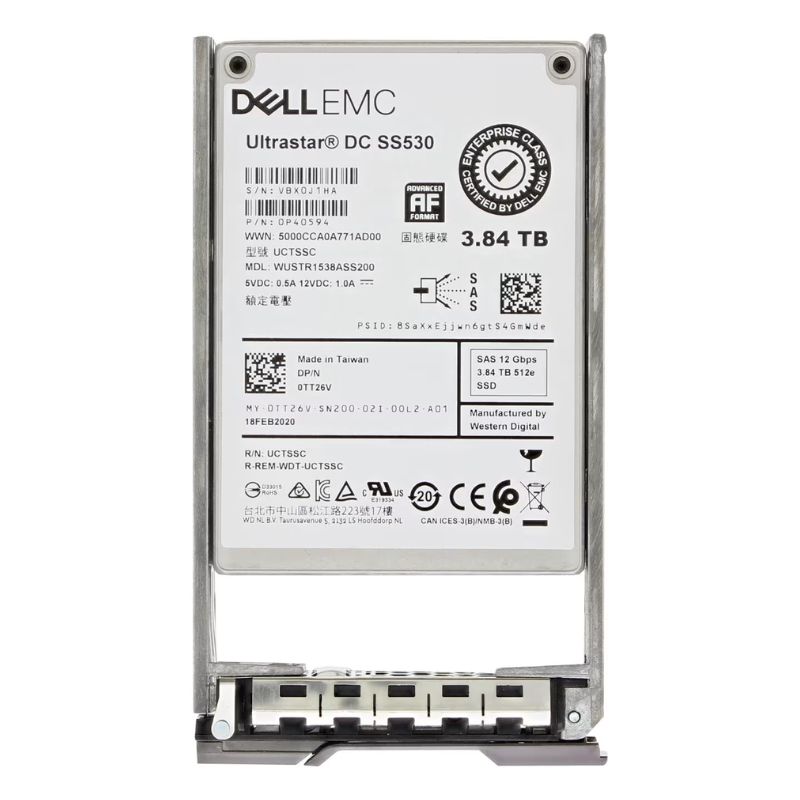
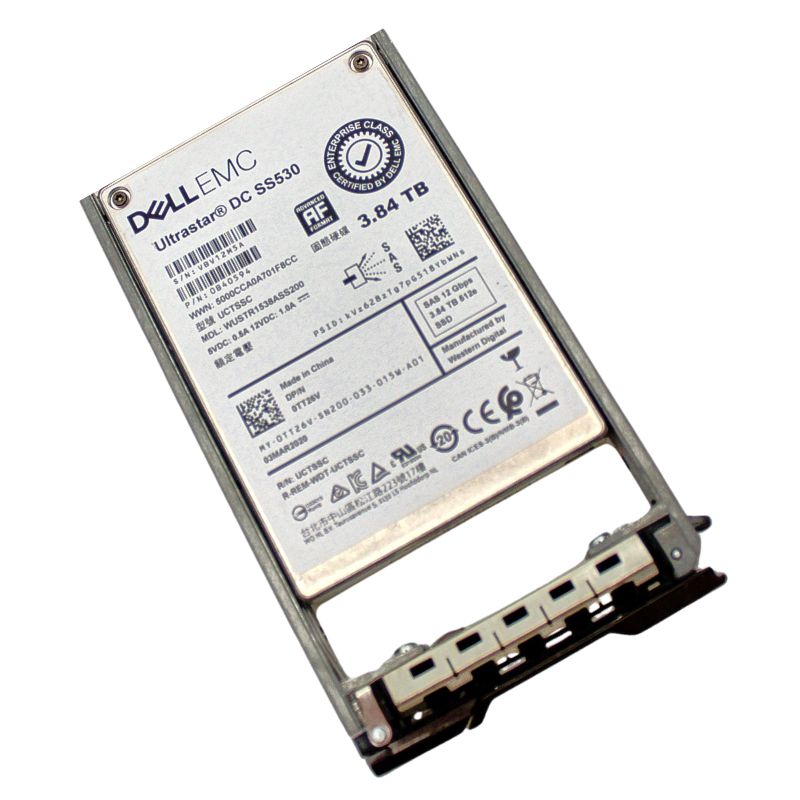
Dell TT26V 3.84TB Solid State Drive SAS 12GBPS Read Intensive. Excellent Refurbished with 1 year replacement warranty
Compatible with models such as:
The Dell TT26V 3.84TB SAS-12GBPS Read Intensive TLC Hot-Plug SFF Solid State Drive for Compellent Storage occupies a focused niche in modern data centers and enterprise storage tiers where read-heavy workloads dominate. Positioned as a read-optimized enterprise-class solid state drive, this device is intended to deliver a balance of high capacity, sustained read performance, and the durability characteristics required by shared storage systems such as Dell Compellent arrays. In large-scale environments where application responsiveness, quick snapshot restore, and rapid boot times are crucial, read-intensive SSDs like the TT26V are often selected to accelerate database queries, virtualization host boot storms, analytics workloads, content delivery, and caching layers without incurring the higher cost per gigabyte associated with write-endurance-optimized drives. The result is a category that bridges affordability and performance for organizations seeking to modernize tiered storage policies while retaining compatibility with existing SAS-based infrastructures.
The core of the Dell TT26V drive is based on TLC NAND technology, which stores three bits per cell and therefore provides greater raw density than single-level or multi-level cell alternatives. To make TLC suitable for enterprise read-intensive workloads, manufacturers pair the NAND with a sophisticated controller and firmware that implement advanced error correction, wear leveling, and read-optimized data paths. The controller orchestrates internal caching strategies, read retries, and garbage collection in ways that prioritize consistent read latency. Firmware optimizations also influence how the drive reports SMART metrics, handles power loss events, and interacts with storage controllers like Dell Compellent, ensuring predictable behavior in multi-drive RAID sets and pooled storage environments.
The SFF designation for this family indicates a compact 2.5-inch footprint, which enables higher drive densities in storage shelves and server chassis. The mechanical design includes hot-plug connectors compatible with standard SAS backplanes, shock- and vibration-tolerant enclosures suited for enterprise rackmount systems, and front-bezel access where drives can be replaced or upgraded without powering down the host. Thermal and acoustic considerations are also designed for continuous operation; the drive’s PCB, NAND placement, and heatsinking are engineered to distribute heat evenly while cooperating with chassis airflow to maintain reliability under sustained load.
Drives in this category are engineered to provide exceptional random and sequential read throughput under steady-state conditions. The TT26V excels when serving large numbers of small, random read requests typical of virtual desktop infrastructure (VDI), web serving, metadata access for large file systems, and database index lookups. Because the device is read-optimized, system architects can rely on consistently low latencies and predictable IOPS behavior when the drive is used as a primary read tier or as a read cache in front of slower spinning media. The firmware’s read path prioritization reduces read amplification and ensures that repeated access to the same logical blocks remains efficient across extended periods of use.
Although TLC-based read-intensive SSDs are not intended for heavy sustained write workloads, modern firmware mitigations such as adaptive overprovisioning, dynamic wear leveling, and enterprise-grade error correction improve their resilience to occasional write bursts. Administrators should expect lower drive endurance ratings compared to write-intensive models, and plan placement accordingly: suitable uses include workloads where writes are predominantly sequential, where writes are absorbed by a higher endurance tier, or where writes are constrained by application design. When deployed correctly—paired with write-optimized arrays or cache-tiering strategies—the drive delivers long and reliable service life while providing cost-effective capacity for read-dominant datasets.
Quality of Service (QoS) and tail latency are critical for production environments. The Dell TT26V category continuously meets enterprise expectations for median and tail read latencies by minimizing background maintenance during heavy read activities and employing prioritized scheduling for foreground IO. Administrators can expect consistent latency figures across mixed read loads, making service-level agreements for response times easier to meet. In multi-tenant or multi-host deployments, the SAS interface’s robust queueing and host path capabilities assist in preserving QoS across multiple accessors.
Designed with interoperability in mind, drives of this class are often qualified for use in Dell Compellent controllers and storage enclosures. Compellent’s tiering and pool-based management can leverage the TT26V’s read characteristics to establish a high-speed read tier that accelerates frequently accessed blocks while pushing colder data to larger, slower drives. Integration typically includes automatic discovery by the storage controller, SMART telemetry reporting, and firmware-level health indicators that Compellent’s management software can consume for predictive maintenance and analytics. This compatibility enables administrators to deploy the drive without extensive reconfiguration, relying on the array’s native policies to maximize the drive’s effectiveness within the storage topology.
While the SAS-12Gbps interface ensures broad compatibility with enterprise RAID controllers, it is important to match the drive with controllers and backplanes that support 12Gbps signaling for optimum performance. Many modern server platforms and enterprise RAID controllers provide advanced features such as drive-level health monitoring, link speed negotiation, and multipath awareness that improve both performance and availability. When used in RAID configurations, these drives benefit from raid controllers’ cache and read-ahead algorithms, but architects should carefully design RAID levels to balance redundancy, rebuild times, and effective capacity relative to the array’s workload patterns.
One of the most common deployment patterns for read-intensive SFF SAS SSDs is as an acceleration or caching layer within a tiered storage system. In such configurations, a pool of TT26V drives can act as a high-speed read cache, absorbing hot data and reducing latency for frequently accessed blocks. Compellent-style arrays can automatically promote hot data to the read tier, making this arrangement nearly transparent to applications and minimizing administrative overhead. This placement reduces the operational pressure on spinning disks and improves application-level performance without requiring a wholesale refresh of the entire storage estate.
The hot-plug capability of the SFF drive allows administrators to replace or upgrade drives without powering down systems, supporting high-availability maintenance windows. Proper hot-plug procedures must be followed, including ensuring the storage controller marks the drive offline when necessary, confirming array rebuild policies, and validating that replacements are fully compatible and certified. Physical handling precautions—anti-static measures, adherence to vendor torque specifications, and controlled airflow during replacements—help preserve drive longevity and data integrity.
Choosing the TT26V category over higher-end mixed-use SSDs or NVMe flash depends on a number of practical trade-offs. If the workload is predominantly read-heavy, cost per gigabyte is a primary concern, and the existing infrastructure is SAS-based, the read-intensive TLC SAS drives offer an excellent balance of capacity and read performance. They are especially compelling when a storage controller-based tiering strategy will handle write amplification and endurance-sensitive operations. Conversely, if ultra-low latency, extreme concurrency, or direct-attached NVMe acceleration is required, NVMe drives or higher-end mixed-use SSDs might be a better fit despite the higher unit cost. The decision should be driven by workload profiling, capacity economics, and the existing storage architecture.


 Contact Us
 Information
 Catalog
 Solid State Drives (SSD)
 Network Switches
 Hard Disk Drives
 HBA & Controllers
 PC & Servers
 PC & Server Memory
 CPU & Processors
 Network Routers
 Power Supplies
 Tape Drives & Libraries
 Network Devices
 Computer & Network Cables