(7% discount is applied at checkout)
Cart is empty
Your go-to destination for cutting-edge server products
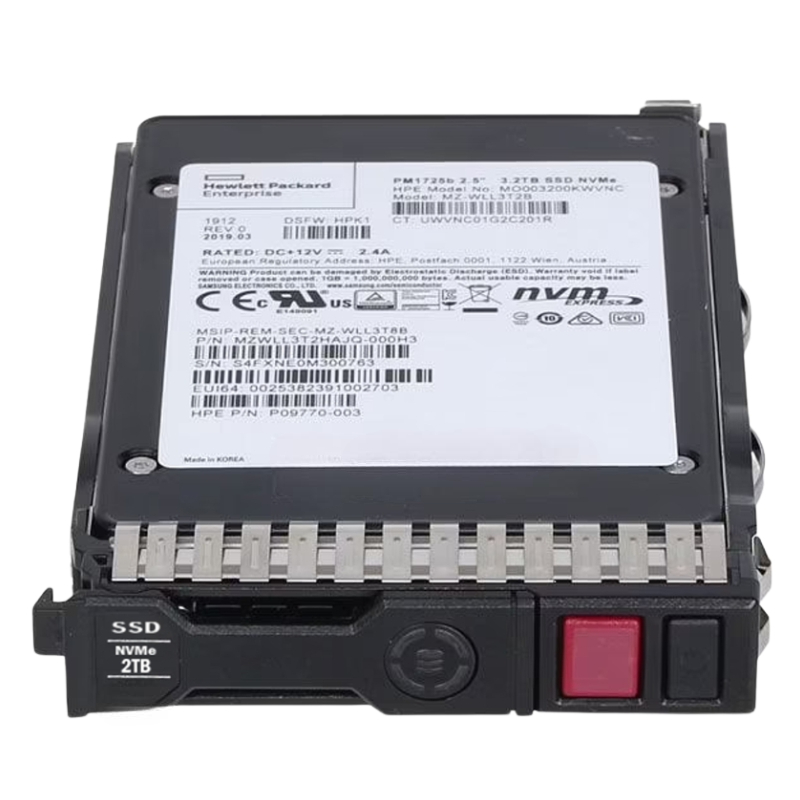


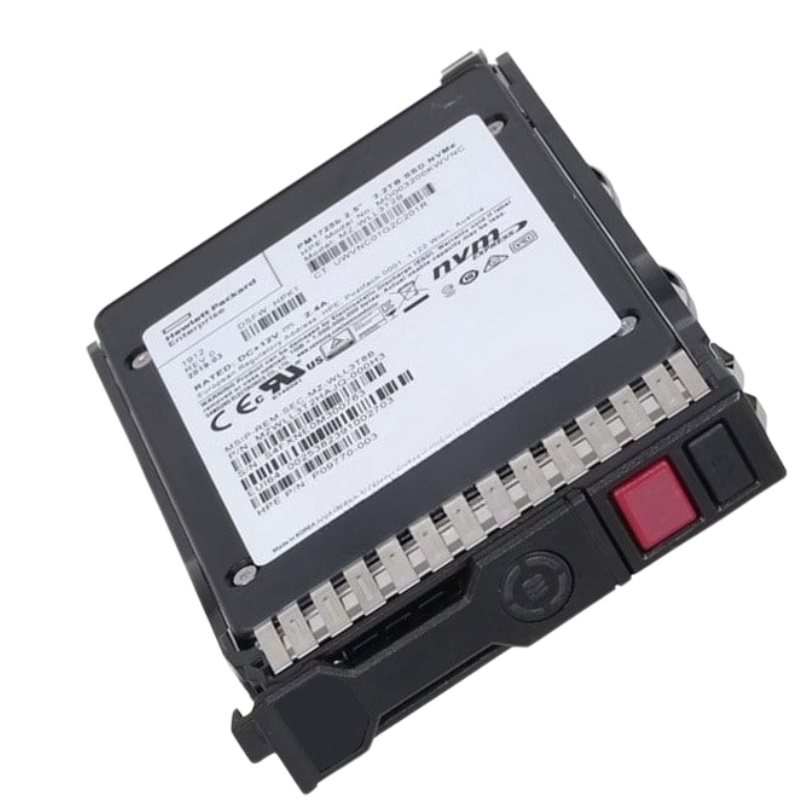
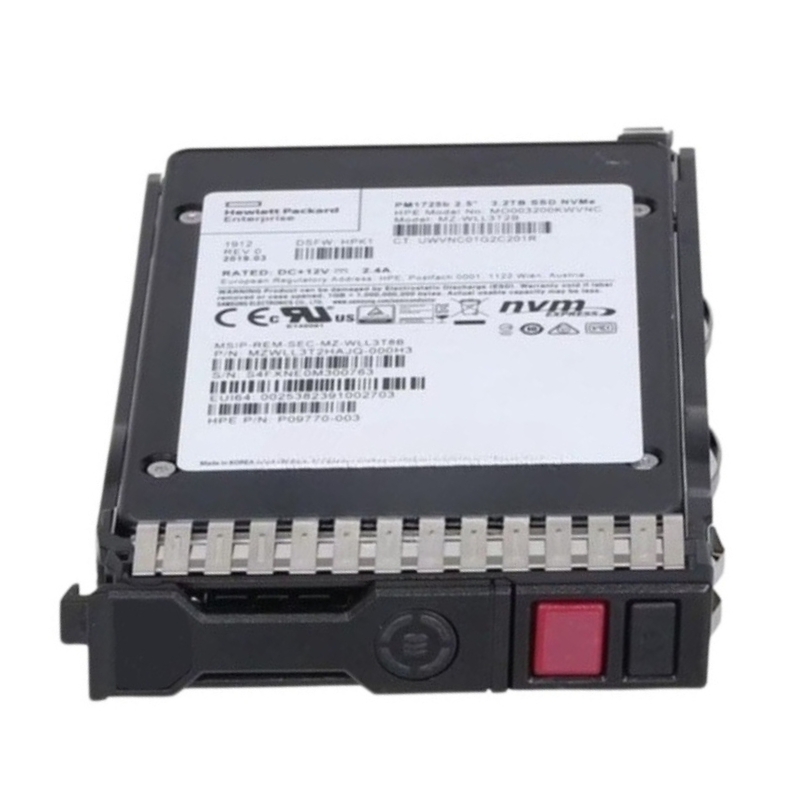
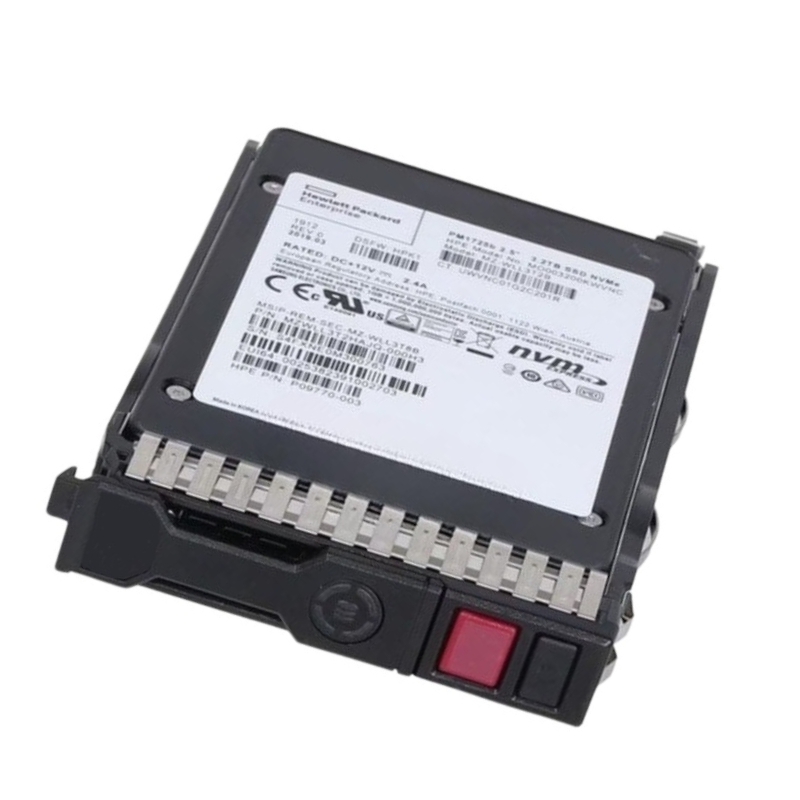
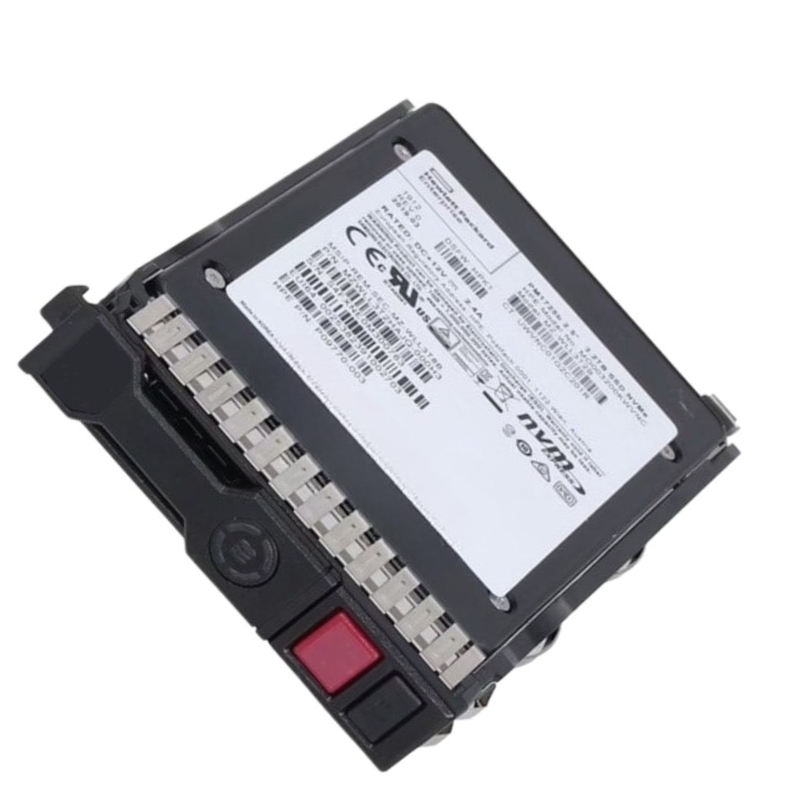
HPE 764908-B21 2TB PCI-E Read Intensive SFF 2.5-in SC2 SSD. Excellent Refurbished with 1 year replacement warranty
| SKU/MPN | Warranty | Price | Condition | You save |
|---|---|---|---|---|
| 764908-B21 | 1 Year Warranty | $1,170.00 | New (System) Pull | You save: $409.50 (26%) |
| 764908-B21 | 1 Year Warranty | $625.00 | Excellent Refurbished | You save: $218.75 (26%) |
The HPE 764908-B21 2TB PCI-E Read Intensive SFF 2.5-Inch SC2 SSD is engineered for enterprise-grade performance, delivering fast data access, reliable storage, and optimized efficiency for demanding IT infrastructures.
This enterprise-class solid state drive is tailored for organizations seeking dependable storage solutions. Its read-intensive architecture ensures consistent performance for applications such as:
The HPE 764908-B21 SSD integrates seamlessly with Hewlett Packard Enterprise servers and storage systems, ensuring smooth deployment and maximum efficiency.
Drives in this category prioritize read throughput and predictable latency. Typical customers will see fast random read IOPS, strong sequential read bandwidth over PCI-E interfaces, and firmware tuned to reduce read amplification. The 2TB capacity point is a common sweet spot for tiered caching layers: large enough to hold substantial hot datasets while remaining cost-effective per gigabyte. When optimizing for read-centric applications—such as large-scale web front ends, analytics query acceleration, or virtual machine image hosting—these drives minimize bottlenecks and maximize responsiveness.
The SFF 2.5-inch format allows dense drive packing in modern blade and rack servers, giving system designers the flexibility to increase storage per chassis without sacrificing cooling or hot-swap convenience. The compact footprint simplifies deployments where bay space is limited yet performance cannot be compromised. In blade servers, hyperconverged nodes, and storage dense appliances, this form factor yields a favorable balance between usable capacity and physical density.
The PCI-E interface (NVMe over PCI-E) used by the SC2 series provides direct, low-latency pathways between storage media and host CPUs. This cuts out SCSI overhead associated with legacy SAS or SATA channels and unlocks full potential of NAND flash performance. The result is lower CPU overhead per I/O, higher IOPS/Watt, and improved scalability when numerous SSDs are aggregated in a storage pool.
The 2TB capacity variant in the 764908-B21 family is often used with conservative or aggressive over-provisioning depending on the endurance and performance targets. Over-provisioning reserves a portion of raw NAND to improve sustained performance and increase write endurance. For read-intensive use cases, administrators can often allocate modest OP while still retaining long service life and consistent read performance. When designing storage tiers, consider whether a 2TB drive will act as a cache, a VM image store, or a persistent data volume—each role informs the ideal over-provisioning and RAID choices.
Read-intensive SSDs are tuned to support high ratios of reads to writes; this means endurance (measured in drive writes per day, or DWPD) is typically lower than mixed-use or write-intensive variants, but still engineered to match the expected workload profile. For workloads where writes are limited (caching read-mostly datasets, read-only VM images, CDN edge nodes serving static content), a read-optimized drive strikes an excellent price/performance compromise without unnecessary endurance premium. It’s essential to estimate write amplification and real-world write rates when planning lifecycle and replacement windows.
Firmware within SC2 drives implements advanced garbage collection, wear-leveling, and background optimization to ensure steady state performance. For administrators, understanding idle-time background processes is important because GC can affect tail-latency if background cycles are aggressive during heavy host activity. Good practice includes spacing firmware updates across maintenance windows and monitoring SMART metrics to detect early signs of NAND wear or performance anomalies.
Enterprise SSDs in this category use end-to-end data protection mechanisms, such as CRC checksums, metadata protection, power-loss protection (in supported configurations), and advanced ECC (error-correcting code) to maintain data integrity at scale. This reduces bit error rates and protects critical metadata structures even under stress. While read-intensive models may not have the same hardware-backed capacitors for comprehensive power-loss protection as high-end mixed-use drives, they still include robust firmware-level safeguards to protect against transient corruption.
The SC2 2TB PCI-E SFF drives are designed to be compatible with a broad range of HPE ProLiant servers, HPE storage enclosures, and many third-party platforms that accept NVMe 2.5-inch form factor devices. Always verify compatibility with your server’s HCL (Hardware Compatibility List) or boot ROM/BIOS firmware notes; NVMe boot support and native UEFI options can affect how the drive is used for system images versus data volumes. When integrating into an existing server fleet, check vendor-specific firmware and management utilities for drive health reporting and proactive monitoring.
Modern OS kernels (Linux, Windows Server, and recent hypervisor releases like VMware ESXi) include NVMe drivers that support these drives. For environments that rely on advanced vendor management features, install HPE’s storage agents or management packs to surface SMART attributes, endurance forecasts, and firmware update channels. When using third-party orchestration tools, ensure they can map NVMe serial numbers and namespaces correctly to support VM storage policies and automation.
Place these 2TB read-optimized SSDs in front of slower storage tiers to accelerate read-heavy workloads. Typical patterns include caching frequently accessed database indices, web application static assets, machine learning model parameters for inference, and VDI golden images. In tiered storage systems, these drives act as hot tiers—reducing latency for end-users and enabling cold tiers (HDDs or archival object stores) to handle sequential or rarely accessed data.
VDI environments often generate significant read concurrency when boot storms occur or many users access shared images simultaneously. The SC2 read-oriented architecture reduces login times and improves user experience by accelerating reads, minimizing stutter, and handling numerous small random reads characteristic of desktop OS workloads. Pairing with appropriate RAM and CPU provisioning yields a responsive end-user experience.
Content delivery nodes and edge caches require rapid access to static assets—images, video segments, and application payloads. Using 2TB NVMe SFF drives allows CDN and edge servers to store a meaningful working set locally, significantly lowering origin fetch rates and reducing bandwidth costs. The small form factor and efficient power profile make these drives suitable for distributed edge appliances where space and thermal budgets are constrained.
In hyperconverged and stateless server models, the boot device must be reliable and fast to minimize deployment and reboot times. These SSDs serve as excellent boot volumes for host images, container base images, or system-critical services that rely primarily on reads. When used for booting, configure RAID or replication for redundancy, and monitor the drive's SMART attributes to catch early warnings.
Optimize filesystems for NVMe characteristics: align partitions to 1MB boundaries, enable TRIM/discard where supported, and choose a filesystem that performs well under many small reads (e.g., XFS or ext4 with tuned mount options on Linux). When using virtualization, select virtual disk provisioning modes that minimize unnecessary writes (thin provisioning can be suitable but monitor write amplification).
For capacity pools and performance redundancy, consider RAID levels that optimize read performance without compromising rebuild times. RAID10 or RAID6 with NVMe-aware controllers are common in mixed environments; however, read-optimized drives paired with erasure coding in scale-out systems can reduce capacity overhead while still delivering strong read throughput. Always perform failure-domain analysis and test rebuild impacts before deploying at scale.
In single-chassis deployments, hot-spares minimize rebuild wait times; in distributed systems, erasure codes and multi-node redundancy spread risk across hardware boundaries. Both strategies have tradeoffs: hot-spares can accelerate recovery but consume local capacity; distributed redundancy improves capacity efficiency but may incur network traffic during rebuilds. Choose the approach aligned with your SLAs for recovery time (RTO) and data durability.
Implement telemetry collection for SMART attributes, media errors, temperature, percentage life used, and firmware revision. Regular firmware updates can improve compatibility and performance but should be rolled out according to change control policies and vendor guidance. Use HPE’s management tools or third-party monitoring stacks to create alerting thresholds for immediate action. Routine health checks and trend analysis predict failures and reduce unplanned downtime.
When choosing between drive classes, align the device type to workload characteristics:
Read-Intensive: Best for workloads dominated by reads; lower DWPD and reduced cost per GB.
Mixed-Use: Balanced endurance for read/write workloads common in general-purpose VMs.
Write-Intensive: High endurance for heavy logging, caching write workloads, or heavy database OLTP writes.
The 764908-B21 falls in the read-intensive category—ideal when writes are minimal relative to reads.
Comparing SFF NVMe to U.2 and M.2 Form Factors
The 2.5-inch SFF NVMe format bridges density and manageability. U.2 drives offer similar electrical interfaces but sometimes better backplane integration for enterprise bays. M.2 may be more appropriate in compact edge devices or single-board computers but lacks hot-swap functionality and can be thermally constrained in high-density server trays. Choose form factor based on serviceability, thermal considerations, and chassis compatibility.
Many enterprise SSDs support hardware-based encryption and standards-compliant operation modes (e.g., TCG Opal or FIPS when offered). For regulated environments where encryption is required for data-at-rest, opt for drives with validated hardware encryption and ensure key management integrates with your KMS. Verify compliance documentation and attestations before deploying into regulated workloads.
Secure erase capabilities that conform to industry standards help when retiring or repurposing drives. Understand the difference between cryptographic erasure (deleting encryption keys) and physical erasure methods if disposal policies require destruction. Maintain a data sanitization policy aligned with regulatory requirements and institutional risk tolerances.


 Contact Us
 Information
 Catalog
 Solid State Drives (SSD)
 Network Switches
 Hard Disk Drives
 HBA & Controllers
 PC & Servers
 PC & Server Memory
 CPU & Processors
 Network Routers
 Power Supplies
 Tape Drives & Libraries
 Network Devices
 Computer & Network Cables