(7% discount is applied at checkout)
Cart is empty
Your go-to destination for cutting-edge server products


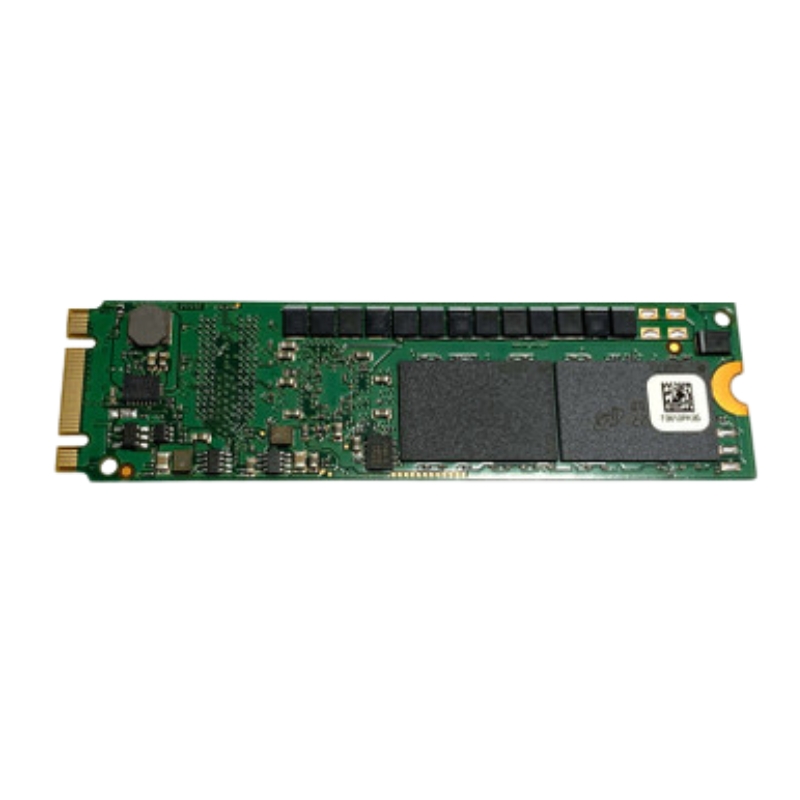
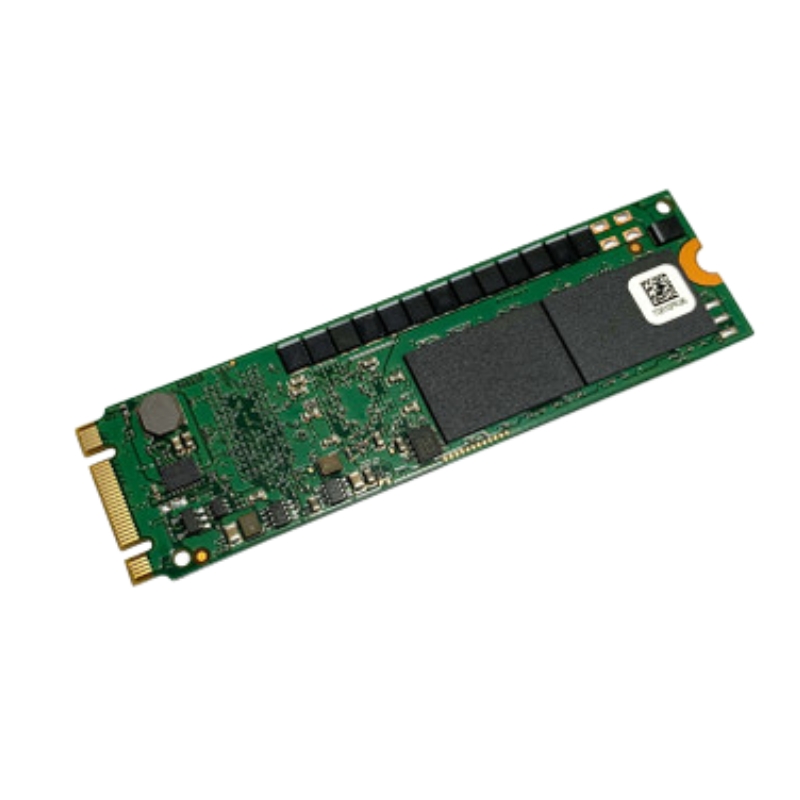
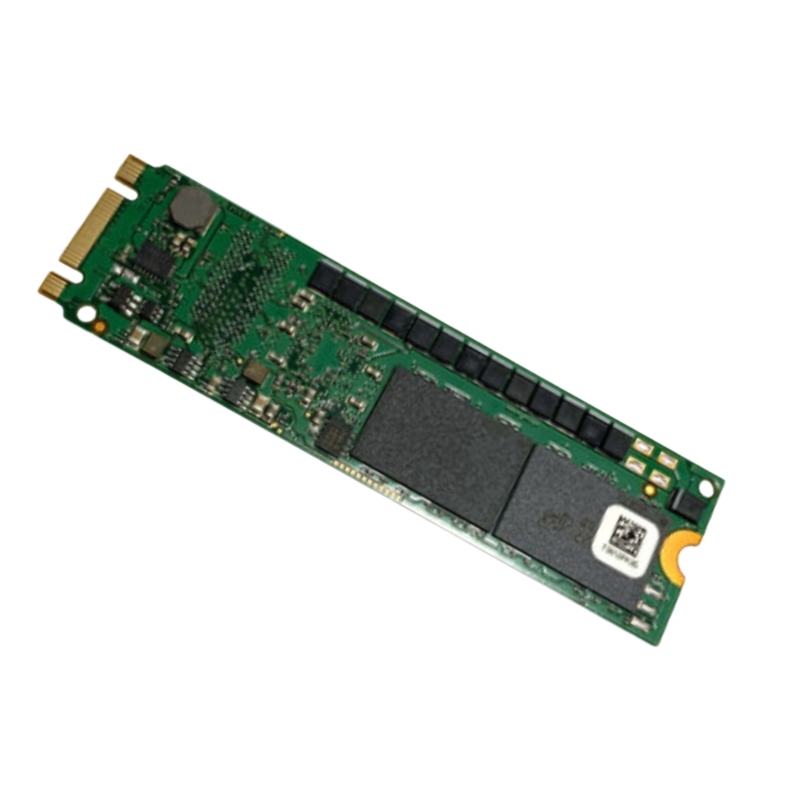
HPE 875490-B21 480GB SATA-6GBPS Mixed Use M.2 2280 TLC SSD. Excellent Refurbished with 1 year replacement warranty
| SKU/MPN | Warranty | Price | Condition | You save |
|---|---|---|---|---|
| 875490-B21 | 1 Year Warranty | $693.00 | Excellent Refurbished | You save: $242.55 (26%) |
| 875490-B21 | 1 Year Warranty | Contact us for a price | New (System) Pull |
The HPE 875490-B21 480GB SATA-6GBPS Mixed-Use M.2 2280 TLC Solid State Drive represents a targeted balance of performance, endurance, and platform-level security specifically engineered for modern enterprise workloads. As part of HPE's storage portfolio, this M.2 2280 form factor SSD is intended for server and storage appliance integration where compact size, reliable sustained throughput, and robustness under mixed-use read/write patterns are required. The drive’s 480GB capacity, SATA-6GBPS interface, and triple-level cell (TLC) NAND combine to deliver an attractive capacity-to-cost ratio while maintaining the I/O responsiveness that data center applications depend upon. Inclusion of digitally signed firmware underscores HPE’s emphasis on secure boot chains and firmware integrity, while the supplied tray simplifies field installation and hot-swap readiness in supported HPE ProLiant and storage platforms.
Mixed-use SSDs are engineered to handle workloads that consist of varied read and write ratios, often encountered by virtualization hosts, boot volumes, database logging partitions, and general-purpose application storage. The HPE 875490-B21 is tuned to maintain consistent IOPS and low latency when subjected to the unpredictable access patterns of virtual machines, container orchestration, and multi-tenant server environments. Unlike consumer-grade SSDs that prioritize peak burst performance or maximum sequential throughput for single-threaded tasks, this unit targets predictable performance across a broad set of queues and thread counts, making it suitable for server boot, OS images, application binaries, and metadata storage where reliability and responsiveness are mission-critical.
The M.2 2280 form factor offers a compact, low-profile footprint that is ideal for modern rack servers, edge appliances, and dense blade systems. By leveraging the SATA-6GBPS interface, the HPE 875490-B21 bridges widespread platform compatibility and mature ecosystem support with the performance and cost-efficiency of TLC NAND. While NVMe devices have become prevalent for ultra-low latency storage tiers, SATA M.2 devices remain essential for predictable secondary tiers, boot volumes, and systems where a broad matrix of firmware and hardware compatibility is required. The SATA interface ensures interoperability with many HPE platforms and third-party systems while minimizing the integration complexity associated with PCIe lanes and driver stacks.
Modern enterprise operations demand secure supply chains and firmware authenticity. The HPE 875490-B21’s digitally signed firmware addresses an often-overlooked vector for compromise: firmware tampering. Digitally signed firmware ensures that only verified, vendor-authorized code runs on the drive, reducing the risk of malicious firmware implants or corruption during updates. For environments that enforce secure boot policies and firmware integrity checks at the system management level, the drive’s firmware signature provides an added layer of protection and helps align the storage layer with broader security frameworks. Administrators can therefore include this SSD in hardened environments, regulatory compliance architectures, and security-sensitive deployments with greater confidence.
Endurance metrics and reliability engineering are primary differentiators between consumer and enterprise SSDs. The HPE 875490-B21 is categorized as a mixed-use drive, which signals an endurance profile engineered to tolerate sustained moderate write volumes typical of datastore metadata, logging, and application data. Enterprise drives undergo additional validation, incorporate over-provisioning strategies, stronger error correction algorithms, and thermal management features that together extend useful life and protect data integrity under heavy use. These reliability features are critical in environments that must maintain high availability and predictable performance across multi-year refresh cycles.
Manufacturers of enterprise SSDs commonly publish mean time between failures (MTBF) and include features such as power-loss protection, advanced wear-leveling, and advanced ECC (error correcting code). While specific absolute MTBF figures and internal protection implementations vary by model and firmware revision, the HPE 875490-B21 is designed to complement HPE system-level safeguards including storage health monitoring and drive-level telemetry. That telemetry provides administrators with early indicators of wear and helps integrate the drive into predictive maintenance and capacity planning procedures. Error management schemes and background data scrubbing mechanisms reduce the incidence of uncorrectable errors and guard against silent data corruption in RAID or erasure-coded storage configurations.
The performance profile of a 480GB TLC SATA SSD in mixed-use configuration emphasizes a balance of random IOPS at typical enterprise queue depths, consistent latency, and reasonable sequential throughput for boot and bulk transfer operations. For OS boot volumes and installation images, the drive’s lower latency compared to traditional hard disk drives yields faster boot times and more responsive system management. For virtualization hosts, the drive’s random read and mixed read/write capabilities reduce VM boot storms and improve application responsiveness during peak consolidation events. The drive also serves well for caching layers where predictable response time is more important than maximum throughput, enabling tiered storage architectures to sustain SLAs for latency-sensitive services while offloading cold data to higher capacity tiers.
Enterprise application performance is not determined solely by peak IOPS; sustained performance under realistic queue depths and mixed I/O patterns is the meaningful metric. The HPE 875490-B21 is optimized for the queue depth and concurrency characteristics common to server workloads rather than the deep queue depths exploited by high-end NVMe arrays. This makes the drive especially effective in single-server contexts, boot and system partitions, and as part of RAID arrays where multiple drives aggregate IOPS for higher throughput. Predictable latency under mixed operations helps maintain consistent application behavior and simplifies SLA management.
Compatibility with server platforms, management firmware, and storage controllers is a practical consideration when selecting enterprise SSDs. The HPE 875490-B21 is validated to operate within HPE ProLiant servers and select HPE storage appliances, and it fits into the vendor’s ecosystem for firmware updates, health reporting, and support. The presence of a tray with the drive simplifies mounting and replacement procedures in select HPE chassis that accept M.2 modules via carrier or adapter. For system integrators and IT teams, purchasing vendor-authorized drives reduces integration risk and streamlines support communications should warranty service or firmware upgrades be required.
Digitally signed firmware requires controlled update workflows, which is beneficial for operational security but also places emphasis on disciplined firmware lifecycle management. HPE provides firmware bundles and management tools that coordinate updates across systems, reducing the likelihood of mismatched or incompatible firmware revisions. Administrators should incorporate firmware update windows into maintenance cycles, verify compatibility matrices against server BIOS and RAID controller revisions, and apply HPE-recommended procedures to ensure safe rollouts. Centralized update mechanisms also provide a record of firmware provenance, supporting auditability and compliance needs in regulated environments.
The SATA interface allows the HPE 875490-B21 to be used behind a broad set of RAID controllers and in software-defined storage implementations that accept SATA-based M.2 devices. When used in RAID arrays, considerations such as rebuild times, write amplification, and RAID controller cache behavior should be evaluated, particularly when chosen as part of an array with heterogeneous drive types. For software-defined stacks that perform caching or tiering, the drive’s mixed-use endurance profile and predictable latency make it a compelling candidate for small-tier cache or metadata storage where responsiveness outweighs raw capacity.
The HPE 875490-B21 SSD is versatile across multiple enterprise deployment scenarios. It is an ideal choice for system boot and OS volumes where the combination of fast random access, low latency, and durability ensures consistent system start times and dependable day-to-day operations. For virtualization platforms and hyperconverged nodes, this drive can be used for local caching, swap, or as a high-performance layer for metadata and small-block I/O. Edge computing deployments benefit from the drive’s compact form factor and power efficiency, allowing robust local storage in constrained enclosures. In managed hosting and colocation facilities, the drive supports multi-tenant workloads that require consistent performance without the cost premium of enterprise NVMe tiers.
Within HPE’s broader SSD lineup, the 875490-B21 is positioned as a mixed-use SATA M.2 offering that complements higher-endurance enterprise SSDs and ultra-low-latency NVMe models. For buyers comparing across the portfolio, the primary trade-offs involve interface (SATA vs NVMe), form factor (M.2 vs U.2/HHHL), and endurance class (mixed-use vs read-intensive vs write-intensive). Organizations should assess workload profiles, density constraints, and platform compatibility to determine the optimal mix of drives. This model is particularly compelling where compatibility, cost-effectiveness, and firmware security are prioritized over the absolute lowest latency achievable with NVMe devices.


 Contact Us
 Information
 Catalog
 Solid State Drives (SSD)
 Network Switches
 Hard Disk Drives
 HBA & Controllers
 PC & Servers
 PC & Server Memory
 CPU & Processors
 Network Routers
 Power Supplies
 Tape Drives & Libraries
 Network Devices
 Computer & Network Cables