(7% discount is applied at checkout)
Cart is empty
Your go-to destination for cutting-edge server products
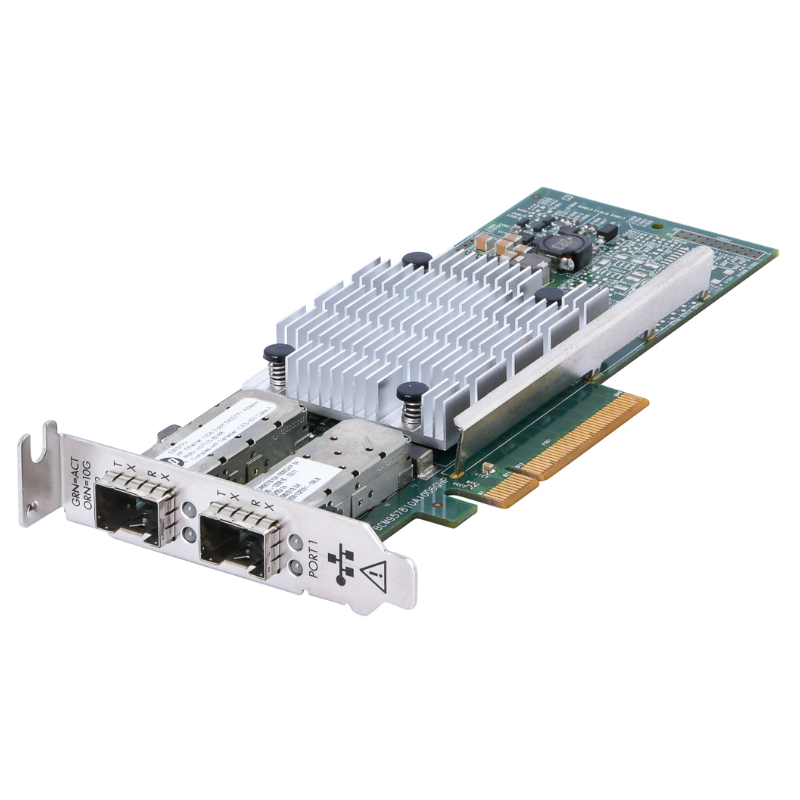


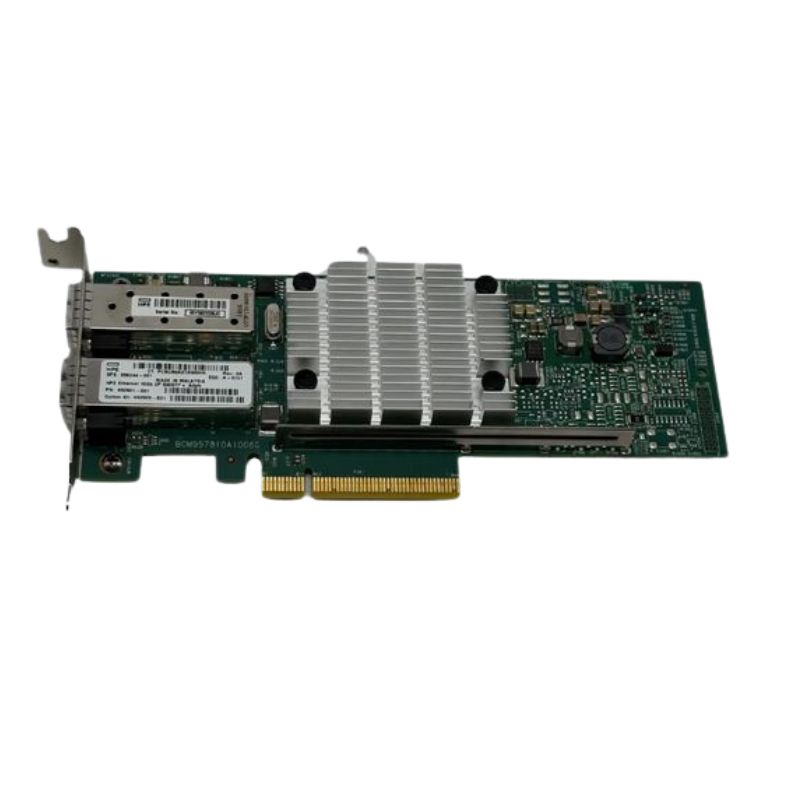
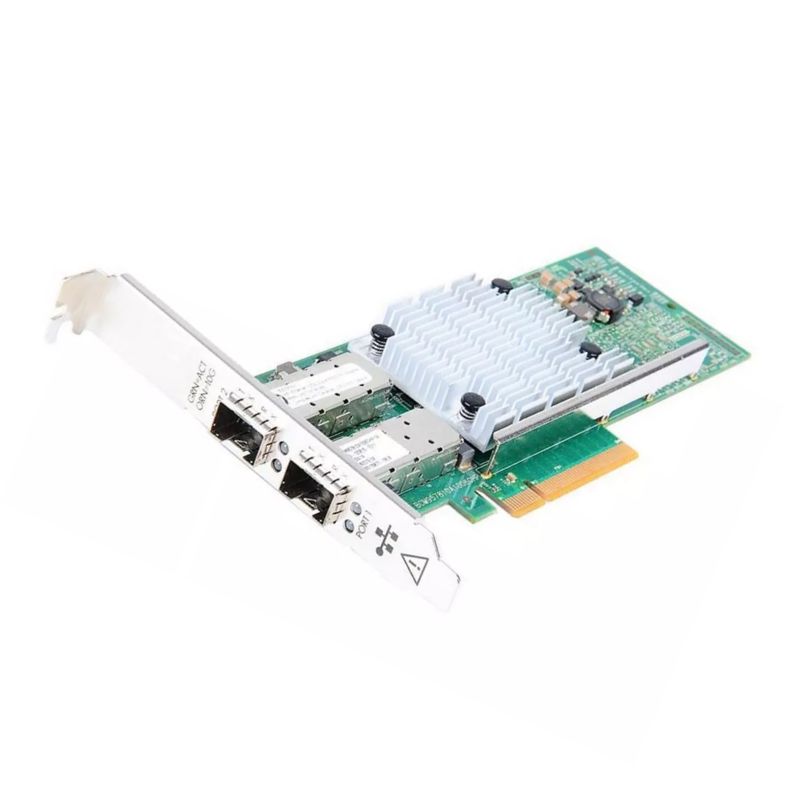
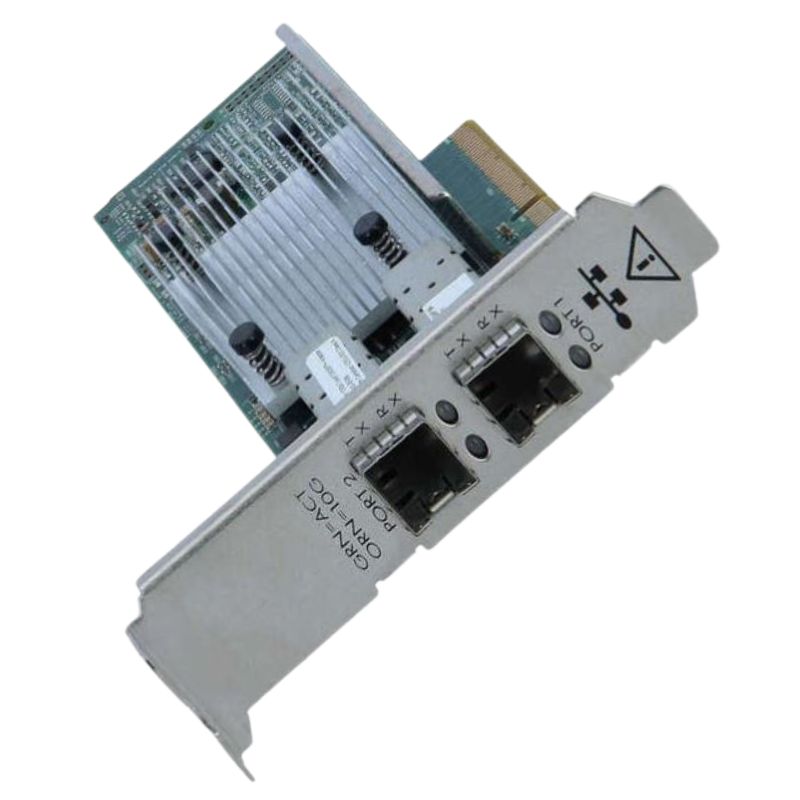
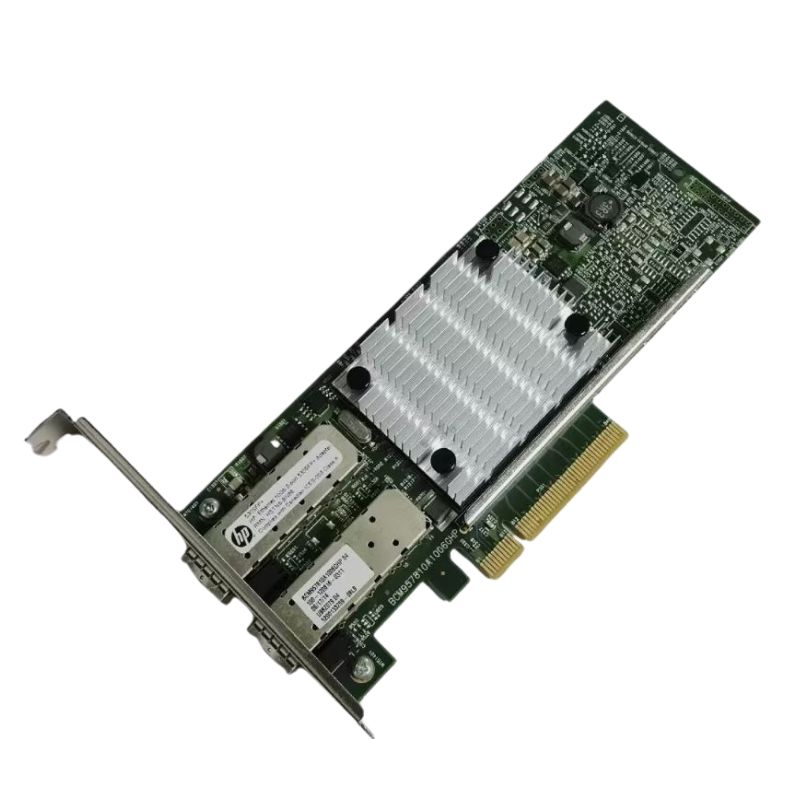
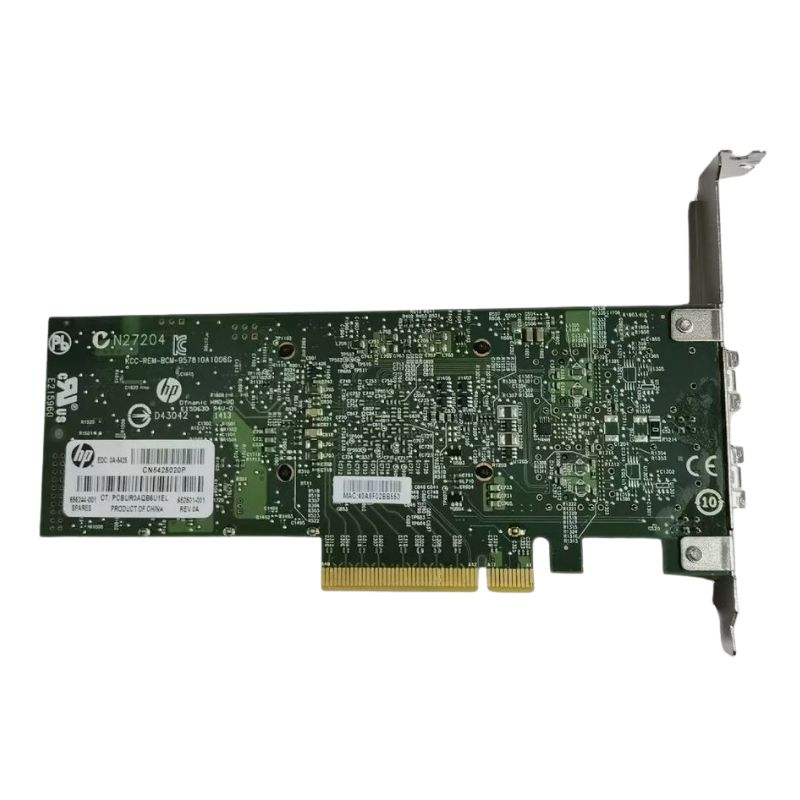
HPE 652503-B21 10GbE 2-Port 530SFP+ PCI-E Adapter for G7 G8 G9 G10 Servers. Excellent Refurbished with 1 year replacement warranty
The HPE 652503-B21 Ethernet 10Gb 2-Port 530SFP+ Adapter is a high-performance PCI Express network interface card designed for enterprise-grade servers. It delivers reliable 10 Gigabit connectivity, advanced virtualization features, and optimized data handling for modern data center environments.
The category of the HPE 652503-B21 10GbE 2-Port 530SFP+ PCI-E Adapter for G7, G8, G9, and G10 servers represents a high-performance enterprise networking solution designed for modern data center environments that demand high throughput, low latency, and reliable scalability. This adapter is engineered to support dual-port 10 Gigabit Ethernet connectivity through SFP+ interfaces, enabling flexible deployment options across a wide range of ProLiant server generations. It is commonly integrated into virtualization clusters, storage networking environments, and high-density compute infrastructures where consistent network performance is essential. At its core, this adapter belongs to a category of server network interface cards (NICs) optimized for PCI Express-based expansion. It allows servers to extend their native networking capabilities beyond standard onboard ports, making it suitable for workloads requiring rapid data exchange, such as cloud computing, virtualization farms, and database replication systems. The dual-port design enhances redundancy and load balancing while maintaining predictable throughput performance across demanding workloads.
10 Gigabit Ethernet technology forms the foundation of this adapter category, delivering ten times the bandwidth of traditional Gigabit Ethernet connections. This increased capacity is essential for environments where large datasets must be transferred quickly between servers, storage systems, and virtualization hosts. The HPE 652503-B21 adapter ensures that such high-speed transmission is handled efficiently with minimal packet loss and jitter. The adoption of 10GbE also enables consolidation of multiple network connections into fewer high-capacity links, reducing cabling complexity and improving overall network manageability. This is particularly beneficial in dense data center environments where physical space and cable management are critical considerations.
Within G7 and G8 ProLiant servers, the HPE 652503-B21 adapter serves as a critical upgrade component that significantly enhances networking capabilities beyond base-level onboard NICs. These server generations, while reliable and widely deployed, often require modernization to meet contemporary bandwidth demands. The 530SFP+ adapter provides a cost-effective path to 10GbE connectivity without necessitating full infrastructure replacement. In these environments, the adapter is frequently deployed to support virtualization clusters and mid-tier enterprise applications. Its ability to deliver stable dual-port throughput makes it especially useful in clustered storage configurations and backup networks where predictable performance is essential.
In G9 and G10 ProLiant servers, the adapter plays a more performance-centric role. These server generations are designed for modern workloads such as hybrid cloud deployments, containerized applications, and large-scale virtualization. The 530SFP+ adapter aligns with these requirements by providing scalable network bandwidth that can keep pace with multi-core processors and high-speed storage systems. In G10 environments, the adapter is often paired with SSD-based storage arrays and software-defined networking architectures, allowing organizations to maximize throughput while maintaining low latency across distributed systems. This integration ensures seamless operation in next-generation data center designs.
Low latency is a defining requirement for enterprise networking, and the adapter category is designed to minimize delays in packet transmission and processing. By leveraging hardware-based offloading techniques, the adapter reduces reliance on CPU processing cycles, allowing near-real-time data transmission for latency-sensitive applications such as financial trading platforms, real-time analytics, and distributed databases.
In VMware ESXi environments, the HPE 530SFP+ adapter is widely used to support virtual machine networking workloads. Its ability to handle multiple virtual NICs efficiently makes it suitable for dense virtualization clusters. The adapter ensures that virtual machine traffic is distributed evenly across available ports, improving performance stability and reducing network congestion in hyperconverged infrastructures. Advanced driver support ensures compatibility with VMware’s networking stack, enabling features such as VLAN tagging, network segmentation, and traffic shaping. This makes it a strong candidate for enterprise virtualization deployments where network isolation and performance consistency are essential.
In Microsoft Hyper-V environments, the adapter supports high-throughput virtual switch configurations and enables efficient communication between virtual machines and external networks. The dual-port architecture allows administrators to implement redundancy strategies and load balancing policies that improve overall system resilience. The adapter’s integration with Windows Server drivers ensures stable performance under heavy virtualized workloads, making it suitable for enterprise application hosting, remote desktop services, and private cloud deployments.
Linux environments benefit significantly from the adapter’s open driver compatibility and kernel-level support. Whether deployed in Red Hat Enterprise Linux, Ubuntu Server, or SUSE Linux Enterprise Server, the adapter provides stable networking performance for container orchestration platforms such as Kubernetes and Docker-based deployments. This compatibility makes the adapter particularly valuable in hybrid cloud environments where Linux-based workloads dominate modern infrastructure architectures.
The HPE 652503-B21 adapter category is frequently used in storage networking applications, particularly iSCSI-based SAN environments. Its high bandwidth capability ensures efficient block-level storage communication between servers and storage arrays. This reduces latency in database operations, virtualization storage access, and backup processes. In NAS environments using NFS or SMB protocols, the adapter supports high-speed file sharing across multiple servers. This is particularly important in media production, scientific computing, and large-scale data analytics where large file transfers are common.
High-performance computing clusters rely on extremely fast inter-node communication, and this adapter category supports such requirements by delivering consistent low-latency throughput. Scientific simulations, financial modeling, and AI training workloads benefit significantly from the adapter’s ability to maintain stable high-speed data exchange.
The SFP+ interface standard provides flexibility in choosing between direct attach copper (DAC) cables and fiber optic transceivers. DAC solutions are commonly used for short-distance connections within racks, offering low latency and cost efficiency. Fiber optic configurations, on the other hand, enable long-distance connectivity between data center racks or even across facilities. This flexibility allows organizations to tailor network architecture based on distance, performance requirements, and budget constraints. The adapter’s compatibility with multiple SFP+ transceiver types ensures broad deployment versatility.
Within the broader HPE networking portfolio, the 530SFP+ adapter category occupies a balanced position between entry-level Gigabit adapters and high-end 25GbE or 40GbE solutions. It offers a cost-effective upgrade path for organizations transitioning from legacy networks while still providing sufficient bandwidth for most enterprise workloads. Its dual-port design and SFP+ flexibility make it more versatile than single-port alternatives, while maintaining lower complexity and cost compared to next-generation high-speed adapters.


 Contact Us
 Information
 Catalog
 Solid State Drives (SSD)
 Network Switches
 Hard Disk Drives
 HBA & Controllers
 PC & Servers
 PC & Server Memory
 CPU & Processors
 Network Routers
 Power Supplies
 Tape Drives & Libraries
 Network Devices
 Computer & Network Cables