(7% discount is applied at checkout)
Cart is empty
Your go-to destination for cutting-edge server products
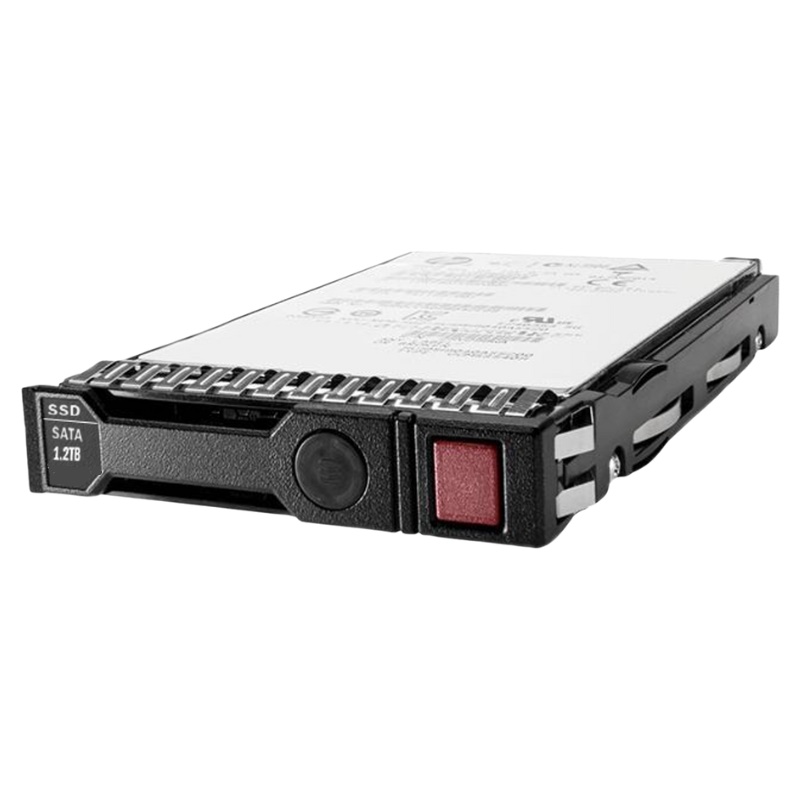


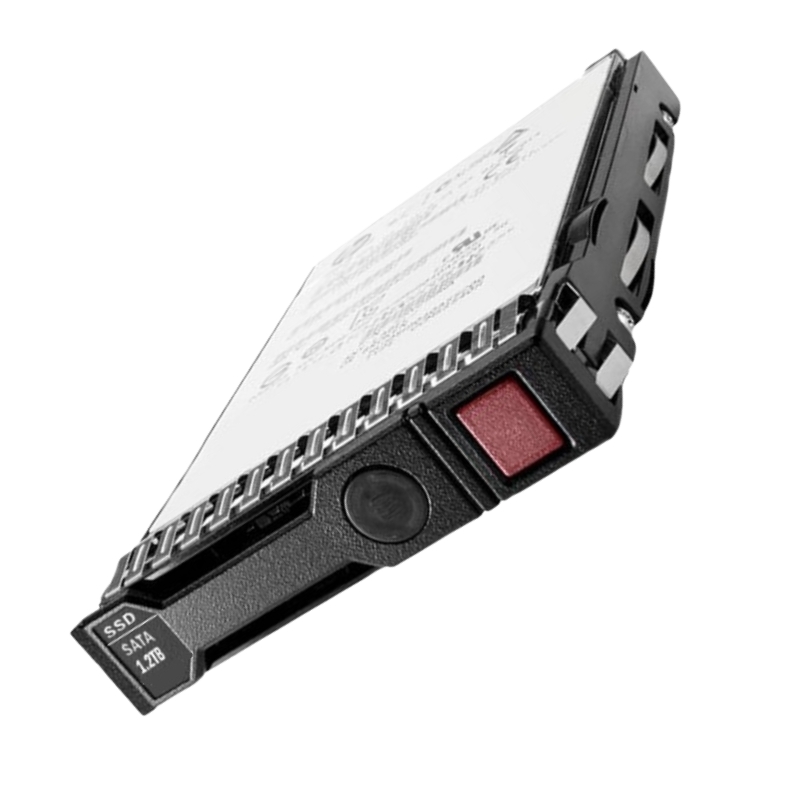
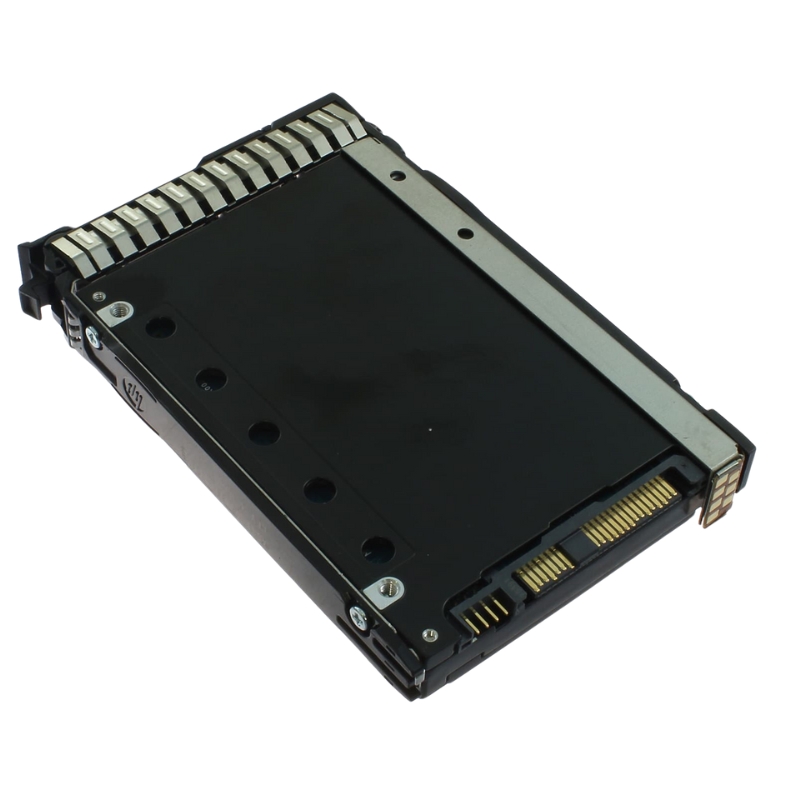
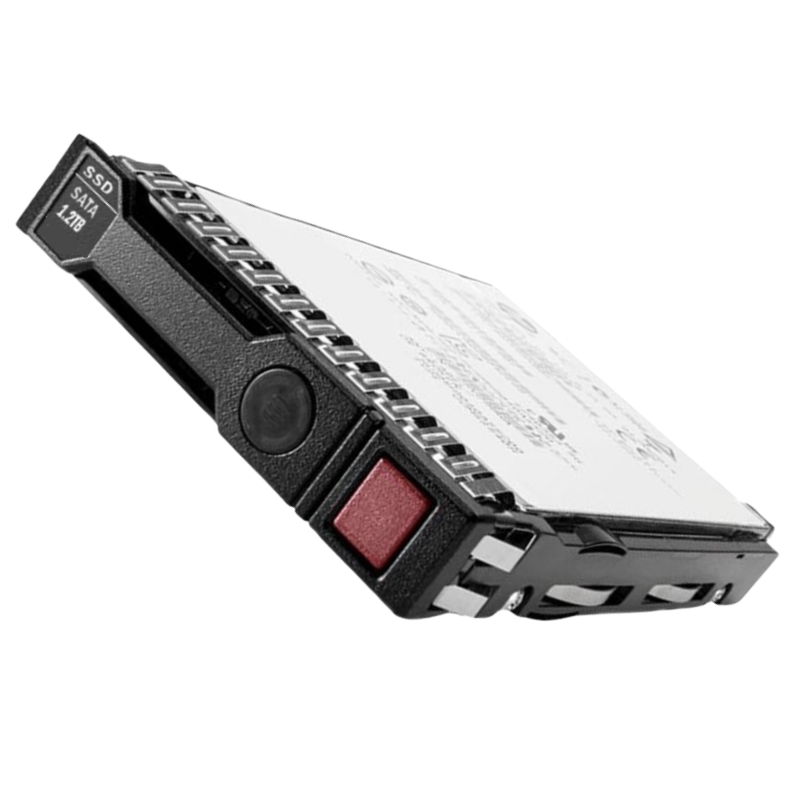
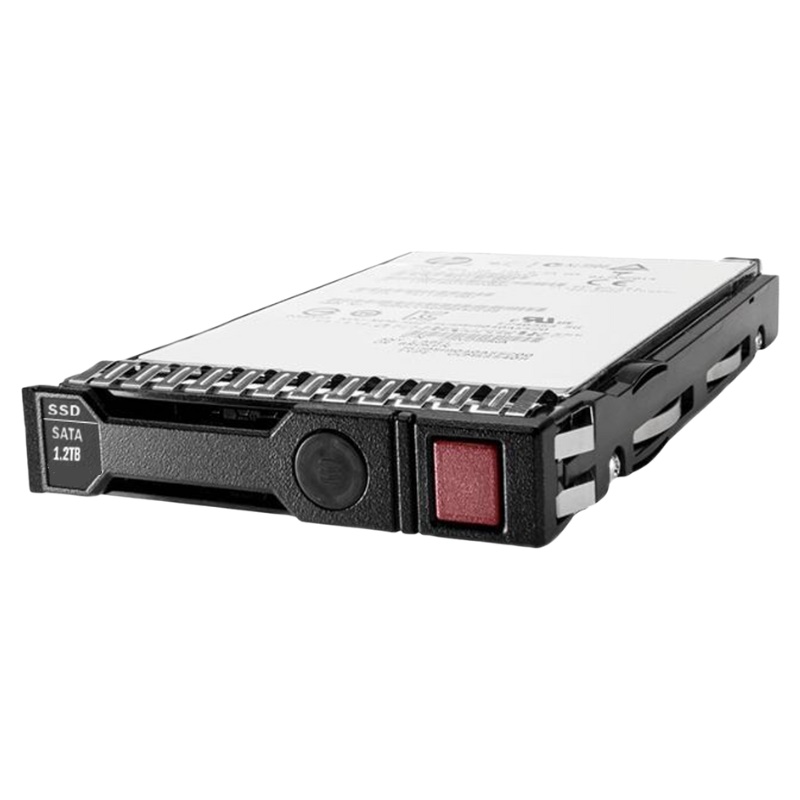
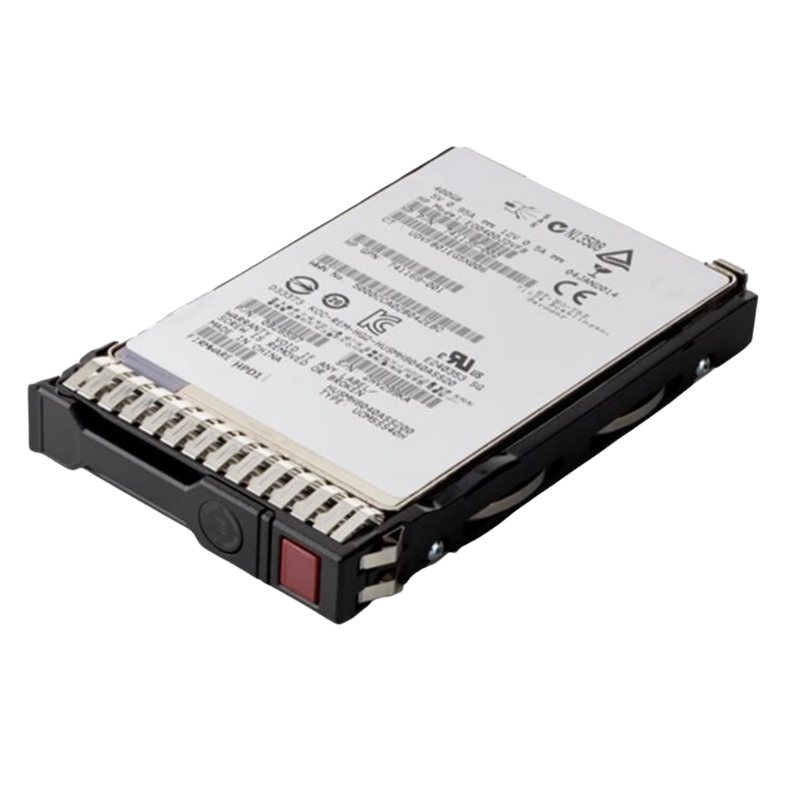
HPE 804677-H21 1.2TB 2.5inch DS SATA-6GBPS SC Intensive Solid State Drive. Excellent Refurbished with 1 year replacement warranty
The 804677-H21 HPE 1.2TB 2.5" DS SATA-6GBPS SC SSD occupies an important place in enterprise storage categories that demand a balance of capacity, reliability, and predictable performance. This category centers on 2.5-inch SATA form-factor solid state drives optimized for single-controller (SC) server and storage array configurations where high sustained throughput, low latency, and solid endurance characteristics are required. The description below expands the category into practical applications, technical differentiators, compatibility considerations, deployment guidance, performance expectations, and buyer-focused guidance to help procurement, system integrators, and IT administrators make well-informed decisions.
Drives in this category are commonly defined by a 2.5-inch form factor, a 6 Gbps SATA interface, and capacities around 1.2TB that serve mid-tier performance and capacity needs in rack-mounted servers and storage enclosures. The designation “DS” indicates suitability for Data-centric Server platforms, and “SC” implies single-controller optimized behavior often used in dual-controller storage arrays when each controller presents dedicated channeling to drives. The category emphasizes enterprise-grade flash memory with firmware tuned for consistent performance under mixed workloads and a focus on data integrity features such as power-loss protection, end-to-end data path protection, and robust error correction algorithms.
Drives like the 804677-H21 are designed to deliver low-latency read and write responses that improve application responsiveness compared with spinning media. Typical throughput behavior shows strong sequential reads and writes for large-block transfers combined with good random IOPS for small-block database and transactional workloads. This makes the category especially suitable for virtualization platforms, database acceleration, boot volumes, caching layers in hybrid arrays, and read/write intensive application tiers that require predictable latency under multi-tenant loads. Workloads such as online transaction processing, virtual desktop infrastructure, container density optimizations, and mid-tier caching will especially benefit from the drive’s mix of capacity and low-latency behavior.
Enterprise-class SSDs in this category are distinguished by endurance ratings expressed in drive writes per day (DWPD) or terabytes written (TBW) over the warranty period. The 1.2TB capacity point hits a sweet spot where endurance is sufficient for sustained production workloads while maintaining attractive cost-per-gigabyte. Built-in features such as wear-leveling, advanced error correction codes, bad block management, and over-provisioning work together to extend usable life and keep performance consistent as the drive is used. Additionally, enterprise firmware implementers include telemetry and SMART reporting to help administrators monitor health, predict failures, and plan non-disruptive replacements.
Because data integrity is a major priority in enterprise environments, this SSD category often includes hardware-assisted power-loss protection mechanisms that flush volatile write caches to non-volatile storage in case of sudden power events. End-to-end data path protection ensures that data leaving the host is checksum-protected through the SSD’s internal buses and flash channels so that corruption is minimized. These integrity measures reduce the risk of silent data errors and improve confidence in using SSDs for critical volumes such as databases, transaction logs, and virtual machine images.
Compatibility is a key concern for buyers and integrators. Drives branded for HPE (such as the 804677-H21 series) are typically qualified for HPE ProLiant servers, HPE storage enclosures, and associated backplanes and firmware ecosystems. Using manufacturer-qualified parts often reduces support friction and ensures firmware interoperability with server management tools, RAID controllers, and storage arrays. However, these drives also use standard SATA-6Gbps signaling, so they can be physically interoperable with a wide range of server platforms that accept 2.5" SATA drives. IT teams should verify firmware compatibility matrices, carrier/tray fitment, and physical backplane connectors to ensure trouble-free deployment.
Enterprise SSDs frequently ship with firmware versions tested against specific OEM systems. Firmware controls how the device handles background garbage collection, thermal throttling, and latency-reducing strategies. When procuring for a large fleet, administrators should coordinate with OEM support and validate that the firmware revision is supported for the intended server or storage model. OEM-validated firmware reduces the risk of unexpected behavior and improves supportability under warranty or vendor support contracts.
The 2.5-inch form factor is mechanically compact and commonly used in high-density server bays and storage sleds. Mechanical design considerations include drive height (commonly 7mm, 9.5mm, or 15mm variants), tray latch compatibility, and connector retention suitable for hot-swap backplanes. Drives in this category are engineered for vibration tolerance and thermal dissipation consistent with multi-drive enclosures. When populating dense arrays, administrators should account for airflow patterns, ambient operating temperatures, and drive placement to avoid thermal throttling that can affect sustained performance.
Typical operational specifications define an air-inlet temperature range for guaranteed performance. Exceeding recommended temperatures can trigger throttling where the SSD temporarily reduces internal activity to avoid overheating, leading to reduced throughput. Administrators should consult environmental guidelines and implement server-level monitoring to capture thermal trends and tune cooling profiles when backplane or array density increases thermal load.
Security is frequently built into storage at multiple layers. SSDs in this category may support self-encrypting drive (SED) capabilities compliant with industry standards such as TCG Opal or hardware AES encryption. SEDs provide a hardware-based encryption engine that secures data at rest without a significant performance penalty and enables central key-management integrations. In addition to encryption, secure erase and cryptographic erase functions allow safe repurposing or retirement of drives by ensuring previously stored data cannot be recovered after proper sanitization procedures.
Enterprises adopting hardware encryption should incorporate compatible key management practices. A robust key management solution ensures that encryption keys are rotated, stored securely, and auditable. When drives are used in multi-tenant or regulated environments, hardware encryption provides an additional compliance layer to meet data protection mandates without relying solely on volume-level or file-level encryption solutions.
Use cases vary from compute-edge servers requiring local high-performance storage to central storage arrays where these SSDs serve as cache or tier-1 data storage. In virtualization clusters, the drive’s low latency improves VM boot times and application responsiveness. For databases and real-time analytics, the drive supports faster query responses and higher transactions per second. In hybrid storage arrays, 1.2TB SSDs are commonly used as performance tier drives that absorb hot data, while larger-capacity HDDs provide high-density archival storage.
Virtual desktop infrastructure benefits from improved random IOPS and reduced latency provided by enterprise SATA SSDs. The category reduces login storms and improves consistent performance across many concurrent virtual desktops. The 1.2TB capacity provides a good mix of per-node storage for OS images, user profiles, and frequently accessed application data while remaining cost-effective compared with NVMe-only deployments.
Databases that are sensitive to I/O latency, such as OLTP systems and small-to-medium analytics platforms, gain from placing transaction logs and hot datasets on SSDs within this category. Lower write latency and deterministic IOPS help minimize query tail-latency and improve SLA adherence for client-facing applications. For log-intensive workloads, administrators should consider the endurance rating and implement appropriate monitoring to plan drive replacement cycles aligned with workload write intensity.
Compared with consumer SATA SSDs, enterprise-class drives bring stronger firmware, endurance, and management features tailored to server and array ecosystems. Versus NVMe/U.2/U.3 PCIe SSDs, SATA-6Gbps drives generally have lower peak throughput and higher latency, but they remain cost-effective for many mid-tier workloads where NVMe’s higher performance is unnecessary. They are also often easier to retrofit into existing SATA-equipped backplanes without controller or adapter upgrades, making them an attractive option for incremental performance improvements in legacy infrastructures.
Procurement teams should standardize on a narrow set of part numbers and firmware revisions to simplify inventory and support. When buying at scale, negotiating firmware support, advance replacement terms, and extended warranty options can reduce operational risk. Lifecycle planning should include capacity forecasting, endurance budgeting, and a scheduled replacement strategy based on SMART and telemetry alerts rather than reactive failure-driven replacement. This approach minimizes unplanned downtime and preserves predictable performance across the fleet.
A pragmatic spare-parts strategy involves holding a small pool of spare drives of the same model and firmware to enable quick replacements and reduce Mean Time To Repair (MTTR). Matching firmware versions and carriers reduces the need for emergency reconfiguration and ensures replacement drives behave identically to the existing fleet. For cloud and service providers, automation around drive replacement and health checks reduces human intervention and speeds recovery from drive faults.
Modern enterprise drives expose detailed SMART attributes and telemetry that feed into server management platforms and monitoring systems. These metrics include power-on hours, percentage used, error counts, and temperature trends. Integrating SSD monitoring into existing observability stacks enables predictive maintenance and data-driven capacity expansion decisions. Administrators should configure alert thresholds for indicators such as media wearout, reallocated sectors, and temperature excursions to maintain a healthy storage estate.
Firmware updates may include performance improvements, bug fixes, and new telemetry features. Plan firmware updates carefully in controlled maintenance windows and follow vendor guidance, because updating drive firmware in large arrays can be sensitive and, in some cases, require coordinated controller or host updates. Maintain change logs and rollback plans, and test new firmware on a small subset before broad rollout to production systems.


 Contact Us
 Information
 Catalog
 Solid State Drives (SSD)
 Network Switches
 Hard Disk Drives
 HBA & Controllers
 PC & Servers
 PC & Server Memory
 CPU & Processors
 Network Routers
 Power Supplies
 Tape Drives & Libraries
 Network Devices
 Computer & Network Cables