(7% discount is applied at checkout)
Cart is empty
Your go-to destination for cutting-edge server products
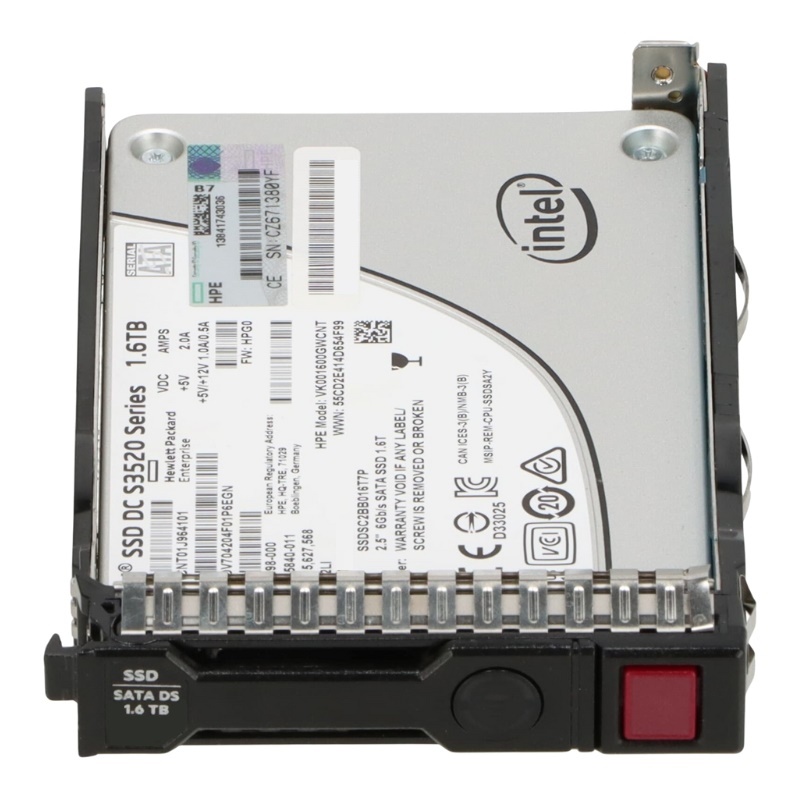


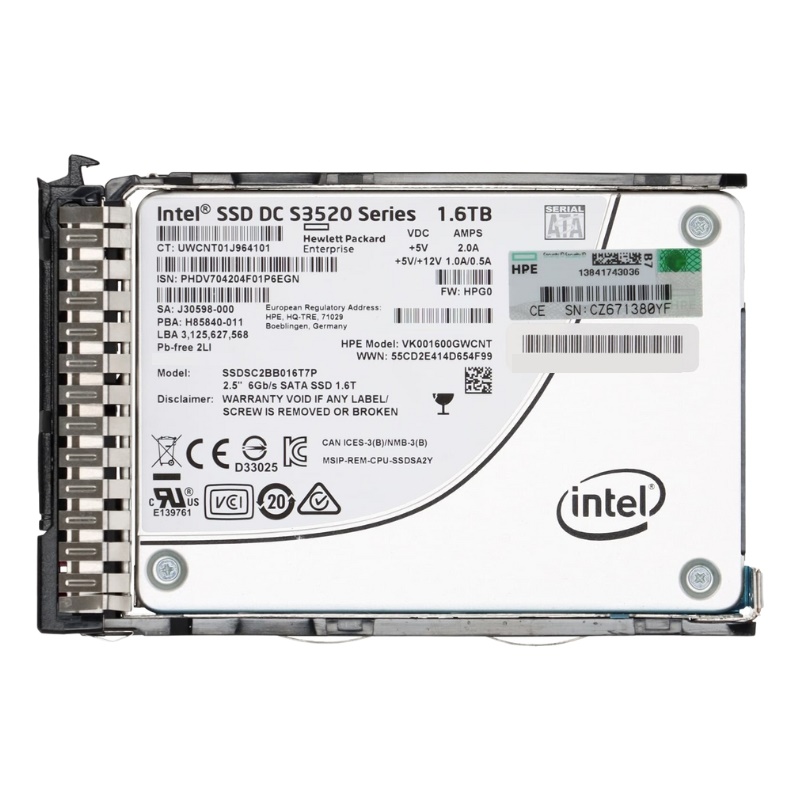
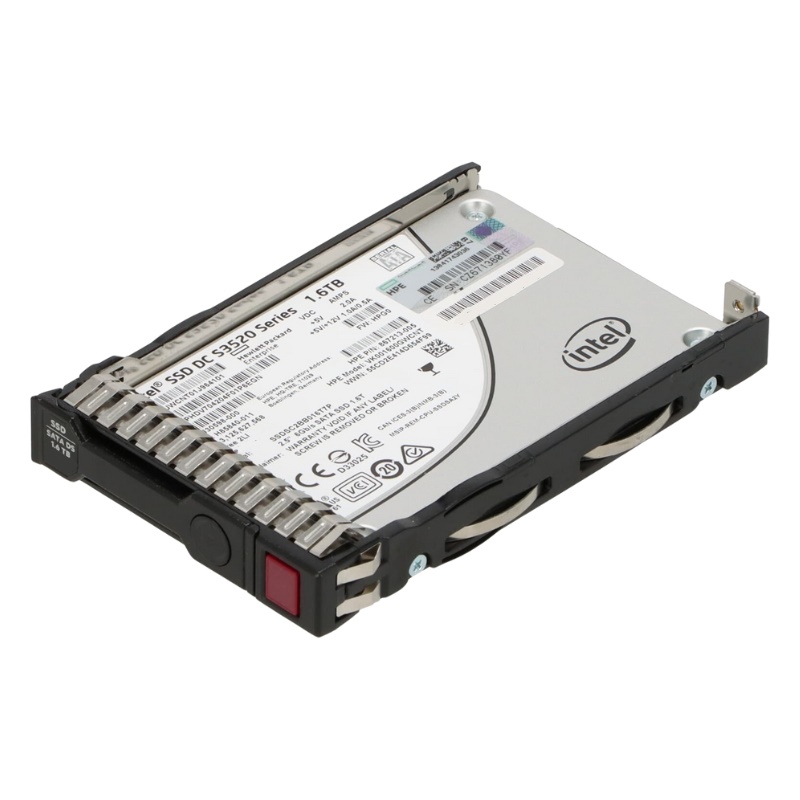
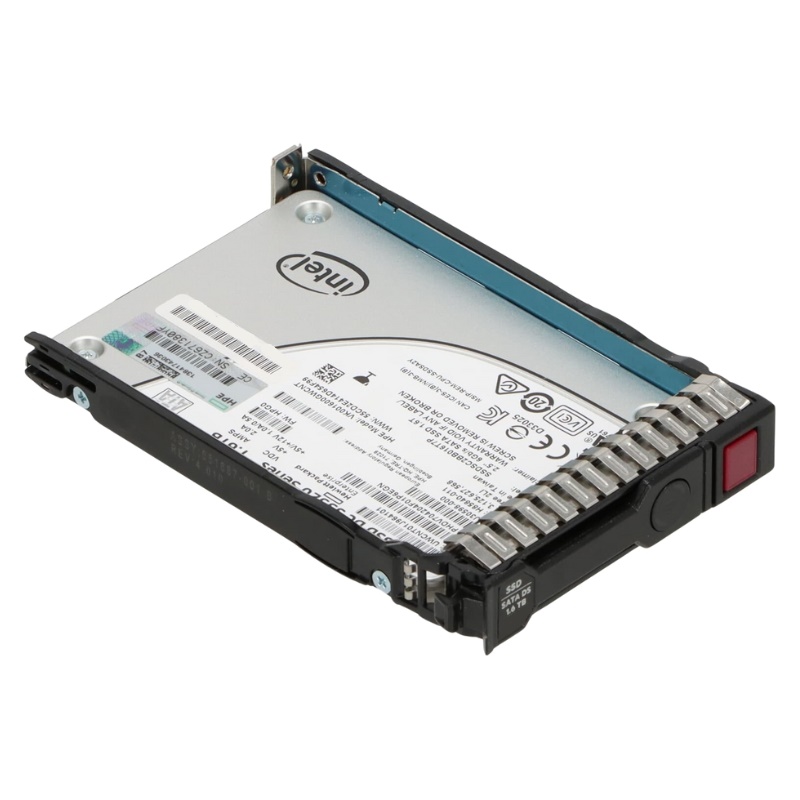
HPE 805366-001 1.6TB SATA 6GBPS 2.5-inch Read Intensive SSD. Excellent Refurbished with 1 year replacement warranty
The 805366-001 HPE 1.6TB SATA 6GBPS 2.5" Read Intensive SSD represents a focused category within enterprise-class storage: high-capacity, read-optimized solid state drives engineered for server and storage-array environments where read throughput, low latency, and predictable performance are primary objectives. This category description covers technical characteristics, target workloads, deployment patterns, integration and compatibility notes, lifecycle management, performance tuning, and buying considerations for system architects, storage administrators, and procurement teams. Readers will find an in-depth view of what makes the 805366-001 model and its family of read-intensive SATA SSDs appropriate for cache tiers, content delivery, virtual desktop infrastructure (VDI) read-heavy pools, database read replicas, and other read-dominant applications.
HPE’s 805366-001 drives are designed around the read-intensive use case: maximizing read I/O per second and throughput while providing acceptable endurance for workloads that perform significantly more reads than writes. The design philosophy balances NAND selection, firmware algorithms, over-provisioning, and thermal controls to deliver steady-state read performance with minimal latency variation. Typical environments include storage caching layers where writes are absorbed elsewhere, media streaming nodes where content is read repeatedly, analytics nodes that perform many table scans or key-value lookups, and boot/OS volumes in dense virtualization deployments where thousands of virtual machines frequently read common images.
Read-intensive SSDs like the 805366-001 thrive when the workload profile is dominated by sequential or random reads with a low to moderate write rate. Examples include large-scale web servers serving static content, distributed object storage front-ends where clients retrieve rather than store objects, read-replica databases used for reporting queries, and virtualization platforms using linked clones or golden images that produce heavy read I/O. Since write amplification and endurance demands are lower than in write-intensive drives, read-optimized SSDs offer a cost-effective balance for read-heavy tiers while still providing enterprise-class reliability features.
The 805366-001 follows the 2.5" form factor standard for server and storage drives, making it compatible with an extensive array of HPE ProLiant servers, storage enclosures, and third-party chassis that accept 2.5-inch SATA drives. The SATA 6Gbps interface ensures broad interoperability with legacy and modern SATA backplanes while offering a practical throughput ceiling for many read-oriented deployments. The 1.6TB capacity point is attractive for medium-density storage tiers that require larger logical volume sizes without resorting to higher-cost NVMe options.
The compact 2.5" profile allows server builders and data center operators to populate dense drive bays, enabling higher storage capacity per chassis while maintaining airflow and cooling characteristics suitable for enterprise racks. Mechanical design also includes mounting and connector placement consistent with industry standards so the drive fits in hot-swap trays and sleds used across HPE systems. Careful attention to thermal throttling behavior and power dissipation ensures consistent operation in demanding multi-drive configurations.
Performance for the 805366-001 series centers on delivering low read latency, consistent random read IOPS, and competitive sequential read throughput within a SATA bandwidth envelope. In real deployment scenarios, users can expect fast boot times for operating systems, rapid access to frequently read application binaries, and reduced latency for read queries in database workloads. Benchmarks that emphasize read IOPS and read latency — such as random 4K read tests and sequential read transfer measurements — are the most relevant indicators for this category. Performance also scales appropriately in RAID configurations optimized for read speed, such as RAID 10 or read-preferring RAID controllers.
Latency is a critical metric for user experience and transaction speed. The 805366-001 family is tuned to minimize average and tail read latency, which benefits interactive applications and real-time services. IOPS capacity supports many concurrent read threads, making the drive suitable for multitenant systems. Throughput for large sequential reads is constrained by the SATA 6Gbps link, but within that envelope the drive uses firmware-level optimizations to sustain high sustained reads and reduce stalls under heavy parallel read workloads. Administrators should monitor queues and adjust scheduling parameters to avoid controller-level bottlenecks that can mask the drive’s read strengths.
Although targeted at read-heavy workloads, the 805366-001 maintains enterprise-grade reliability features, including power-loss protection, advanced error-correcting code (ECC), wear-leveling algorithms, and over-provisioning to extend usable NAND life. Endurance is specified in terms of terabytes written (TBW) or drive writes per day (DWPD) over a warranty period; while lower than write-intensive models, the endurance rating matches the expected write patterns of the intended workloads and includes safety margins for mixed-use scenarios. HPE integrates drive telemetry so that health metrics can be reported to management tools for proactive replacement planning.
SMART attributes and vendor-specific telemetry provide insight into the drive’s health, including reallocated sectors, uncorrectable errors, wear indicators, and temperature metrics. Administrators should configure enterprise monitoring stacks to capture and trend these signals, enabling timely interventions before failures impact service availability. HPE’s management ecosystems typically expose these telemetry values through system utilities and OEM monitoring agents, which can be integrated into broader ITSM or observability platforms.
One of the primary advantages of the 805366-001 designation is its compatibility pedigree with HPE server families and validated configurations. System integrators and operators will find this drive listed in HPE interoperability matrices and compatibility guides for specific ProLiant generations, HPE storage enclosures, and blade chassis. Compatibility with RAID controllers and backplanes is important: the drive leverages standard SATA signaling and command sets to ensure interoperability with a wide range of HBA and storage controller firmware versions certified by HPE.
When deployed in HPE ProLiant servers or storage blades, the 805366-001 benefits from firmware-level integrations that allow for optimized power management, enhanced error reporting, and simplified firmware updates through HPE’s system management tools. Integration points include iLO system logs, Smart Storage Administrator (SSA), and OneView, which can display drive health and lifecycle state. Using certified drives reduces the risk of subtle interoperability issues, simplifies support contracts, and ensures greater predictability for firmware upgrade paths.
Effective deployment starts with selecting the appropriate RAID level, over-provisioning strategy, and monitoring setup. For read-optimized applications, RAID configurations that favor read performance and offer redundancy — such as RAID 10 or RAID 6 with read caching — are commonly used. Administrators should consider reserving some drives as hot spares for rapid rebuilds and tuning write cache policies on controllers to avoid unnecessary write amplification. Over-provisioning and leaving spare capacity at the filesystem level can help prolong endurance and maintain peak read performance under sustained workloads.
Keeping drive firmware current is critical for stability and security. HPE publishes firmware bundles and interdependent component advisories that specify compatible controller firmware, server BIOS, and drive firmware versions. Follow HPE’s recommended update sequence to avoid transient incompatibilities. Incorporate firmware maintenance into regular change windows, testing updates on representative non-production hardware when possible. Maintain a record of firmware versions and test results to assist with troubleshooting and vendor support interactions.
Dense 2.5" drive deployments increase the importance of thermal planning. The 805366-001's thermal profile must be managed through proper airflow management on drive sleds, ensuring drive bays are clear of obstructions and front-to-back cooling paths are unobstructed. Monitor drive operating temperatures and watch for thermal throttling events that can affect read latency under sustained load. Data center operators should coordinate rack-level cooling strategies and validate that chassis fans, perforated drive carriers, or blanking panels are installed correctly to maintain stable operating conditions.
While SATA SSDs consume less power than many high-performance NVMe drives, large arrays still require careful power planning. Calculate expected idle and active power draw per drive and factor in peak conditions during rebuilds or heavy sequential reads. Ensure redundant power supplies and proper UPS sizing for the server or storage enclosure to maintain availability during power events. Proper power design also helps preserve data integrity by avoiding sudden power-loss conditions; additional safeguards such as capacitive power-loss protection can mitigate incomplete write operations.
Security is a central consideration for enterprise storage. Depending on the specific 805366-001 firmware variant and platform support, features such as ATA security, secure erase, and cryptographic erase may be available. When deploying drives in regulated environments, follow formal data sanitization procedures using vendor-supported secure erase commands or NIST-compliant wipe tools to render data unrecoverable before decommissioning. Document wipe processes and, where applicable, integrate drive-level encryption and key management into broader information security policies.
Organizations operating under regulatory constraints should confirm that drive deployment and data destruction methods meet sector standards. Healthcare, finance, government, and other regulated industries may require specific certification levels for data handling and disposal. Keep records of drive serial numbers, warranty transfers, and destruction certificates when necessary to demonstrate compliance during audits.
Within HPE’s storage portfolio, the 805366-001 read-intensive SATA SSD sits between lower-capacity consumer-grade SSDs and higher-performance enterprise NVMe or SAS write-intensive drives. Compared to write-optimized enterprise SSDs, read-intensive drives offer a more cost-efficient per-GB price while offering sufficient enterprise manageability. When high random write endurance, ultra-low latency, or NVMe-specific features such as namespace virtualization are required, NVMe models become the preferred choice despite higher cost. Conversely, for archival, cold storage, or write-rarely use cases, higher-capacity SATA HDDs may remain economical, though they cannot match SSD latency and read IOPS.
Choice of interface should be driven by workload and budget. SATA provides wide compatibility and predictable performance for read-heavy tasks. SAS offers higher sustained throughput and dual-port redundancy for mission-critical workloads, while NVMe provides the lowest latency and highest parallelism for write-intensive or latency-sensitive applications. The 805366-001 occupies the sweet spot for organizations that need enterprise reliability and read performance without the premium of NVMe platforms.
When procuring drives, verify OEM part numbers, warranty durations, and support entitlements. The 805366-001 designation typically maps to HPE’s part numbering and will have warranty coverage consistent with HPE’s policies for enterprise drives. Confirm whether the purchase includes advance replacement options, on-site support, or extended warranty services, as these factors influence total cost of ownership and operational risk. Keep drive firmware and hardware serial numbers in asset management systems to streamline RMA or support processes.
Some organizations seek cost savings through refurbished drives or third-party compatible OEM alternatives. If considering non-OEM or refurbished units, weigh the trade-offs in warranty, firmware compatibility, and longevity. Using drives not validated in HPE compatibility lists can introduce subtle interoperability risks and may affect support; for mission-critical systems, certified OEM parts are recommended to ensure predictable behavior and vendor support coverage.
Planning for growth requires understanding how the 805366-001 fits into a broader storage topology. For horizontal scalability, use clustered storage architectures that add nodes with additional drive capacity. For vertical capacity increases, ensure that server chassis and backplanes support the desired number of 2.5" slots and that cooling and power budgets scale accordingly. Consider tiering strategies that combine read-intensive SSDs as a caching layer in front of higher-capacity disk arrays or object stores, enabling cost-effective scaling while maintaining fast read response times.
When replacing drives or performing capacity expansions, take advantage of hot-swap capabilities offered by HPE systems and adopt staged migration processes to minimize downtime. Validate rebuild and resilver times in lab environments to estimate impact on performance during rebuilds, and schedule maintenance during off-peak windows when possible. Maintain a clear change management plan and backup/restore verification to mitigate risk during migrations.
Operational excellence requires continuous monitoring of drive health, performance trends, and environmental factors. Use HPE management suites to collect SMART metrics, firmware status, temperature readings, and drive usage statistics. Establish alerting thresholds for wear indicators, reallocated sector counts, and temperature excursions. Regularly review logs to detect early signs of degradation. Proactive maintenance, including scheduled replacements for drives nearing specified endurance thresholds, helps avoid unplanned disruptions in production environments.
Conduct capacity planning not only for storage volume but also for endurance lifecycle. Track TBW consumption and project replacement intervals based on observed write patterns. Factor in the cost of replacement drives, support contracts, and labor in total cost of ownership models. Assess whether the read-intensive drive class remains the optimal choice as workloads evolve; if write rates increase over time, plan for potential migration to higher-endurance models.
Common deployment scenarios for the 805366-001 include web hosting environments where thousands of small files are read repeatedly, VDI farms serving many users from common golden images, caching layers in content distribution networks where read throughput is critical, and analytics clusters that perform large, read-heavy scans. In each scenario, the drive’s attributes—low read latency, steady random read IOPS, and 2.5" density—help achieve performance and density goals while managing costs compared with high-end NVMe alternatives.
To maximize return on investment, combine the 805366-001 with tiered storage architectures, use it as the hot-read layer in front of higher-capacity arrays, and leverage intelligent caching to reduce redundant reads from backend storage. Match RAID policies to read patterns, and reserve spare drives for rapid rebuilds. Incorporate lifecycle and wear monitoring to replace drives proactively and avoid performance degradation. Where possible, standardize on validated HPE configurations to simplify procurement, support, and firmware maintenance.
The 805366-001 HPE 1.6TB SATA 6GBPS 2.5" Read Intensive SSD is a strategic building block for storage architectures prioritizing read performance, predictable latency, and cost-effective capacity. It fits naturally into caching layers, VDI read pools, content delivery front-ends, and other read-dominant use cases. Proper configuration, monitoring, and lifecycle planning unlock the drive’s full potential and provide a balanced, enterprise-grade solution that integrates with HPE systems and management frameworks. By understanding the workload profile, choosing appropriate RAID and over-provisioning strategies, and maintaining proactive firmware and health management, organizations can achieve reliable, high-performance read tiers while optimizing cost and operational overhead.


 Contact Us
 Information
 Catalog
 Solid State Drives (SSD)
 Network Switches
 Hard Disk Drives
 HBA & Controllers
 PC & Servers
 PC & Server Memory
 CPU & Processors
 Network Routers
 Power Supplies
 Tape Drives & Libraries
 Network Devices
 Computer & Network Cables