(7% discount is applied at checkout)
Cart is empty
Your go-to destination for cutting-edge server products
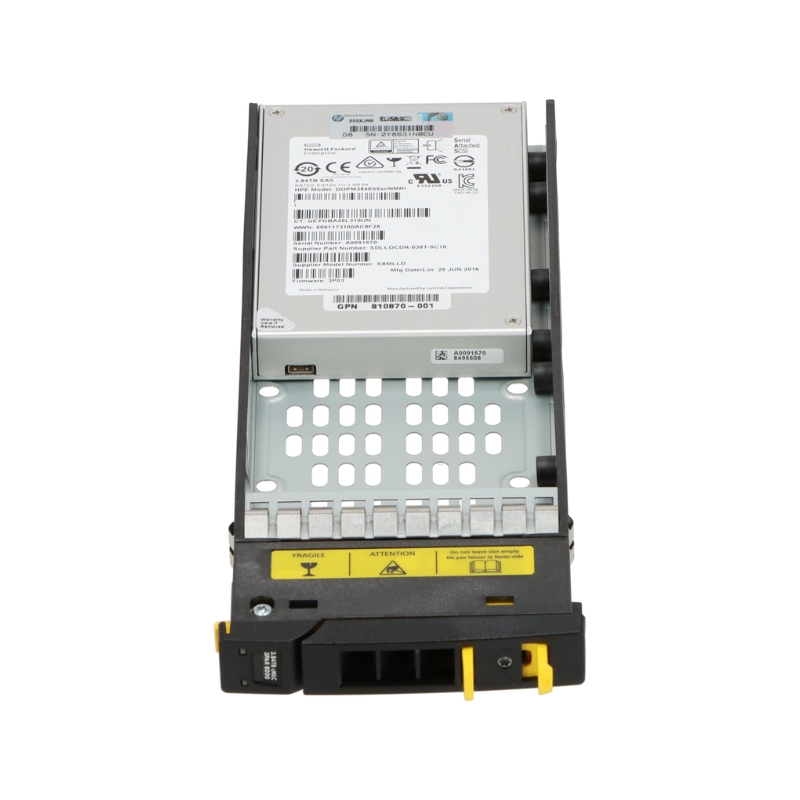


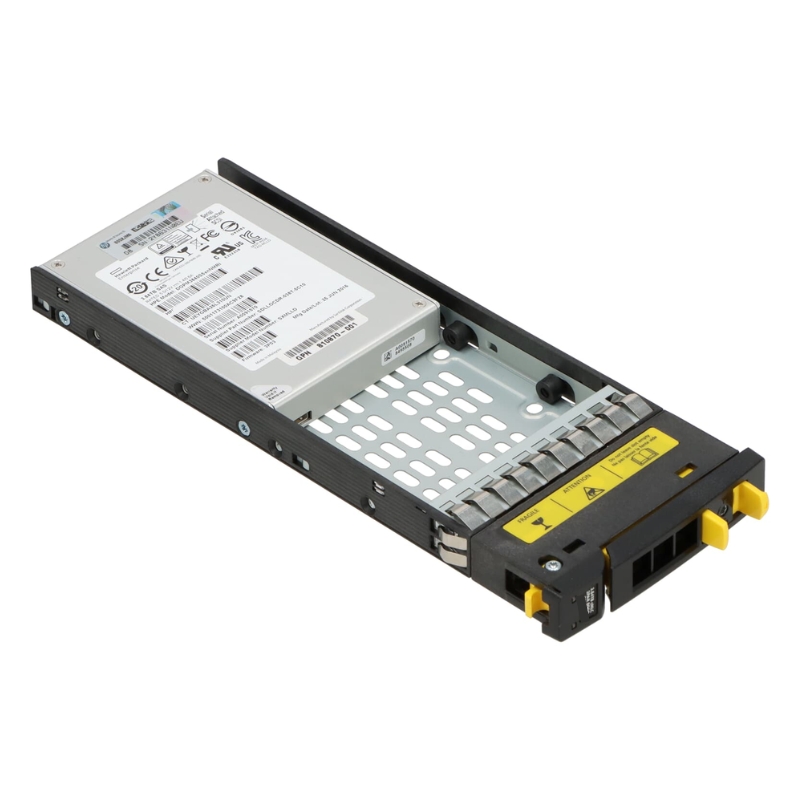
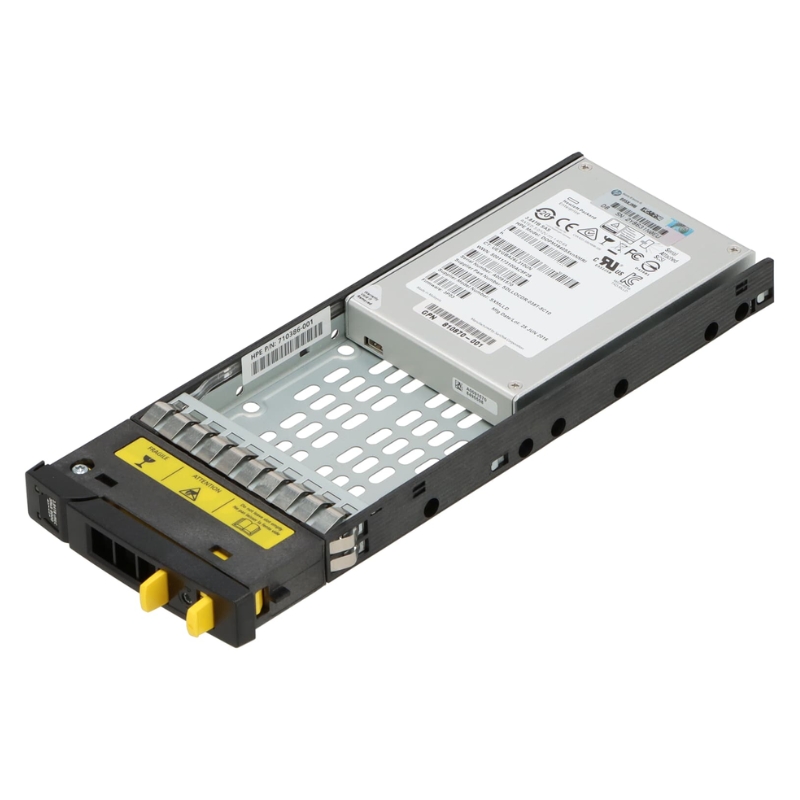
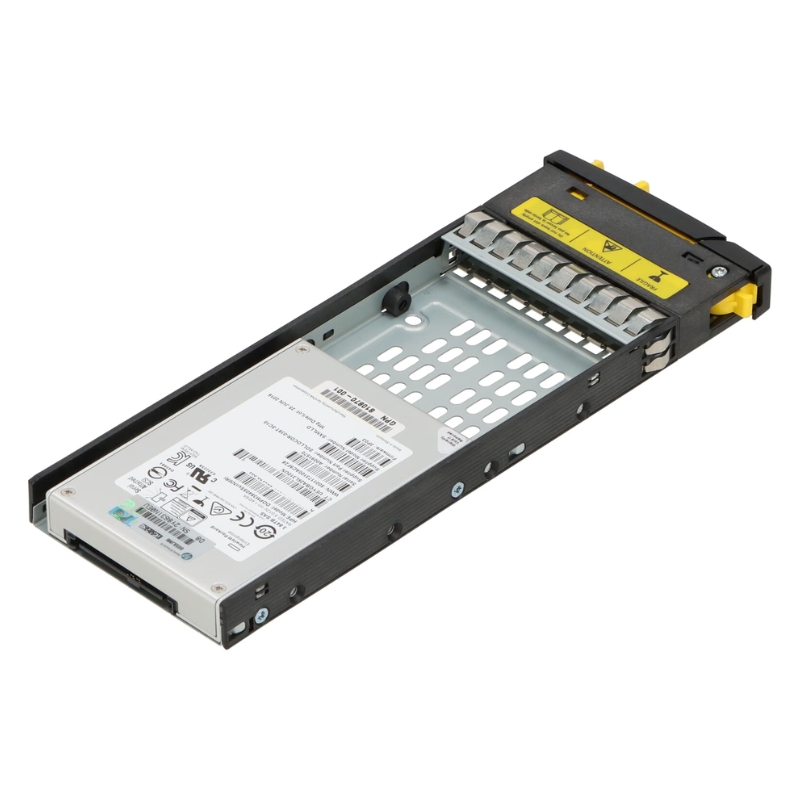
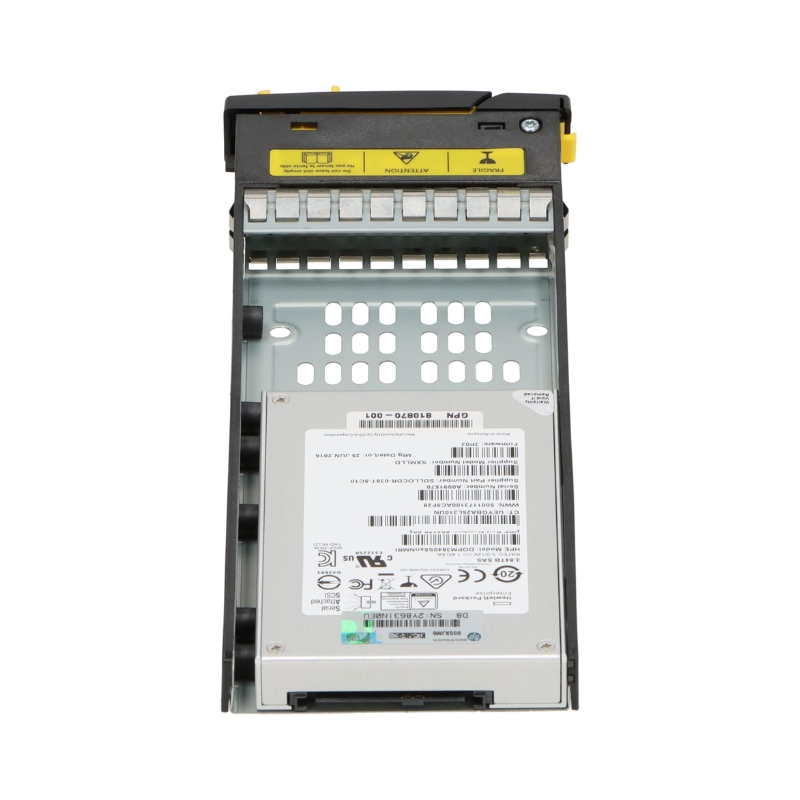
HPE 809589-001 3.84TB SSD SAS 6GBPS 3PAR Storeserv 20000. Excellent Refurbished with 1 year replacement warranty
The 809589-001 HPE 3PAR StoreServ 20000 3.84TB SSD SAS 6Gbps is positioned as a high-density, high-performance enterprise solid-state drive option intended for HPE 3PAR StoreServ environments. This category page describes the drive’s role within modern data center storage architectures, highlights the technical qualities that make it suitable for mixed and write-intensive workloads, and explains how procurement and lifecycle management decisions benefit from choosing a purpose-built HPE-qualified SSD. Search engine intent for this SKU typically relates to compatibility, reliability, performance characteristics, and deployment scenarios, and the content below addresses those topics directly with clear headings and thorough technical discussion for buyers, systems engineers, and procurement teams.
Designed to match the enterprise-grade expectations of the HPE 3PAR StoreServ 20000 family, the 809589-001 SSD fits into the chassis and firmware ecosystem used across StoreServ deployments. Compatibility is more than physical fit; it encompasses validated firmware interoperability, expected thermal and power envelopes, and optimized controller interactions. When used as part of a StoreServ 20000 array, these SSDs help deliver predictable latency characteristics and sustained I/O throughput, because their firmware is tuned to behave consistently under the kinds of mixed-size, high-concurrency workloads typical of virtualized server farms and database clusters. Purchasing the SKU with HPE validation reduces the risk of drive firmware incompatibilities that can arise with generic or consumer-class drives.
The drive leverages the SAS 6Gbps interface, which remains a ubiquitous and robust enterprise interconnect for server and storage arrays. SAS provides features such as full-duplex communication, dual-port redundancy for failover, and enterprise-level error handling that are essential in highly available storage systems. Physically, the drive is intended to integrate into the 3PAR hot-plug drive bays used in the 20000 series, enabling drive replacement and array expansion without downtime. Physical and electrical specifications are engineered to match the accommodation constraints of HPE enclosures and sleds, and this close fit delivers predictable mechanical, thermal, and cabling behavior in dense rack environments.
At the array level, firmware interoperability matters as much as raw NAND quality. HPE-qualified SSDs such as the 809589-001 are typically shipped with drive firmware that cooperates with 3PAR controllers to ensure correct handling of error recovery, block mapping, and background maintenance operations. This interplay reduces the risk of unnecessary drive offlining due to aggressive timeout behavior and improves the array’s overall ability to manage background processes like garbage collection and wear-leveling without impacting foreground I/O. For systems administrators, this means smoother firmware update cycles and fewer compatibility-related support calls.
Performance for enterprise SSDs is multi-dimensional: IOPS, throughput, latency under load, and consistency over time are all critical metrics. The combination of 3.84TB capacity and SAS 6Gbps interface indicates a balance between usable capacity and predictable performance in enterprise workloads. In practical deployments the 809589-001 can deliver low latency for small, random I/O typical of transactional databases and virtual machine hosts while also sustaining higher sequential throughput for backup or replication tasks when orchestrated by the 3PAR controllers.
Enterprise storage buyers care less about peak synthetic numbers and more about consistent low-latency behavior under concurrency. When used within a 3PAR StoreServ pool, the drive contributes to the array’s ability to maintain sub-millisecond service times for small-block I/O, particularly when the array is configured with multiple SSDs and proper tiering policies. Consistency is driven by the drive’s garbage collection strategy, power-loss protection design, and the array’s I/O queue depth management. These drives are typically used to meet SLAs for latency-sensitive workloads such as online transaction processing and virtual desktop infrastructure.
While SAS 6Gbps imposes a theoretical per-lane limit, the real-world sequential throughput available to any single logical device also depends on how the array stripes data across multiple drives and the controller’s caching behavior. The 809589-001, when combined in RAID configurations and supplemented by 3PAR’s controller cache, supports high sustained throughput for large-block transfers such as backup windows, bulk replication traffic, and large dataset analytics. The result is a storage tier that balances both transactional responsiveness and capacity-efficient transfer rates.
Choosing a 3.84TB enterprise SSD is a strategic decision that weighs raw capacity against cost, endurance, and the intended workload profile. The 809589-001 is positioned to serve as either a primary performance tier for active working sets or as part of a hybrid architecture with automated tiering where hot data lives on SSD strata and cooler data is demoted to traditional spinning media. Key enterprise use cases include virtual machine consolidation, critical database acceleration, high-performance file serving, and hyperconverged platforms where predictable write endurance and capacity overhead matter.
Write endurance is often described by TBW (terabytes written) or DWPD (drive writes per day) metrics, and selecting a drive requires aligning these endurance parameters with the expected write intensity of the workload. When deployed in a StoreServ array, endurance is further optimized by 3PAR’s thin provisioning and deduplication features, which reduce unnecessary writes by minimizing redundant data stored on the NAND. Understanding the array-level data reduction rates and how they affect physical write amplification allows architects to project drive lifetime more accurately and select an appropriate replacement cadence.
The 3PAR platform supports automated tiering policies that balance performance and cost. In hybrid configurations, the 809589-001 SSDs form the high-performance tier that accelerates hot data, while high-capacity HDDs provide economical long-term storage. This allows IT teams to optimize TCO by concentrating expensive flash capacity where it yields the most benefit. For workloads with sudden spikes, the flash tier absorbs the peak IOPS demand and returns consistently low latency to end-users.
Serviceability is a core consideration in enterprise storage life cycles. These SSDs integrate into HPE’s chassis-level management, which supports online firmware updates, predictive failure analysis, and clear replacement procedures. Hot-plug capabilities make field replacements straightforward and reduce maintenance windows. From a lifecycle perspective, the combination of warranty terms, firmware support from HPE, and availability of replacement parts are important contractual considerations for IT procurement teams seeking to minimize disruption and maximize uptime.
Hot-swap readiness is crucial when replacing a drive in a production array. The 809589-001 is intended for environments where drives can be replaced without powering down the chassis. Properly executed replacement follows the array’s recommended decommission and rebuild sequence to avoid unnecessary data redistribution. HPE’s support documentation outlines the correct steps for offlineing a drive logically before physical removal, ensuring the controller’s rebuild process uses remaining parity and minimizes rebuild time impacts on performance.
Firmware maintenance is a collaborative activity between the drive vendor and the array manufacturer. HPE-qualified drives are often accompanied by recommended firmware versions that the array firmware expects, and HPE’s support teams provide guidance for sequencing firmware updates to reduce risk. Regular firmware updates can include performance improvements, enhanced error handling, and security fixes; however, administrators must weigh the benefits of each update against the operational risk and schedule updates within planned maintenance windows.
Modern arrays expose SMART-like telemetry and extended drive health metrics to the management console, enabling proactive replacement before drive failures cause array-level stress. The 3PAR management interface collects these signals, and integrated predictive analytics, when available, can flag drives exhibiting abnormal read or write error patterns, rising latency, or escalating corrected error counts. Using these signals to plan replacement reduces the risk of cascade failures and protects data availability.
Data protection extends beyond redundancy. The drive and the array together form a platform that supports secure erase, data-at-rest encryption, and integrity checking. When encryption is required, HPE offers array-level encryption options that can leverage self-encrypting drive (SED) capabilities or controller-based encryption, depending on regulatory and operational requirements. Ensuring proper key management and wipe procedures are in place is essential for compliance with data privacy regulations and secure decommissioning of drives at end-of-life.
For customers with stringent data protection obligations, the ability to perform cryptographic erase or secure sanitize operations at drive retirement can reduce the logistics and risk of physical destruction or off-site disposal. Where the drive supports SED features, encryption can be enabled to ensure that decommissioned drives present no exposure of sensitive data. The choice between drive-level encryption and controller-managed encryption hinges on manageability, performance, and regulatory requirements.
Enterprise-class SSDs commonly incorporate advanced error-correcting code (ECC), power-loss data protection capacitors, and robust write-ordering to preserve data integrity during unexpected events. These features are indispensable in environments running transactional databases or other workloads where write atomicity and durability are critical. When paired with 3PAR’s consistency and replication features, the drive contributes to an infrastructure that meets high standards for both local and remote data integrity.
Right-sizing flash capacity for the workload is a balancing act. Overprovisioning drives increases cost unnecessarily, while underprovisioning can lead to premature wear and degraded performance under heavy write workloads. Working with capacity planning tools and historical performance metrics helps determine the optimal number of 3.84TB drives to deploy. When factoring in data reduction techniques such as thin provisioning, deduplication, and compression, purchasing decisions should reflect expected effective capacity rather than nominal raw capacity alone.
The 809589-001 HPE 3PAR StoreServ SSD is versatile across several deployment patterns. It is well-suited to primary performance pools supporting virtualization clusters, clustered databases, and latency-sensitive transactional services. It can also be used to create an all-flash tier for the most demanding workloads or to supplement hybrid pools where the goal is to maintain high performance for a subset of data. The following paragraphs outline practical considerations that engineers and architects typically use when planning deployment.
When planning an all-flash pool, capacity planning should anticipate future growth and factor in spare capacity for maintenance and failure tolerance. All-flash pools can dramatically simplify performance prognoses because they remove rotational media variability. Conversely, hybrid pools allow cost-effective scaling where warm and cold data can live on lower-cost HDD tiers. The 809589-001 can operate in either topology, but architects must configure tiering policies and data reduction appropriately to achieve the intended balance of performance and cost.
Effective tiering requires realistic expectations about data reduction. Certain data types compress and deduplicate well, increasing effective usable capacity, while encrypted or already-compressed data will show little reduction benefit. The drive’s usable life and effective capacity planning should incorporate expected data reduction multipliers derived from real-world monitoring to avoid surprise capacity shortfalls.
Virtual machine density and responsiveness improve when the most active VM working sets are placed on flash. For VDI deployments, SSD-backed pools reduce boot storm impact and accelerate user login experience. Database workloads gain from consistent I/O latency and improved transaction commit times. When configuring the 3PAR StoreServ array, ensure that provisioning best practices such as appropriate cache allocation, RAID level selection, and host queue tuning are applied to extract maximum benefit from the SSD tier.
Smooth migration and upgrade paths are important for organizations evolving their storage infrastructure. The 809589-001 can be integrated into phased upgrade strategies where existing arrays are gradually augmented with flash drives to accelerate hot datasets without a forklift replacement. HPE’s migration utilities and interoperability matrices should be consulted to validate compatibility with array firmware versions and to plan rolling upgrades that minimize disruption.
Adding drives to an existing pool on 3PAR is typically non-disruptive when performed according to recommended procedures. Rolling upgrades that augment capacity and performance allow IT teams to scale storage adaptively while maintaining service continuity. This approach supports staged budgets and reduces the need for single large capital expenditures by distributing spending over multiple cycles.
While the drive is specified for HPE 3PAR StoreServ 20000 systems, understanding cross-platform behaviors is useful for heterogeneous environments. Drive-level behaviors such as error reporting, S.M.A.R.T. attributes, and power management settings can vary across controller vendors. Organizations operating multi-vendor arrays should segregate vendor-validated drives to their intended platforms to avoid unintended interactions. HPE’s compatibility documentation remains the authoritative source for deploying this SKU in mixed or evolving fleets.
Indicators of approaching drive wear can include increasing write amplification, rising error correction counts, and observable latency degradation for write-heavy workloads. Rather than reactively replacing drives at the first sign of trouble, many organizations use predictive analytics and scheduled refresh policies to preempt failures while maximizing usable lifetime. Maintaining a documented spare pool and adhering to a replacement schedule aligned with warranty and support terms reduces operational risk.
Firmware anomalies can manifest as transient latency spikes or as persistent performance shifts after an update. If a firmware update correlates with performance regression, review vendor release notes for known issues and consult with HPE for rollback or mitigation instructions. Testing firmware updates in non-production environments before broad rollouts is a recommended best practice to minimize exposure to unforeseen regressions.


 Contact Us
 Information
 Catalog
 Solid State Drives (SSD)
 Network Switches
 Hard Disk Drives
 HBA & Controllers
 PC & Servers
 PC & Server Memory
 CPU & Processors
 Network Routers
 Power Supplies
 Tape Drives & Libraries
 Network Devices
 Computer & Network Cables