(7% discount is applied at checkout)
Cart is empty
Your go-to destination for cutting-edge server products
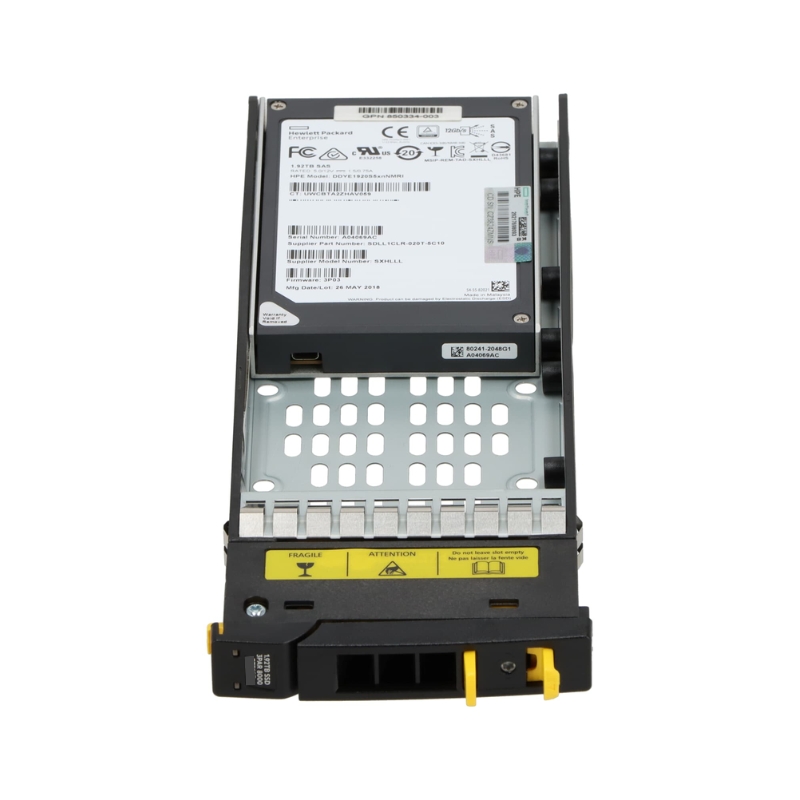


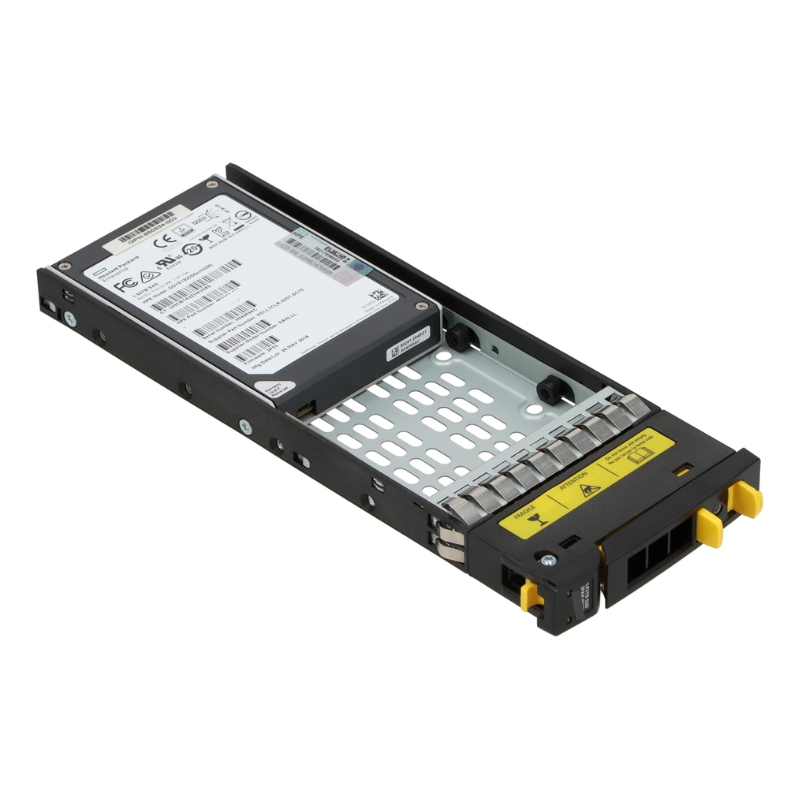
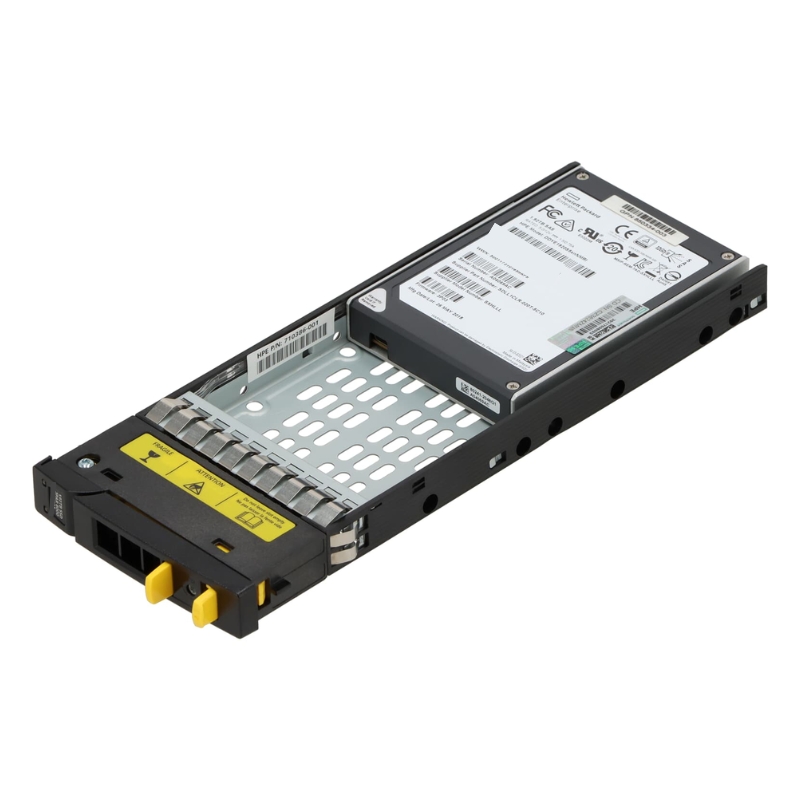
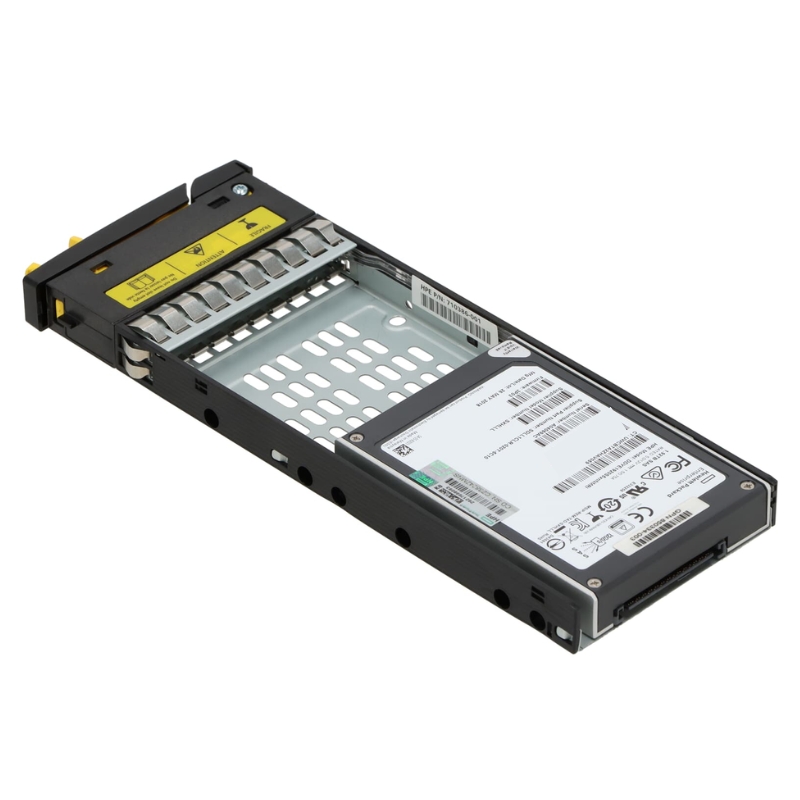
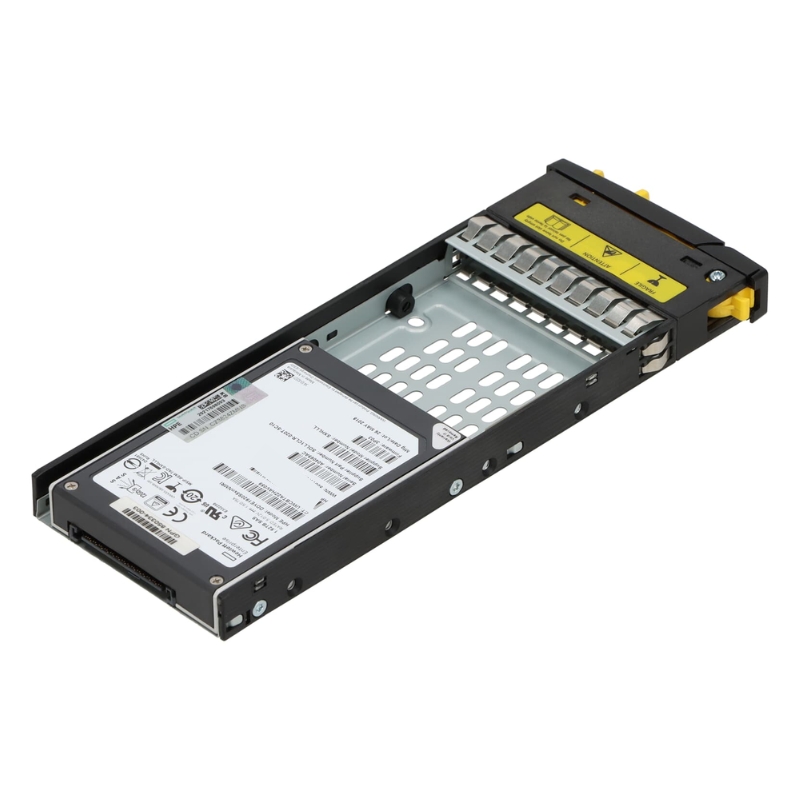
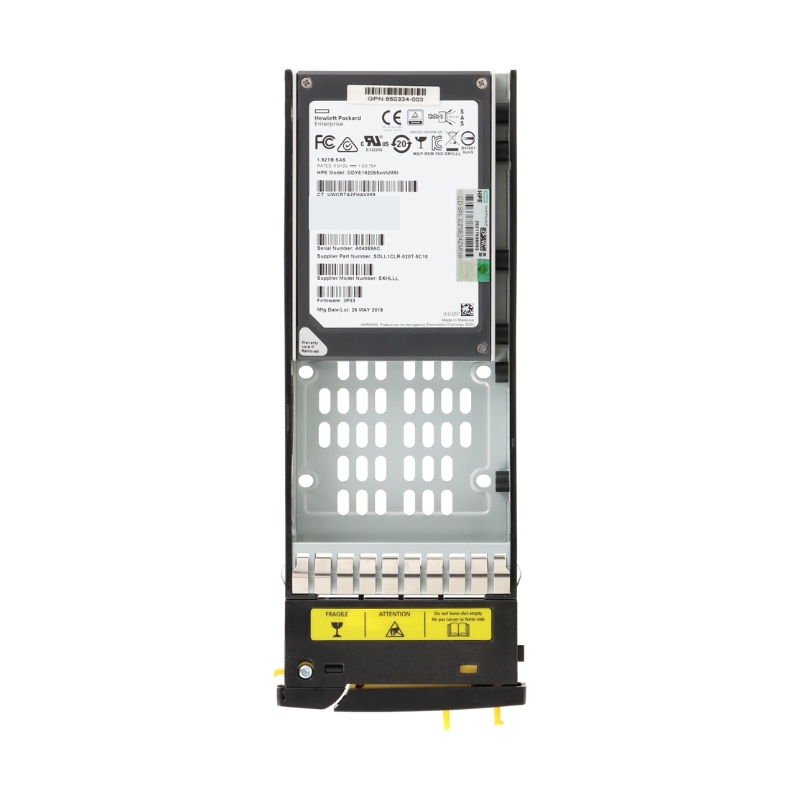
HPE 810771-001 1.92TB SSD 3PAR StoreServ 8000 SAS 12GBPS MLC. Excellent Refurbished with 1 year replacement warranty
General Information:
The 810771-001 HPE 1.92TB SSD for 3PAR StoreServ 8000 series represents a focused category of enterprise-class storage media designed for demanding data center environments. This category centers on a factory-qualified solid state drive with a 1.92 terabyte usable capacity, a SAS 12Gbps interface for high-throughput connectivity, Multi-Level Cell (MLC) flash memory for a balance of performance and endurance, and certifications specifically aligned with HPE 3PAR StoreServ 8000 arrays. The category description below expands on the drive’s architecture, compatibility, performance characteristics, endurance implications, deployment scenarios, management considerations, and procurement guidance while using natural keyword variations such as HPE 810771-001 SSD, 3PAR StoreServ 8000 SSD, SAS 12Gbps 1.92TB MLC, and HPE enterprise SSD for search optimization.
The HPE 810771-001 drive category is built around enterprise-grade flash controllers optimized for low-latency I/O and strong error correction. Controller firmware is tailored to work with HPE 3PAR storage systems, enabling features such as optimized wear-leveling, power-loss protection, and background garbage collection that minimize performance variability during sustained workloads. The MLC NAND chosen for this SKU delivers a compromise between the high write endurance of single-level cell (SLC) and the cost-efficiency of triple-level cell (TLC), making it well suited for mixed read/write enterprise workloads where both throughput and reasonable longevity are required.
Using a SAS 12Gbps physical interface, the drives in this category provide bi-directional bandwidth suited to high IOPS and sequential throughput needs typical of virtualization, database, and mixed application stacks. The SAS protocol ensures enterprise-grade link robustness with features such as full-duplex communication, dual-port resiliency where applicable, and integration with HBA and RAID controller ecosystems. The SAS 12Gbps interface also helps reduce latency compared to older SAS 6Gbps drives and allows arrays to extract greater performance from parallel workloads when multiple drives operate concurrently within a 3PAR node.
These 1.92TB drives are offered in a standard enterprise hot-plug form factor compatible with the 3PAR StoreServ 8000 drive bays. Thermal design and power consumption characteristics are optimized for densely populated arrays, with drive electronics tuned to minimize energy draw while still supporting aggressive performance profiles. Proper airflow and rack cooling remain critical when deploying multiple high-capacity SSDs to ensure sustained performance and long-term reliability in enterprise data centers.
Drives in this category are validated to operate with HPE 3PAR StoreServ 8000 firmware versions that support mixed media pools and automated tiering when configured. The firmware validation ensures that SMART attributes, predictive failure analytics, and array-level diagnostics report correctly to HPE management consoles. This category emphasizes compatibility notes such as recommended HPE microcode levels, supported backplane architectures in the 8000 series, and certified replacement procedures to maintain support and system stability.
Within a 3PAR StoreServ environment, the 810771-001 1.92TB SSDs can be designated into flash-optimized tiers or pooled for thin provisioning strategies. The category details the benefits of placing these SSDs in a high-performance tier for latency-sensitive workloads versus using them in mixed tiers with HDDs for cost-optimized capacity. It also outlines how array-level quality of service controls can throttle or prioritize traffic so critical workloads maintain predictable latency and throughput even during peak usage.
The category highlights expected performance markers for HPE 810771-001 drives under realistic workload mixes. In transactional database and virtual machine consolidation scenarios, these SSDs typically demonstrate high random read and write IOPS, sub-millisecond read latency, and steady sequential throughput when subject to long-running streaming tasks. Performance is framed as dependent on factors such as the number of devices in a RAID or mesh configuration, controller caching parameters inside 3PAR nodes, and the parallelism afforded by multiple concurrent I/O streams.
When benchmarking this category of SSD, it is important to describe workload characteristics rather than rely on single-number metrics. Benchmarks that model mixed 70/30 or 60/40 read/write distributions, variable I/O sizes from 4KB to 128KB, and random versus sequential patterns deliver the most practical expectation of drive behavior in production. The category explains how steady-state testing, preconditioning, and sustained write testing reveal endurance and performance throttling behavior that synthetic short-burst tests can miss.
MLC flash provides a measurable endurance curve expressed in drive writes per day or total terabytes written (TBW) over the warranty period. This category describes how MLC endurance translates into practical retention for workloads like virtualization, OLTP, analytics, and VDI. It clarifies that drive life is a function of write intensity, garbage collection efficiency, and how the array’s write amplification can affect overall wear. The category also examines recommended monitoring strategies and firmware features that mitigate premature wear and enable graceful drive retirement.
Enterprise drives in this category come with advanced error correction codes and on-drive capacitors or firmware-based power-loss protection to minimize the risk of data loss during unexpected outages. Monitoring tools integrated with HPE management frameworks surface SMART metrics including media errors, spare block counts, and wear indicators to inform proactive replacement. The category emphasizes the importance of regular health checks and the ways in which 3PAR’s diagnostic telemetry can be used to schedule maintenance without disrupting availability.
In database acceleration, the category explains how the HPE 810771-001 SSD fosters faster query response times, increased transaction throughput, and reduced locking contention. The drive’s low latency and consistent random I/O performance make it suitable for primary database files, log files, and mixed transactional systems. The category also discusses how RAID configuration choices and 3PAR cache settings influence the effective performance of database clusters that rely on these SSDs.
Virtualized environments benefit from the capacity and performance balance of 1.92TB MLC SSDs when consolidating multiple virtual machines on a single host or across a cluster. For VDI deployments that exhibit boot and login storms, the category outlines strategies such as using SSDs for the persistent storage tier, leveraging array snapshot features for rapid cloning, and employing thin provisioning to maximize usable capacity. When used in cloud infrastructure stacks, the SSD category supports multi-tenancy with stable performance under mixed workloads and predictable QoS controls.
For analytics pipelines and big data workloads that require high sequential throughput, these 1.92TB SAS SSDs provide the streaming bandwidth necessary for ETL tasks, high-speed data ingest, and intermediate staging. The category differentiates sequential throughput needs from the random IOPS focus of databases, showing when SSDs outperform HDD tiers and when hybrid tiering remains a cost-effective design.
Because these SSDs are intended for hot-plug drive bays, the category includes guidance on safe insertion and removal within HPE 3PAR chassis. Recommended practices emphasize ensuring arrays are in a healthy state, following HPE-specified replacement steps to avoid unnecessary rebuild stress, and using OEM firmware images to prevent compatibility issues. The category also covers how to interpret array notifications and error codes to determine when a drive should be replaced versus when a firmware update or reseat might resolve an anomaly.
Keeping drive firmware synchronized with the 3PAR system firmware is essential for predictable operation. The category explains processes for staging firmware updates, maintaining revision control, and testing firmware across non-production nodes prior to cluster-wide rollouts. It also highlights change-control best practices such as documenting firmware levels, maintaining restore points, and coordinating maintenance windows to apply updates that affect drive behavior.
Comprehensive monitoring is a key theme within the category. Administrators are advised to integrate HPE OneView or 3PAR Management Console telemetry into centralized monitoring systems so wear metrics, SMART alerts, and predictive failure indicators can trigger automated ticketing and replacement workflows. The category encourages periodic capacity and performance trend analysis to avoid unexpected saturation and to plan incremental refreshes before performance degrades.
Enterprise environments often require data-at-rest encryption and certified erase methods to satisfy regulatory compliance. The category describes options for drive-level encryption support, array-managed encryption keys, and secure erase procedures that render data irrecoverable. It clarifies how HPE 3PAR integrates with external key management systems and the importance of key lifecycle practices to maintain data security across the storage stack.
To support business continuity, these SSDs are frequently used in arrays that provide snapshot, replication, and asynchronous or synchronous replication features. The category outlines how placing SSDs in performance tiers affects snapshot behavior, replication throughput, and restore times. It also suggests replication topologies and recovery point objective considerations for workloads that leverage the low-latency capabilities of flash-backed storage.
The category provides a comparative analysis between MLC and other NAND types. MLC offers better endurance than TLC under write-heavy conditions while being more cost-efficient than SLC. This section lays out decision criteria for choosing 1.92TB MLC SSDs in environments where sustained write endurance and moderate cost per gigabyte are priorities. It also explains when TLC with higher capacities or newer QLC options might be chosen for write-light archival workloads, and when SLC remains the choice for extreme write endurance needs despite its premium cost.
While SAS 12Gbps remains widely supported and offers robust interoperability in existing 3PAR deployments, the category compares SAS to NVMe options in terms of latency, queue depth, and future-proofing. The discussion notes that NVMe delivers superior latency and parallelism for next-generation applications, but SAS 12Gbps SSDs remain highly relevant where array compatibility, existing investment protection, and comprehensive management integration are the primary drivers.
Performance degradation can result from background garbage collection, thermal throttling, or high levels of write amplification rather than imminent drive failure. The category explains how to differentiate transient performance dips from progressive failure by monitoring SMART counters, analyzing I/O latency distributions, and reviewing array rebuild metrics. It also outlines immediate steps to take when encountering unexplained latency increases including firmware checks, reseating procedures, and targeted diagnostics through HPE support channels.
When a drive requires replacement, planned replacement strategies minimize rebuild impact. The category covers hot-swap replacement, proactive replacement of drives approaching end-of-life, and migration patterns such as replacing older SAS drives with new MLC SSDs to lift overall performance. It also addresses how thin provisioning snapshots and background rebalancing in 3PAR can be leveraged to shift workloads with minimal downtime.


 Contact Us
 Information
 Catalog
 Solid State Drives (SSD)
 Network Switches
 Hard Disk Drives
 HBA & Controllers
 PC & Servers
 PC & Server Memory
 CPU & Processors
 Network Routers
 Power Supplies
 Tape Drives & Libraries
 Network Devices
 Computer & Network Cables