(7% discount is applied at checkout)
Cart is empty
Your go-to destination for cutting-edge server products
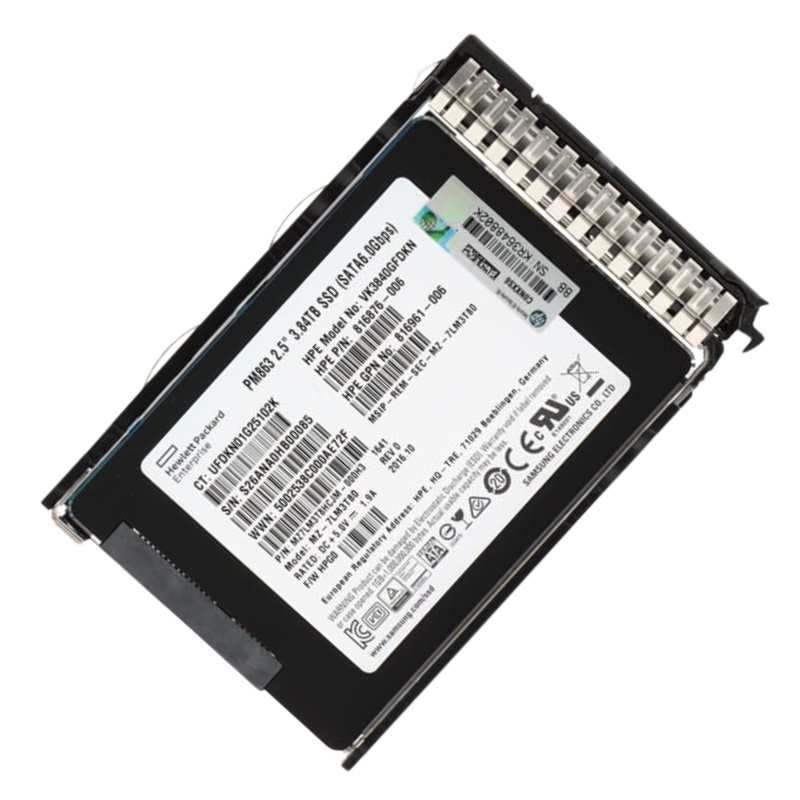


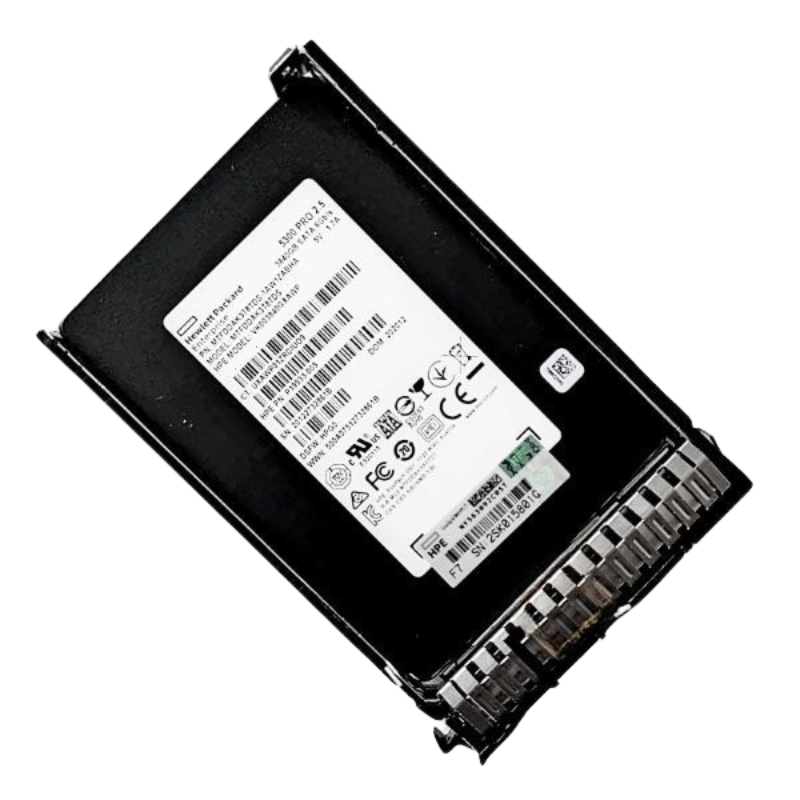
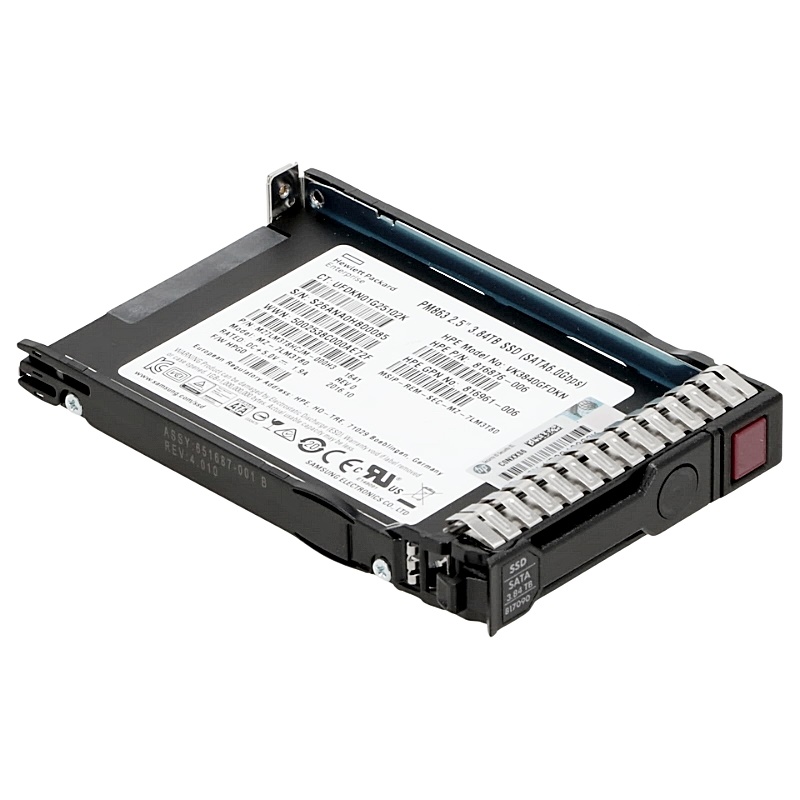
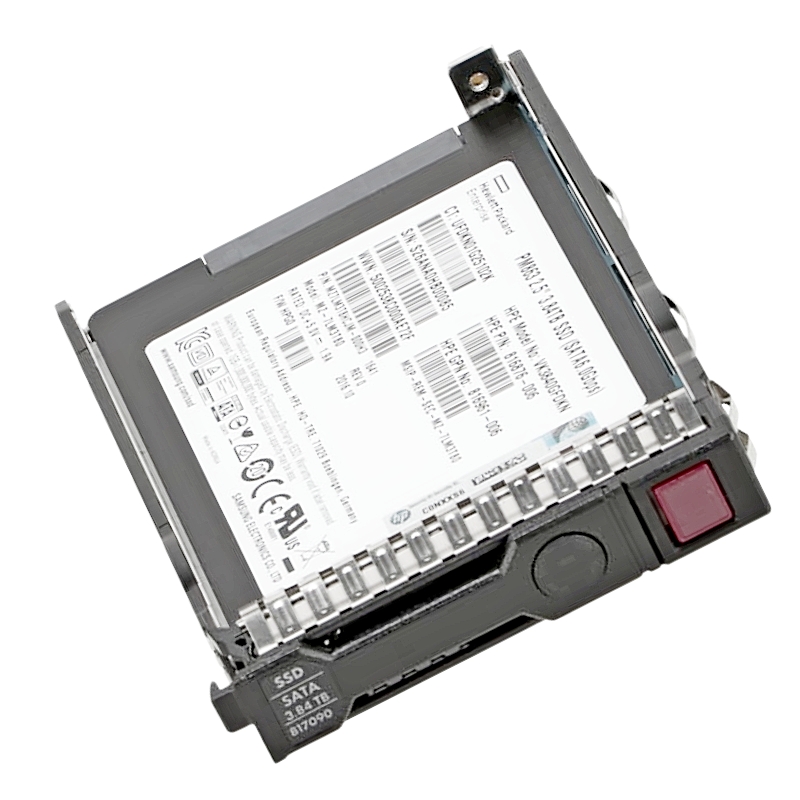
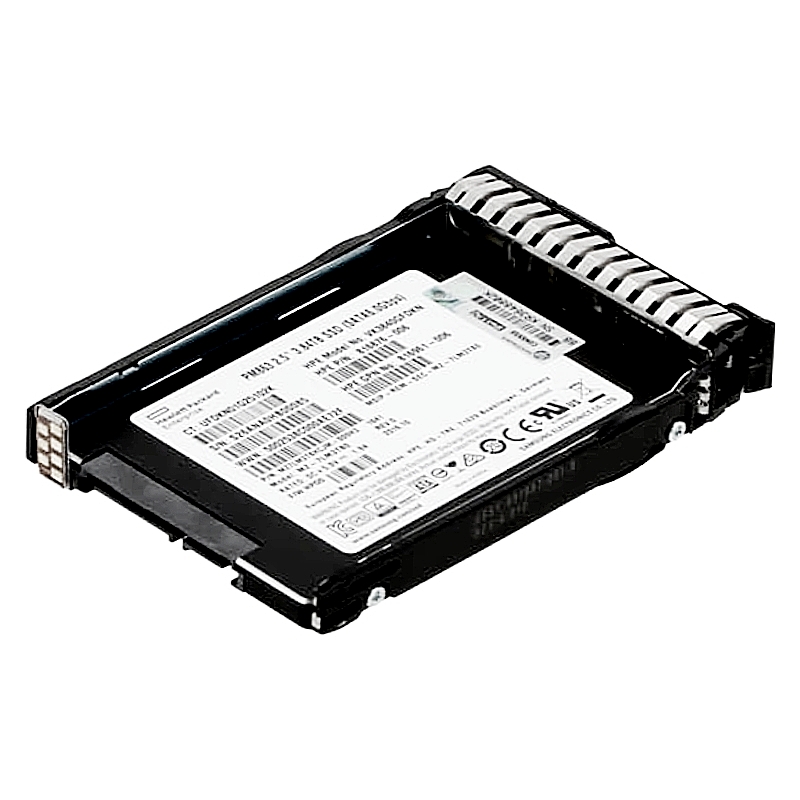
HPE 817092-001 3.84TB SATA 6GBPS Read Intensive SFF SC SSD. Excellent Refurbished with 1-Year Replacement Warranty
Drives in this category emphasize metrics that matter for read-heavy deployments: sustained sequential read throughput measured in megabytes per second, random read IOPS measured at enterprise block sizes, and read latency typically expressed in microseconds or low milliseconds under load. The SATA 6Gbps interface provides a commonly supported, cost-effective connection that balances throughput and broad compatibility. Because the HPE 817092-001 is targeted at read-intensive workloads, the drive firmware and flash management algorithms favor read performance stability and minimal latency spikes over write-centric endurance tuning. This results in drives that deliver consistent read responsiveness even as temperature, queue depth, or concurrent workload count fluctuate in busy rackmount servers.
At 3.84TB usable capacity, the HPE 817092-001 sits in a mid-to-high capacity band for SFF SATA SSDs, making it suitable for applications that require significant local capacity without occupying multiple bays. The form factor and capacity density allow system architects to maximize usable storage per chassis while still maintaining low power draw and high thermal efficiency. When planning server rollouts or blade chassis assignments, the 3.84TB capacity reduces the number of drives needed for read cache layers or image repositories, simplifying RAID configurations and lowering management overhead. The storage density in this category should be weighed against expected read cache hit rates and the benefits of consolidating larger read datasets onto fewer, faster devices.
HPE-branded parts, including the 817092-001, are often validated against HPE server lines such as ProLiant and Apollo series. Category-level buyers benefit from compatibility notes and vendor-tested interoperability. The SATA 6Gbps interface is widely supported across HPE controllers and many third-party RAID controllers that accept SFF drives. System integrators value vendor-validated firmware, drive carriers that fit HPE caddies, and drives that support HPE management utilities for firmware updates, predictive failure analysis, and inventory reporting. This category is presented with an emphasis on integration: whether deployed as a hot-swap bay in a rack server, installed in a storage shelf, or used in hybrid storage pools, the HPE 817092-001 is meant to fit seamlessly into HPE-centric infrastructures.
Power efficiency is a central theme for modern data centers. The SFF SC design of these drives yields lower idle and active power consumption than many 2.5-inch legacy designs or spinning media with equivalent capacity, contributing to reduced cooling load and lowered operational expenses. Thermal design considerations include heat dissipation in high-density enclosures, thermal throttling behavior under sustained read loads, and the drive's ability to maintain performance within advertised temperature ranges. The category copy highlights power per terabyte and steady-state thermal performance to assist procurement teams aiming to optimize rack cooling and power distribution in large-scale deployments.
Enterprise-class SSDs such as the HPE 817092-001 typically implement firmware features that protect data integrity across power events and ensure consistent read behavior. Features may include end-to-end data protection, internal error correction codes, background media refresh, and robust bad-block management. The firmware's read-path prioritization and read-cache algorithms reduce read latency and maintain IOPS under contention.
Security-conscious deployments will look for drives with optional encryption support, secure erase commands that align with industry standards, and compliance-friendly behavior. While some SATA SSDs support self-encrypting drive (SED) functionality, procurement teams should verify the specific model's security feature set and whether the drive supports TCG Opal or other cryptographic management standards. The category content frames security as part of the broader procurement checklist, advising customers to confirm encryption, secure erase, and audit logging features where regulatory compliance and data sovereignty are key concerns.
Benchmarks matter when choosing between similar capacity drives. This category page encourages buyers to examine both synthetic benchmarks and application-level results. Synthetic testing focusing on 4KB random reads at varying queue depths can highlight the drive's ability to handle many small read operations concurrently. Sequential read tests demonstrate throughput potential for streaming workloads. Real-world tests, such as database read query timings, virtual machine boot storms, or web server object retrieval times, provide the most relevant insight into operational behavior. The category text invites visitors to compare benchmark methodology, queue depths, and block sizes to ensure apples-to-apples comparisons when evaluating the HPE 817092-001 against other SATA or NVMe solutions.
Latency is often the differentiator in user-facing services and analytics stacks. Drives in the HPE 817092-001 category emphasize low tail latencies and consistent response time distribution under concurrent access. Quality of service concerns include the drive's ability to maintain throughput while providing predictable latency for high-priority read operations. Enterprise administrators may implement storage QoS layers or controller-level throttles to ensure critical applications maintain the necessary latency budgets. This category material outlines why tail latency matters and how the 3.84TB SFF SATA drive can be a stable building block in a QoS-aware storage topology.
Architectural guidance helps readers understand how to position HPE 817092-001 drives inside multi-tier storage strategies. Common patterns include using these SSDs as front-end read caches in front of high-capacity HDD tiers, as read-oriented nodes in distributed object stores, or as local fast storage for database read replicas. The category explains how combining several drives in RAID arrays or erasure-coded pools can increase capacity and read throughput while sustaining fault tolerance. It also covers the trade-offs between adding more drives for parallel bandwidth versus consolidating capacity to reduce administrative overhead and per-device failure surface area.
These SSDs are deployed behind hardware RAID controllers or software-defined storage stacks, controller compatibility, SATA port configuration, and firmware update procedures all influence overall behavior. Certain controllers may introduce additional caching layers or re-order I/O in ways that affect measured performance. The category advises purchasers to consult HPE compatibility matrices and to validate that the chosen RAID settings such as stripe size, write-back cache behavior, and read-ahead tuning align with read-intensive goals. Because RAID rebuild behavior can be impacted by large-capacity drives, administrators are also advised to plan maintenance windows and choose RAID levels that balance rebuild time, redundancy, and read throughput requirements.


 Contact Us
 Information
 Catalog
 Solid State Drives (SSD)
 Network Switches
 Hard Disk Drives
 HBA & Controllers
 PC & Servers
 PC & Server Memory
 CPU & Processors
 Network Routers
 Power Supplies
 Tape Drives & Libraries
 Network Devices
 Computer & Network Cables