(7% discount is applied at checkout)
Cart is empty
Your go-to destination for cutting-edge server products
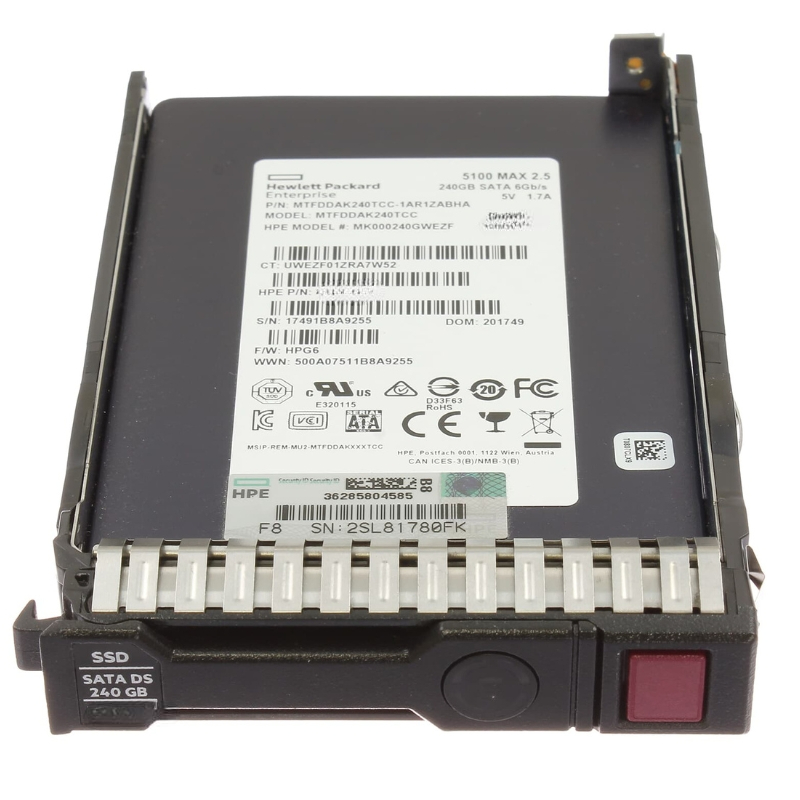


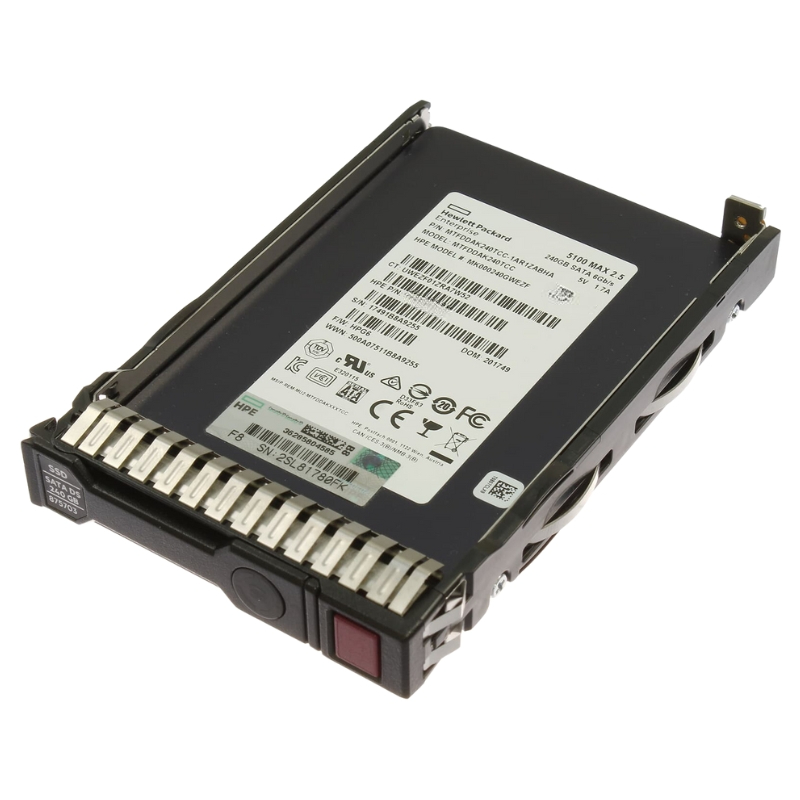
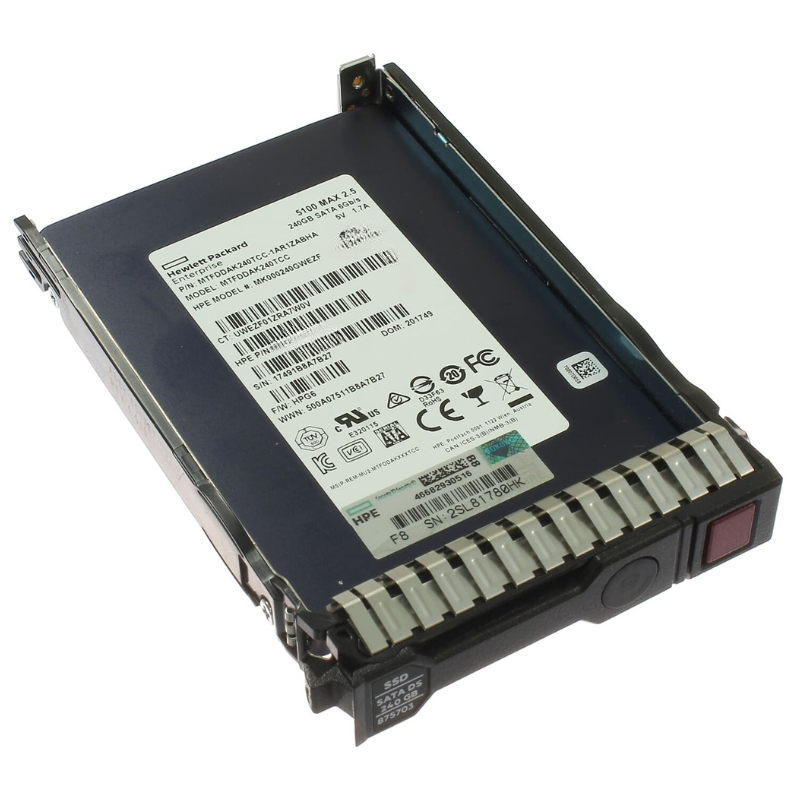
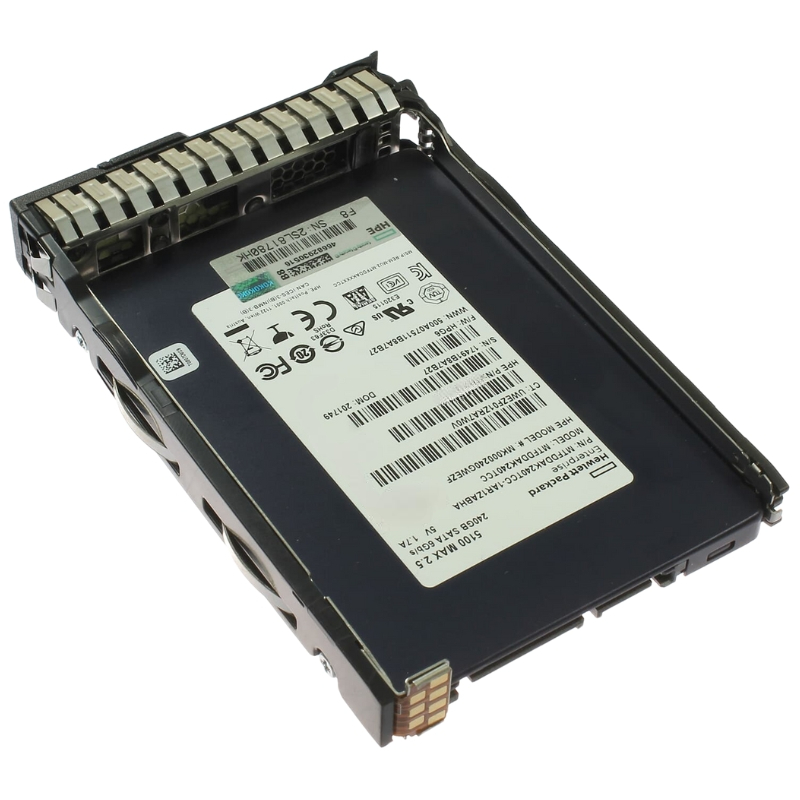
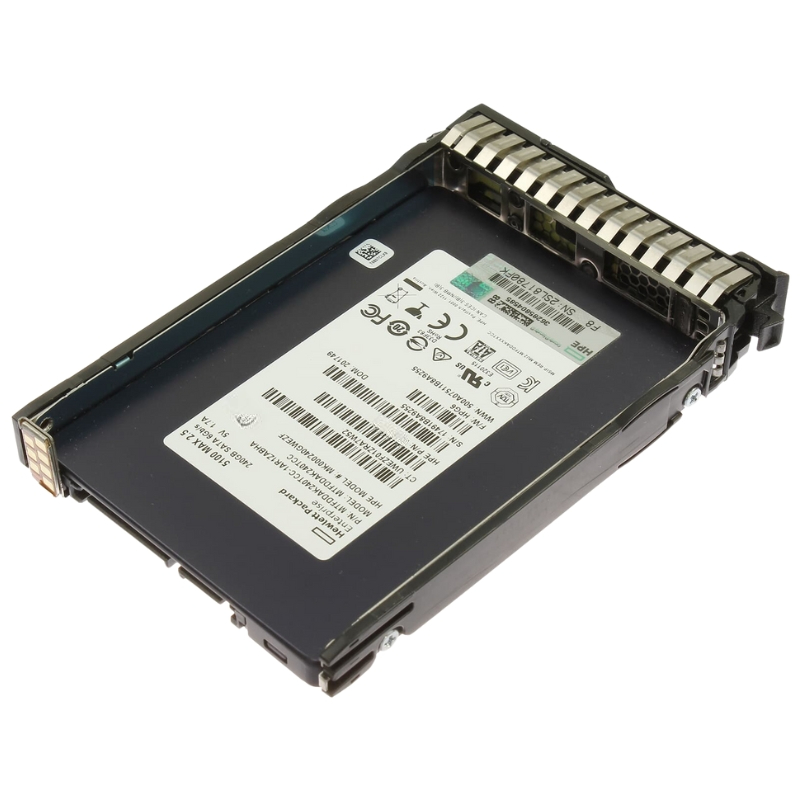
HPE 875652-001 Small Form Factor 240GB SSD SATA-6GBPS Read Intensive. Excellent Refurbished with 1 year replacement warranty
HPE 875652-001 refers to a class of 2.5-inch small form factor (SFF) solid state drives engineered for enterprise server environments where read-dominant workloads demand low latency, consistent throughput and carrier-style hot-swap convenience. These drives are factory-configured with a 240GB usable capacity and utilize the SATA 3.0 (6Gbps) interface to deliver compatibility with a wide range of HPE ProLiant platforms. The drives are supplied in an HPE SmartDrive tray/carrier for simple insertion into SFF bays and are built with Digitally Signed (DS) firmware — a security and compatibility feature HPE uses to guarantee firmware authenticity and to prevent mismatched or unsupported firmware from being installed on production servers.
The form factor for the 875652-001 is the standard 2.5-inch SFF disk with a hot-plug SmartDrive carrier that aligns with the bay geometry used in HPE ProLiant rack and tower systems. This mechanical design allows field replacement without powering down the server in systems equipped with hot-swap backplanes. The SATA 6Gbps electrical interface used by the drive ensures backwards compatibility with legacy SATA ports while offering the maximum transfer rate supported by the SATA III protocol. Because the drive is presented in an HPE carrier, the tray latching, LED/indicator mapping, and carrier keying follow HPE serviceability conventions so administrators can expect consistent fit and simple carrier handling during maintenance and upgrades.
Digitally Signed firmware is a defining characteristic of many HPE branded drives and is particularly important for enterprise deployments where firmware integrity and vendor validation are priorities. Digitally signed firmware provides a cryptographic assurance that the firmware running on the drive is the version supplied or approved by HPE; this reduces the risk associated with installing unofficial firmware and helps ensure predictable interoperability with HPE BIOS, Smart Array controllers and iLO management systems. For datacenter operators who run coordinated firmware baselines and compliance checks, the digital signature simplifies firmware lifecycle control and can be a requirement in tightly governed production environments.
As a read-intensive (RI) drive, the 875652-001 is optimized to maximize read throughput and random read IOPS while offering moderate write capability commensurate with the intended workload profile. Vendors publishing product specifications for this HPE part commonly report random read IOPS in the tens of thousands and proportionally lower random write IOPS, reinforcing the drive’s suitability for use cases dominated by reads such as content delivery, database query loads with read caching, and boot or OS volumes in virtualized environments. The drive’s typical behavior under heavy read mixes is to sustain consistent latencies and to put fewer demands on the drive’s write endurance reserve compared to mixed-use or write-intensive drives.
Read-intensive drives are calibrated with endurance ratings that reflect lower per-day write allowances compared to mixed-use or write-intensive. Some reseller specifications for this HPE part list endurance figures in terms of drive writes per day (DWPD) and total TBW; one reported listing references approximately 1.5 DWPD and a TBW figure in the mid-hundreds of terabytes for the 240GB, though exact endurance numbers can vary by vendor revision and by the NAND generation used in different production batches. In practical terms, for read-heavy server roles the drive’s endurance rating is generally more than adequate for system volumes, read caches, and virtual machine OS disks; for write-heavy databases or swap volumes, administrators should consider higher-endurance options or tiered storage approaches.
The language used in product listings and HPE datasheets explicitly positions this SKU for use in HPE ProLiant Gen9 and Gen10 server families. The compatibility claim is important because HPE servers use an ecosystem of controller firmware, backplane wiring and drive diagnostics that perform best when drive firmware and carrier assemblies are HPE-certified. Using an HPE-branded or HPE-approved drive with DS firmware typically avoids mismatches flagged by iLO or array firmware, and reduces the likelihood of unexpected drive reclassifications by Smart Array controllers during inventory or predictive failure analytics. Customers maintaining validated server fleets will often prefer to source drives that list explicit compatibility with the Gen9/Gen10 platforms.
The HPE 875652-001 240GB RI SSD excels as a high-performance boot/OS volume, a read cache device in hybrid arrays, and a low-latency target for read-dominant applications such as web servers, content repositories, and index/query engines. It is also well suited for virtualization hosts where many guests primarily perform read operations, or where operating system images are served from local fast storage. Because the drive is a read-optimized SKU, it is less appropriate for sustained write-heavy roles like intensive logging, large-scale transactional databases with high commit rates, or caching layers that receive heavy write amplification. In such cases, tiered storage or SSDs with write-optimized endurance classes should be considered.
The SmartDrive form and hot-swap carrier design simplify in-place replacement and inventory management for datacenter technicians. Because the carrier exposes a drive handle and a keyed latch, technicians can replace drives quickly during maintenance windows or after proactive alerts. Tracking part numbers and serial numbers through asset management systems is straightforward when using HPE-branded units because iLO and Smart Array firmware will usually report the genuine HPE part details, easing warranty traceability and service ordering. When procuring replacement drives, confirm the part number, carrier type and whether the item is new, refurbished or reconditioned to align procurement and support expectations.


 Contact Us
 Information
 Catalog
 Solid State Drives (SSD)
 Network Switches
 Hard Disk Drives
 HBA & Controllers
 PC & Servers
 PC & Server Memory
 CPU & Processors
 Network Routers
 Power Supplies
 Tape Drives & Libraries
 Network Devices
 Computer & Network Cables