(7% discount is applied at checkout)
Cart is empty
Your go-to destination for cutting-edge server products
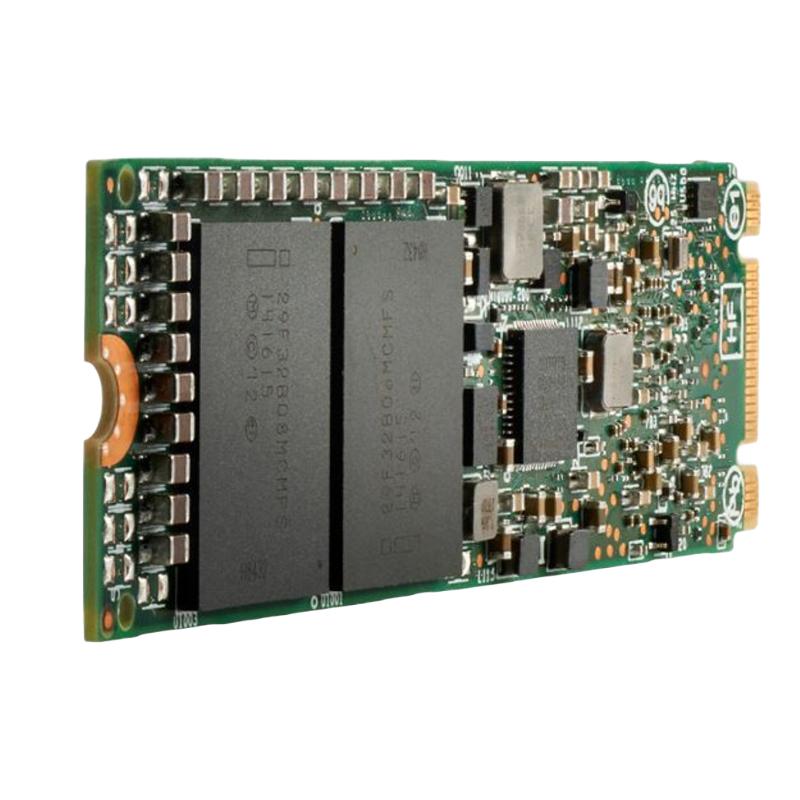


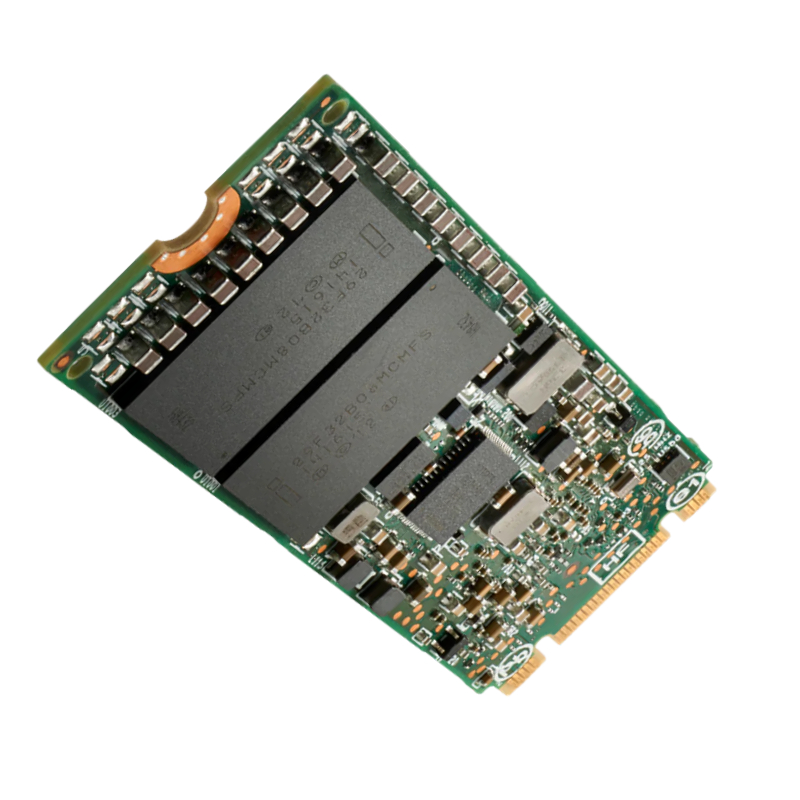
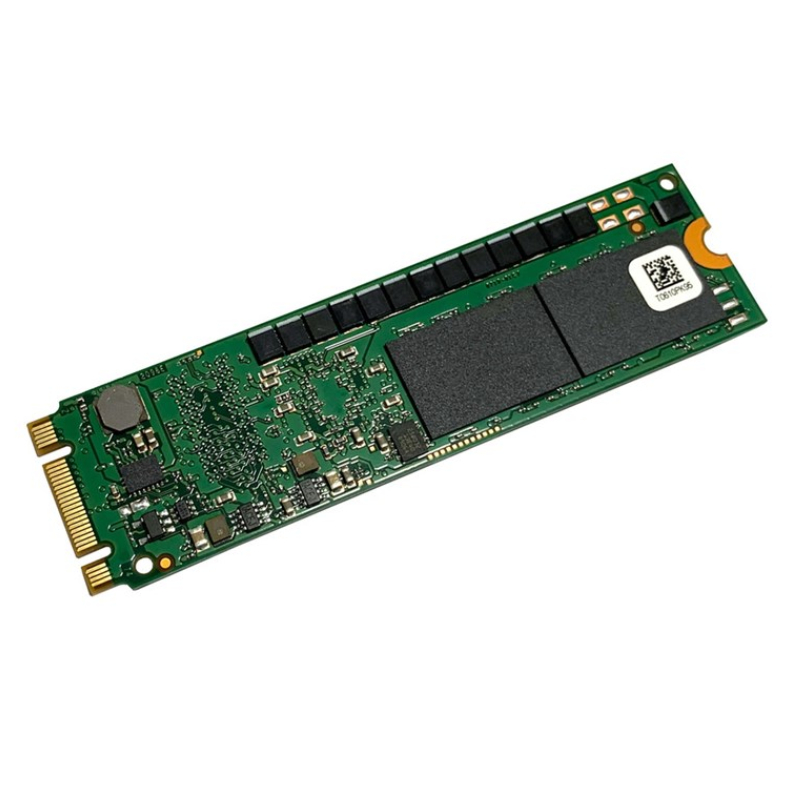
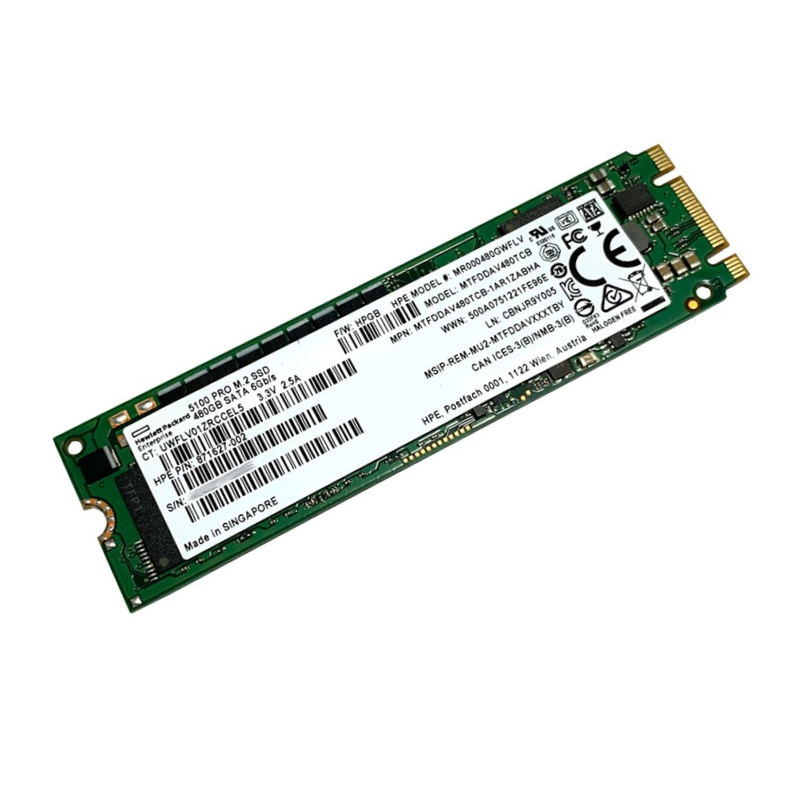
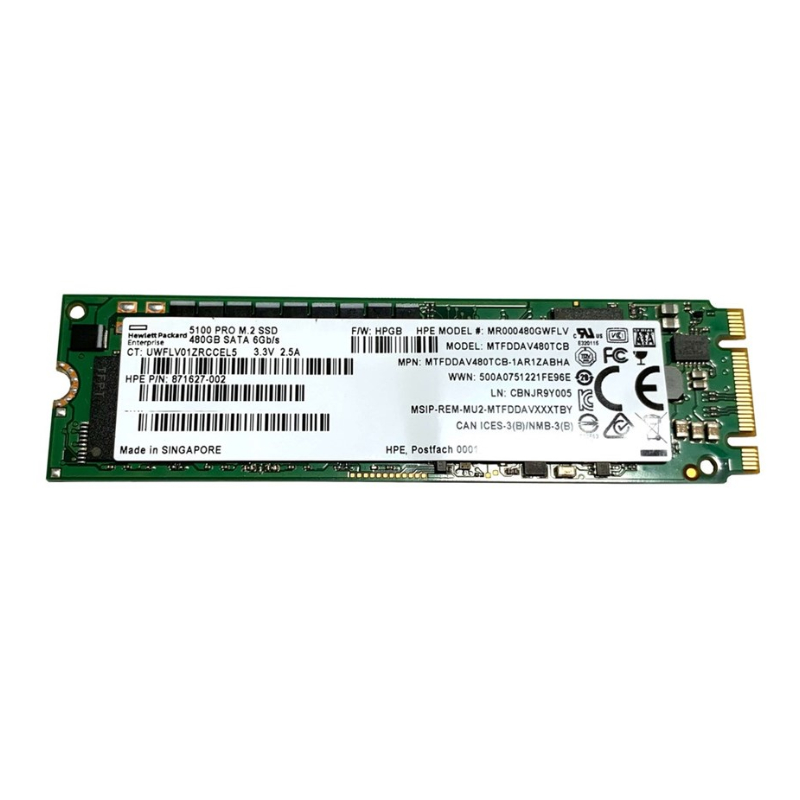
480GB SATA-6GBPS SSD Mixed Use M.2 2280 TLC Digitally Signed Firmware HPE 875851-001. Excellent Refurbished with 1 year replacement warranty
| SKU/MPN | Warranty | Price | Condition | You save |
|---|---|---|---|---|
| 875851-001 | 1 Year Warranty | Contact us for a price | New (System) Pull | |
| 875851-001 | 1 Year Warranty | $693.00 | Excellent Refurbished | You save: $242.55 (26%) |
The HPE 875851-001 480GB SATA-6GBPS Mixed-Use M.2 2280 TLC SSD sits at the intersection of trusted OEM engineering and targeted performance for mixed-read/mixed-write server workloads. As an HPE-branded M.2 2280 SATA device with a 480GB capacity and Triple-Level Cell NAND, it is purpose-built for enterprise and edge applications that require consistent throughput, solid endurance characteristics, and the administrative assurance of digitally signed firmware. The combination of a SATA-6Gbps interface and a compact 22x80mm M.2 form factor makes this drive highly suitable for modern server architectures, storage expansion in dense blade systems, and mixed-tier caching layers where space and compatibility are primary constraints. The tray packaging implies OEM-ready deployment, streamlining replacement and inventory management for data centers that standardize on HPE service parts and spares.
The defining specifications — 480 gigabytes of usable capacity, SATA 6Gbps interface, M.2 2280 physical profile, TLC NAND and digitally signed firmware — together explain how this drive balances cost, durability, and integration readiness. A 480GB capacity is an effective sweet spot for many enterprise caching roles, boot volumes, hypervisor hosts, and I/O-optimized applications that do not demand the raw throughput of NVMe but still need predictable latency and steady sequential performance. SATA 6Gbps remains a ubiquitous interface across server generations, ensuring backward and cross-platform compatibility with many HPE ProLiant, storage controllers, and boot firmware stacks. Triple-Level Cell NAND provides cost efficiency and higher capacity per die, while the drive's mixed-use endurance rating indicates a design optimized for a balanced workload profile rather than extreme write-heavy analytics or purely read-intensive archival operations. Digitally signed firmware is a crucial security and support attribute: it ensures the drive operates on validated firmware builds, minimizes the risk of unauthorized firmware modifications, and facilitates streamlined support with HPE’s diagnostic tools.
The M.2 2280 form factor narrows physical compatibility down to systems that expose M.2 sockets designed for SATA M.2 modules. Many HPE servers expose M.2 sockets on system boards or riser cards specifically for boot devices or local storage expansion, and the 2280 length is the most commonly supported specification. The SATA 6Gbps signalling provides broadly compatible plumbing for BIOS/UEFI boot, OS installations, firmware-based RAID solutions, and many storage controllers that present SATA M.2 devices directly to host operating systems. While NVMe M.2 slots and PCIe bifurcation offer higher bandwidth, the SATA M.2 option remains indispensable where legacy support, simple firmware-based booting, and thermal/power constraints are present. When selecting a replacement or addition, confirm whether the host M.2 socket supports SATA signalling (B+M key, SATA wiring) rather than only PCIe/NVMe, as physical fit does not always guarantee electrical compatibility.
Triple-Level Cell NAND balances per-die density with manufacturing cost-efficiency. The controller architecture on the HPE 875851-001 coordinates wear-leveling, error correction (ECC), bad block management, and over-provisioning to present stable performance and prolong drive lifetime under mixed workloads. Digitally signed firmware indicates that HPE has cryptographically verified the firmware image, enabling secure boot of the drive microcontroller and reducing the attack surface for firmware-level compromises. This is especially important in regulated environments and managed hosting where firmware provenance, image validation, and change control are required by audit or service level agreements. The firmware stack on these OEM SSDs typically integrates telemetry hooks for HPE management utilities, enabling health monitoring and pre-failure alerts via server management interfaces.
Performance for a SATA-based M.2 drive manifests most noticeably in sequential read/write throughput limits and random I/O measured in IOPS at specified queue depths. Because SATA 6Gbps is the bus ceiling, sequential throughput is generally constrained by the protocol ceiling and the drive's internal condition, which results in predictable read and write numbers well-suited for OS loads, application booting, and steady-state caching. Mixed-use drives are tuned to deliver sustained random performance across a blend of small-block reads and writes, which is important for virtualization hosts running many VMs, databases with moderate transaction rates, and web-scale application front-ends where small I/O dominates. Enterprise-grade error correction, background garbage collection, and thermal throttling strategies help maintain consistent tail latencies, which is often more important than peak throughput in user-facing systems where latency spikes degrade QoS.
Compatibility is the vital first check for any M.2 SATA deployment. While the M.2 2280 form factor is physically standardized, electrical compatibility varies: some M.2 slots support only PCIe x4 NVMe, some support both SATA and PCIe, and legacy bays might accept different keyed modules. For HPE environments, the 875851-001 is most beneficial where the server explicitly supports M.2 SATA boot devices or where hot-swap trays are available for easy field replacement. Tray packaging, often supplied as a spare part or in multi-drive kit form, simplifies serviceability and aligns with HPE's parts cataloging and support workflows. Confirming supported BIOS/UEFI firmware revisions, controller firmware, and any needed HPE server firmware updates prior to mass deployment prevents boot and recognition issues and ensures the drive participates correctly in vendor management functions.
This mixed-use M.2 SSD is well-suited for a range of practical deployments. As a boot device for operating systems and hypervisors, it offers fast startup times and reduced latency compared to spinning media. In distributed edge appliances or branch office servers with limited space, its compact M.2 form factor and tray serviceability make it an ideal candidate. In hyperconverged infrastructures that use local SSDs for metadata, caching or ephemeral VM storage, the drive’s mixed-use profile strikes a balance between endurance and cost, enabling acceptable lifetimes without the expense of high-endurance devices. For SMB databases or application servers with moderate transaction rates, the drive supplies adequate random I/O performance at a significantly lower cost per gigabyte than higher-tier enterprise SLC or eTLC parts. Conversely, write-intensive analytics clusters and write-heavy logging systems may require drives with higher DWPD ratings or NVMe-based flash for optimal lifetime and throughput.
Compared to NVMe SSDs, SATA M.2 devices such as the HPE 875851-001 trade peak bandwidth and lower latency for broad compatibility, lower cost per GB, and simpler deployment in legacy or BIOS-limited systems. Compared to 2.5" SATA drives, the M.2 form factor offers greater density and a smaller physical footprint, but 2.5" drives sometimes provide larger capacities and different ruggedized packaging options. When weighing options, consider whether the workload prioritizes maximum sequential throughput, extreme random IOPS, raw capacity, or the strategic advantage of vendor-managed spare parts. The HPE 875851-001 is positioned as a pragmatic enterprise-grade SATA M.2 option for organizations that need balanced performance, OEM assurance, and secure firmware provenance without the higher cost and complexity of cutting-edge NVMe tiers.


 Contact Us
 Information
 Catalog
 Solid State Drives (SSD)
 Network Switches
 Hard Disk Drives
 HBA & Controllers
 PC & Servers
 PC & Server Memory
 CPU & Processors
 Network Routers
 Power Supplies
 Tape Drives & Libraries
 Network Devices
 Computer & Network Cables