(7% discount is applied at checkout)
Cart is empty
Your go-to destination for cutting-edge server products
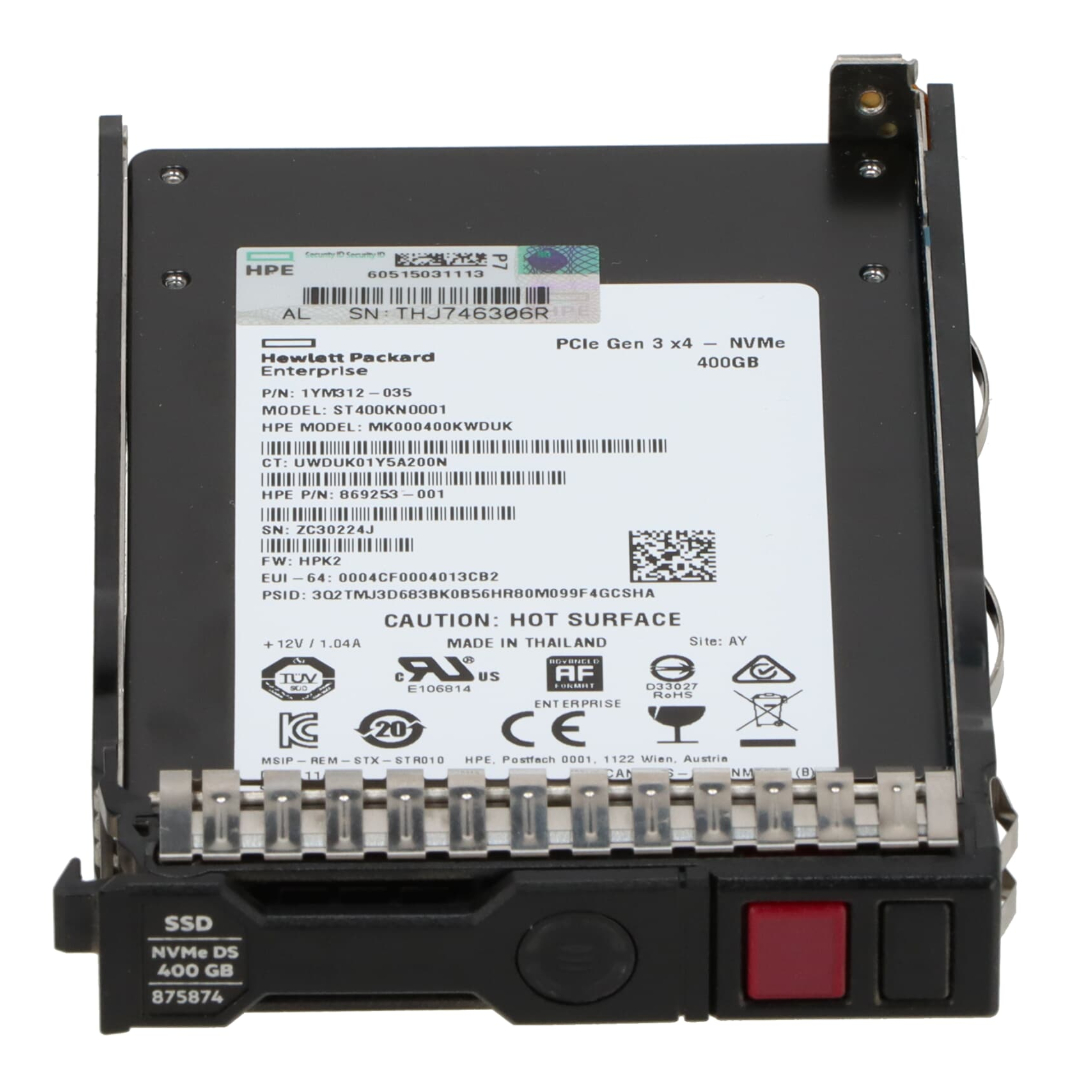


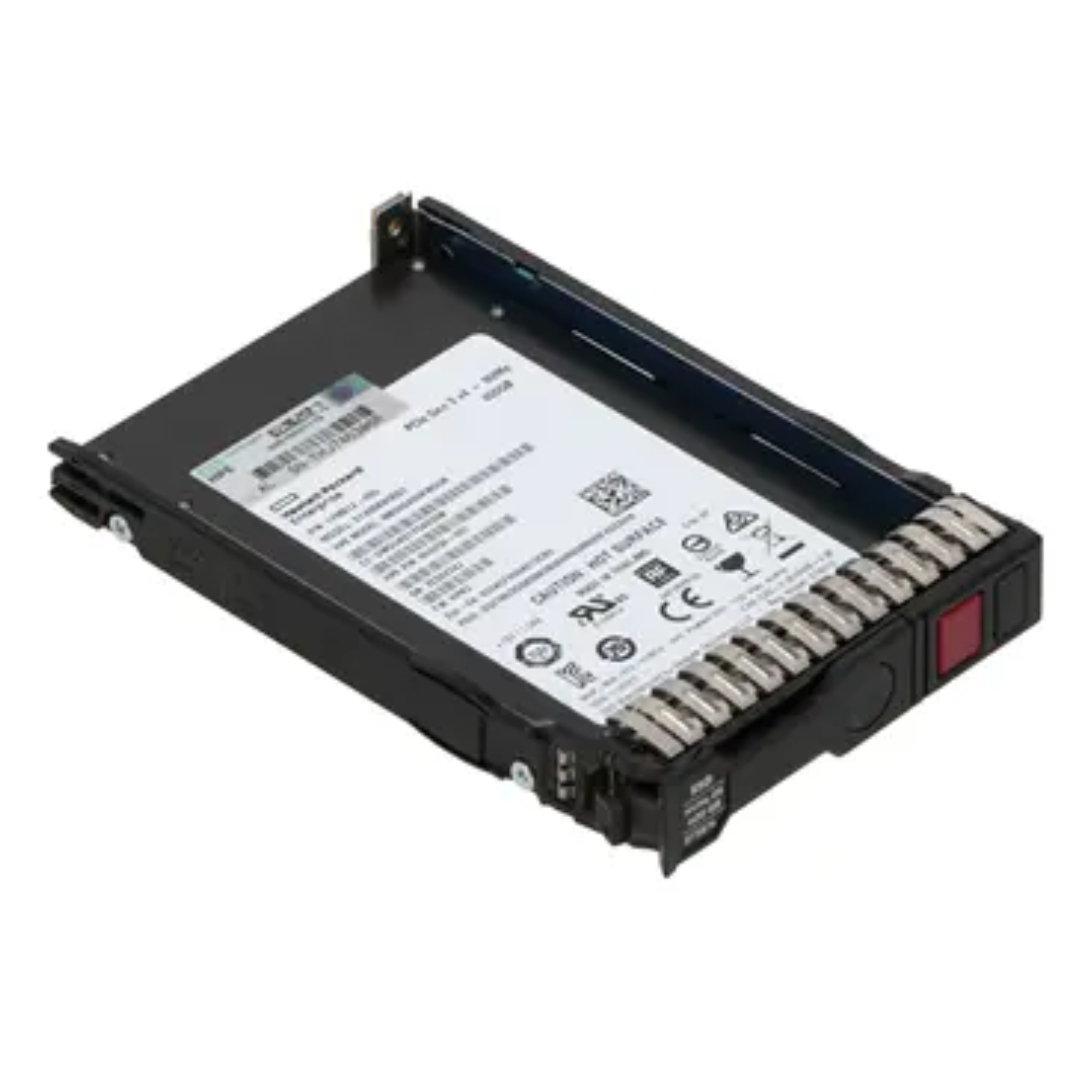
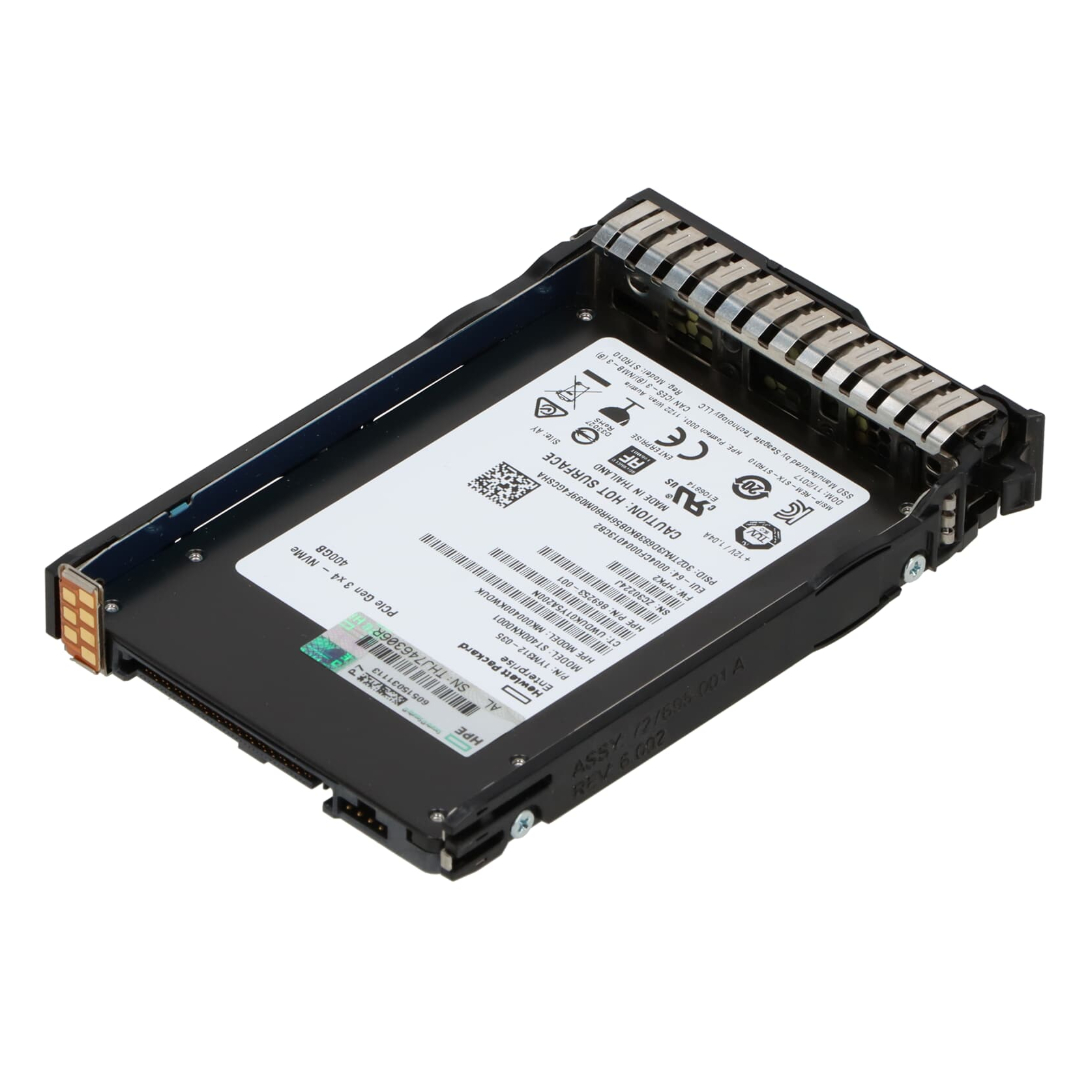
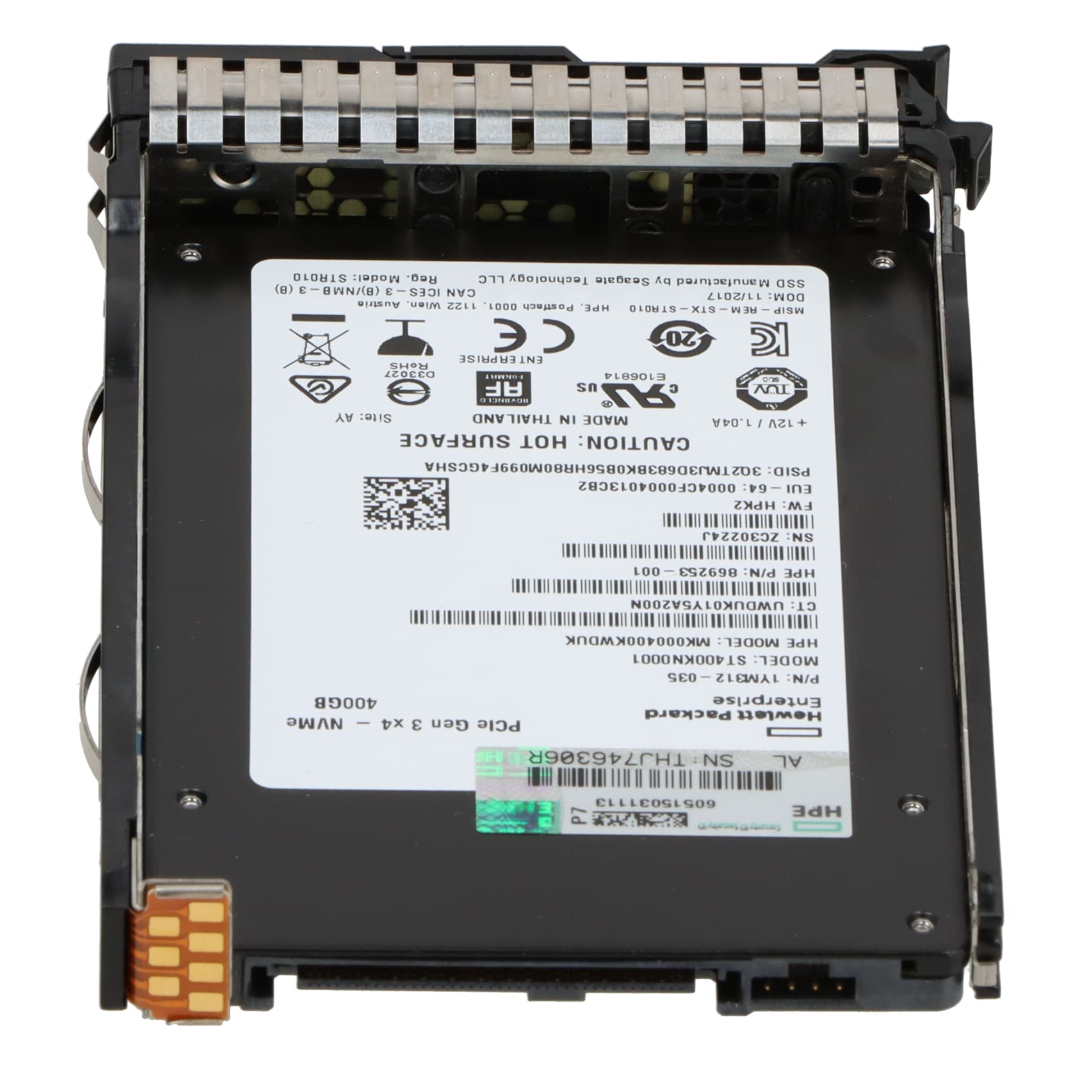
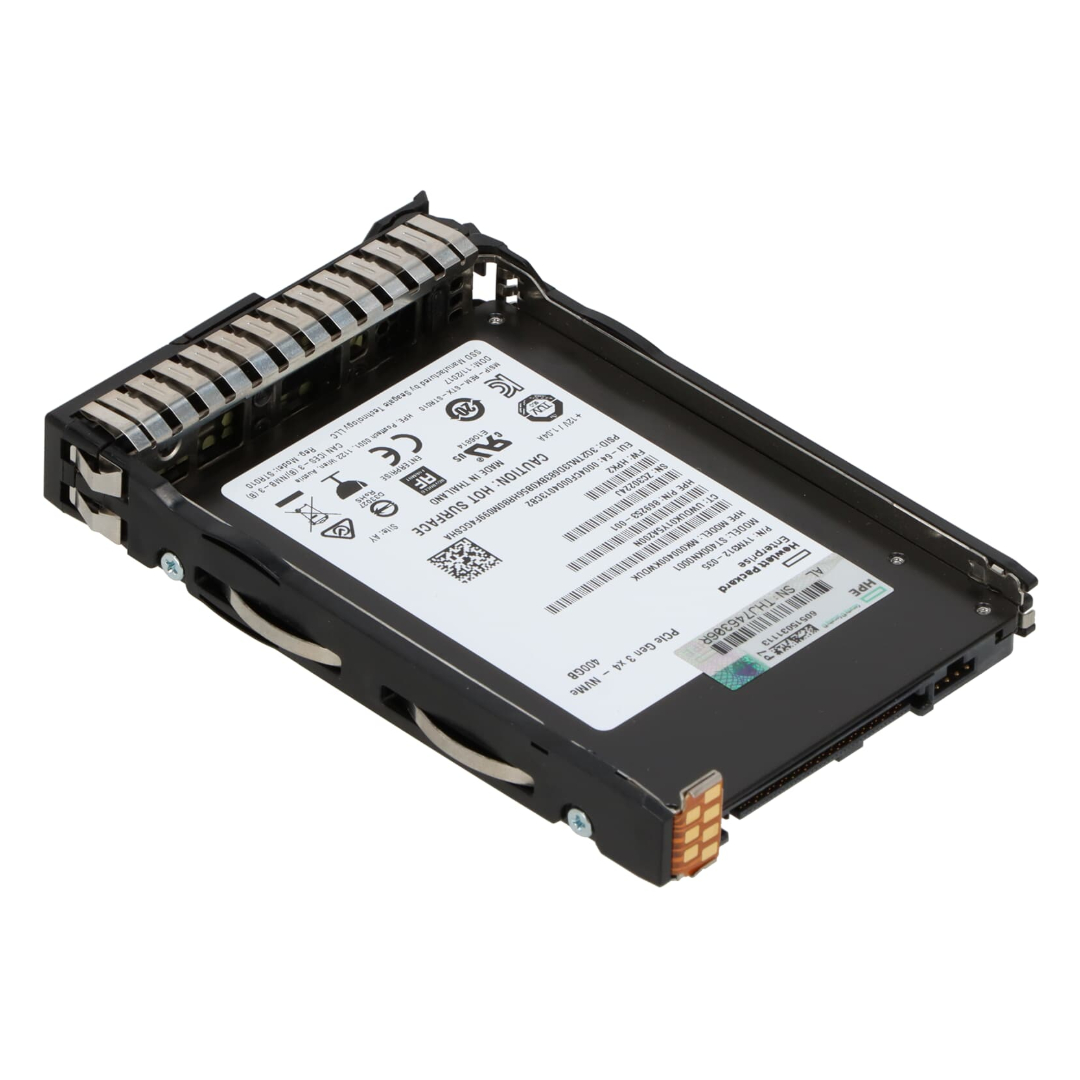
HPE 875874-001 400GB PCI-E SSD Mixed Use 3.0 X4 Hot Swap. Excellent Refurbished with 1 year replacement warranty
The HPE 875874-001 400GB Mixed-Use SFF PCI-Express 3.0 x4 (NVMe) hot-swap solid state drive with tray for ProLiant Gen9 and Gen10 servers represents a category of enterprise-class storage devices designed for high-performance, low-latency data center applications. This continuous category description examines the attributes, compatibility considerations, deployment patterns, and maintenance expectations associated with HPE-branded NVMe drives and their subcategories. Emphasis is placed on mixed-use endurance profiles, small form factor (SFF) packaging, PCIe 3.0 x4 interface behavior, the NVMe protocol advantages, hot-swap mechanisms, and the role of digitally signed firmware and tray compatibility for HPE ProLiant Gen9 and Gen10 rack and blade servers. The category captures optimized to serve virtualized environments, database workloads, tiered storage arrays, caching layers, and mixed read/write enterprise use cases that benefit from the drive's balance of performance and endurance.
The small form factor (SFF) design central to this category prioritizes density and thermal efficiency. SFF NVMe drives make efficient use of server chassis drive cages and hot-swap bays, enabling data center architects to maximize storage capacity per rack unit without compromising airflow or serviceability. The compact tray provided with these drives ensures secure mechanical mounting and aligns electrical connectors accurately with the server backplane. Because the tray is purpose-built for ProLiant Gen9 and Gen10 servers, installation and removal are straightforward for technicians familiar with HPE hardware, reducing mean time to repair. SFF packaging also shortens signal paths compared to larger form factors, which can contribute to improved signal integrity for the PCI-Express lanes and help maintain consistent NVMe performance under high I/O load.
Compatibility with HPE ProLiant Gen9 and Gen10 servers is a defining trait of the category. The drive-tray assembly is dimensioned to match HPE's drive bay mechanical standards, allowing the drive to latch into existing sleds and backplanes without modification. Owners of ProLiant systems expect drives in this category to interact smoothly with the server's system firmware, health monitoring, and drive presence detection features. The tray facilitates hot-swap serviceability, which is critical when maintaining databases or clustered services with minimal downtime. Mechanical considerations also include vibration tolerance and retention features that prevent drive movement even during enclosure relocation. System integrators often reference these physical attributes when building blade or rack systems intended for enterprise workloads, particularly where drive replacement must be performed quickly and reliably.
At the heart of this category is the PCIe 3.0 x4 interface used in conjunction with the NVMe command set. PCIe 3.0 x4 provides a direct, low-latency link between the storage device and the CPU, enabling higher throughput and more consistent IOPS compared to SATA-based devices. NVMe leverages parallelism inherent in modern multi-core systems and allows the drive to process many queues and deep queue depths, which translates to superior random read and write performance for concurrent workloads. For mixed-use drives, the PCIe 3.0 x4 interface typically delivers a performance envelope suitable for transactional databases, application servers, and mixed virtual machine environments that require both steady throughput and high IOPS. The result is a storage element that fits cleanly into tiered storage architectures as a primary operational tier or as a high-performance caching layer in front of larger capacity drives.
Mixed-use solid state drives in this category balance sequential throughput and random I/O durability. Mixed-use drives are engineered with a firmware and NAND management strategy that optimizes endurance for environments where both reads and writes occur frequently and unpredictably. This makes them particularly effective for general-purpose enterprise roles such as virtualization hosts, transactional databases, and mixed analytic workloads. The combination of NVMe command efficiency and improved NAND wear-leveling algorithms delivers predictable latency under load. While raw sequential bandwidth benefits from the PCIe x4 lanes, the NVMe architecture ensures that latency-sensitive random operations scale better with host CPU cores. Administrators appreciate this stability because it reduces the variability in application response times, which is essential for meeting service-level objectives.
A 400GB capacity point occupies a specific niche in the storage hierarchy. It is large enough to hold critical system images, caching volumes, or hot partitions of databases while remaining small enough to be used as part of a larger pool of drives when fine-grained scaling is required. In many enterprise deployments, multiple 400GB drives are combined within RAID arrays, HPE Smart Array configurations, or software-defined storage pools to increase usable capacity while maintaining redundancy. For multi-tier designs, a 400GB NVMe drive can act as an accelerator tier ahead of larger capacity HDDs or SATA SSDs, ensuring that the hottest data benefits from the NVMe drive's low latency and high throughput. The capacity also corresponds well to performance per dollar computations that storage architects perform during procurement, particularly when considering endurance and write amplification effects associated with mixed-use workloads.
Typical use cases for a 400GB mixed-use NVMe involve database log volumes, virtual machine working sets, caching layers for web applications, and metadata stores for file systems. This capacity point supports scenarios where a modest but high-performance storage tier can yield meaningful improvements to application responsiveness. In environments that implement containerized microservices or ephemeral workloads, 400GB drives often store base images, persistent state for smaller services, or performance-sensitive metadata. The drive's capacity also makes it economical for large clusters where many smaller drives can be aggregated to meet capacity and performance targets without overinvesting in larger, more expensive single drives.
Endurance and reliability are central to enterprise SSD selection. Drives in this category are engineered with a focus on extended service life under mixed read/write conditions. Endurance is typically articulated as drive writes per day (DWPD) or total terabytes written (TBW) over the warranty period, and the category favors firmware-level strategies that minimize write amplification and balance wear across the NAND. Reliability also encompasses error-correction code (ECC), background media scanning, power-loss protection, and robust SMART telemetry reporting. Enterprise customers rely on these features to maintain data integrity and to provide actionable health data to administrators. Because mixed-use drives encounter more writes than read-optimized, these design choices help ensure that the drive remains serviceable across expected lifecycle windows.
Digitally signed firmware is a significant security attribute in this category. Signing ensures firmware authenticity by cryptographically validating that the firmware image originated from a trusted source and has not been tampered with. For enterprise environments, digitally signed firmware mitigates the risk of loading malicious firmware that could corrupt data, exfiltrate information, or render devices inoperable. The presence of digitally signed firmware in the HPE 875874-001 category indicates a focus on trusted boot and secure supply chain practices. System administrators value this assurance because it reduces attack surface at the storage device level and supports compliance with internal security policies and external regulations related to data protection.
Hot-swap capability is a fundamental operational feature. Drives in this class are built so that replacement can be performed without powering down the server, a critical requirement for high-availability systems. The tray’s ergonomic design and HPE-compatible latch mechanics facilitate rapid replacement and reduce human error during servicing. Hot-swap also supports modular scaling of storage pools, where drives can be added or removed to rebalance data, expand capacity, or replace failing units with minimal disruption. The category reinforces procedures for hot-swap operations, including how to gracefully remove a drive from arrays, initiate rebuilds, and return the server to optimal state while preserving data integrity and performance consistency.
Integration with the ProLiant Gen9 and Gen10 ecosystem is a hallmark advantage. The drives and trays are designed to be recognized and managed by HPE server management tools, which can display status, health, and firmware versions within the broader server management dashboard. This tight integration streamlines procurement, inventory management, and support workflows because the same vendor provides the server chassis, backplane, and storage components. Compatibility matrices are important to review when selecting drives for specific Gen9 or Gen10 server to ensure that the host firmware and controller drivers support the NVMe mode of operation and that any platform-specific features are leveraged. The category recognizes that when storage components come from a consistent ecosystem, lifecycle operations tend to be more predictable and support escalations are simpler.
Common deployment scenarios for this category include NVMe-only nodes in hyperconverged infrastructure, NVMe caching tiers in hybrid arrays, and direct-attach NVMe for latency-sensitive database nodes. In hyperconverged setups, 400GB NVMe drives contribute to distributed caching and local storage acceleration that benefit containerized applications and microservices. For hybrid arrays, these drives act as the top tier that accelerates reads and writes for frequently accessed datasets. Direct-attach NVMe is particularly valuable for single-node databases and analytics engines where low-latency I/O directly influences query performance. The category provides guidance on pairing drives with appropriate compute and networking resources to avoid bottlenecks in any layer.


 Contact Us
 Information
 Catalog
 Solid State Drives (SSD)
 Network Switches
 Hard Disk Drives
 HBA & Controllers
 PC & Servers
 PC & Server Memory
 CPU & Processors
 Network Routers
 Power Supplies
 Tape Drives & Libraries
 Network Devices
 Computer & Network Cables