(7% discount is applied at checkout)
Cart is empty
Your go-to destination for cutting-edge server products
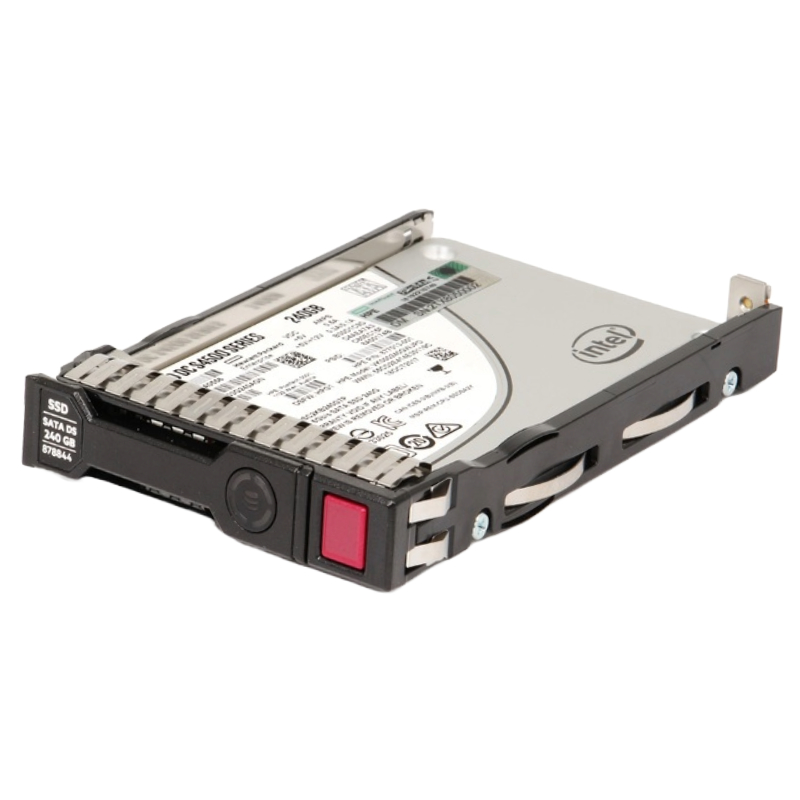


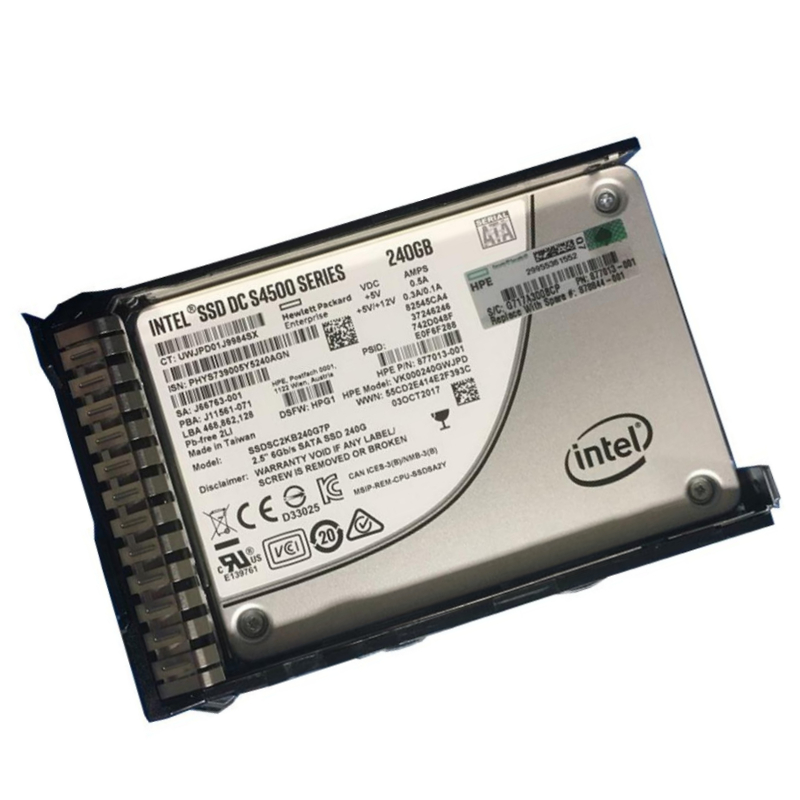
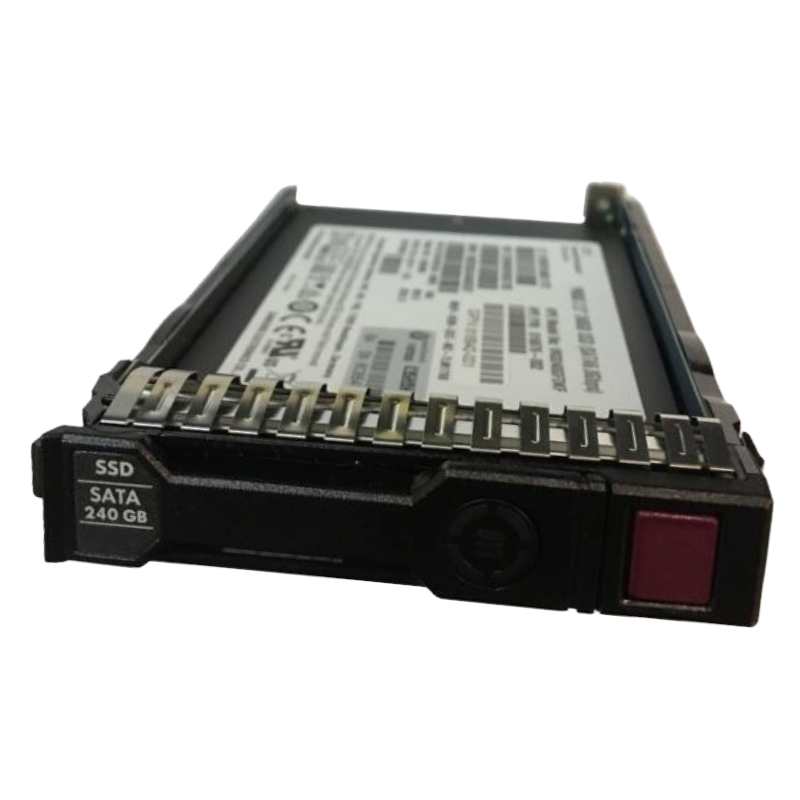
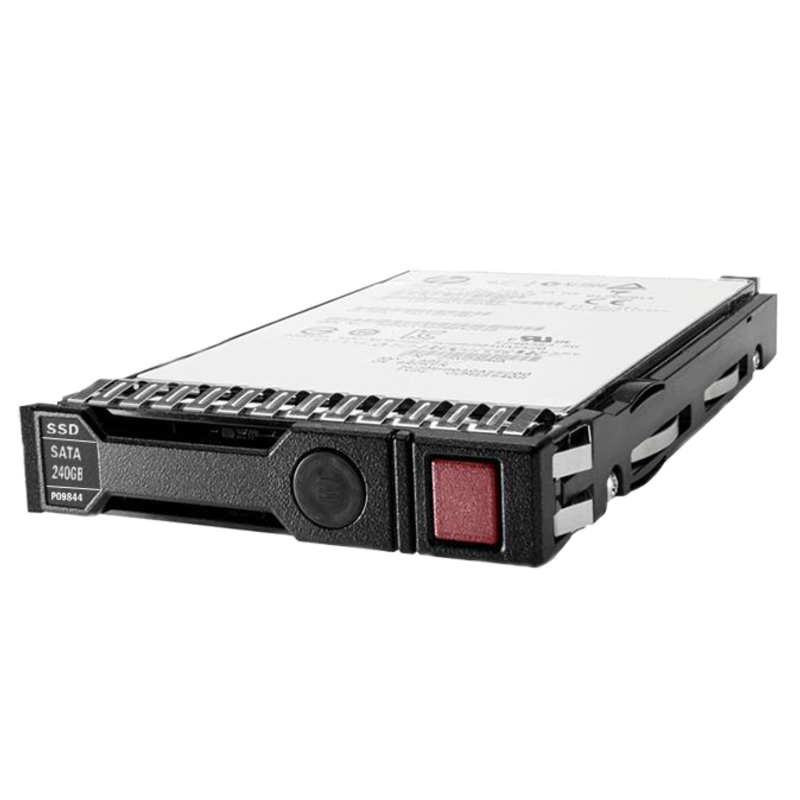
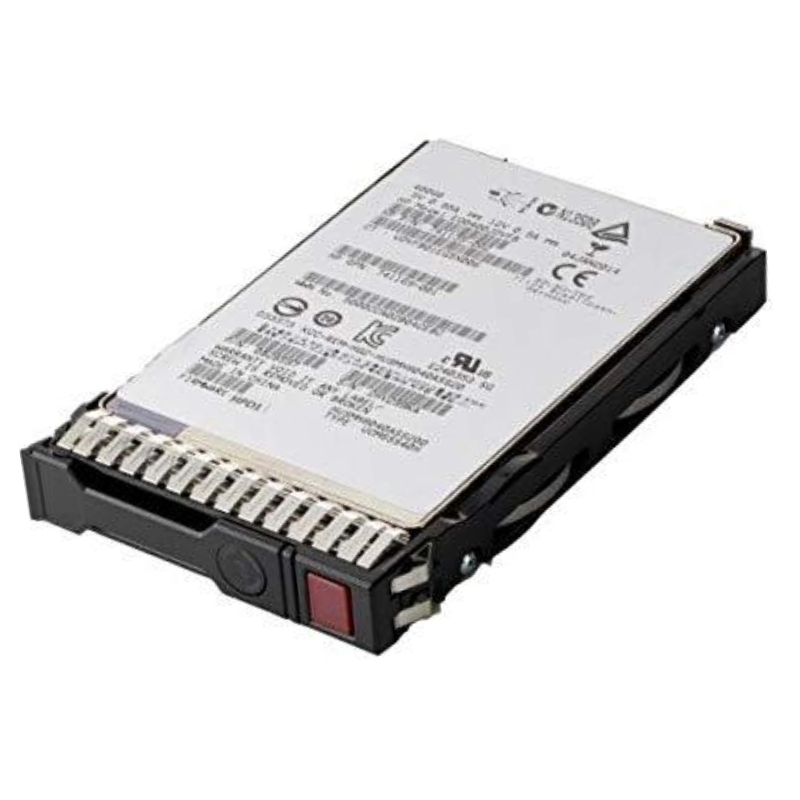
HPE 877013-001 240GB SATA 6GBPS SSD SC SFF Read Intensive. Excellent Refurbished with 1 year replacement warranty
The HPE 877013-001 240GB 2.5in DS SATA-6GBPS Read Intensive G9 G10 SSD occupies a distinct place within enterprise storage catalogs as a purpose-built solid state drive designed to balance cost, capacity, and read-optimized performance for HPE ProLiant G9 and G10 server platforms. This category covers read-intensive SATA SSDs that adhere to HPE part number conventions, mechanical formats and interface standards that data center administrators, systems integrators, and procurement teams expect when specifying drives for read-heavy workloads, such as boot volumes, content delivery, caching tiers, database indexing, and large-scale virtualization where random read throughput and IOPS stability matter more than maximum write endurance. Within e-commerce and product taxonomy frameworks this category helps shoppers and engineers quickly locate the correct form factor, interface, and endurance class.
At the heart of the category is the 2.5-inch mechanical form factor, a ubiquitous sizing that enables the HPE 877013-001 240GB SSD to be deployed in dense server drive bays, storage enclosures, and blade systems that accept standard 2.5-inch drives. The "DS" designation suggests a drive optimized for direct server slot installation or sled-based deployment in HPE chassis. Physical considerations for the buyer include drive thickness, caddy compatibility, and backplane connector orientation—factors that must match the G9 and G10 server trays or universal 2.5-inch bays. Because many HPE servers use tool-less drive caddies and side-mounted connectors, confirming that the drive supports standard 2.5-inch mounting points and has SATA 7-pin signal and 15-pin power connectors is essential to avoid physical or electrical incompatibility when ordering replacements or upgrades.
The "SATA-6GBPS" interface identifies the drive as compatible with SATA III host controllers and backplanes, offering up to 6.0 gigabits per second theoretical throughput per lane. In practice, the interface provides robust performance for read-intensive workloads while remaining backward compatible with SATA II controllers operating at 3.0 gigabits per second, should older infrastructure be present. The SATA interface is commonly used in enterprise boot and storage tiers because it provides wide compatibility, low cost, and mature error correction mechanisms. For deployments in HPE ProLiant G9 and G10 servers, SATA-6GBPS drives typically connect to integrated SATA controllers or HPE Smart Array controllers that can offer RAID functionality, SMART telemetry pass-through, and firmware management through HPE management utilities. Buyers should verify whether their server firmware, HBA or RAID controller supports the specific SSD features to obtain optimal performance and compatibility.
Read-intensive SSDs like the HPE 877013-001 240GB are characterized by higher read endurance ratios and firmware tuned to maximize stable read throughput and sustained random read IOPS. Such drives are engineered to deliver consistent performance for workloads dominated by reads, including web serving, large scale content repositories, index-heavy databases, and analytics systems where the majority of I/O operations request data rather than modify it. The 240GB capacity is often chosen where a boot volume, a local cache, or a small but frequently accessed dataset requires low latency and rapid access, without incurring the higher cost per gigabyte of larger enterprise-class write-intensive SSDs. In multi-tier storage architectures, the read-intensive SATA SSD category acts as an intermediate layer between high-performance NVMe or SAS read/write tiers and larger capacity spinning disk tiers, accelerating read-heavy tasks while keeping overall storage costs predictable.
One of the defining properties of this category is certified compatibility with HPE ProLiant G9 and G10 server platforms. HPE’s Gen9 and Gen10 server families employ specific firmware, backplane wiring, and management ecosystems where parts that carry HPE part numbers like 877013-001 are more likely to be fully supported by HPE iLO, Smart Array controllers, and service pack updates. Using drives that match vendor part numbers reduces the risk of encountering firmware feature gaps, alerting mismatches, or lack of vendor support during diagnostics. For procurement, specifying HPE-branded or HPE-qualified drives simplifies maintenance contracts and ensures predictable behavior when performing firmware updates or when integrated system diagnostics rely on vendor-specific SMART attributes and predictive failure analytics.
Within enterprise environments, the HPE 877013-001 240GB SATA SSD finds frequent use in several repeatable patterns. It commonly serves as a boot device for servers running hypervisors or container hosts where operating system and local caching require low-latency reads. In database environments, the drive can host index shards or read-heavy tables that benefit from flash characteristics without requiring the higher endurance of write-optimized NVMe drives. In web and content delivery stacks, read-intensive SATA SSDs function as local content caches or edge-serving volumes that accelerate static asset delivery. In virtualization and VDI deployments, such drives may host read-heavy user profiles or golden images, enabling faster boot storms and better density per host. The combination of 240GB capacity and read-oriented endurance makes these drives a cost-effective choice for these specialized roles.
Deploying SATA SSDs in RAID configurations is a common approach to combine performance, redundancy, and predictable rebuild times. For the HPE 877013-001 240GB SSD, administrators frequently pair multiple drives in RAID 1 for boot redundancy or RAID 10 for an optimal mix of read performance and write protection where small scale write bursts occur. When integrating into RAID arrays, it’s important to consider rebuild behavior: SSDs rebuild differently from spinning disks, and raid controllers’ rebuild algorithms and stripe sizes affect performance impacts during a rebuild. HPE Smart Array controllers provide features such as background initialization and priority locking to minimize the production impact of a rebuild. Because the drive is read-intensive, RAID configurations should be designed to avoid write amplification or repeated background writes that could accelerate wear beyond the drive’s rated endurance.
Enterprise SSDs are built with multiple layers of data protection, and read-intensive such as the HPE 877013-001 implement strong error correction codes (ECC), bad block management, and end-to-end data path protection to preserve integrity from host to media. These mechanisms reduce the incidence of read errors and ensure that returned data matches what was written, a critical requirement for systems that store indexes, configurations, and other metadata that must remain correct. Additionally, drive firmware often supports power-loss protection features that prevent metadata corruption during unexpected power events. For environments demanding the highest levels of reliability, combining secure erase procedures, SMART monitoring, and periodic integrity checks helps maintain a trustworthy storage fabric. Administrators should consult HPE resources for specifics about supported data protection features and recommended best practices for safe firmware upgrades and end-of-life disposal.
When designing a storage architecture, it’s important to evaluate where a 240GB read-intensive SATA SSD sits relative to NVMe, SAS SSDs, and spinning disks. NVMe drives offer higher throughput and lower latency but at a higher cost per gigabyte and sometimes with higher power and thermal requirements. SAS SSDs can provide more enterprise features and higher endurance classes for write-heavy workloads. Traditional hard disk drives remain the cost-effective choice for large-capacity, cold storage where access frequency is low. The read-intensive SATA SSD category finds its niche where predictable, cost-efficient read performance is necessary and where SATA’s broad compatibility simplifies integration. For many deployments, a hybrid architecture that uses a mix of NVMe for critical low-latency tasks, SATA read-intensive SSDs for frequently accessed mid-tier datasets, and HDDs for long-term storage will achieve the best balance of cost and performance.


 Contact Us
 Information
 Catalog
 Solid State Drives (SSD)
 Network Switches
 Hard Disk Drives
 HBA & Controllers
 PC & Servers
 PC & Server Memory
 CPU & Processors
 Network Routers
 Power Supplies
 Tape Drives & Libraries
 Network Devices
 Computer & Network Cables