(7% discount is applied at checkout)
Cart is empty
Your go-to destination for cutting-edge server products
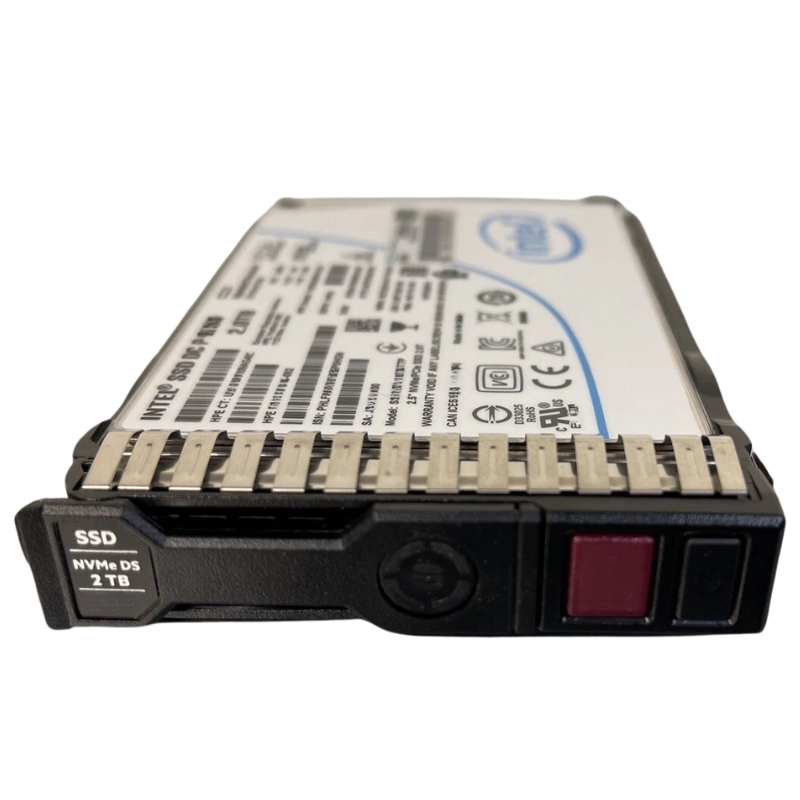


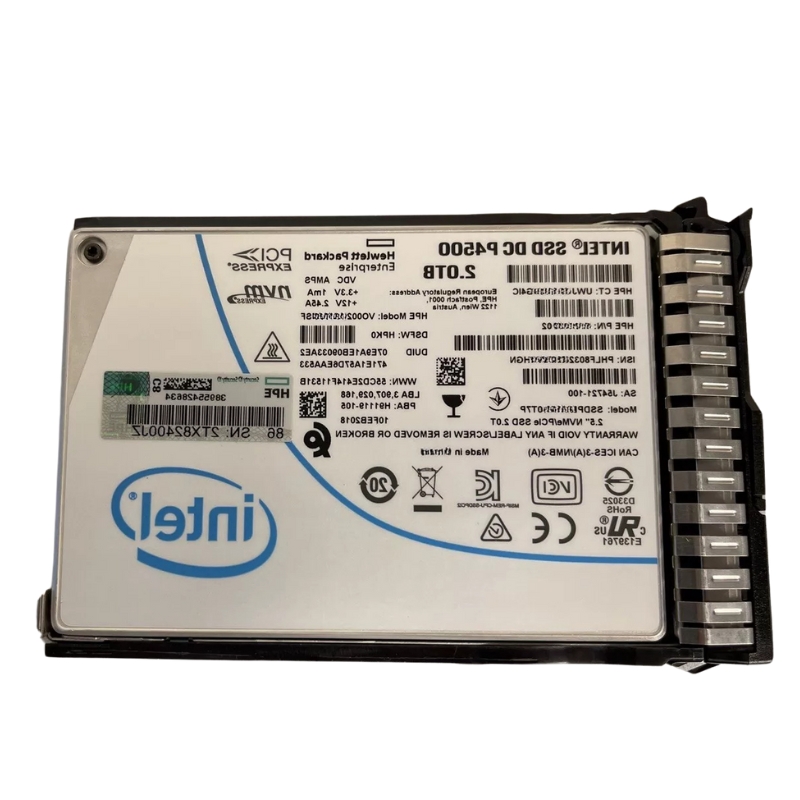
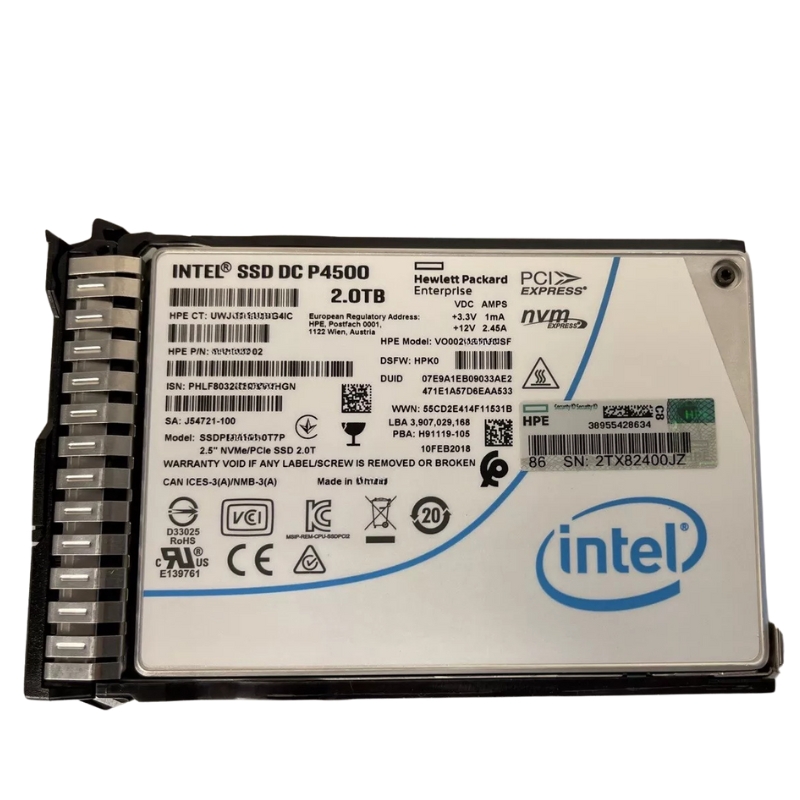
HPE 877986-B21 2TB PCI Express 3.0 X4 Nvme SSD with SCN Digitally Signed Firmware. Excellent Refurbished with 1 year replacement warranty
HPE 877986-B21 2TB Read Intensive SFF PCI-Express 3.0 x4 (NVMe) Solid State Drive with tray is a category of enterprise storage designed specifically for environments where read throughput, low latency, and consistent I/O response times are mission-critical. This product category emphasizes steady-state read performance over raw write endurance, making it ideal for applications such as large-scale virtualization, high-concurrency database reads, analytics queries, content delivery, and other server-side workloads that request high rates of random and sequential reads. The drive leverages the NVMe protocol over a PCIe 3.0 x4 interface to unlock parallelism and reduce command overhead, translating into lower latency and higher IOPS per watt than legacy SATA or SAS SSDs.
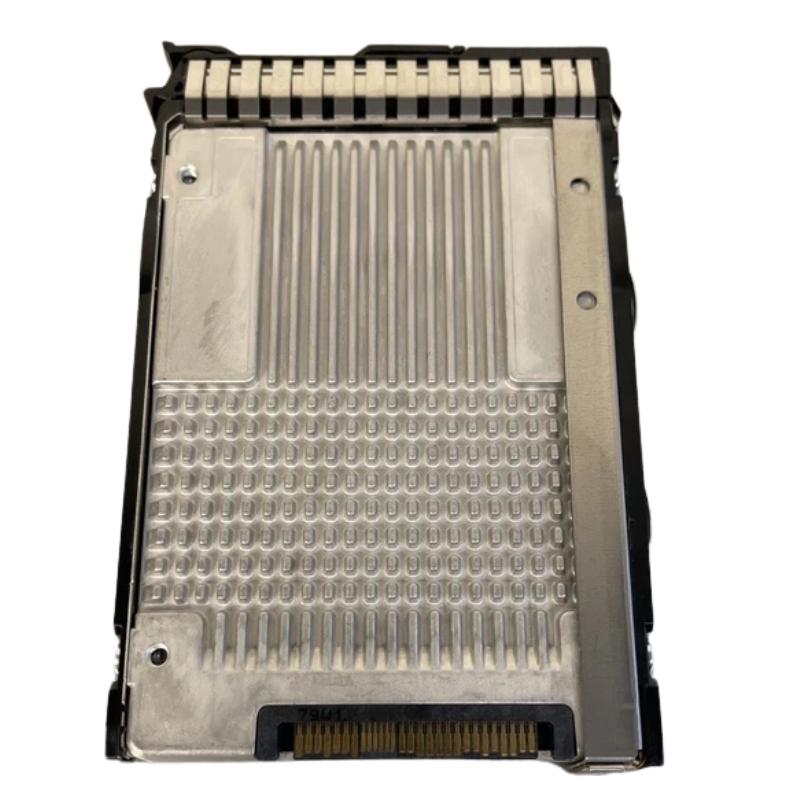
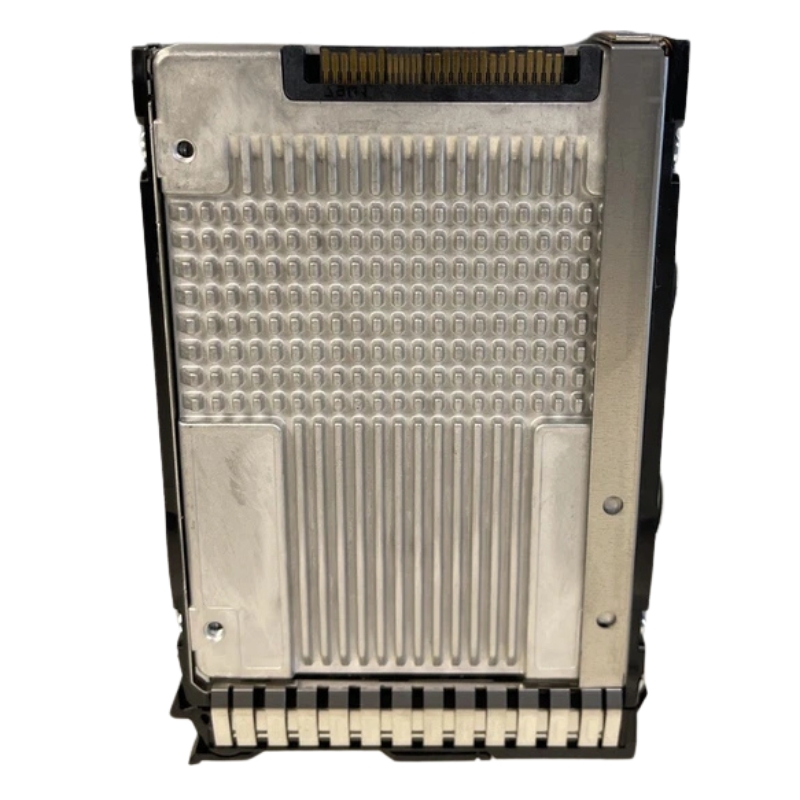
Small form factor NVMe drives in this category are engineered for dense server environments where drive bay real estate, airflow, and hot-swap accessibility are priorities. The HPE 877986-B21 2TB drive typically ships with a server-specific tray or carrier that aligns the SSD with front-access bays and drive backplanes used in HPE server families. The tray facilitates secure mechanical mounting and proper thermal contact, enabling adequate cooling in chassis environments that house dozens of drives. The compact SFF outline reduces obstruction to airflow and allows system designers to populate more storage capacity per rack unit without compromising serviceability. OEM trays are usually keyed to match HPE drive sled geometries, and the tray simplifies replacement and field servicing by technicians during upgrade or maintenance operations.
The PCIe 3.0 x4 interface in this category provides a high-bandwidth, low-latency link between the SSD and the server CPU or storage controller. NVMe, designed from the ground up for non-volatile media, exposes multiple submission and completion queues, significantly reducing I/O latency and CPU overhead compared with legacy protocols. This results in higher effective IOPS and reduced latency for both random and sequential reads. For read-intensive workloads, the drive's firmware and controller are tuned to prioritize read throughput and predictable response times, which helps maintain application performance under sustained, heavy read traffic. The architecture also supports features such as command queuing, end-to-end data protection, and optimized garbage collection strategies to keep performance consistent over long operational periods.
Enterprise read-optimized NVMe drives in this category focus on sustaining high IOPS under steady-state conditions, where background maintenance tasks and wear-leveling routines are balanced to avoid performance cliffs. Predictable latency is especially important where service-level agreements require sub-millisecond response times. These drives are engineered for consistent read latency across mixed I/O patterns so that read-heavy database queries and index lookups complete reliably within tight latency budgets. The controller firmware uses advanced techniques to minimize write amplification and schedule internal housekeeping during low activity periods, preserving available performance for foreground read requests.
The 2TB capacity point in this category hits a balance between storing large datasets locally on a single drive and maintaining economy for read-focused applications. Read-intensive drives trade absolute write endurance for cost-efficiency and capacity, delivering more terabytes of storage at a price point that suits read-centric deployments. Instead of optimizing for high drive writes per day, these SSDs optimize firmware and media allocation to lengthen lifespan under predominantly read traffic while still providing robust error management, bad block handling, and wear-leveling algorithms to ensure predictable longevity. For environments where writes are infrequent relative to reads—such as media streaming caches, reference data stores, and backup reference volumes—this endurance profile aligns well with operational needs while minimizing acquisition cost.
The HPE 877986-B21 NVMe SSD category commonly includes a vendor-compatible tray to ensure the drive mounts cleanly into server bays. The tray not only physically holds the drive but also ensures that the electrical and mechanical interface matches the server backplane for proper seat, latching, and hot-swap behavior. When selecting a drive from this category, verify the server model's supported drive types and bay configurations to confirm that the SFF NVMe form factor and tray are supported. Many HPE servers support a broad range of NVMe and SAS/SATA drives, but checking firmware and platform compatibility matrices avoids unexpected incompatibilities at deployment time. The tray also usually contains labeling and indexing for drive slot identification in multi-bay systems.
NVMe SSDs interface directly over PCIe lanes or through NVMe-capable backplanes and controllers. Certain server platforms may require specific BIOS/UEFI settings, controller firmware versions, or backplane firmware to properly enumerate NVMe devices and expose them to the operating system. Ensure server boot and storage controller firmware are kept current to enable full feature support, such as passthrough NVMe, namespace management, and secure firmware update paths. In systems where NVMe devices are used for boot volumes, confirm that the platform supports booting from NVMe devices and that any necessary NVMe driver support is present in the target operating system or hypervisor.
Virtualized environments with many read activities, such as boot storms during VDI logins or rapid provisioning of virtual machines, benefit from NVMe read performance. The ability to process many simultaneous read requests with low latency reduces desktop boot times and improves user experience. Because these drives focus on read optimization, they provide cost-effective acceleration for read-dominant virtualization tasks while allowing administrators to design storage cost/performance tradeoffs in multi-tier architectures.
Analytic platforms that repeatedly scan reference datasets, look up indices, or serve read-heavy reporting jobs see performance gains when staging hot datasets on NVMe media. The 2TB capacity supports a substantial working set for many analytics pipelines, and the consistent latency profile helps maintain predictable job completion times. Combined with in-memory techniques and parallel query engines, NVMe read-optimized drives reduce I/O bottlenecks and unleash higher degrees of parallelism in compute nodes.
NVMe SSDs consume less power per IOPS than spinning media in many read-heavy scenarios, contributing to lower total power draw for storage subsystems. The small form factor and high capacity-per-drive reduce physical footprint in racks, enabling more storage capacity in a given unit of rack space. When planning capacity and power budgets, account for peak power draw under heavy read/write bursts and ensure redundant power and cooling architectures can handle aggregated load in dense deployments.


 Contact Us
 Information
 Catalog
 Solid State Drives (SSD)
 Network Switches
 Hard Disk Drives
 HBA & Controllers
 PC & Servers
 PC & Server Memory
 CPU & Processors
 Network Routers
 Power Supplies
 Tape Drives & Libraries
 Network Devices
 Computer & Network Cables