(7% discount is applied at checkout)
Cart is empty
Your go-to destination for cutting-edge server products
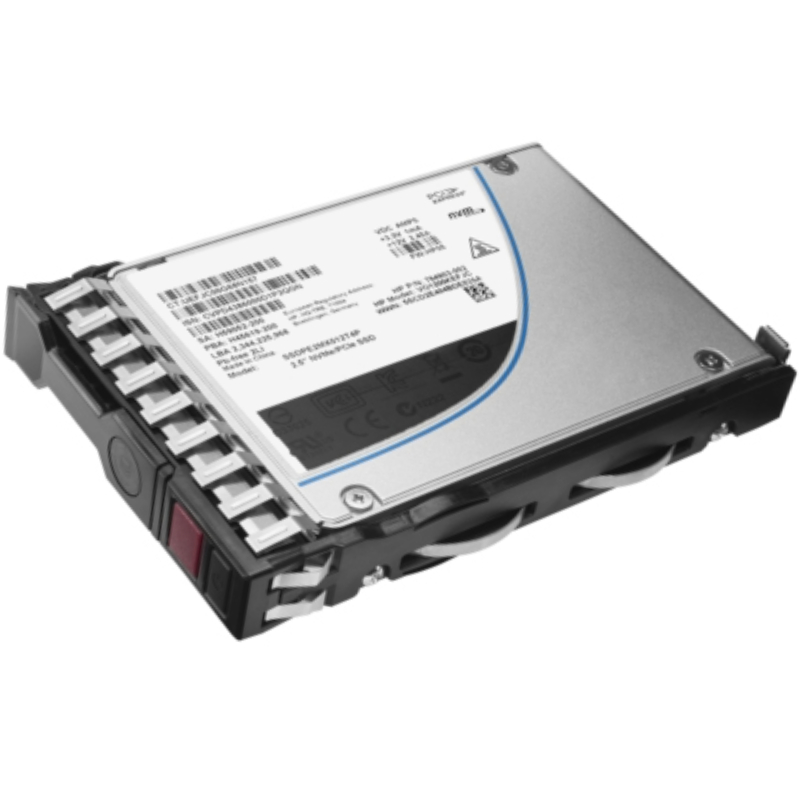


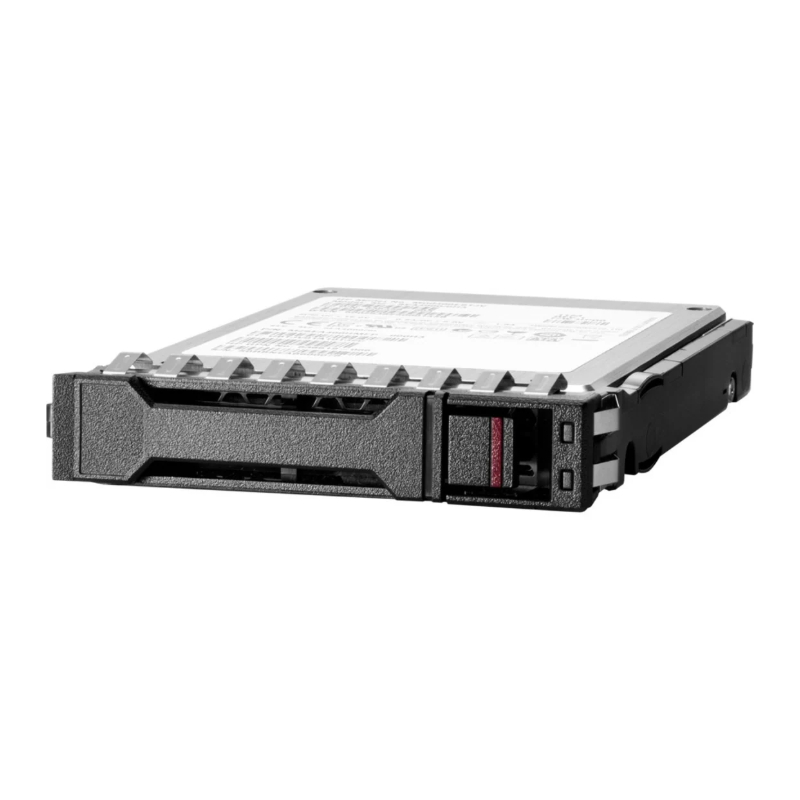
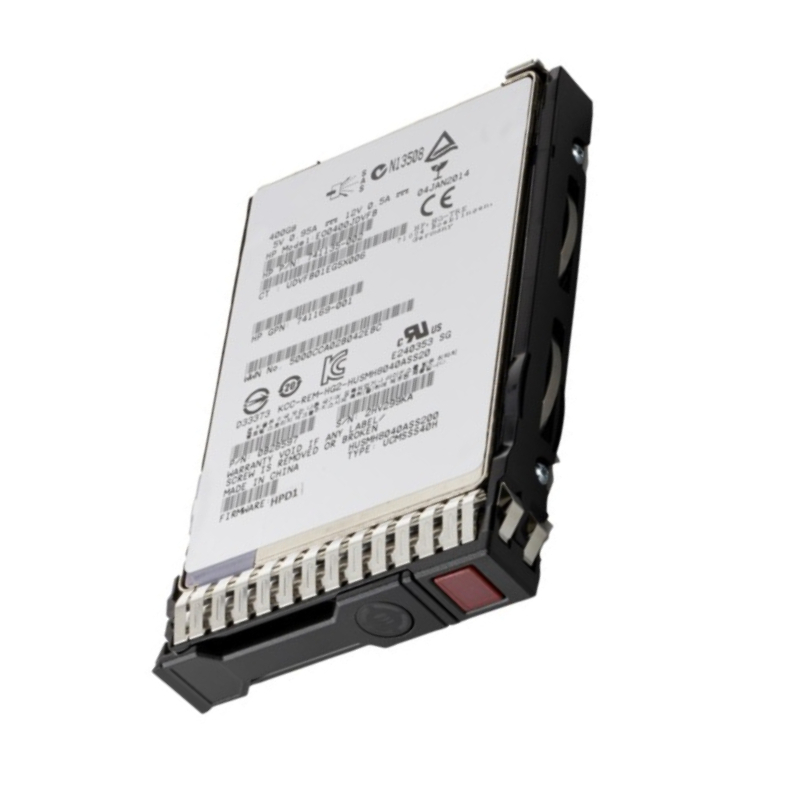
HPE 878849-001 960GB SSD 6GBPS SATA SC Read Intensive for Server. Excellent Refurbished with 1 year replacement warranty
| SKU/MPN | Warranty | Price | Condition | You save |
|---|---|---|---|---|
| 878849-001 | 1 Year Warranty | $380.00 | Excellent Refurbished | You save: $133.00 (26%) |
| 878849-001 | 1 Year Warranty | $680.00 | New (System) Pull | You save: $238.00 (26%) |
The HPE 878849-001 is a state-of-the-art 960GB SATA SSD, meticulously engineered for read-intensive tasks, specifically tailored for ProLiant Gen9 and Gen10 servers. This hot-swappable drive allows for seamless upgrades without system downtime.
The HPE 878849-001 960GB SFF DS SATA-6GBPS SC Read Intensive Server SSD stands as a purpose-built storage component engineered for data center workloads that prioritize read performance, predictable latency, and strong endurance characteristics for read-dominant applications. This specific model, referenced by its part number 878849-001, combines a 960GB capacity in a small form factor (SFF) design with a SATA III 6 Gbps interface. It is marketed and configured for server-class deployments where read-intensive I/O patterns — such as content delivery, virtualization read caches, database query offloading, indexing, and analytics scanning — are common. The model’s SC designation signals storage-class features tailored to enterprise expectations for reliability, power management and compatibility with HPE server platforms.
At the technical core, the device communicates over a SATA-6GBPS channel enabling backward and forward interoperability with standard server backplanes and storage controllers that support SATA III. The small form factor facilitates high-density server storage configurations and fits into SFF drive bays commonly used across modern rack and blade servers. The internal architecture emphasizes a controller and flash combination optimized for consistent read throughput and reduced read latency under sustained workloads. 960GB of raw capacity is balanced against enterprise wear-leveling, over-provisioning and firmware-level optimizations to deliver predictable performance across long service intervals. The device’s physical and electrical design also meets server power envelope expectations, offering stable operation within typical datacenter thermal constraints.
“Read intensive” is not a marketing label alone; it defines the firmware algorithms, error correction strategies, and block management policies applied to this SSD. In read-intensive drives, firmware tuning prioritizes read latency consistency and read amplification minimization, often accepting lower raw program/erase (P/E) cycle ratings than mixed-use or write-intensive SSDs while providing significantly higher read IOPS and stable response times. This makes the 878849-001 particularly well suited to content-serving roles, search index lookups, in-memory database spillovers where sequential or random read operations dominate, and virtual machine image libraries where reads vastly outnumber writes. Systems that rely on fast, frequent reads of relatively static data will benefit from lower tail latency and sustained throughput compared to general-purpose SATA SSDs that are not tuned for read-dominant traffic.
Compatibility is a crucial factor when selecting server SSDs. The HPE 878849-001 has been validated to operate within a wide range of HPE ProLiant and HPE Apollo systems, ensuring hot-swap support, appropriate insertion/ejection behavior in SFF trays, and firmware interaction with HPE Smart Array controllers and HPE Integrated Lights-Out (iLO) management features. Deployment into certified HPE platforms typically gives administrators the added advantage of drive health telemetry, predictive failure alerts, and firmware update mechanisms integrated into HPE management utilities.
The SFF design contributes directly to storage density. High-density servers often trade off between numerous smaller drives and fewer larger drives; in many scale-out architectures, smaller SFF SSDs allow architects to maximize aggregate IOPS and parallelism by deploying more drives in the same chassis footprint. The physical dimensions and connector arrangement are engineered to align with standard SFF trays, enabling straightforward replacement and minimizing the risk of mechanical incompatibilities. For operations emphasizing per-rack throughput, the small form factor helps reduce idle physical space and increases the number of logical volumes or RAID groups that can be created without rearchitecting the enclosure layout.
Performance for a read-intensive SATA SSD is typically expressed in terms of sequential read throughput, random read IOPS at different queue depths, read latency under sustained workloads, and consistency metrics such as tail latency percentiles. In real-world deployments, administrators should expect strong sequential and random read profiles optimized for average and tail-case responsiveness. When benchmarking, synthetic tests should be selected to mirror expected production patterns: mixed small-block random read tests, sequential read scans, and multi-stream read scenarios will reveal how the drive behaves under load. It is also advisable to profile the SSD in an end-to-end server configuration including RAID controllers or HBA cards to observe any interaction effects with caching layers or controller offload capabilities.
Software-defined storage solutions and caching layers can exploit the read-optimized nature of this SSD by placing frequently accessed index and metadata files on the 878849-001 drives while relegating archival and bulk-write workloads to other tiers. Database engines with hot set caching (for example, buffer pool extensions or external cache layers) will see latency and throughput improvements when the hottest pages reside on read-optimized SSD tiers. Key considerations include cache eviction policies, prefetching strategies, and alignment of block sizes to the SSD’s internal page architecture to minimize read amplification and maximize effective cache hit rates. Platform administrators should also ensure that the host OS and storage stack are configured for optimal SATA performance, including correct AHCI/native command queuing settings and interrupt coalescing as supported by the server controller.
Power efficiency and thermal behavior are central to maintaining steady performance and long-term reliability. The 960GB SFF SSD is designed to operate with a server-grade power envelope and is typically deployed in environments with controlled airflow and rack cooling. Thermal throttling mechanisms are implemented at the firmware level to protect the drive from overheating; however, consistent high read loads can still elevate drive temperatures, so data center designers must account for drive placement, airflow patterns, and ambient temperature management. Monitoring tools that report temperature and power consumption per device give operators the data they need to balance density against thermal risk. When replacing drives or expanding storage, administrators should be mindful of cumulative rack heat and ensure sufficient cooling capacity before adding numerous high-performance SSDs to a single chassis.
Comparing the HPE 878849-001 to other SSD classes highlights tradeoffs. Mixed-use and write-intensive SSDs generally offer higher P/E cycle ratings and more aggressive over-provisioning to handle heavier write workloads, at an increased price. NVMe drives deliver substantially higher throughput and lower latency than SATA devices but require NVMe-capable backplanes and may impose higher power and cooling demands. The 960GB SFF SATA model sits in a balanced position: it leverages widespread SATA compatibility for ease of integration while delivering read-optimized performance at an appealing cost point. For workloads where absolute lowest latency is required or where extremely high write endurance is non-negotiable, alternative classes will be more appropriate; however, for read-dominated server roles and many virtualization and caching scenarios, the 878849-001 represents an efficient choice.
Practical configuration examples demonstrate how the HPE 878849-001 performs in context. In a virtual desktop infrastructure where dozens of read-mostly images are accessed concurrently, deploying these drives as a read tier reduces boot storm impact and accelerates user login times. In a database analytics cluster, placing query indexes and frequently scanned tables on the read-optimized SSD tier improves query throughput and reduces contention on slower storage tiers. For web content delivery, hosting static assets and frequently requested media on these SSDs improves page load times and reduces backend compute waiting times for I/O-bound operations. Each configuration should be tested with representative load profiles to fine-tune controller settings, queue depths, and OS level I/O tuning parameters.


 Contact Us
 Information
 Catalog
 Solid State Drives (SSD)
 Network Switches
 Hard Disk Drives
 HBA & Controllers
 PC & Servers
 PC & Server Memory
 CPU & Processors
 Network Routers
 Power Supplies
 Tape Drives & Libraries
 Network Devices
 Computer & Network Cables