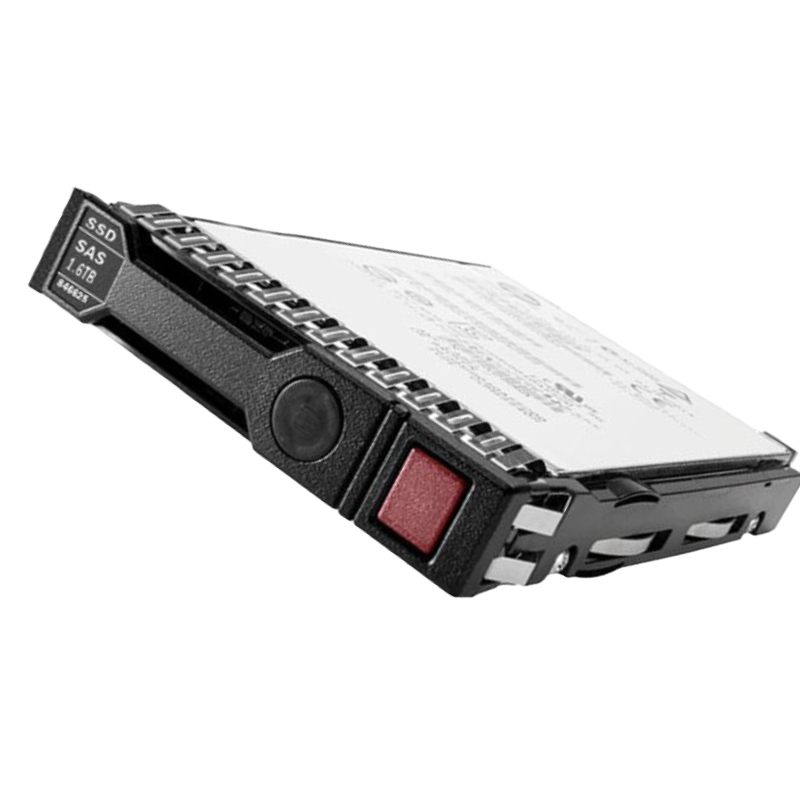
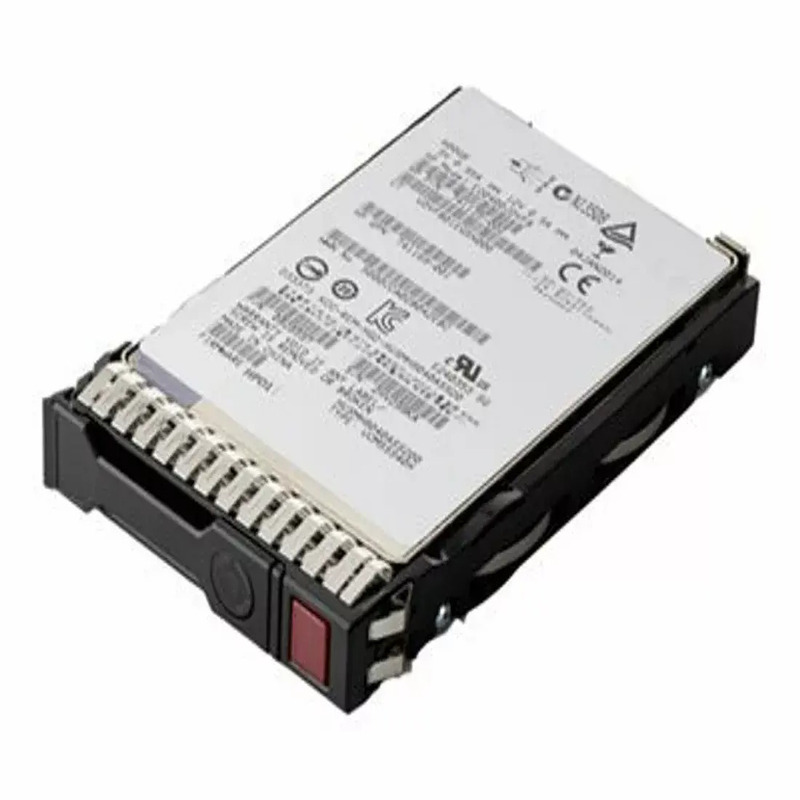
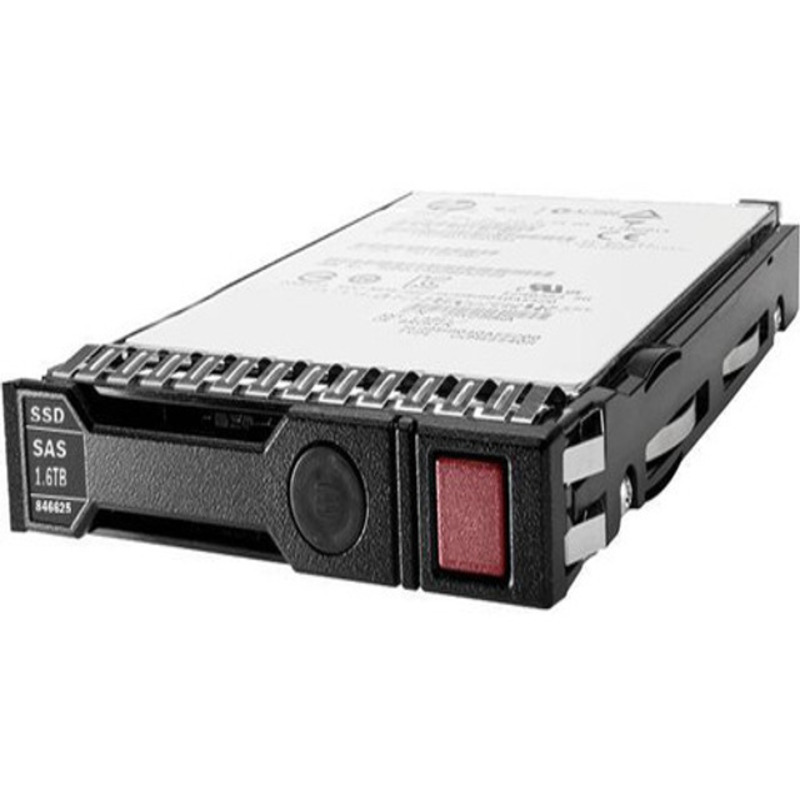
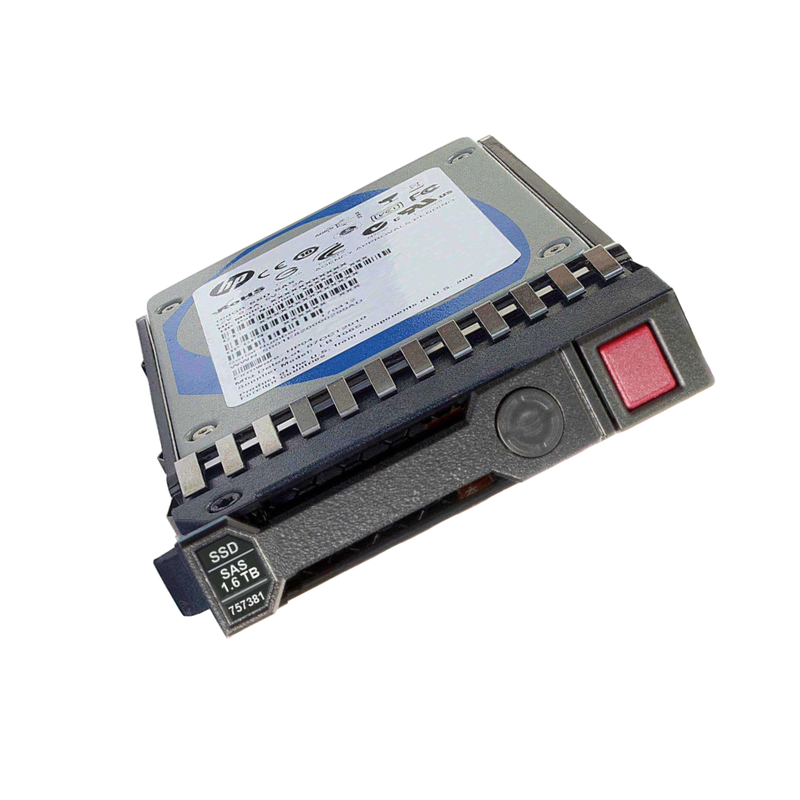
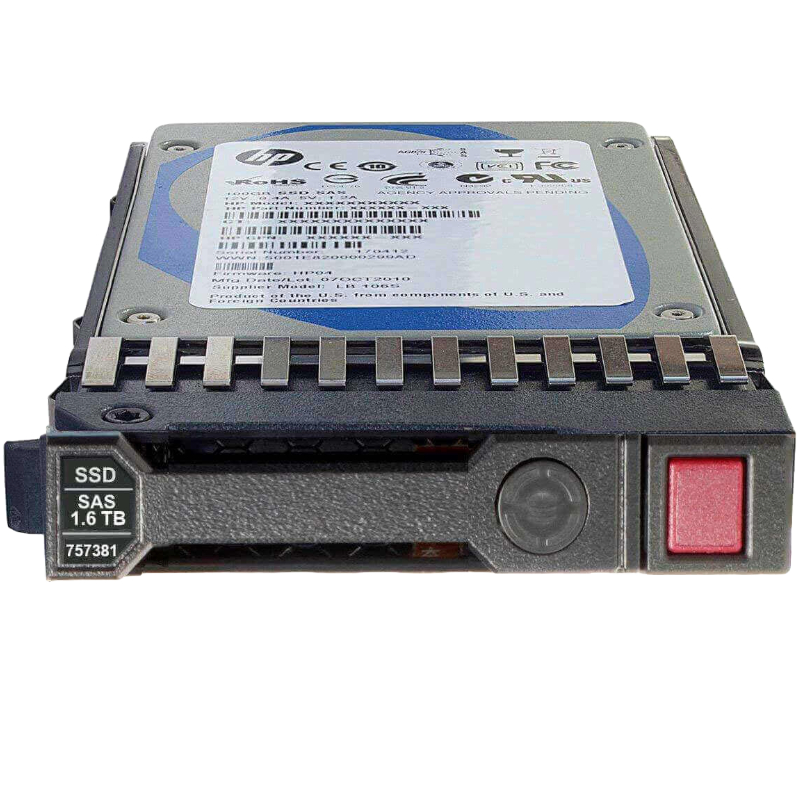
MO1600JVYPR HPE 1.6TB SSD SAS 12GBPS Mixed Use SFF
- — Free Ground Shipping
- — Min. 6-month Replacement Warranty
- — Genuine/Authentic Products
- — Easy Return and Exchange
- — Different Payment Methods
- — Best Price
- — We Guarantee Price Matching
- — Tax-Exempt Facilities
- — 24/7 Live Chat, Phone Support
- — Visa, MasterCard, Discover, and Amex
- — JCB, Diners Club, UnionPay
- — PayPal, ACH/Bank Transfer (11% Off)
- — Apple Pay, Amazon Pay, Google Pay
- — Buy Now, Pay Later - Affirm, Afterpay
- — GOV/EDU/Institutions PO's Accepted
- — Invoices
- — Deliver Anywhere
- — Express Delivery in the USA and Worldwide
- — Ship to -APO -FPO
- — For USA - Free Ground Shipping
- — Worldwide - from $30
Product Overview of HPE MO1600JVYPR 1.6TB SAS SSD
The HPE MO1600JVYPR Solid State Drive is a high-performance enterprise-grade storage device engineered for speed, reliability, and seamless integration with HPE ProLiant servers. Featuring a 1.6TB capacity and 12Gbps SAS interface, this SSD is purpose-built for environments requiring consistent data throughput, low latency, and dependable endurance under demanding workloads.
General Product Details
- Manufacturer: Hewlett Packard Enterprise (HPE)
- Model Number: MO1600JVYPR
- Product Category: Enterprise Solid State Drive (SSD)
- Form Factor: Standard Small Form Factor (SFF)
- Height: 15mm compact profile for optimized data center configurations
Technical Specifications
Capacity and Interface
With a 1.6 terabyte capacity and a robust 12Gbps SAS interface, this SSD ensures fast data transfers and sustained performance. Its SAS connectivity guarantees compatibility with HPE’s advanced server platforms, supporting both scalability and reliability for business-critical systems.
Performance Metrics
- Random Read Speed: Up to 88,500 IOPS
- Random Write Speed: Up to 65,500 IOPS
- Sequential Read Throughput: Approximately 1,080 MB/s
- Sequential Write Throughput: Around 565 MB/s
These impressive performance figures make the MO1600JVYPR ideal for intensive applications such as data analytics, virtualization, and database operations that require low latency and high-speed I/O handling.
Physical and Environmental Attributes
- Logical Block Size: 512 bytes
- Power Consumption: 9 watts typical during active operation
- Operating Temperature Range: 0°C to 60°C
This drive’s power efficiency and durable design allow it to operate reliably in high-demand environments while maintaining optimal energy usage and thermal balance.
Server and System Compatibility
HPE ProLiant DL Series
Fully supported by numerous HPE ProLiant DL servers, ensuring flawless integration and enhanced system responsiveness:
- DL160 Gen10 / Gen9 / Gen8
- DL360 Gen10 / Gen9 / Gen8 / Gen8p / Gen8e
- DL380 Gen10 / Gen9 / Gen8 / Gen8p / Gen8e
- DL385 Gen10 / Gen9 / Gen8p
- DL560 Gen10 / Gen9 / Gen8
- DL580 Gen10 / Gen9 / Gen8
- DL20 Gen9, DL120 Gen8–Gen9, DL180 Gen8–Gen9
- DL320e Gen8–Gen9, DL388 Gen9
HPE ProLiant ML Series
- ML110 Gen10 / Gen8 / Gen9
- ML150 Gen8 / Gen9
- ML310e Gen8 / Gen9
- ML350 Gen10 / Gen8 / Gen9
- ML350e / ML350p Gen8–Gen9
HPE ProLiant XL Series
- XL230k Gen10
- XL170r / XL190r / XL220a / XL230a / XL250a Gen9
HPE ProLiant BL and SL Series
- BL420c / BL460c / BL465c / BL660c Gen8–Gen9
- SL230s / SL250s / SL270s Gen8–Gen9
Additional Compatibility
- HPE Storage Arrays: D3700, D2220sb
- HPE StoreEasy Systems: StoreEasy 1830 and StoreEasy 1840
Key Advantages of HPE MO1600JVYPR SSD
Exceptional Reliability
Built to enterprise standards, the drive provides superior reliability, minimizing downtime and supporting sustained workloads in 24/7 operational environments.
Energy Efficiency
Designed with power optimization in mind, the SSD maintains a balance between high-speed performance and low power draw, reducing operational costs and thermal strain.
Optimized for HPE Ecosystem
- Seamless integration with HPE Smart Array Controllers
- Enhanced firmware-level compatibility for secure data handling
- Supports RAID configurations for improved redundancy
Performance-Driven Architecture
Engineered with advanced NAND technology and HPE firmware tuning, this SSD delivers high endurance and stable read/write cycles suitable for mission-critical operations.
Ideal Use Cases
- Database and transactional processing
- Virtualization and hyper-converged infrastructure
- High-frequency trading systems
- Enterprise file servers and analytics clusters
The HPE MO1600JVYPR SSD
- Enterprise-class reliability and endurance
- High throughput for mission-critical data applications
- Extensive compatibility with ProLiant and StoreEasy servers
- Energy-efficient and thermally optimized performance
- HPE-certified firmware for maximum data integrity
HPE MO1600JVYPR 1.6TB SAS Mixed Use SSD Overview
The HPE MO1600JVYPR 1.6TB SAS-12Gbps Mixed Use-1 SFF 2.5-inch SC Solid State Drive is positioned in the enterprise-class mixed-use SSD segment designed for data centers, rack servers, storage enclosures and mission-critical applications. This category centers on high-performance SAS 12Gbps solid state drives in the small form factor (SFF) 2.5" profile, offering a balance between sustained throughput and endurance. These SSDs are engineered to support consolidated workloads — including virtualization, database operations, caching and mixed read/write transaction processing — where consistent low latency and high IOPS are required alongside solid long-term durability.
Key attributes and defining characteristics
Drives in this category share a set of common technical and operational traits that make them well-suited for enterprise deployments:
- Interface: SAS 12Gbps — enterprise-grade serial-attached SCSI connectivity for high reliability and broad server compatibility.
- Form factor: SFF 2.5-inch (1 SFF slot) — compact, hot-swappable drives optimized for modern chassis and dense server arrays.
- Capacity: 1.6TB nominal usable capacity — designed for tiered storage, caching layers, or high-performance pools.
- Workload profile: Mixed Use — tuned for balanced read/write mixes typical of virtualized and transactional workloads.
- Enterprise features: Power-loss protection, advanced error correction, SMART telemetry, and robust firmware management.
Technical breakdown: hardware, interface and compatibility
Controller, NAND and internal architecture
Enterprise mixed-use SSDs like the HPE MO1600JVYPR combine a purpose-built controller with enterprise-grade NAND flash memory to achieve consistent I/O performance. The controller orchestrates wear-leveling, bad-block management, and hardware-assisted error correction while the SSD firmware implements features tailored to SAS environments, such as SCSI command optimization and negotiated transfer rates at 12Gbps. NAND selection (e.g., multi-level cell or newer TLC variants in enterprise grade configurations) and over-provisioning levels together determine effective endurance, steady-state performance and write amplification characteristics.
Interface specifics: SAS 12Gbps explained
SAS (Serial Attached SCSI) at 12Gbps remains the backbone for many enterprise storage stacks. Compared to SATA, SAS provides:
- Full-duplex data paths for higher effective throughput.
- Advanced error reporting and SCSI-based management features.
- Multipath and dual-port options on some drives (enabling redundant paths in SAN/enterprise arrays).
- Backward compatibility with 6Gbps and legacy SAS controllers when negotiated appropriately.
Form factor and physical compatibility
The SFF 2.5-inch profile ensures high-density deployment in blade servers, 1U/2U rack units and storage shelves. Mechanical compatibility with standard drive caddies and backplanes used by HPE and other leading server vendors is a typical expectation, and the single-socket drive width minimizes slot space while enabling efficient airflow and cooling in dense configurations.
Performance characteristics and benchmarks
IOPS, throughput and latency
Mixed-use enterprise SAS SSDs are validated using a range of synthetic and application-level benchmarks. Key performance indicators to evaluate include:
- Random IOPS (4KB): indicative of transactional performance for databases and VDI workloads.
- Sequential throughput (MB/s): relevant for large-file transfers and streaming tasks.
- Average latency (ms/μs): critical for user-facing and real-time applications that require predictable response times.
For decision-making, consider both peak IOPS and sustained IOPS under mixed read/write ratios; mixed-use drives are tuned to maintain consistent throughput across a spectrum of real-world workload mixes rather than maximizing single-metric peaks.
Workload examples and realistic performance expectations
Typical workloads that benefit from this drive type include:
- Virtual machine boot storms and VDI pools — where random read and random write bursts happen concurrently.
- Online transaction processing (OLTP) databases — requiring consistent low-latency commits and reads.
- Web-scale caching and application acceleration — leveraging high IOPS for fast user response.
- Mixed consolidation tiers — combining hot block storage and tiered data pools.
When planning, benchmark using workload-profiling tools that mirror your production read/write ratio, working set size and concurrency level to determine the effective drive count required to meet Service Level Objectives (SLOs).
Endurance, reliability and enterprise features
Endurance considerations for mixed-use SSDs
Endurance is a cornerstone metric for enterprise SSD selection. Mixed-use drives strike a middle ground between read-intensive and write-intensive SSDs, offering higher drive writes per day (DWPD) than read-optimized models while avoiding the higher cost of extreme write-optimized designs. When calculating endurance needs, factor in:
- Daily write volume per drive (GB/day) based on application I/O.
- Provisioning margin to allow for background maintenance and reserved over-provisioning.
- Write amplification characteristics of the filesystem and storage layer.
Data protection: power-loss protection and error management
Enterprise-class SAS SSDs typically include capacitive power-loss protection to ensure in-flight data is safely committed to non-volatile media during unexpected power events. Coupled with end-to-end data path protection and strong ECC (error-correcting code), these features reduce the risk of data corruption and increase confidence in transactional integrity for business-critical systems.
SMART telemetry, monitoring and firmware
S.M.A.R.T. attributes and vendor telemetry expose metrics such as available spare, unsafe shutdowns, media and controller errors, and total bytes written — all essential for proactive maintenance and predictive replacement. Firmware updates, distributed by HPE or the drive manufacturer, may add performance enhancements, bug fixes and compatibility improvements; plan firmware update windows with minimal disruption and always follow vendor upgrade guidance.
Use cases and deployment patterns
Primary use cases for 1.6TB mixed-use SAS SSDs
The 1.6TB capacity point is often used as a building block within tiered storage architectures and performance pools. Use cases include:
- VM-hosting clusters: balanced capacity per VM with predictable performance for both reads and writes.
- Transactional databases: where small-block random IO is common and low latency is required under mixed loads.
- Cache/accelerator tiers: acting as a fast layer in front of higher-capacity HDD or hybrid storage arrays.
- High-availability clusters: using mirrored or RAID-protected SSD pools for fast failover and consistent performance.
Architecture patterns: tiering, caching and hybrid arrays
Enterprises often deploy mixed-use SSDs as the mid-tier in multi-tier storage architectures:
- Tier 0 / hot tier: NVMe or ultra-low-latency devices for the highest-demand data.
- Tier 1 / mixed tier: SAS mixed-use SSDs like the 1.6TB HPE part for balanced performance and cost.
- Tier 2 / capacity tier: high-density HDDs for cold or archival data.
These drives are also effective as read/write cache in front of spinning-disk pools, significantly reducing latency for frequently accessed blocks and improving overall system responsiveness.
Comparison: Mixed Use vs Read-Intensive vs Write-Intensive
When to choose mixed-use SSDs
Mixed-use SSDs are the pragmatic choice when your environment exhibits a steady blend of reads and writes rather than extremes. They balance cost, endurance and performance — suitable when:
- Your I/O mix is near 50% reads and 50% writes, or varies over time.
- You need more endurance than a read-optimized drive but don't require the extreme endurance (and cost) of write-optimized models.
- Predictable, consistent performance under mixed loads is more valuable than absolute peak throughput for reads or writes alone.
Selecting alternatives and trade-offs
Consider these trade-offs:
- Read-Intensive: lower cost per GB and lower DWPD — ideal for archival reads and large-scale content delivery but not for heavy writes.
- Write-Intensive: highest DWPD and longest endurance — expensive but necessary for write-heavy databases and logging workloads.
- NVMe vs SAS: NVMe offers lower protocol overhead and higher parallelism, but SAS maintains broad controller compatibility and mature enterprise management capabilities. Mixed-use SAS drives remain a compelling choice when existing infrastructure and management tools are SAS-centric.
Compatibility and vendor integration
HPE ecosystem and server compatibility
The HPE MO1600JVYPR designation indicates a part optimized for HPE platforms. When assessing compatibility:
- Confirm support lists for target servers (e.g., ProLiant models and HPE storage arrays) and backplane firmware revisions.
- Validate drive firmware revision compatibility with RAID controller firmware to ensure stable operation and predictable performance.
- Check for vendor-specific features such as proprietary monitoring utilities, secure erase tooling, and support packaging/warranty coverage.
Interoperability with third-party systems
While HPE-branded parts deliver tight integration, many organizations deploy HPE-compatible SAS SSDs across multi-vendor environments. Verify:
- Physical fit with the drive caddy and sled.
- Backplane and controller support for SAS 12Gbps negotiation.
- Cross-vendor SMART attribute interpretation and management tools.
Security, encryption and data protection
Self-Encrypting Drives (SED) and data-at-rest encryption
Many enterprise SAS SSDs support hardware-based encryption (SED) to protect data at rest and simplify compliance with data protection regulations. Key considerations:
- Whether the SSD implements TCG Opal, IEEE 1667, or manufacturer-specific encryption implementations.
- Integration with key management systems (KMS) and HPE management frameworks for centralized key lifecycle management.
- Impact of encryption on performance and operational procedures for secure erase and decommissioning.
Secure erase and sanitization procedures
Follow vendor-recommended secure erase routines when repurposing or retiring drives. Proper data sanitization ensures compliance with regulatory and organizational policies for handling sensitive information.
Subcategories and related product families
Capacity and form factor variations
The 1.6TB capacity is one node in a broader array of SKU options. Related subcategories include:
- Lower and higher capacities (e.g., 960GB, 3.2TB) to match density and capacity planning needs.
- Different form factors such as 2.5" U.2 or EDSFF where ultra-dense or high-performance chassis require alternate mechanical interfaces.
Protocol and performance tiers
Adjacent categories include:
- SAS Read-Intensive Series: optimized for read-heavy workloads at lower cost-per-GB.
- SAS Write-Intensive Series: designed for heavy logging and write-dominant databases.
- NVMe Performance Series: for latency-sensitive, extreme-performance applications where NVMe is supported.
How to decide between subcategories
Map your application I/O profile and lifespan expectations against the subcategory characteristics. If write volume and write bursts are high, consider write-optimized parts. For general consolidation and balanced performance, the mixed-use family typically provides the best cost-to-performance ratio.
Content snippets for category pages and meta usage
Short product snippet (for SERP and cards)
HPE MO1600JVYPR — 1.6TB SAS 12Gbps Mixed-Use 2.5" SFF enterprise SSD offering balanced endurance, consistent IOPS, and enterprise-grade telemetry and power-loss protection for virtualized and transactional workloads.
Bulleted highlights for category listing
- Interface: SAS 12Gbps
- Capacity: 1.6TB
- Form Factor: SFF 2.5" (hot-swap)
- Workload: Mixed Use (balanced read/write)
- Enterprise features: Power-loss protection, SMART telemetry, advanced ECC
Implementation tips and best practices
Rack and chassis considerations
Maintain adequate airflow and cooling in dense server configurations. Position drives in recommended bays to ensure firmware and backplane power delivery stay within the manufacturer-specified thermal envelope.
Software and filesystem tuning
Tune host stack parameters such as write cache settings, filesystem block sizes and RAID stripe widths to align with the SSD characteristics:
- Match RAID stripe sizes to typical I/O sizes to reduce unnecessary read-modify-write cycles.
- Use filesystem tools that reduce write amplification for flash (e.g., properly aligned partitions).
- Leverage storage hypervisor features for I/O throttling and QoS where supported.
Capacity planning and overprovisioning
Reserve additional capacity or select models with higher over-provisioning to maintain consistent performance over the life of the drive.
Supply chain, procurement and spare parts strategy
Keeping spare inventory and lifecycle spares
Maintain a small pool of hot spares to reduce rebuild times and impact of failed drives. Track part numbers, firmware levels and serial ranges for rapid replacement and to maintain warranty and support entitlements.
Documentation and asset tagging
Document serial numbers, purchase dates, firmware versions and physical location within racks. This level of detail simplifies audits, warranty claims and RMAs.