(7% discount is applied at checkout)
Cart is empty
Your go-to destination for cutting-edge server products
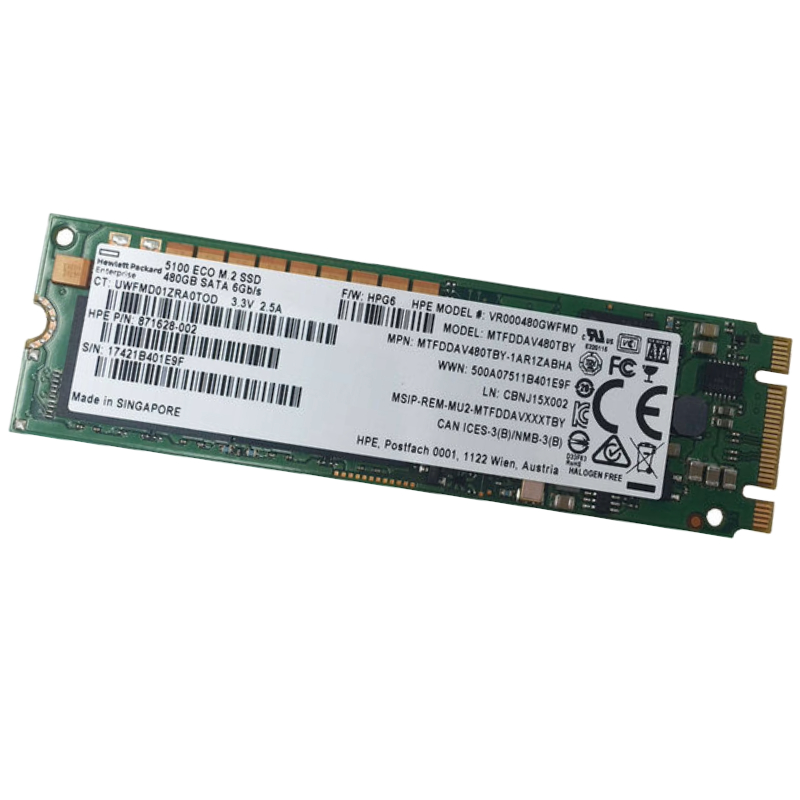


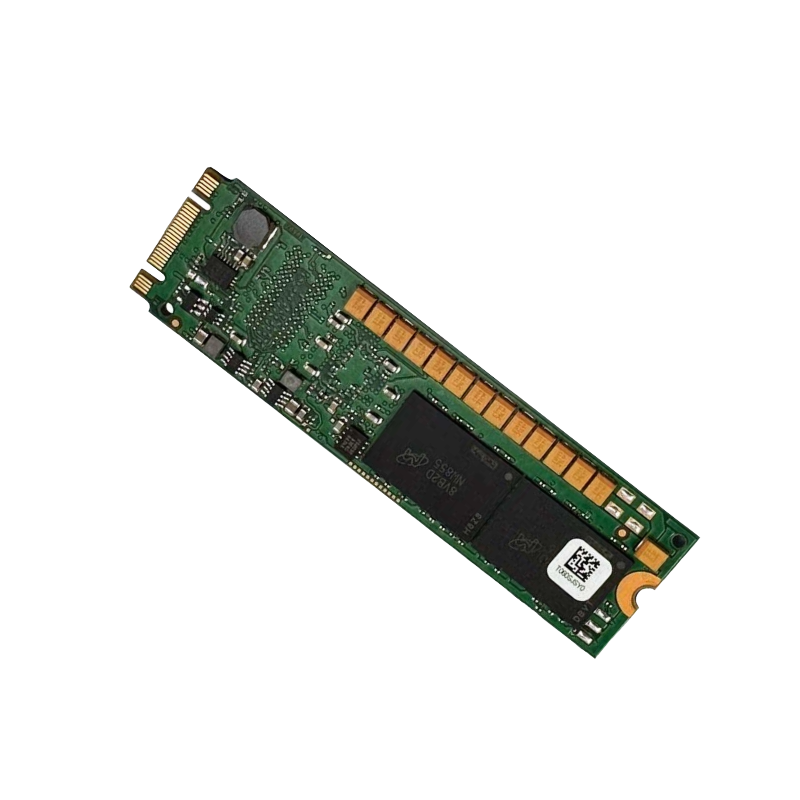
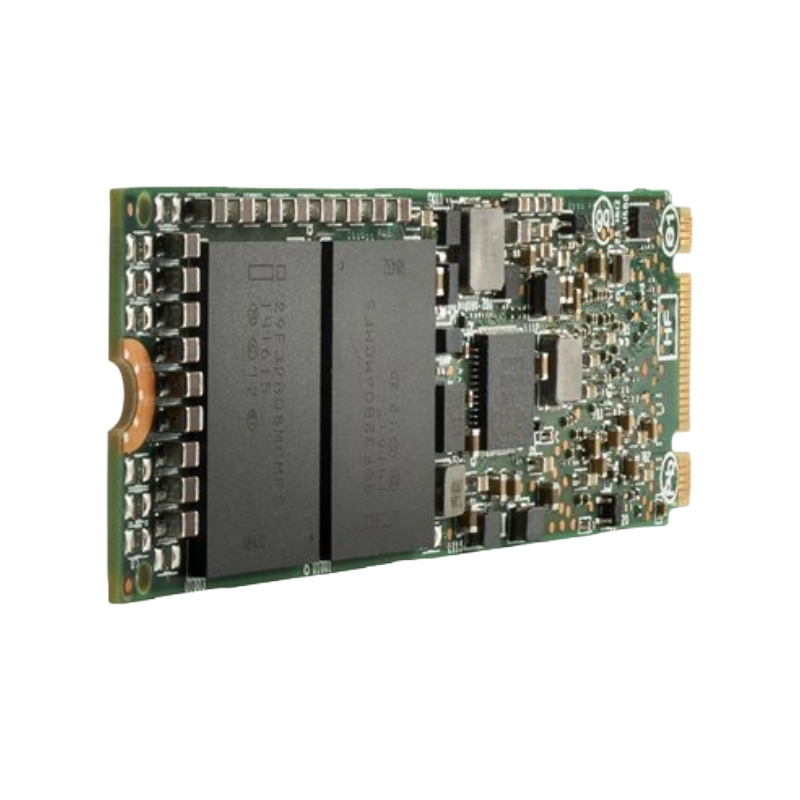
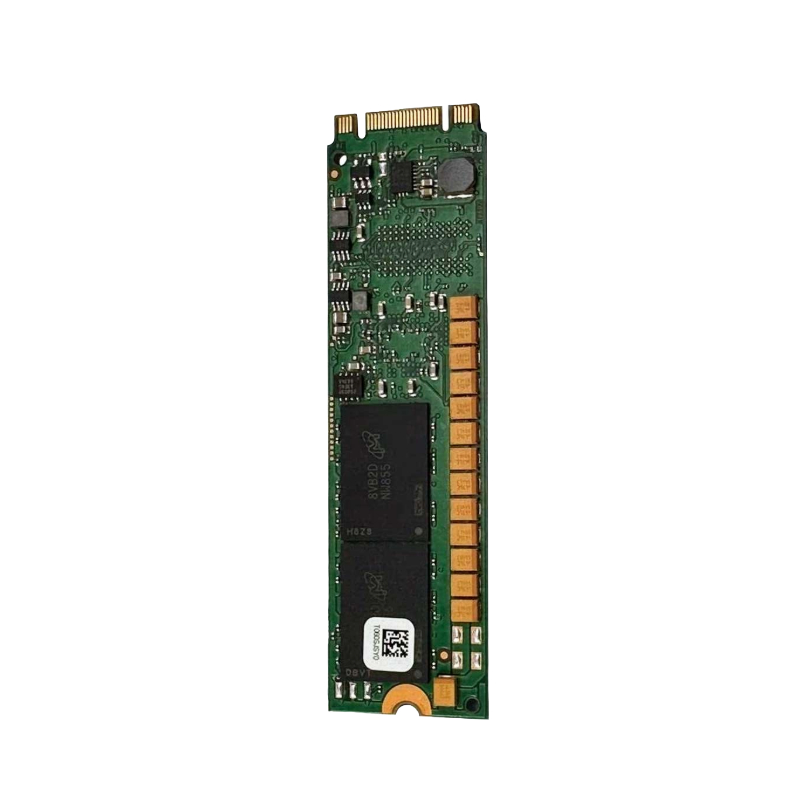
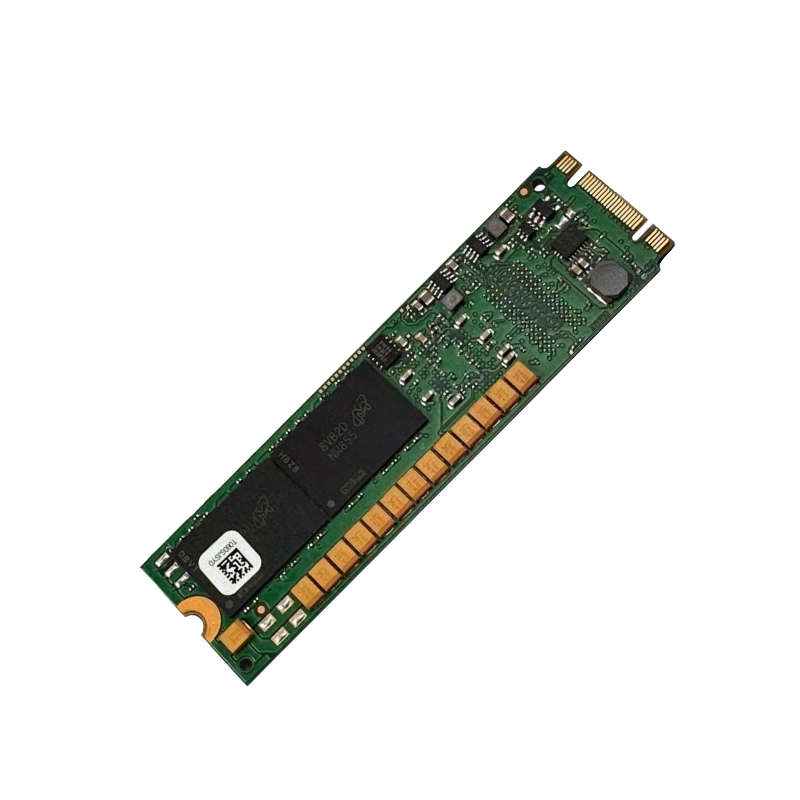
HPE MR000480GWFLV 480GB SSD SATA 6GBPS Mixed Use M.2 2280. Excellent Refurbished with 1 year replacement warranty
The HPE MR000480GWFLV is a high-performance, mixed-use solid-state drive tailored for HPE Proliant servers, Synergy platforms, and enterprise storage solutions. Built for demanding workloads, this 480GB M.2 2280 drive delivers reliable speed, endurance, and energy efficiency for modern data centers.
The HPE MR000480GWFLV SSD is fully compatible with an extensive range of HPE server lines, ensuring seamless integration and optimal performance:
The HPE MR000480GWFLV 480GB SATA 6Gbps Mixed Use M.2 2280 TLC solid state drive (SSD) is a purpose-built storage solution tailored for mixed-use workloads that demand consistent performance, strong endurance, and enterprise-grade reliability. This category page focuses on the M.2 2280 form-factor, SATA 6Gbps interface drives with TLC NAND and digitally signed firmware — a combination that makes these SSDs ideal for servers, workstations, storage arrays, embedded systems, and edge devices where cost, capacity, and longevity must be balanced.
M.2 2280 is one of the most popular form factors for modern SSDs. The designation “2280” means the drive is 22mm wide and 80mm long — a compact footprint that fits in a wide range of blade servers, rackmount servers with M.2 slots or adapter trays, desktop motherboards, and certain storage blade designs. The small size is especially useful when maximizing density per rack unit or when upgrading space-constrained systems.
The SATA III (6Gbps) interface remains ubiquitous in enterprise environments where backwards compatibility and cost-effectiveness matter. While NVMe drives are notable for raw performance, SATA 6Gbps M.2 SSDs provide predictable latency, broad compatibility with existing controllers, and lower platform integration complexity. This category is therefore often chosen for mixed-use applications where sequential throughput and steady random I/O are equally important.
TLC NAND stores three bits per cell, offering a strong balance between cost-per-gigabyte and write endurance. In the HPE MR000480GWFLV category, TLC is paired with enterprise-grade firmware and over-provisioning strategies that increase usable life and deliver dependable write endurance for mixed-use workloads. TLC enables competitive capacities like 480GB at a favorable price while maintaining enterprise reliability characteristics.
Digitally signed firmware provides chain-of-trust assurance and prevents unauthorized firmware from being installed. For enterprise deployments this is a critical security and reliability feature: signed firmware ensures the drive operates with validated microcode, reduces risk during firmware updates, and supports IT governance and compliance demands. Drives in this category are typically compatible with vendor tools and firmware management platforms.
480GB capacity sits in a sweet spot for many use-cases: large enough for boot volumes, application installs, databases with tiered storage, and cache layers, yet cost-effective when scaled across many servers. This makes the category highly attractive for enterprises upgrading legacy spinning disks or adding fast boot volumes across numerous hosts.
SATA M.2 2280 is broadly compatible with a wide range of platforms. Enterprises running mixed vendor servers benefit from this compatibility because it minimizes platform-specific procurement risk. In addition, the HPE-branded drives and equivalents tend to be validated by system vendors for use in their ecosystems, making them suitable for warranty-friendly replacements and certified upgrades.
Digitally signed firmware and support for enterprise management commands (e.g., ATA Security, Power Loss Protection where implemented, and SMART reporting) help meet corporate security policies. Firmware validation reduces attack surface and operational risk, particularly in regulated industries where firmware provenance must be auditable.
Using M.2 2280 SATA drives as boot volumes in rackmount servers or blade systems provides extremely fast system startup, rapid OS-level updates, and resilient, low-latency system disk performance. 480GB capacity is large enough for OS images, essential applications, and local caching layers.
Hypervisor hosts benefit from predictable IOPS and latency. Mixed-use drives are well-suited for VM image stores, swap, and intermediate caching when combined with higher-performance NVMe tiers for the most I/O-intensive VMs. The combination reduces overall infrastructure cost while providing acceptable performance for a broad set of guest workloads.
When deploying remote or edge computing nodes (IoT gateways, industrial controllers), M.2 SATA SSDs are attractive for their small size and lower power characteristics. Their digitally signed firmware also helps with secure firmware update processes in geographically dispersed fleets.
Databases with a read-heavy but occasionally write-intensive profile (analytics caches, content delivery nodes) benefit from TLC-based mixed-use SSDs where the drive’s firmware optimizes wear-leveling and garbage collection to protect performance consistency.
The SSD controller coordinates NAND access, wear-leveling, error correction (ECC), bad-block management, and garbage collection. In the MR000480GWFLV category, controller tuning is focused on:
Over-provisioning reserves part of the NAND to support wear leveling and background operations. For mixed-use drives, manufacturers often tune over-provisioning to preserve performance under sustained workloads. The result is low standard deviation in response times even during heavy GC cycles.
SMART attributes offer actionable insights into drive health — such as remaining life (percentage of TBW used), number of bad blocks, and read/write error statistics. Enterprises should integrate these metrics with monitoring tools to preemptively remediate drives approaching end-of-life or reporting anomalous metrics.
Installing an M.2 2280 SATA drive requires verifying the motherboard, riser, or adapter supports SATA signals on the M.2 M or B+M key edge connector. Some systems require a tray or adapter module for secure mounting in server bays (HPE often supplies tray options for validated installation). Always follow vendor instructions for standoff placement and torque to avoid mechanical stress.
Ensure BIOS/UEFI settings are configured for SATA mode (AHCI) when using SATA M.2 devices. Enable SMART monitoring and check for firmware compatibility notices from the server OEM. If using RAID controllers, verify whether the drive is intended for RAID metadata compatibility; in some deployments, using host-managed RAID or passthrough modes yields better performance.
Many rackmount servers require a small M.2 to U.2 or M.2 to SATA adapter or a vendor-specific tray for hot-swap bays. Check HPE documentation for tray part numbers for MR000480GWFLV or compatible part series if you plan large-scale deployment to reduce installation time and ensure vendor support.
Drives in this category are typically sold with enterprise warranty terms that include defined TBW coverage and a fixed warranty period (for example, 3–5 years). When buying in volume, confirm RMA policies, cross-shipping availability, and whether the drive is an HPE-validated spare to maintain server warranty and support levels.
Keep firmware updated using vendor-approved channels to ensure signed firmware integrity and compatibility. For large fleets, test firmware updates on a sample set before rolling out to production. Maintain change logs to comply with audit requirements when performing firmware modifications.
NVMe drives typically offer higher bandwidth and lower latency than SATA-based M.2 drives because NVMe communicates directly over PCIe lanes. However, NVMe platforms can be more expensive and sometimes require platform upgrades. SATA M.2 remains a cost-effective option for many mixed-use workloads where raw NVMe speed is unnecessary or where platform compatibility is a priority.
For boot volumes and smaller application stores, 240–480GB often suffices. For cache tiers, consider 480GB and larger to avoid frequent saturation. If you plan to consolidate several functions (e.g., OS + local database + cache) on the same drive, opt for higher capacities for headroom and reduced write amplification.
TLC offers a better endurance profile than QLC while remaining cost-effective. QLC increases capacity per die but reduces endurance and may introduce higher latency under sustained writes. For mixed-use enterprise workloads, TLC is generally recommended unless the workload is nearly 100% read-only and cost-per-GB is the top priority.
Use filesystems and partition alignments optimized for SSDs (e.g., proper alignment to 4K boundaries). For Linux environments, ext4, XFS, and newer filesystems like F2FS can be tuned for SSDs. For Windows hosts, ensure TRIM is enabled to help the drive reclaim unused blocks and maintain peak performance.
TRIM (or discard) support helps the drive manage free space more efficiently. Enable TRIM in OS settings and ensure that virtualization layers pass TRIM commands if supported; this reduces long-term write amplification and preserves consistent performance.
Over-provisioning can be adjusted either by firmware defaults or by carving out a portion of the drive’s accessible capacity at the host level. Reserving space for over-provisioning increases endurance and helps maintain steady-state performance during peaks.
Many enterprise SATA drives support ATA Security features or hardware-assisted encryption. Check product documentation for support of TCG Opal, Self-Encrypting Drive (SED) features, or vendor-specific encryption. When encryption is required, ensure key management integrates with your corporate KMS or HSM infrastructure.
While power-loss protection (PLP) hardware is more common in higher-end enterprise SSDs, firmware strategies can also reduce metadata corruption risk. Verify drive-level protections and pair them with server-level UPS or redundant power designs for mission-critical workloads.
For bulk purchases, negotiate volume pricing, confirm availability of spares, and ensure SKU consistency across shipments. Ask for serialized drive lists (S/N and firmware revision) for asset tracking and integration into configuration management databases.
M.2 drives can operate across broad temperature ranges, but thermal throttling can reduce performance under sustained high I/O. Ensure proper airflow within server chassis, use heatsinks where supported, and monitor drive temperature SMART attributes. For dense deployments, design chassis airflow to remove heat from M.2 locations.
SATA M.2 SSDs generally have modest power draw compared with 2.5" spinning disks and many NVMe SSDs. For large-scale deployments, aggregate power savings translate to meaningful operational cost reductions. Measure idle and active power profiles for capacity planning.
Use long-tail keywords naturally across headings and body text such as “HPE MR000480GWFLV 480GB SATA M.2 2280 SSD”, “digitally signed firmware M.2 SATA”, and “mixed-use enterprise TLC SSD 480GB”. Include spec-driven phrases (e.g., “SATA 6Gbps M.2 2280 TLC SSD 480GB”) to capture buyers using precise search queries.
Implement product schema (Product, Offer, AggregateRating) on the product category pages to increase the chance of rich snippets in search. Include properties like model number, capacity, interface, form factor, brand (HPE), and warranty. Add technical specifications as
Provide in-depth technical content (as presented on this page) and link to relevant subcategories: compatible trays & adapters, firmware updates, installation guides, and certified server models. Internal links to high-quality support or product pages improve crawlability and distribute ranking signals across the site.


 Contact Us
 Information
 Catalog
 Solid State Drives (SSD)
 Network Switches
 Hard Disk Drives
 HBA & Controllers
 PC & Servers
 PC & Server Memory
 CPU & Processors
 Network Routers
 Power Supplies
 Tape Drives & Libraries
 Network Devices
 Computer & Network Cables