(7% discount is applied at checkout)
Cart is empty
Your go-to destination for cutting-edge server products
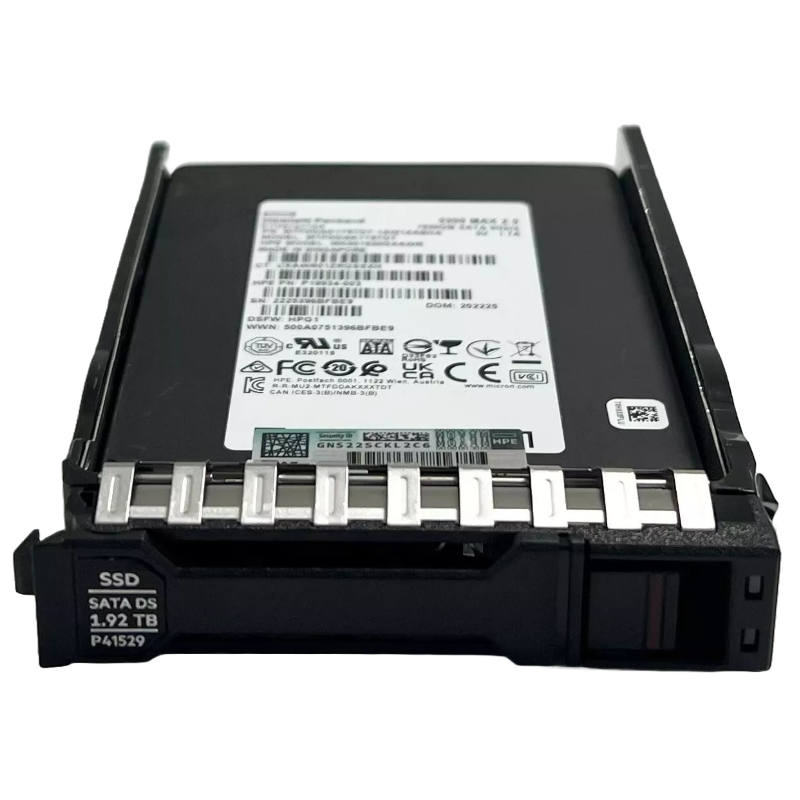


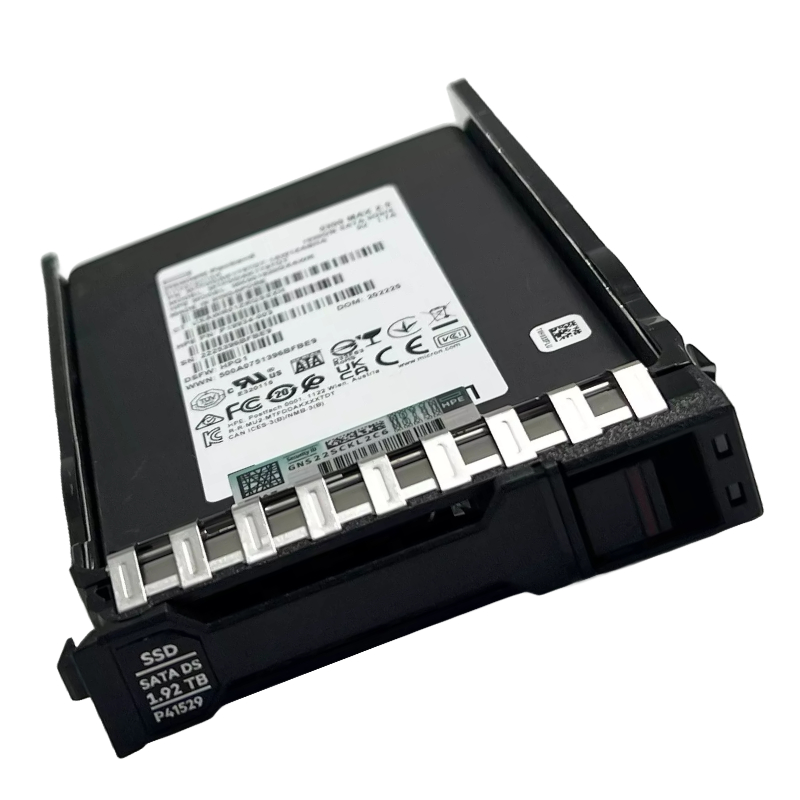
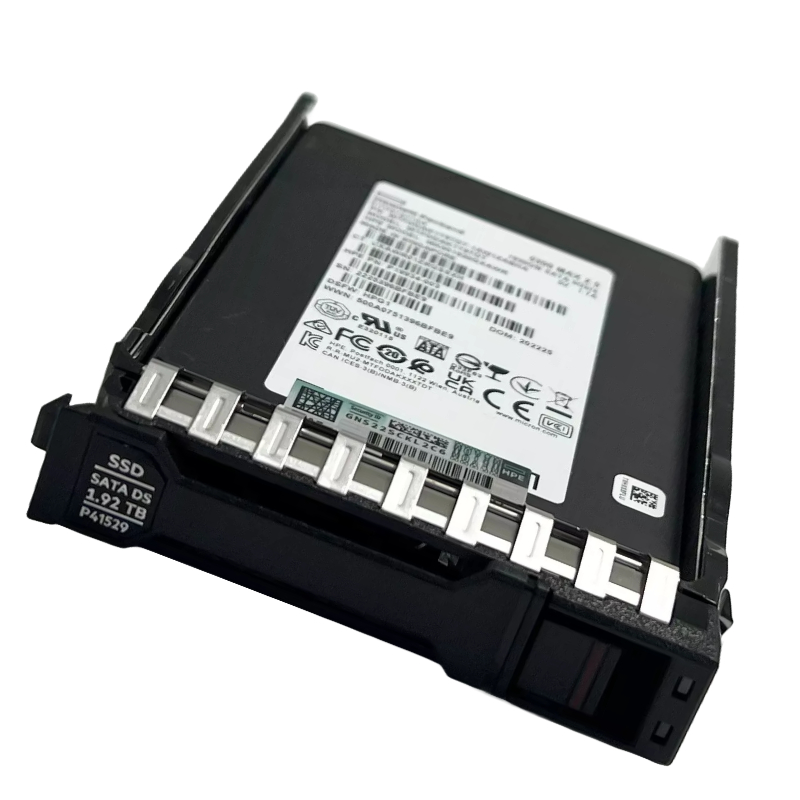
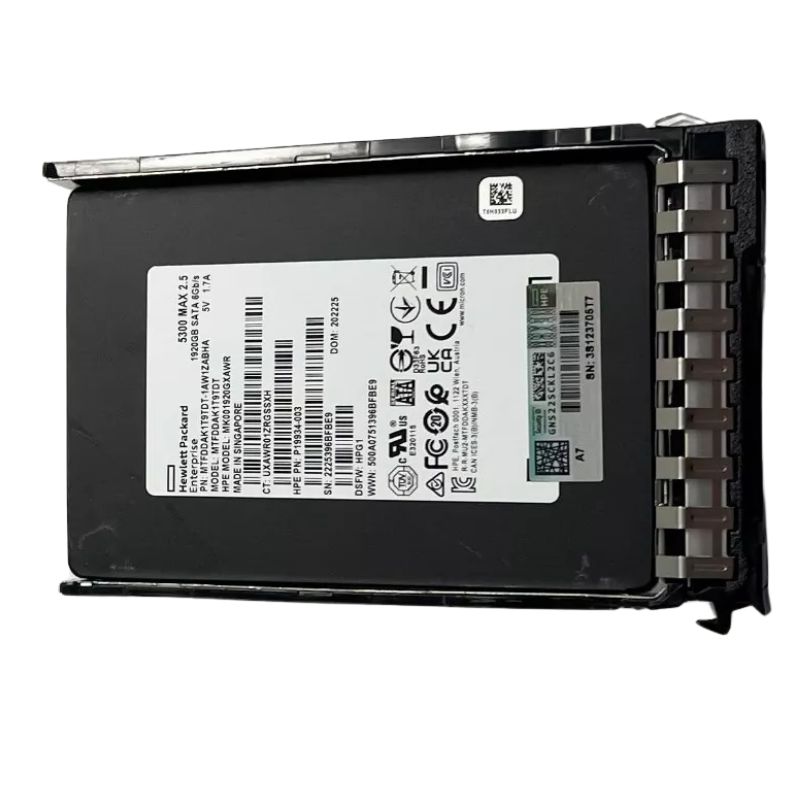
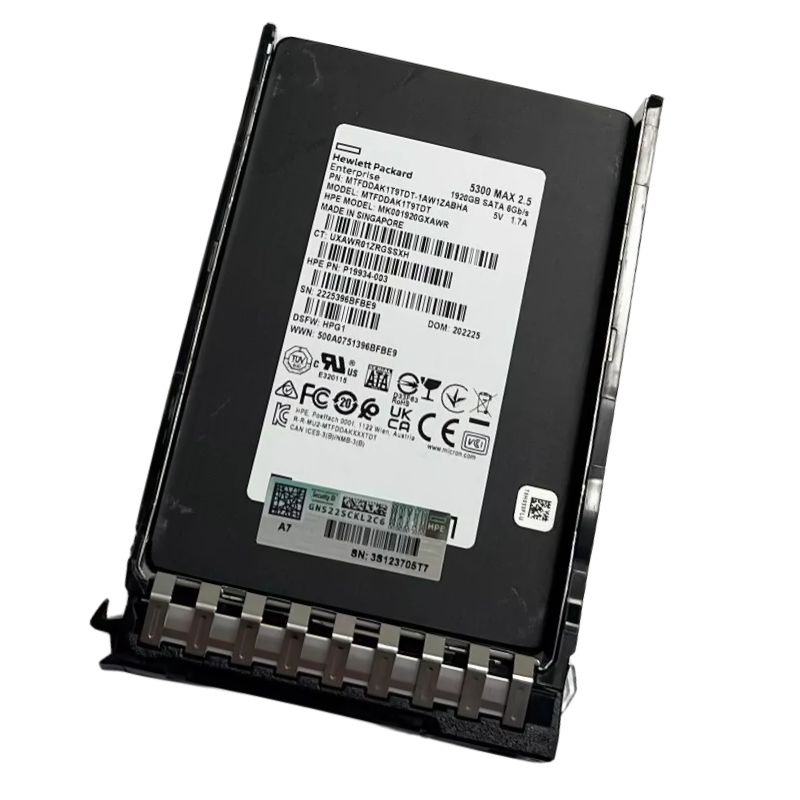
HPE P08572-001 1.92TB SATA 6GBPS Read Intensive Solid State Drive. Excellent Refurbished with 1 year replacement warranty
| SKU/MPN | Warranty | Price | Condition | You save |
|---|---|---|---|---|
| P08572-001 | 1 Year Warranty | $426.00 | Excellent Refurbished | You save: $149.10 (26%) |
| P08572-001 | 1 Year Warranty | $1,376.00 | Factory-Sealed New in Original Box (FSB) | You save: $481.60 (26%) |
The HPE P08572-001 is a high-capacity 1.92TB solid-state drive designed for read-intensive applications. Built by Hewlett Packard Enterprise (HPE), this enterprise-grade SSD offers impressive performance, reliability, and energy efficiency, making it ideal for data center environments.
This category encompasses high performance, enterprise‑grade read‑intensive solid state drives in the HPE P08572‑001 series. These drives are designed to satisfy demanding applications where read operations dominate, such as web servers, virtualization, caching layers, database read replicas, and analytic query workloads. Within this category, customers will find models that share the same interface, capacity, and performance class, but may differ in firmware revisions, endurance ratings, or bundled accessories. All of them adhere to SATA 6Gbps standards and are engineered to deliver dependable throughput under sustained read‑oriented workloads.
Every drive in this category uses the SATA interface with a 6 gigabits per second link. It supports standard SATA command sets, ensuring compatibility with a broad range of HPE ProLiant servers, storage arrays, and legacy storage controllers that accept SATA drives. The SATA 6Gbps link provides a comfortable margin over typical sustained throughput, allowing the drive to operate below link saturation and leaving room for consistent performance even under bursty load.
The P08572‑001 class of SSDs is optimized to deliver strong sequential throughput and high random read IOPS, especially under workloads where write operations are secondary. In ideal conditions, sequential read speeds can reach up to approximately 530 MiB/s, and sequential write speeds up to around 480 MiB/s. In random I/O terms, those drives support up to 69,000 IOPS for read operations and about 33,000 IOPS for write operations under moderate queuing depths. These performance figures are typical of the series and may vary slightly depending on firmware version, cooling environment, host controller, or workload pattern.
Within this category resides a subcategory of SSDs specifically tuned for read‑intensive settings. These are drives that expect a read/write workload skewed heavily toward reading—often with 90 % or more of I/O operations being reads. The subcategory includes the P08572‑001 drives as well as alternative read‑intensive models from HPE or third‑party vendors that are cross‑compatible with the same form factor and interface standards.
Read‑intensive SSDs are engineered to sustain high performance under constant read pressure. Firmware optimizations, internal caching algorithms, wear leveling strategies, and over‑provisioning are all calibrated to minimize performance degradation even after extensive use. Compared to mixed‑use or write‑intensive SSDs, read‑intensive models tolerate fewer write peaks and prioritize stable read latency, maintaining responsiveness for user queries, lookup operations, or content delivery tasks.
While endurance in read‑intensive SSDs tends to be lower than in write‑intensive or data center class SSDs, the P08572‑001 family is adequately provisioned for the intended usage profile. Because most wear is contributed by write cycles, a drive that is primarily reading will consume far less of its write cycle budget over time. Thus in realistic deployment scenarios the effective lifespan may extend well beyond the nominal write endurance rating when usage is aligned with design goals.
Heat dissipation is critical in high density server racks and blade systems where airflow constraints can impair performance. Drives in this category are designed with thermally conductive casings and appropriate ventilation channels in mind. Proper airflow should be maintained in the chassis; if ambient temperatures rise excessively, firmware may throttle performance. In heavy utilization, it is advisable to monitor drive temperature and confirm that it remains within manufacturer‑specified limits to avoid reduced throughput or data integrity risks.
One of the most important features of enterprise read‑intensive SSDs is consistent low latency under load. For the P08572‑001 series, random read latency typically remains in the low microsecond range when the drive is not congested. Even under moderate queue depths, the latency profile remains relatively flat, avoiding large spikes that could interfere with application responsiveness. Write latency, while less critical in read‑intensive application, is managed by internal caching logic and should remain acceptable for occasional write bursts.
The drives often include firmware features such as SMART monitoring support, error correction, bad block remapping, and secure erase. Administrators can query health metrics, including wear level indicators, error counters, and temperature logs, via standard tools (e.g. `smartctl` or vendor utilities). Some firmware revisions may introduce performance improvements, latency optimizations, or bug fixes, so firmware compatibility and update strategies should be planned carefully in an enterprise environment.
The P08572‑001 SSD series is well suited for caching layers, where frequently accessed content is stored to accelerate read throughput. In content delivery networks (CDNs) or web front ends, these drives minimize latency for user requests. By serving data locally from the SSD rather than fetching from slower backend storage, response times are improved and backend load is reduced.
In VDI deployments, boot storms and login storms often create a surge in read operations as many desktops access OS and profile data simultaneously. A dedicated read‑intensive SSD tier such as the P08572‑001 series can absorb that load, smoothing performance during peak login periods. This ensures consistent responsiveness even in dense VDI environments.
Under deeper queue depths (e.g. QD32 or higher), read latency may increase slightly, but given the architecture and firmware, the latency increase is modest compared to budget SSDs. For many client applications or caching layers, the queue depths remain moderate, so the real‑world user experience remains smooth and responsive. In database analytics, queue depths might grow, but the drive is engineered to sustain consistent latency curves under these conditions.
The SATA 6 Gbps interface ensures compatibility with most modern RAID and HBA controllers. However, particular care must be taken to ensure the controller supports advanced features (e.g. NCQ, TRIM, SMART pass‑through) properly. In some legacy servers, compatibility quirks may reduce performance, so validation testing is prudent. The drives are backward compatible in lower SATA speeds, albeit with reduced performance. Integration testing is recommended in lab environments before deploying into production.
To maximize the benefits of P08572‑001 SSDs, administrators should tune storage stacks, align I/O patterns, monitor health, and manage firmware updates. Performance is highly sensitive to queue depths, alignment of block boundaries, and workload mix. Ensuring that aligning partitions and data blocks to the drive’s internal strip size yields optimal throughput. Where possible, running I/O in larger bursts or higher queue depths can drive the drive closer to its rated performance numbers. Avoiding small random writes, or batching them, reduces fragmentation and background overhead. Monitoring performance counters and adjusting storage tiering helps maintain responsiveness.
The category is built on a SATA 6 Gbps interface, which offers broad compatibility with existing server and storage infrastructure. While newer interfaces such as NVMe/PCIe provide greater throughput, SATA remains widely deployed in many existing enterprise environments, making these SSDs a drop‑in performance boost. The SATA 6 Gbps carrier provides a theoretical line rate sufficient for many read‑dominated workloads without bottleneck. Because the drive is hot‑pluggable, it integrates well into enterprise racks, enabling maintenance, replacement, or expansion with minimal downtime.


 Contact Us
 Information
 Catalog
 Solid State Drives (SSD)
 Network Switches
 Hard Disk Drives
 HBA & Controllers
 PC & Servers
 PC & Server Memory
 CPU & Processors
 Network Routers
 Power Supplies
 Tape Drives & Libraries
 Network Devices
 Computer & Network Cables