(7% discount is applied at checkout)
Cart is empty
Your go-to destination for cutting-edge server products
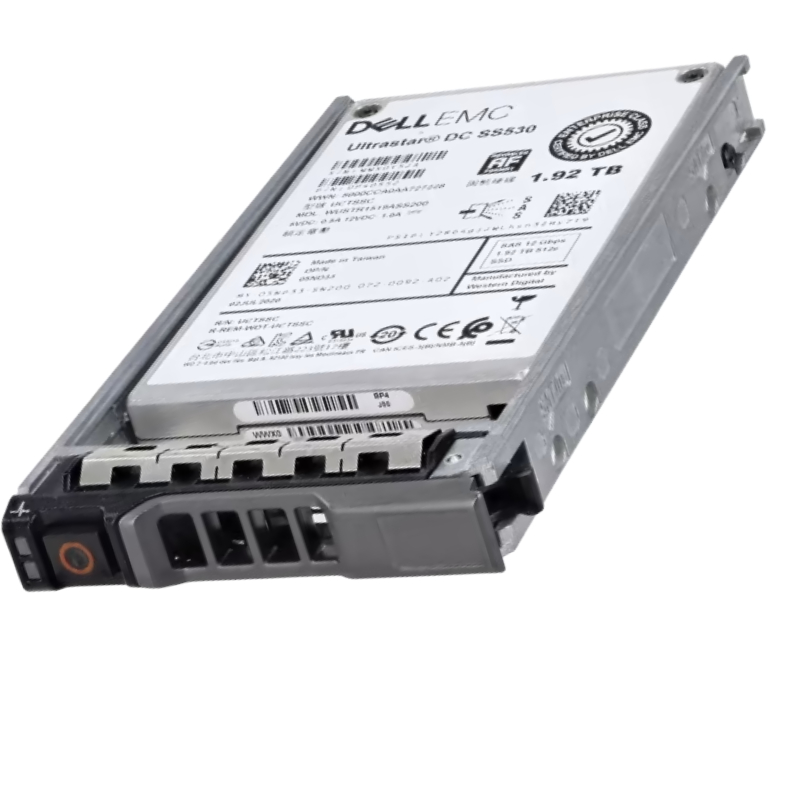


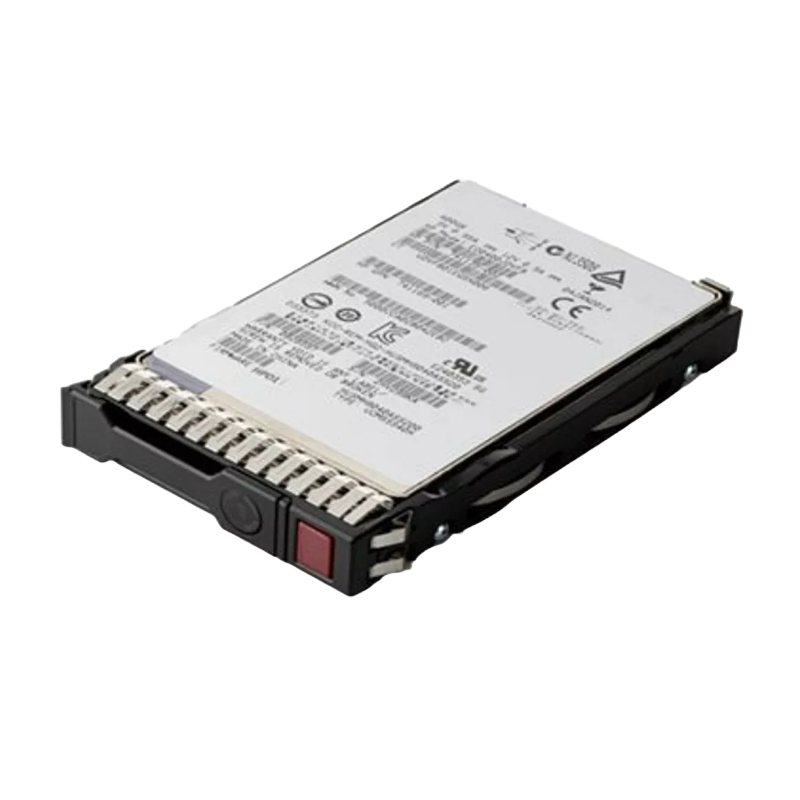
HPE P08694-001 1.92TB SATA 6GBPS Mixed Use Solid State Drive. Excellent Refurbished with 1 year replacement warranty
| SKU/MPN | Warranty | Price | Condition | You save |
|---|---|---|---|---|
| P08694-001 | 1 Year Warranty | $899.00 | New Sealed in Box (NIB) | You save: $314.65 (26%) |
| P08694-001 | 1 Year Warranty | $617.00 | Excellent Refurbished | You save: $215.95 (26%) |
The P08694-001 HPE 1.92TB SATA 6GBPS Mixed Use Solid State Drive (SSD) stands out as a pivotal solution designed to balance performance, endurance, and versatility.
In the realm of enterprise-grade storage technology, the P08694-001 HPE 1.92TB SATA 6GBPS Mixed Use Solid State Drive (SSD) stands out as a pivotal solution designed to balance performance, endurance, and versatility. Mixed use SSDs occupy a critical niche, providing a blend of capabilities suitable for environments requiring a combination of read-intensive and write-intensive workloads. This category of SSDs is engineered to withstand the demands of applications such as virtualization, database operations, email servers, and high-frequency transaction processing, where workload patterns are varied and unpredictable.
Unlike pure read-centric or write-centric SSDs, mixed use drives offer a compromise that delivers reliable endurance without sacrificing the speed necessary to handle diverse enterprise tasks. The P08694-001 model exemplifies this balance, harnessing SATA 6GBPS interface technology and advanced NAND flash memory to deliver consistent throughput and low latency. Its 1.92TB capacity ensures ample storage space for growing datasets, making it an optimal choice for organizations requiring robust, scalable solutions.
At the core of the P08694-001 drive lies sophisticated engineering that merges hardware and firmware enhancements to maximize performance and data integrity. The drive employs a 2.5-inch form factor, a standard dimension that facilitates compatibility with a wide range of servers and storage arrays. Its SATA 6GBPS interface enables high-speed data transfer rates, pushing the limits of traditional spinning disks while maintaining cost-effectiveness.
The choice of triple-level cell (TLC) NAND flash memory technology is pivotal to the drive’s balance of storage density and endurance. TLC NAND stores three bits per cell, which significantly increases capacity compared to single-level cell (SLC) and multi-level cell (MLC) technologies. However, TLC inherently comes with a tradeoff in write endurance and speed. To mitigate these challenges, the P08694-001 SSD incorporates advanced error correction, wear leveling, and optimized firmware algorithms, which are digitally signed to ensure security and reliability.
This drive’s hot-pluggable design further enhances its utility in enterprise environments, allowing technicians to replace or upgrade drives without shutting down systems, thereby reducing downtime. The inclusion of a smart carrier streamlines drive management, simplifying insertion and removal while providing mechanical protection.
Enterprise environments require storage solutions that can sustain heavy workloads without compromising data integrity or operational efficiency. The P08694-001 excels in this regard with a write endurance rating of 5 drive writes per day (DWPD) over its warranty period. This means the drive can reliably write its entire capacity five times daily, an impressive feat for a TLC-based SSD.
Over a 30-day period, this translates to a total write volume of approximately 17,500 terabytes, underlining the drive’s robustness in mixed-use scenarios. This level of endurance makes the P08694-001 suitable for demanding applications such as online transaction processing (OLTP), database management, and virtual desktop infrastructure (VDI), where write-heavy activities are common.
Furthermore, the drive’s firmware is digitally signed, providing an additional layer of protection against unauthorized modifications and ensuring consistent behavior under various operational conditions. This feature is particularly critical in sectors with strict regulatory compliance requirements, such as finance and healthcare.
Performance is a fundamental criterion when selecting an SSD for enterprise use, and the P08694-001 delivers competitive metrics across multiple dimensions. Its maximum sequential read speed of 520 MiB/s and write speed of 495 MiB/s provide swift data access for bulk transfers, backups, and large file operations.
More importantly, the drive shines in handling random input/output operations per second (IOPS), which are crucial for transactional workloads and multitasking environments. With random read IOPS reaching up to 59,000 at a queue depth of 16, and random write IOPS at 52,500 for the same queue depth, this SSD ensures that applications requiring rapid access to numerous small files experience minimal latency.
Maximum random read IOPS peaks at 62,000 with a queue depth of 32, showcasing the drive’s ability to sustain high levels of concurrent requests, a typical scenario in virtualized environments and database systems. Random write IOPS remain stable at 52,500 under a queue depth of 16, affirming consistent performance under mixed read/write loads.
Latency figures further complement these throughput metrics. The drive exhibits an average random read latency of 125 microseconds and a write latency as low as 36 microseconds. Low latency is essential for reducing wait times in latency-sensitive applications such as real-time analytics and interactive web services.
The P08694-001 solid state drive’s 2.5-inch form factor and SATA 6GBPS interface make it widely compatible with an array of servers, storage enclosures, and enterprise-class hardware. The hot-pluggable design facilitates integration into existing systems without the need for extended downtime or complex installation procedures.
Its smart carrier adds mechanical robustness and assists in efficient drive management, making it an ideal choice for data centers that prioritize ease of maintenance and operational uptime. Many HPE server models and storage arrays are optimized to leverage the drive’s capabilities, ensuring that users experience seamless performance enhancements with minimal configuration.
Additionally, the drive supports essential enterprise features such as TRIM, NCQ (Native Command Queuing), and S.M.A.R.T. monitoring. These technologies contribute to improved drive lifespan, error detection, and workload optimization, all of which are crucial in complex IT infrastructures.
Security is a paramount consideration in enterprise storage devices, and the P08694-001 addresses this through its digitally signed firmware. Digitally signed firmware ensures the authenticity and integrity of the software that controls the drive’s operation, preventing malicious tampering and unauthorized updates.
This feature not only protects data integrity but also supports compliance with industry regulations that mandate stringent security controls over storage hardware. Organizations handling sensitive information, such as financial institutions and healthcare providers, benefit from the enhanced security posture offered by this drive.
In addition to firmware integrity, the drive supports standard encryption protocols, although the level of encryption depends on the system implementation. Together, these security mechanisms help maintain confidentiality and guard against data breaches.
The versatility of the P08694-001 SSD makes it suitable for a broad spectrum of applications across various industries. It is particularly effective in mixed workload environments where the demand for both read and write operations fluctuates unpredictably.
In virtualization, for instance, the drive can manage multiple virtual machines running simultaneously, handling intensive input/output demands without degradation in performance. For database servers, the SSD’s balance of speed and endurance ensures fast query responses and reliable transaction processing.
Cloud service providers benefit from the drive’s scalability and endurance, enabling them to offer robust storage options for clients with varying workloads. The SSD’s hot-pluggable design also supports rapid hardware refreshes and upgrades, minimizing service interruptions.
When compared to traditional hard disk drives (HDDs), the P08694-001 mixed use SSD offers significant performance and reliability benefits. SSDs inherently provide faster data access times due to their lack of moving parts, which translates into reduced latency and increased throughput.
Furthermore, the endurance rating of this mixed use SSD ensures sustained performance even under heavy write workloads, a scenario where many lower-endurance SSDs may falter. Its ability to handle 5 DWPD sets it apart from consumer-grade SSDs, which typically offer far less durability.
Compared to other SSD categories, such as read-intensive or write-intensive drives, the mixed use SSD strikes a practical balance for enterprises that cannot afford to specialize their storage for a single type of workload. This flexibility reduces inventory complexity and lowers the total cost of ownership.
In addition to performance and endurance, the P08694-001 SSD is designed with energy efficiency in mind. SSDs generally consume less power than HDDs due to their lack of mechanical components, which translates to reduced cooling requirements and lower operational costs in data centers.
This model continues that trend by incorporating power-saving features that optimize consumption during idle and active states. Efficient power usage contributes to sustainability goals and helps organizations reduce their carbon footprint while maintaining high-performance storage capabilities.


 Contact Us
 Information
 Catalog
 Solid State Drives (SSD)
 Network Switches
 Hard Disk Drives
 HBA & Controllers
 PC & Servers
 PC & Server Memory
 CPU & Processors
 Network Routers
 Power Supplies
 Tape Drives & Libraries
 Network Devices
 Computer & Network Cables