(7% discount is applied at checkout)
Cart is empty
Your go-to destination for cutting-edge server products
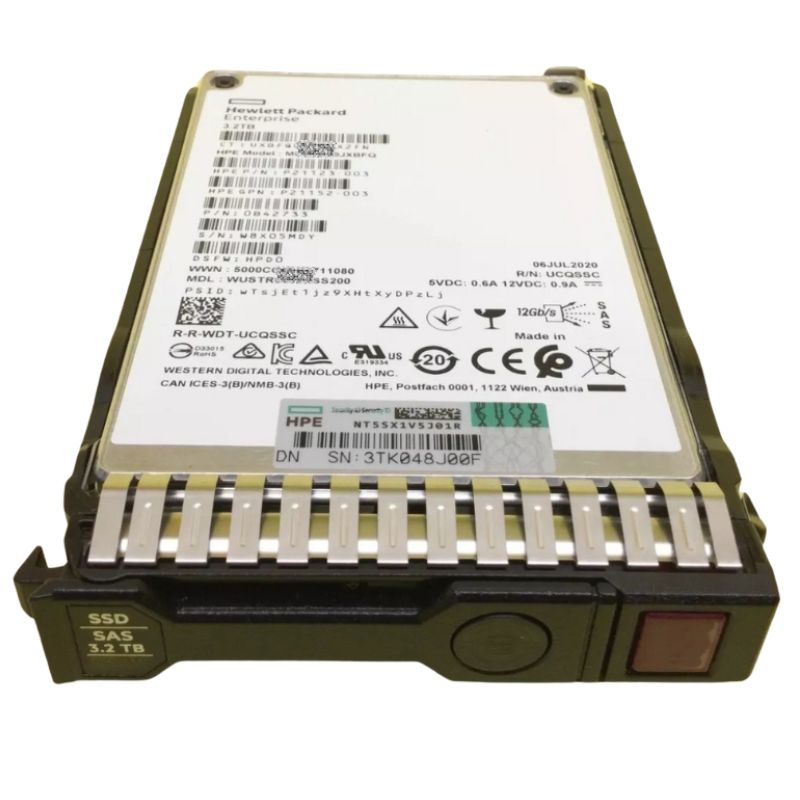


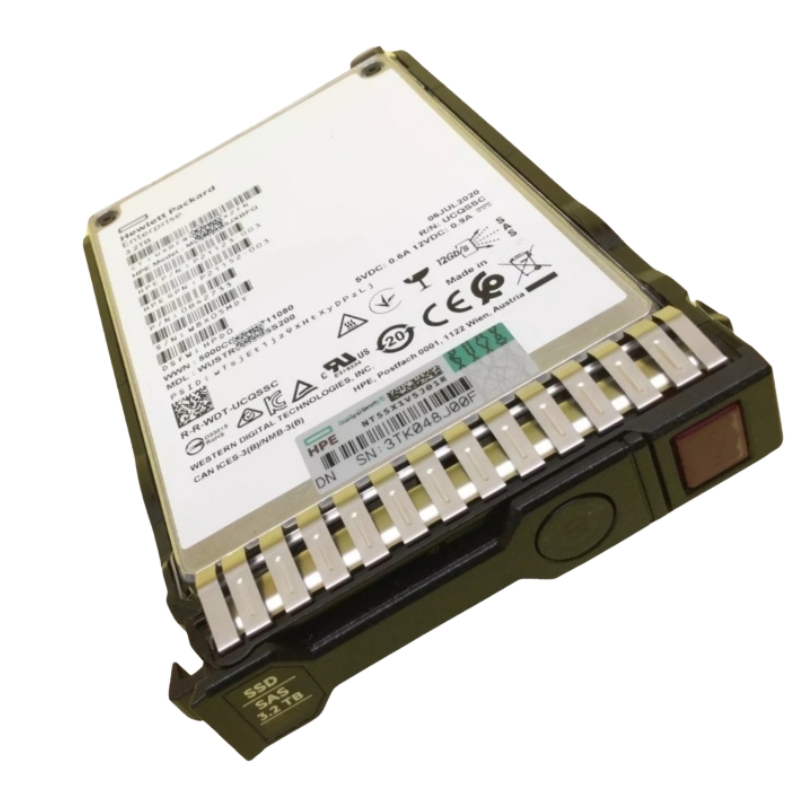
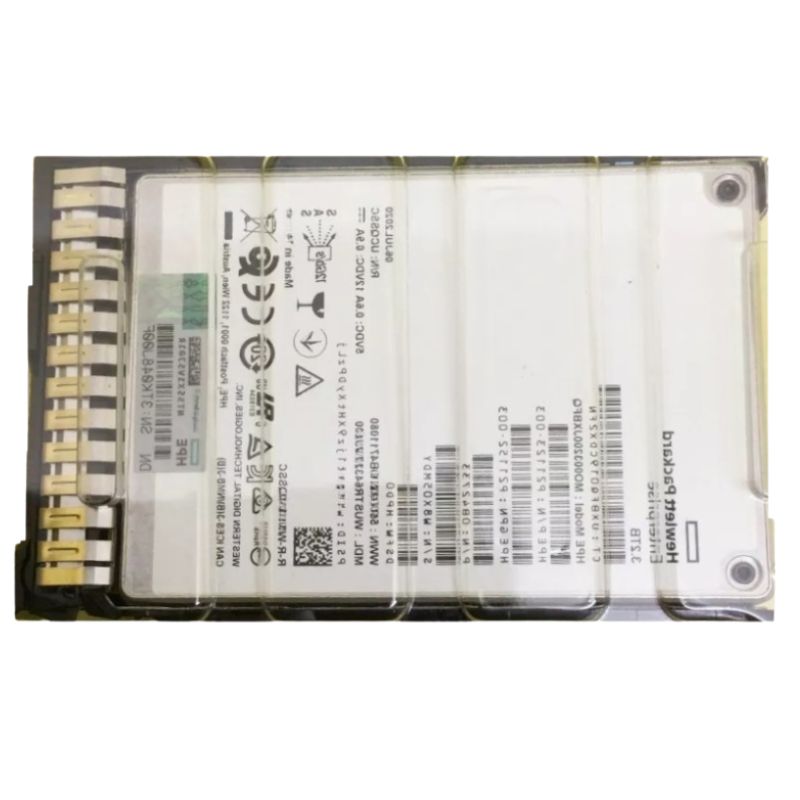
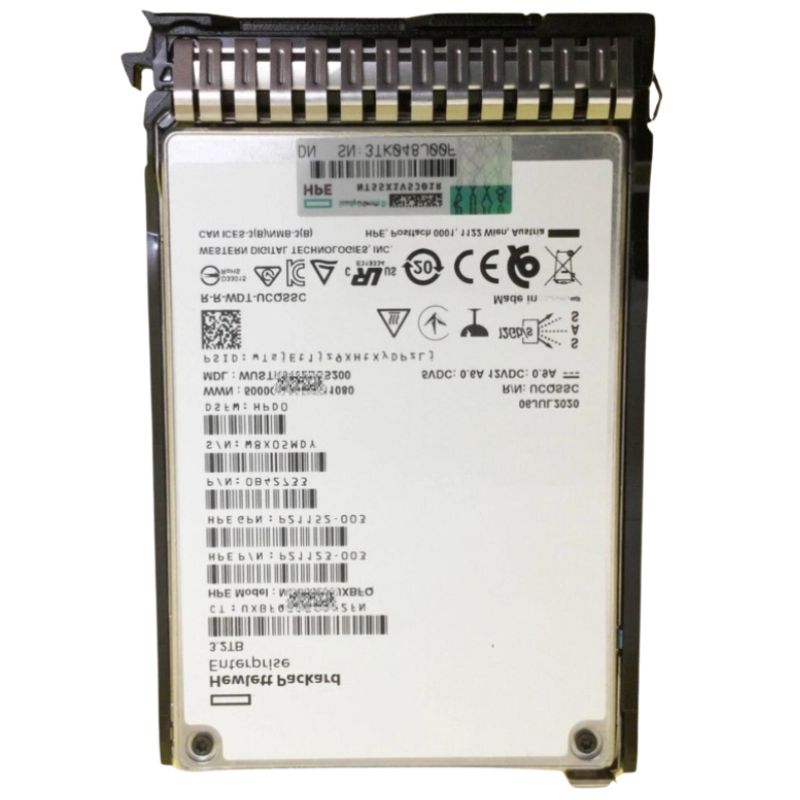
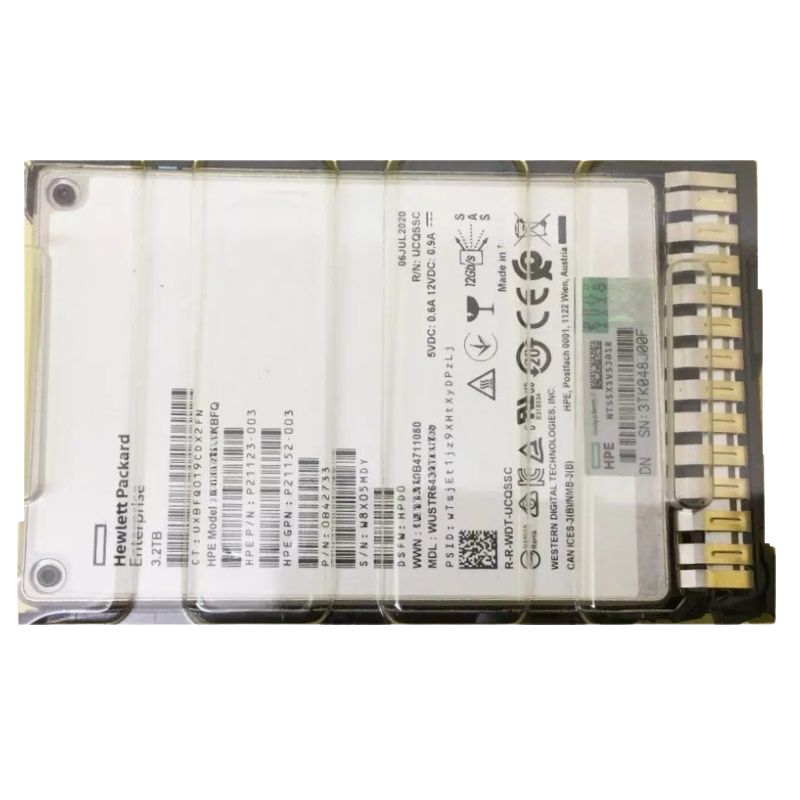
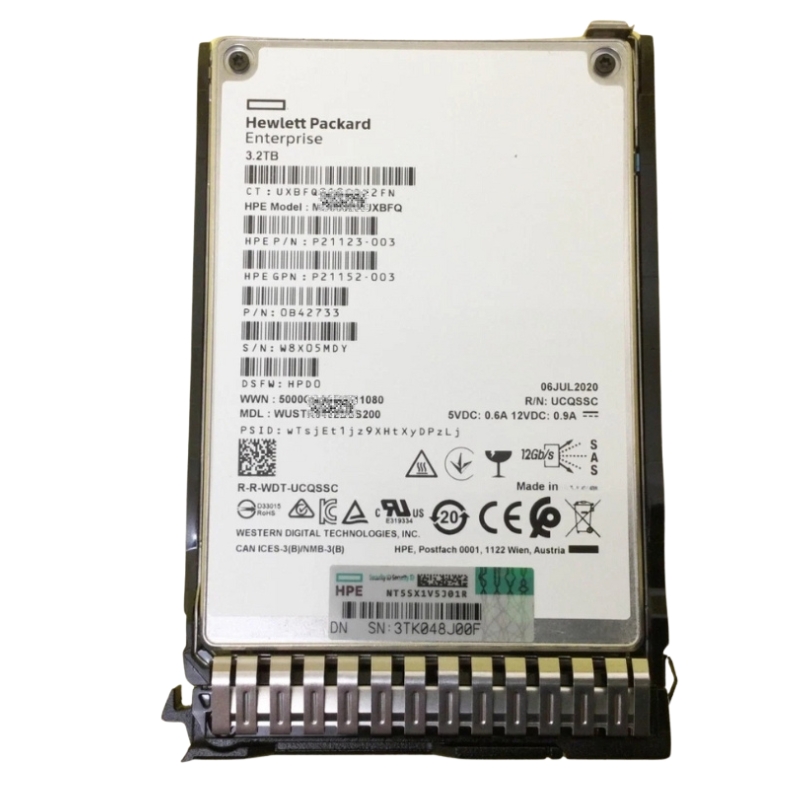
HPE P41560-001 3.2TB SAS-12GBPS BC SFF Mixed Use TLC Hot-Swap Solid State Drive. Excellent Refurbished with 1 year replacement warranty
Discover the HPE P41560-001, a high-performance 3.2TB SAS 12Gbps solid-state drive designed for mixed-use workloads. Equipped with hot-swappable capabilities and dual-port connectivity, this SSD delivers reliable storage performance for enterprise environments.
This HPE SSD is compatible with a wide range of HPE ProLiant servers and HPE SimpliVity nodes, including:
The HPE P41560-001 represents the pinnacle of enterprise storage technology, specifically engineered for demanding data center environments where consistent performance, reliability, and endurance are non-negotiable. As a Mixed Use SAS SSD, this drive occupies a critical position between read-intensive and write-intensive workloads, delivering balanced performance for diverse enterprise applications. With its substantial 3.2TB capacity and cutting-edge TLC NAND architecture, this drive provides organizations with the storage foundation necessary to support business-critical operations while maintaining exceptional I/O consistency and data integrity.
Mixed Use SSDs constitute a specialized category of solid-state storage designed to handle balanced workloads containing both read and write operations. Unlike read-optimized drives that prioritize sequential read performance or write-optimized drives that emphasize write endurance, Mixed Use SSDs like the P41560-001 deliver consistent performance across varied operational patterns. This makes them ideally suited for applications where the ratio of reads to writes fluctuates significantly or remains relatively balanced, such as database operations, virtualization environments, and consolidated server workloads.
Mixed Use SSDs excel in environments with read/write ratios typically ranging from 40/60 to 60/40, though the HPE P41560-001 maintains robust performance even outside these parameters. The drive's sophisticated wear-leveling algorithms and over-provisioning strategies ensure that neither read nor write operations disproportionately impact overall performance or longevity. This balanced approach eliminates the need for organizations to precisely predict workload patterns or maintain separate storage pools for different I/O types, simplifying infrastructure planning and reducing total cost of ownership.
The HPE P41560-001 utilizes the industry-standard SFF (Small Form Factor) 2.5-inch design, making it compatible with the vast majority of enterprise server and storage enclosures. Measuring 100.2mm x 69.85mm x 15mm, this drive conforms to the 2.5-inch specification while providing an impressive 3.2TB of storage capacity. The compact form factor enables high storage density in constrained rack space, allowing organizations to maximize terabyte-per-U ratios in dense server configurations.
Featuring hot-swap capability, the P41560-001 can be safely removed and replaced while the host system remains operational. This critical feature eliminates downtime associated with storage maintenance or replacement, supporting the high availability requirements of modern data centers. The hot-swap design incorporates staggered power and data connectors that ensure proper sequencing during insertion and removal, preventing electrical damage and maintaining system stability during drive transitions.
The Serial Attached SCSI (SAS) 12Gbps interface represents the current generation of SAS technology, delivering significant performance advantages over previous 6Gbps implementations and SATA alternatives. With a full-duplex architecture that enables simultaneous bidirectional data transfer, the SAS interface effectively provides 12Gbps in both directions concurrently. This dual-port capability ensures continuous data availability even in the event of controller failure, making it essential for mission-critical applications where downtime is not an option.
When compared to SATA III's 6Gbps half-duplex interface, the SAS 12Gbps dual-port full-duplex architecture of the P41560-001 delivers substantially higher throughput and superior queue management. The SAS protocol supports deeper command queues (up to 256 commands per port versus SATA's 32 commands) and features enhanced error recovery capabilities that maintain data integrity even in complex multi-drive configurations. These characteristics make SAS the preferred interface for performance-sensitive enterprise environments.
The HPE P41560-001 utilizes Triple-Level Cell (TLC) NAND flash memory, storing three bits of data per memory cell. While historically associated with consumer-grade storage, advancements in TLC technology, coupled with sophisticated controller algorithms and enterprise-grade wear leveling, have enabled TLC NAND to deliver enterprise-class endurance and performance at a more attractive cost point than Single-Level Cell (SLC) or Multi-Level Cell (MLC) alternatives. The drive's architecture includes significant over-provisioning and advanced error correction to maintain TLC reliability in demanding 24/7 operation.
While consumer TLC SSDs prioritize cost reduction, enterprise implementations like the P41560-001 incorporate numerous enhancements to ensure reliability and endurance. These include significantly higher over-provisioning (reserving a larger percentage of NAND for wear leveling and garbage collection), advanced write amplification reduction techniques, power-loss protection circuits, and thermally adaptive performance management. These enterprise features transform TLC technology from a consumer-grade solution to a enterprise-worthy storage medium capable of handling rigorous mixed workloads.
The HPE P41560-001 delivers exceptional and consistent input/output operations per second (IOPS) across both read and write operations, with typical enterprise mixed workloads achieving performance metrics that surpass traditional hard drives by orders of magnitude. The drive maintains consistent low latency even under heavy queue depths, ensuring responsive application performance during peak demand periods. With throughput capabilities that fully utilize the 12Gbps SAS interface, the P41560-001 eliminates storage bottlenecks in I/O-intensive environments.
Enterprise environments demand not just high performance but predictable performance. The P41560-001 incorporates advanced Quality of Service (QoS) features that maintain consistent response times even during heavy workload conditions. Through sophisticated garbage collection algorithms, background operations management, and thermal throttling controls, the drive minimizes performance variance, ensuring that applications receive the I/O resources they need when they need them. This consistency is critical for meeting service level agreements in multi-tenant environments.
As a Mixed Use drive, the P41560-001 is engineered for substantial write endurance, typically expressed in Drive Writes Per Day (DWPD) over the warranty period. The drive's sophisticated flash management techniques, including advanced wear leveling, bad block management, and write amplification reduction, ensure optimal NAND longevity. By distributing write operations evenly across all available memory cells and minimizing unnecessary writes, the controller significantly extends the drive's operational lifespan beyond basic specifications.
The DWPD rating specifies how many times the entire drive capacity can be written to per day over the warranty period while maintaining data integrity. For Mixed Use drives like the P41560-001, this rating typically falls between read-intensive and write-intensive specifications, representing a balance suited for general enterprise applications. This endurance metric provides organizations with a practical framework for estimating drive longevity based on their specific workload characteristics and provisioning strategies.
The dual-port SAS implementation in the P41560-001 represents a critical high-availability feature absent from SATA-based solutions. This architecture provides two independent pathways to the storage media, allowing redundant host connections that maintain data accessibility even if one path fails. In multipath storage configurations, this enables transparent failover between host bus adapters or RAID controllers without service interruption, a fundamental requirement for mission-critical applications requiring five-nines (99.999%) or greater availability.
In practical implementation, the dual-port capability enables sophisticated multipath I/O configurations where two separate host systems or controllers can access the same drive simultaneously. This architecture supports active-active, active-passive, and other redundancy configurations that ensure continuous operation during component failure, maintenance events, or system upgrades. The P41560-001 fully complies with T10 SAS standards for multipath operation, ensuring compatibility with enterprise storage stacks from major vendors.
The HPE P41560-001 incorporates digitally signed firmware, a critical security feature that prevents unauthorized firmware modifications that could compromise drive operation, performance, or data security. Before loading any firmware update, the drive controller cryptographically verifies the digital signature against HPE's secure certificate, ensuring that only authentic, vendor-approved firmware is installed. This protection mechanism safeguards against malware, firmware exploits, and unauthorized feature modifications that could impact system stability or data integrity.
During the boot process and before applying any firmware update, the drive's secure boot mechanism validates the cryptographic signature of the firmware image against certificates embedded in the hardware. This verification process ensures that the firmware has not been tampered with, modified, or replaced with unauthorized code. If the verification fails, the drive will reject the firmware and maintain operation with the previously validated version, preventing potential compromise while maintaining system availability.
Enterprise environments demand protection against data corruption during unexpected power loss events. The P41560-001 incorporates comprehensive power loss protection circuits that provide sufficient hold-up time to complete in-progress write operations and commit data from volatile buffers to non-volatile storage. This capability, combined with end-to-end data path protection, ensures data integrity is maintained even during unplanned power interruptions, preventing data corruption and maintaining filesystem consistency.
Beyond basic power loss protection, the drive implements T10 Protection Information (T10 PI) standards, which add metadata to each sector to verify data integrity throughout the storage stack. This protection mechanism detects and corrects data corruption that might occur during transmission between the host and drive or within the drive's internal data paths. Combined with advanced error correction codes (ECC) for the NAND flash itself, these features provide comprehensive data protection from the application to the physical storage media.
The HPE P41560-001 excels in virtualized environments where multiple virtual machines generate diverse and unpredictable I/O patterns. In hyper-converged infrastructure, virtual desktop infrastructure (VDI), and private cloud deployments, the drive's mixed-use characteristics deliver consistent performance for boot storms, application workloads, and storage operations simultaneously. The high IOPS capability enables higher virtual machine density per host, while the consistent low latency ensures responsive user experiences even during peak utilization.
When planning virtualized infrastructure, storage performance often becomes the limiting factor for VM density. The P41560-001's balanced read/write performance and high queue depth capability enable administrators to deploy more virtual machines per host without storage contention issues. For VDI implementations in particular, the drive efficiently handles the boot storm phenomenon where hundreds of virtual desktops simultaneously power on and generate intensive read operations followed by sustained mixed workload during normal operation.
Database management systems, both relational and NoSQL, generate some of the most demanding mixed workloads in enterprise IT. The P41560-001 delivers the consistent low-latency performance required for OLTP (Online Transaction Processing) systems, where rapid response times directly impact business operations and user satisfaction. The drive's ability to maintain performance during both small random I/O (typical of database transactions) and larger sequential operations (common in reporting and analytics) makes it well-suited for consolidated database environments.
In traditional database architecture, transaction logs require write-optimized storage while data files benefit from read-optimized characteristics. The balanced nature of the P41560-001 makes it suitable for both workload types, simplifying storage provisioning for database applications. For smaller database instances or consolidated environments, a single storage tier using these Mixed Use drives can effectively handle both data and log volumes while maintaining performance service levels.
High-performance computing (HPC) workloads and big data analytics platforms generate intensive mixed I/O patterns as they process large datasets, create intermediate results, and output analytical findings. The P41560-001's high throughput capabilities support the data ingestion and processing requirements of these environments, while its consistent latency profile ensures predictable job completion times. In scale-out storage architectures, multiple drives can be configured to work in parallel, delivering aggregate performance that meets the most demanding computational requirements.
Modern analytics platforms often employ data lake architectures where storage must accommodate diverse access patterns—from large sequential scans during data processing to random reads during query execution. The Mixed Use characteristics of the P41560-001 make it well-suited for these varying demands, providing a balanced performance profile that adapts to different phases of analytical workflows without requiring data movement between storage tiers.
The P41560-001 is engineered specifically for HPE server and storage infrastructure, ensuring optimal performance and management integration across the HPE portfolio. The drive is qualified and certified for use in HPE ProLiant, Apollo, and Synergy servers, as well as HPE StoreOnce, 3PAR, and Nimble Storage systems. This comprehensive compatibility ensures that organizations can deploy the drive with confidence across their HPE infrastructure, supported by HPE's integrated management tools and support services.
When deployed in compatible HPE servers, the P41560-001 integrates fully with HPE Smart Storage Administrator (SSA), providing comprehensive management capabilities including health monitoring, firmware updates, and configuration options. This integration enables administrators to monitor drive health, predict potential failures through smart analytics, and maintain firmware compliance across the storage infrastructure through centralized management interfaces.
While optimized for HPE environments, the P41560-001 maintains standards compliance that ensures interoperability with third-party SAS-compatible systems. The drive adheres to SCSI Block Commands, SCSI Architecture Model, and Serial Attached SCSI standards that guarantee basic functionality in non-HPE enclosures. However, for optimal performance and feature availability, HPE recommends deployment in qualified HPE systems where the drive's full capabilities can be leveraged through vendor-specific enhancements and management integration.
The drive maintains backward compatibility with 6Gbps and 3Gbps SAS infrastructures, automatically negotiating to the highest mutually supported speed. This ensures seamless integration into existing SAS environments while providing a migration path to higher performance as infrastructure is upgraded. The dual-port functionality operates according to SAS-3 standards, ensuring compatibility with SAS expanders, controllers, and enclosures from major storage vendors.


 Contact Us
 Information
 Catalog
 Solid State Drives (SSD)
 Network Switches
 Hard Disk Drives
 HBA & Controllers
 PC & Servers
 PC & Server Memory
 CPU & Processors
 Network Routers
 Power Supplies
 Tape Drives & Libraries
 Network Devices
 Computer & Network Cables