(7% discount is applied at checkout)
Cart is empty
Your go-to destination for cutting-edge server products
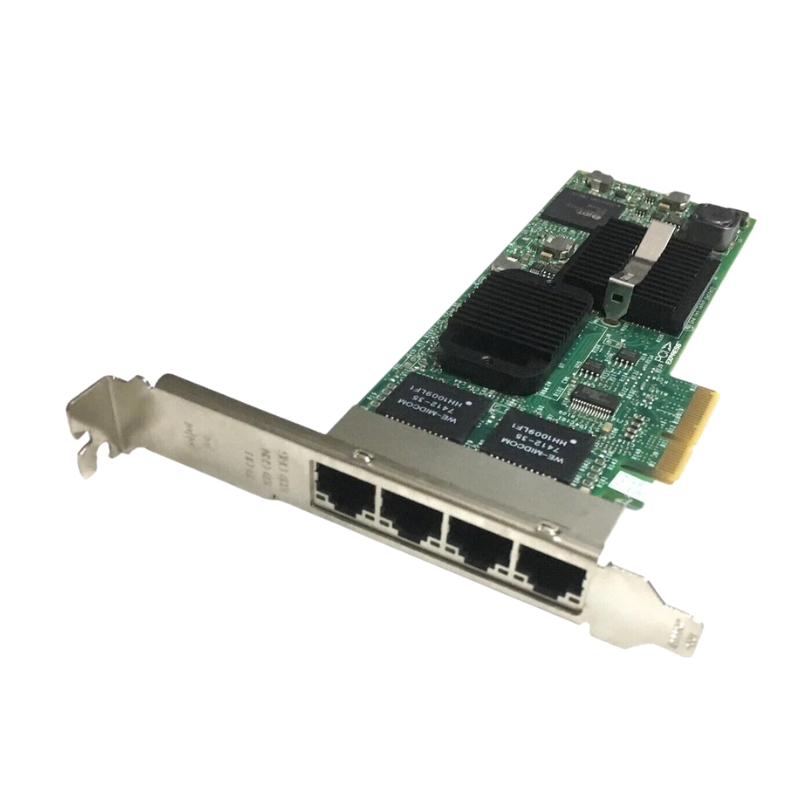


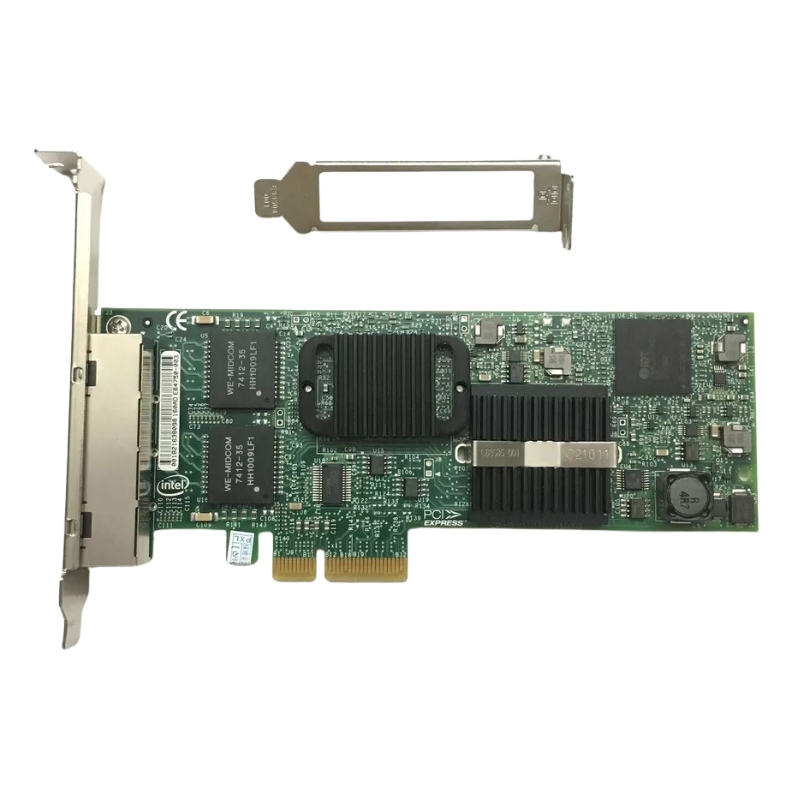
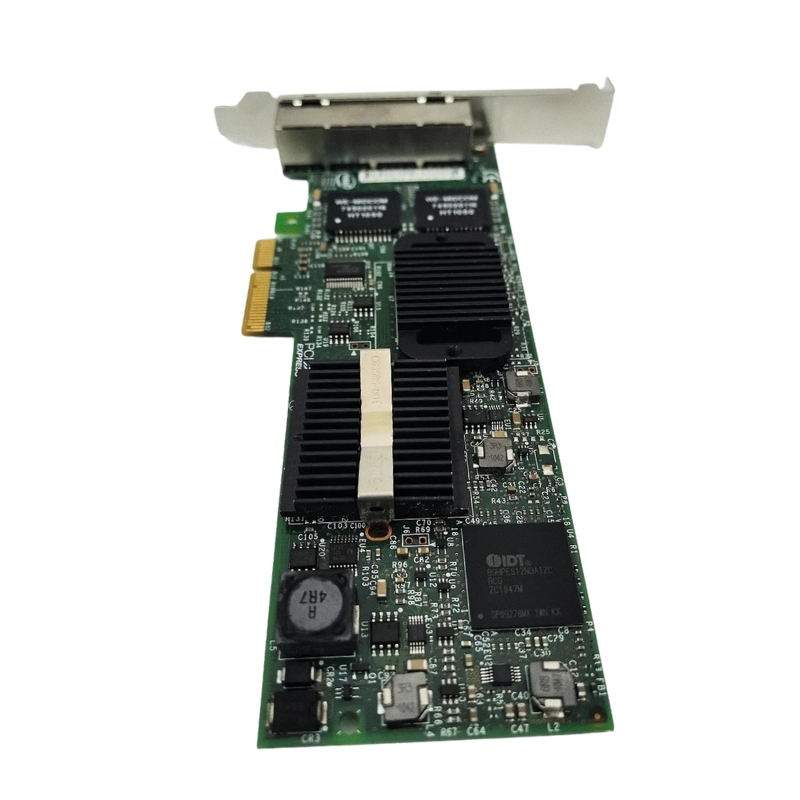
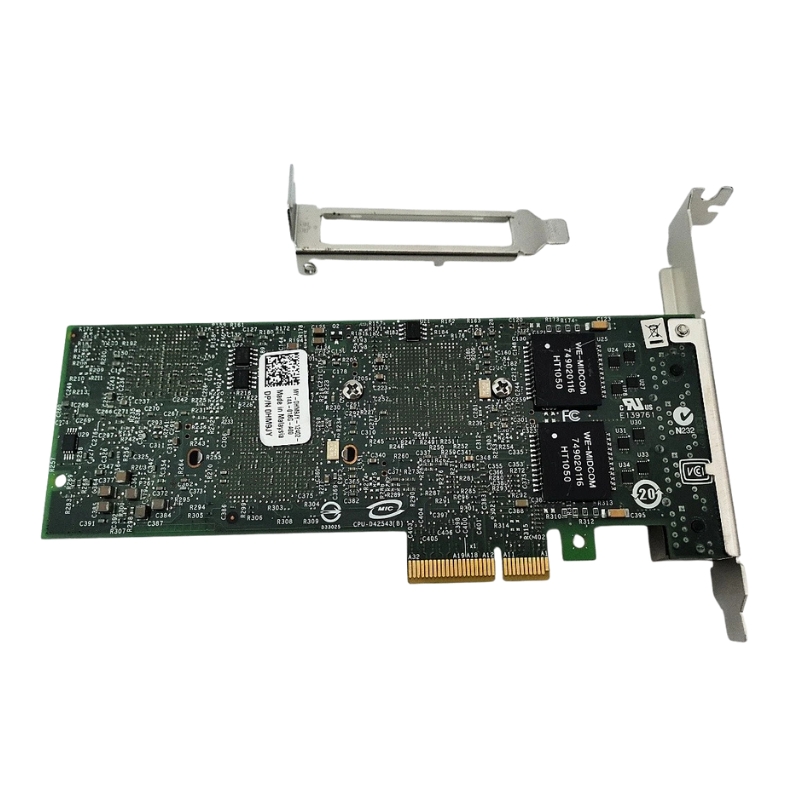
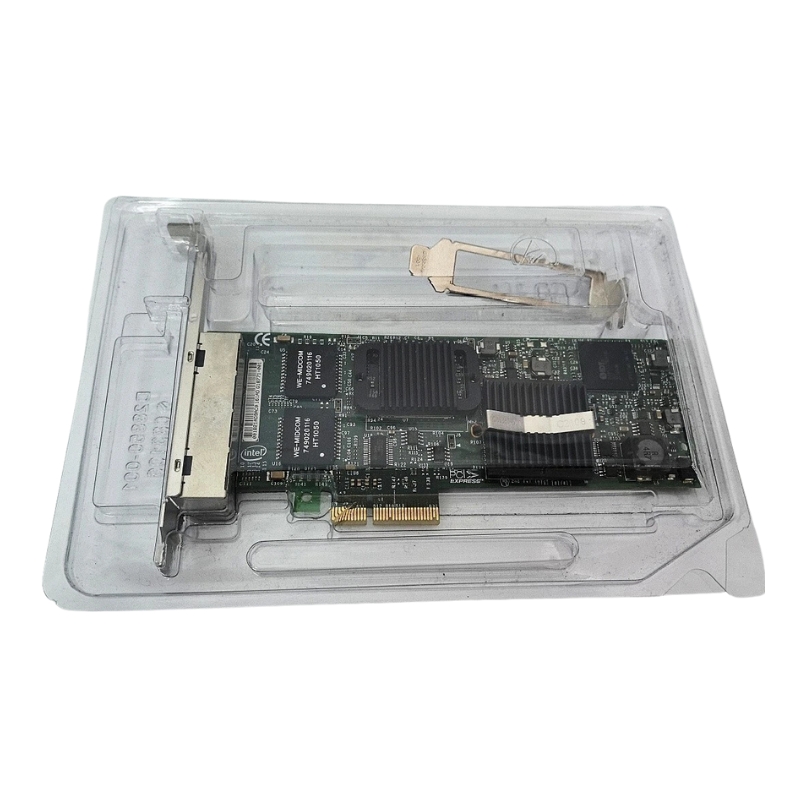
Intel E1G44ET Quad Port Gigabit ET PCI Express Server Network Interface Adapter. Excellent Refurbished with 1 year replacement warranty - Dell Version
The Intel E1G44ET is a quad-port Gigabit Ethernet server network adapter built for dependable wired connectivity in demanding server and enterprise environments. Designed as a low-profile PCI Express card, this adapter delivers four RJ-45 Gigabit Ethernet ports for stable high-speed networking across virtualization platforms, application servers, storage traffic, and business-critical infrastructure. Powered by the Intel 82576 controller, the Intel E1G44ET combines consistent throughput, advanced traffic handling, and broad operating environment support, making it a practical choice for organizations that need scalable copper-based network expansion without sacrificing reliability or manageability.
The Intel E1G44ET Quad Port Gigabit ET PCI Express Server Network Interface Adapter is built for server environments that require dependable wired connectivity, consistent data delivery, efficient traffic handling, and flexible multi-port network expansion. As a quad-port Gigabit Ethernet adapter designed for PCI Express server platforms, this category is widely associated with rack servers, virtualization hosts, network appliances, storage platforms, branch infrastructure, application servers, and dedicated systems that need multiple copper Ethernet interfaces from a single adapter. In enterprise infrastructure, a server network interface card is far more than a simple connectivity component. It acts as a strategic layer between processing resources, operating systems, virtualization platforms, switching environments, and business applications that depend on uninterrupted network communication.
In practical deployment scenarios, the Intel E1G44ET is used in environments where administrators need to consolidate multiple network links into a single low-profile or standard server-ready adapter while preserving flexibility for segmentation, redundancy, throughput distribution, and secure traffic separation. The four-port design gives infrastructure teams more control over traffic engineering. Instead of relying on a single Ethernet path, organizations can assign separate interfaces for production traffic, management traffic, storage communication, virtual machine networking, firewall zoning, replication paths, or dedicated application streams. This ability to divide workloads across multiple physical interfaces makes the category highly valuable for small business servers, mid-sized enterprise platforms, colocation deployments, edge appliances, and lab environments that require reliable Gigabit copper networking.
The broader category of Intel quad-port Gigabit server adapters remains relevant because many business environments continue to operate critical applications on 1GbE infrastructure. Although faster networking technologies exist, Gigabit Ethernet remains practical for countless workloads including branch server communication, remote office connectivity, print and file services, monitoring systems, firewall appliances, VoIP support, moderate virtualization, and general-purpose business networking. The Intel E1G44ET fits into this space by delivering multiple RJ45-based Ethernet ports, server-focused driver support, compatibility with common network standards, and features designed to improve reliability and traffic distribution in demanding environments.
The Intel E1G44ET belongs to a class of server adapters built to support persistent Ethernet connectivity in systems that perform business-critical roles. These roles may include application hosting, domain services, backup operations, web hosting, unified communications, virtual machine hosting, network security, and branch service delivery. In many of these use cases, network continuity matters as much as raw speed. The adapter’s quad-port design allows administrators to separate or aggregate traffic paths based on policy and operational requirements. One port can be dedicated to management, another to production data, another to backup traffic, and another to failover or security segmentation. This makes the adapter category useful for structured network design rather than simple desktop-style connectivity.
Its value is especially visible in compact servers and network appliances where expansion space is limited. A single Intel E1G44ET card can replace several single-port adapters and can reduce slot pressure inside servers that must also accommodate storage controllers, accelerator cards, or additional expansion modules. The category is therefore attractive to IT teams that want to extend the networking flexibility of an existing server platform without a major hardware redesign.
One of the defining characteristics of the Intel E1G44ET category is its quad-port architecture. Four independent Gigabit Ethernet interfaces on one adapter provide practical benefits in environments where different traffic classes must remain logically or physically separated. A multi-port server adapter is not simply about attaching four cables; it is about enabling network design choices that support performance management, operational control, and infrastructure resilience.
In a business server, network segmentation may be used to isolate backup traffic from user-facing application traffic, keep hypervisor management separate from virtual machine workloads, separate security appliance interfaces into WAN and LAN zones, or create dedicated paths for storage access and monitoring. The Intel E1G44ET adapter category supports these types of deployments by providing multiple copper interfaces that can be independently configured by the operating system or hypervisor.
For example, a virtualization host might use one port for host management, one for production VM traffic, one for live migration or backup operations, and one for storage access or standby failover. A firewall appliance might map individual ports to WAN, LAN, DMZ, and management functions. A branch server could use separate interfaces for internal users, voice systems, surveillance traffic, and replication to headquarters. These design patterns illustrate why quad-port Gigabit NICs continue to be valuable even in environments that are not extremely bandwidth intensive.
Multiple physical ports provide several operational advantages. First, they allow traffic isolation at the physical interface level, which can simplify policy enforcement and troubleshooting. Second, they support redundancy planning because administrators can maintain spare links or active-passive failover configurations. Third, they help reduce dependency on a single network path, which is particularly useful in business continuity planning. Fourth, they enable link aggregation or load-distribution strategies in compatible environments, allowing multiple ports to work together for resilience or bandwidth scaling. Finally, a quad-port design reduces the number of separate hardware components needed to achieve these outcomes.
The category also aligns well with copper Ethernet environments because RJ45-based networking remains common in offices, branch facilities, server rooms, and mixed-use business networks. Organizations can deploy the Intel E1G44ET into existing Cat5e or similar copper cabling ecosystems without redesigning the physical network around fiber transceivers or specialized modules. This preserves infrastructure compatibility while adding server-side flexibility.
The Intel E1G44ET is associated with PCI Express server connectivity, which is an important part of its practical value. PCI Express provides a dedicated path between the adapter and the host system, helping ensure that network operations are not constrained by older shared-bus limitations common in legacy platforms. In server environments, the relationship between the NIC and the system bus affects throughput consistency, interrupt handling, latency characteristics, and overall responsiveness during sustained network workloads.
A PCI Express-based network adapter is especially important when a server must manage traffic across four active Ethernet ports. Even if each port operates at Gigabit speeds rather than multi-gigabit rates, the aggregate workload can still be substantial when the server is handling virtualization traffic, backup flows, management sessions, storage communications, and user access simultaneously. The Intel E1G44ET category is designed to fit into this server context by offering a PCIe-based platform for reliable network expansion.
From an infrastructure planning perspective, PCIe quad-port NICs also make server upgrades more efficient. Many organizations keep servers in service for several years, and not every deployment justifies replacing the entire platform to obtain more network interfaces. A quad-port adapter offers a targeted upgrade path. Rather than changing the motherboard or moving workloads to a different system, administrators can add or expand connectivity through a single expansion card. This is especially useful for older but still capable server hardware that needs more interfaces for virtualization, routing, firewalling, or traffic isolation.
Server space optimization is another advantage of the Intel E1G44ET category. In rack environments, dense infrastructure planning often requires balancing storage, compute, cooling, and expansion resources. A quad-port adapter reduces the need to occupy multiple expansion slots for network growth. In edge systems or short-depth appliances, low-profile compatibility can also be important because physical space is constrained. The ability to deliver four Ethernet interfaces from one PCI Express card supports efficient system design in branch offices, telecommunications cabinets, retail server rooms, industrial sites, and compact security appliances.
Although 10GbE, 25GbE, and faster standards have become common in large-scale data centers, Gigabit Ethernet remains highly relevant in a wide range of business environments. The Intel E1G44ET category addresses organizations that continue to depend on stable 1GbE connectivity for everyday workloads, server access, infrastructure services, edge computing, and branch operations. For many applications, the balance of cost, compatibility, cabling simplicity, and sufficient bandwidth still makes Gigabit Ethernet the practical choice.
Typical use cases include directory services, DNS, DHCP, print services, local database access, file sharing, web application hosting, monitoring tools, surveillance recording, backup coordination, VPN endpoints, and moderate virtualization. In these environments, a reliable quad-port Gigabit NIC can be more useful than a single high-speed port because it offers flexibility in how traffic is divided and protected. The adapter category supports the operational reality that many infrastructures are mixed, with some high-speed core links and many Gigabit server-facing or branch-facing connections.
Gigabit Ethernet also remains attractive in situations where switching infrastructure has not yet been upgraded to multi-gigabit or where the economics of copper 1GbE are still favorable. The Intel E1G44ET fits into such environments by offering multi-port copper connectivity with enterprise-oriented features, allowing organizations to extend the useful life of their network architecture while maintaining professional-grade server networking standards.
The Intel E1G44ET category is closely associated with Intel server networking technologies built around proven Ethernet controller design principles. In server environments, controller quality matters because the NIC is responsible for more than electrical signaling and packet transfer. It also interacts with operating system drivers, interrupt handling, checksum operations, virtualization frameworks, offload capabilities, queue management, and link-state monitoring. Enterprise administrators typically favor server-grade Intel networking products because they have a long history in data center, virtualization, firewall, and appliance environments.
Adapters in this class are commonly associated with support for features such as flow control, VLAN tagging, fault tolerance options, load distribution strategies, IPv6 networking readiness, and virtualization-oriented traffic management capabilities. These functions matter because they influence how well the adapter integrates into structured business networks. A server NIC should not only connect to the network; it should also participate efficiently in managed switching, segmented VLAN environments, virtualized workloads, and resilient multi-link designs.
When evaluating the category, buyers often look for support for standard Ethernet protocols, predictable driver behavior, and broad compatibility with enterprise operating systems. The Intel E1G44ET is attractive in part because it is part of a recognized family of Intel server adapters rather than a generic consumer networking card repurposed for server use. This distinction matters in environments where uptime, supportability, and consistent driver performance are essential.
One of the most important reasons organizations choose a quad-port server adapter is virtualization. Hypervisors and virtual machine hosts often require multiple physical interfaces to support different classes of traffic and to provide better control over bandwidth, security, and management. The Intel E1G44ET category is particularly relevant in these scenarios because a single PCIe card can expose four separate Ethernet interfaces to the host, making it easier to design a structured virtualization network layout.
In a small virtualization cluster or standalone host, administrators may assign one port to hypervisor management, one to guest virtual machine traffic, one to storage or backup traffic, and one to replication or migration services. Even where VLANs are used, having multiple physical interfaces remains valuable because it allows certain traffic classes to remain physically separated or attached to different switches. This can improve resilience, simplify troubleshooting, and help enforce design boundaries.
Virtualization hosts often serve multiple applications simultaneously. One VM may run a database, another may act as a file server, another may host line-of-business software, and another may function as a firewall or monitoring node. In such environments, the physical NIC layout directly affects how traffic is mapped and controlled. The Intel E1G44ET category offers flexibility for building cost-effective virtualization systems where 1GbE is sufficient and port count is more strategically important than maximum per-port speed.
One of the strongest arguments for the Intel E1G44ET category is its usefulness in extending the life and capability of existing servers. Businesses often retain servers that remain computationally capable but need additional network interfaces to accommodate new roles. A file server may be repurposed as a virtualization host. A domain server may need dedicated backup connectivity. A branch appliance may be converted into a firewall, VPN gateway, or monitoring platform. In each case, network interface expansion is often more economical than a full hardware refresh.
A quad-port server adapter provides a direct path to that expansion. Instead of retiring otherwise functional hardware, administrators can add multi-port Ethernet capacity through a PCIe slot. This improves return on infrastructure investment and allows organizations to align spending with actual workload requirements rather than replacing equipment simply to gain more interfaces. The Intel E1G44ET category is especially relevant in cost-conscious IT environments where reliable Gigabit Ethernet remains sufficient and where hardware reuse is part of long-term operational planning.
This also makes the category attractive in test labs, education environments, temporary deployments, and disaster recovery preparations. Spare servers can be upgraded with quad-port adapters and repurposed for emergency services, backup routing, network monitoring, or virtualization tasks. The adapter becomes part of a modular approach to infrastructure growth, where compute, storage, and networking are incrementally improved rather than replaced all at once.
The Intel E1G44ET category is built around RJ45 copper Ethernet connectivity, which remains a significant practical advantage for many organizations. Copper cabling is widely deployed, inexpensive to work with, familiar to technicians, and compatible with the majority of office and branch switching environments. In situations where a server needs four independent network connections, using a quad-port copper adapter can be much simpler than deploying fiber modules, media converters, or specialized cabling ecosystems.
Because the adapter integrates into existing copper networks, deployment timelines can be shorter and infrastructure changes can be minimized. Technicians can install the card, connect it to nearby switches using standard Ethernet patch cables, and immediately begin assigning interface roles in the operating system or hypervisor. This is especially valuable in field offices, healthcare clinics, schools, retail sites, and warehouse environments where standardized copper cabling already exists throughout the facility.
Copper Ethernet also remains practical for short to medium in-room server distances, branch switch uplinks, management interfaces, and low-complexity installations. The Intel E1G44ET category benefits from this widespread compatibility because it does not require specialized optics procurement or transceiver inventory for basic deployment. That lowers the barrier to adoption for businesses that want enterprise-style multi-port server networking without the added complexity of fiber management.


 Contact Us
 Information
 Catalog
 Solid State Drives (SSD)
 Network Switches
 Hard Disk Drives
 HBA & Controllers
 PC & Servers
 PC & Server Memory
 CPU & Processors
 Network Routers
 Power Supplies
 Tape Drives & Libraries
 Network Devices
 Computer & Network Cables