(7% discount is applied at checkout)
Cart is empty
Your go-to destination for cutting-edge server products
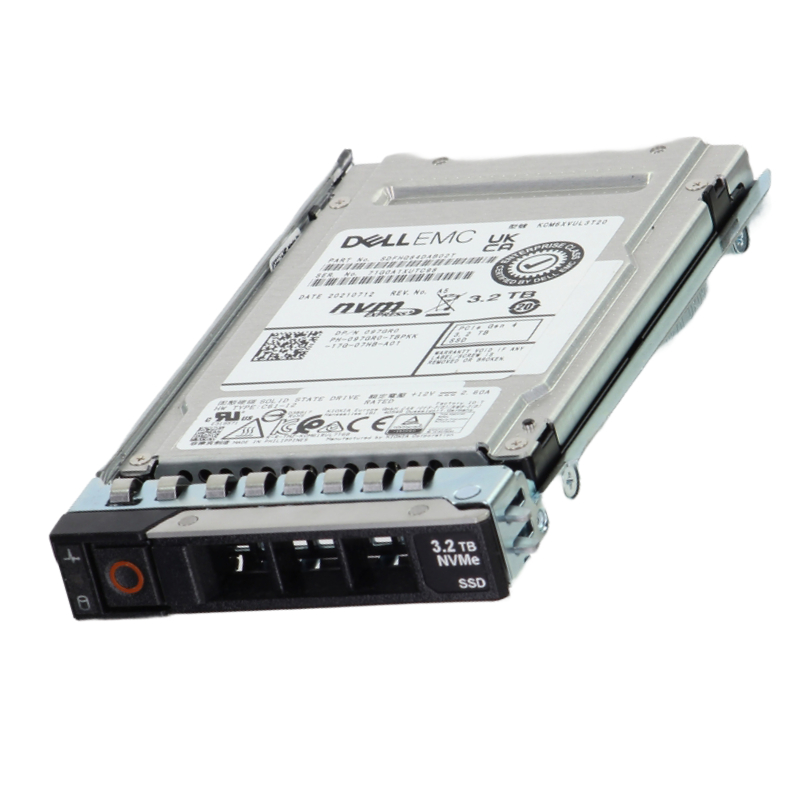


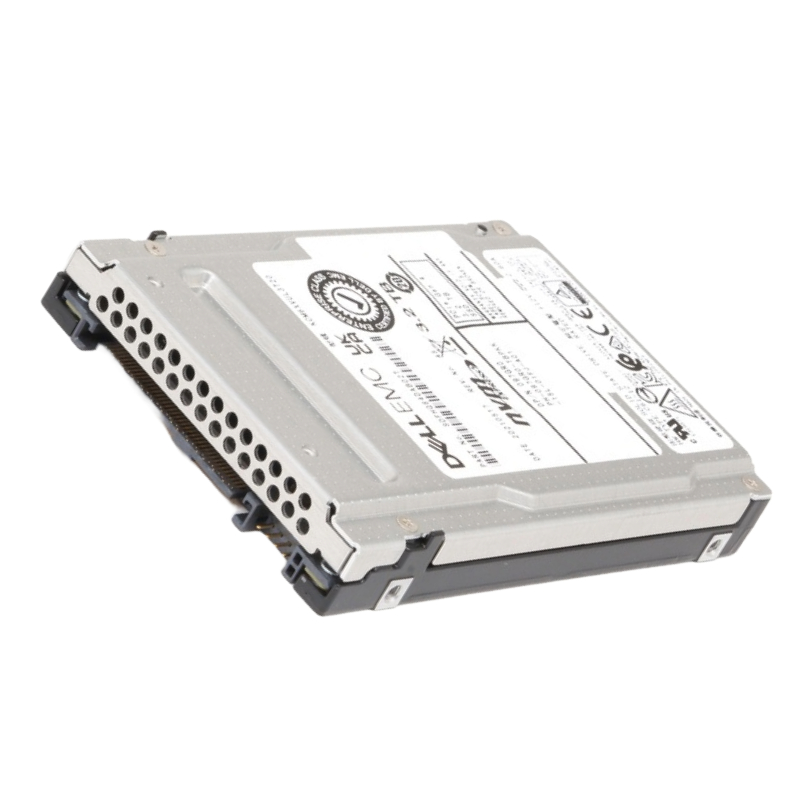
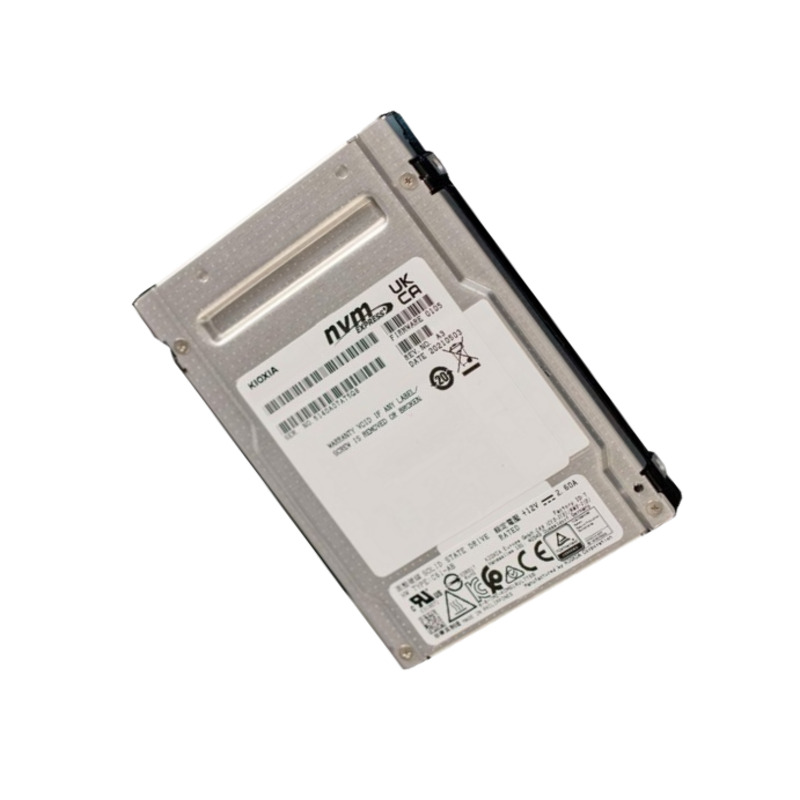
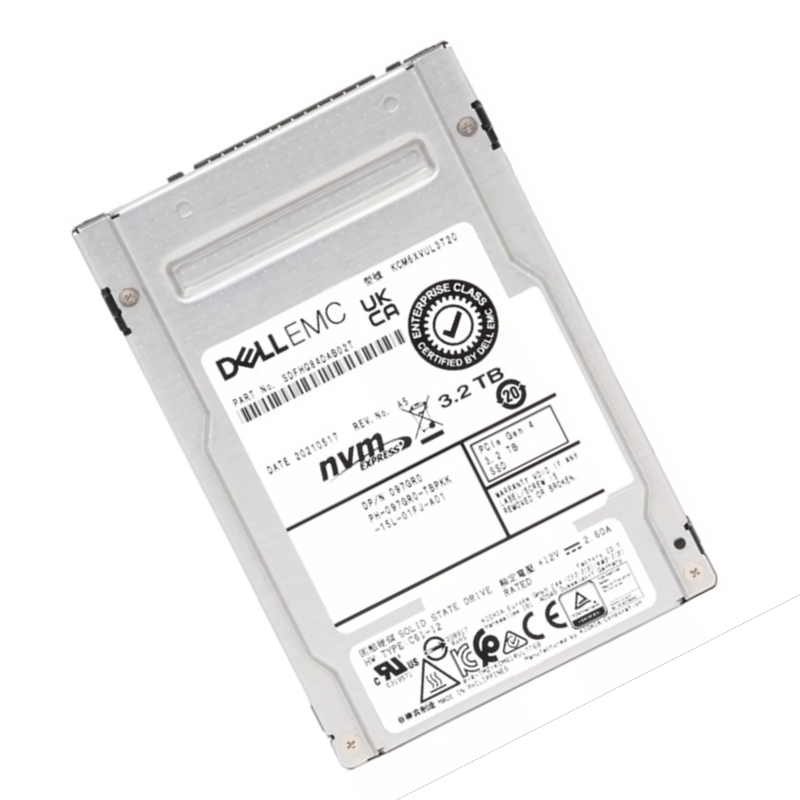
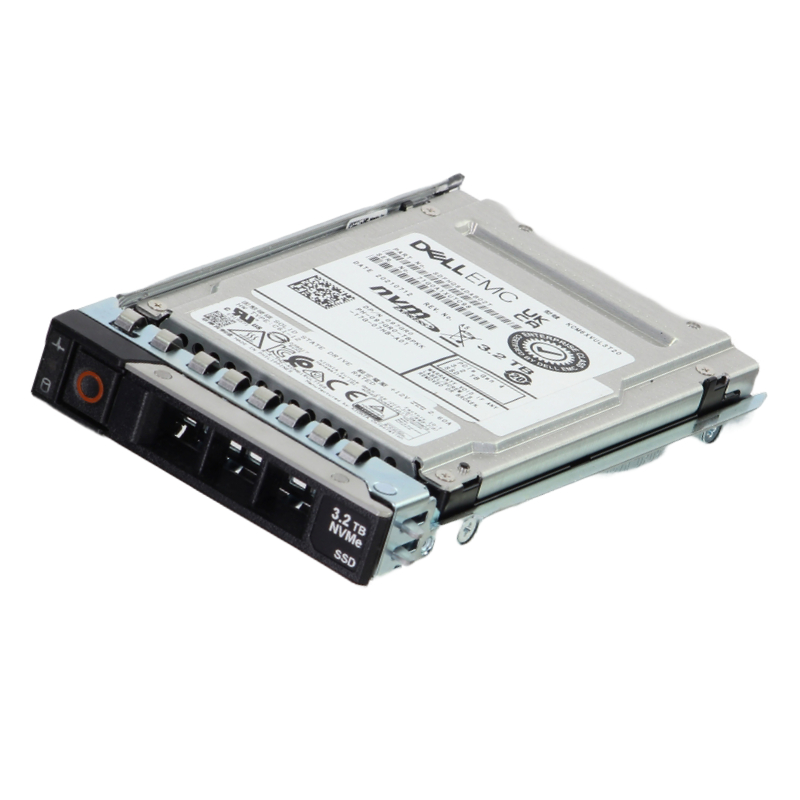
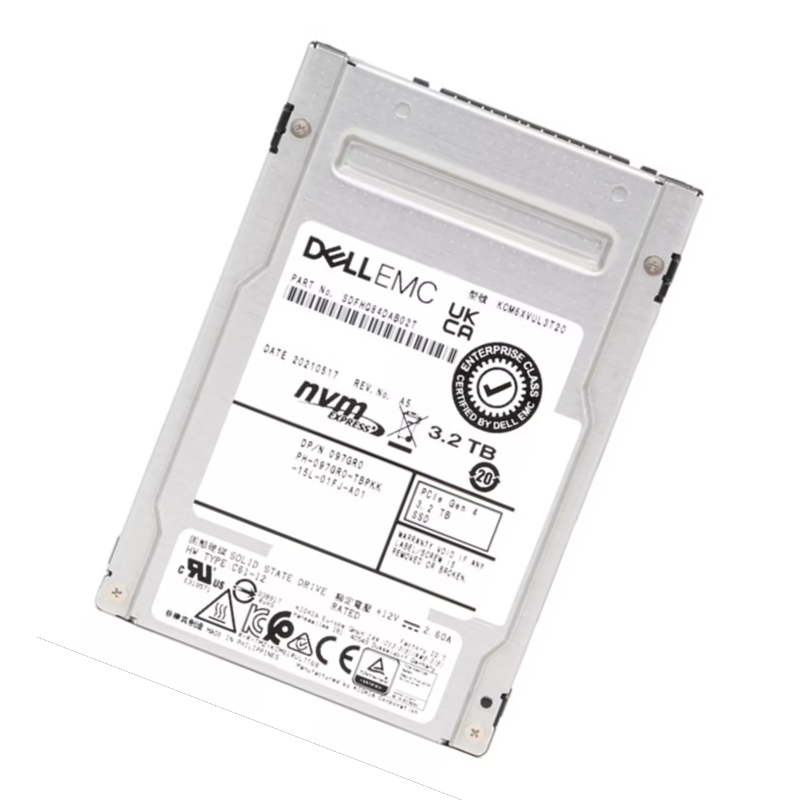
Kioxia KCM6XVUL3T20 CM6 Series 3.2TB Mixed Use Enterprise SSD. Excellent Refurbished with 1 year replacement warranty - Dell Version
The KIOXIA CM6-V KCM6XVUL3T20 is a high-performance enterprise-grade SSD designed for mixed-use workloads. With a storage capacity of 3.2TB, this NVMe SSD leverages PCI Express 4.0 x4 to deliver exceptional speed and reliability. It is ideal for data-intensive applications, cloud computing, and enterprise servers.
The KIOXIA CM6-V SSD is engineered to deliver superior read and write performance for enterprise workloads.
Designed for enterprise environments, this SSD ensures data integrity and long-term durability.
Product category KIOXIA CM6 Series mixed-use NVMe SSDs
The KIOXIA CM6 Series represents a generation of enterprise NVMe solid state drives designed for mixed-use workloads where a balance of high throughput, sustained I/O, and long-term endurance is required. The 3.2TB capacity model (part number KCM6XVUL3T20) is a 2.5-inch, U.3 compatible, PCIe® 4.0 x4 NVMe drive tuned for demanding server and storage environments — delivering high random IOPS and strong sequential bandwidth for database, virtualization, analytics and mixed application stacks. These drives combine KIOXIA’s 96-layer BiCS FLASH™ 3D TLC NAND with KIOXIA’s enterprise controller and firmware optimizations to provide consistent performance in 24x7 deployments.
Key mixed-use characteristics and official product highlights are documented by KIOXIA in the CM6 product brief.
The CM6 Series leverages PCIe® Gen4 capabilities to provide order-of-magnitude gains over previous PCIe Gen3 enterprise drives — offering very high random read IOPS and strong random write figures suitable for mixed workloads. Typical representative performance numbers documented by KIOXIA indicate random read IOPS up to the multi-hundreds of thousands and sequential read/write bandwidth in the multiple gigabytes per second range depending on capacity and workload.
The 3DWPD (drive writes per day) endurance rating for CM6-V series drives provides the confidence needed for mixed read/write enterprise applications. In addition to DWPD, the CM6 Series includes advanced error correction, power loss protection and enterprise firmware features to prolong data integrity and drive longevity. Official KIOXIA documentation lists endurance, MTTF values and a five-year warranty for typical enterprise configurations.
2.5-inch / U.3 (SFF-TA-1001) form factor, 15 mm z-height — fits common enterprise server and storage backplanes.
PCIe® 4.0 x4 interface with NVMe™ 1.4 compliance for modern platform support.
Multiple power modes and management features for datacenter power optimization.
The CM6 family supports a portfolio of security options, including self-encrypting drive (SED) variants, SIE (Sanitize Instant Erase) capability and FIPS-compliant configurations for deployments requiring certified cryptographic assurance. These options help meet strict regulatory and compliance requirements while simplifying secure decommissioning and drive repurposing workflows.
The CM6 Series is architected to extract maximum performance from PCIe Gen4 platforms while controlling power and efficiency. Key architectural advantages include:
Integrated controller and firmware: KIOXIA’s in-house controller and firmware stack tunes garbage collection, wear leveling and QoS to consistent performance.
Advanced NAND: 96-layer BiCS 3D TLC provides higher density per package and predictable program/erase characteristics.
Drive-level data protection: end-to-end protection, power-loss capacitors or internal mechanisms to reduce write corruption risk.
Dual-port (where applicable): Certain CM6 variants provide dual port capability for HA storage arrays and clustered storage systems.
While raw data sheet numbers provide a theoretical ceiling, real deployments benefit from workload-specific tuning:
Use realistic block sizes and read/write ratios (70/30, 50/50, 30/70) to emulate target workloads.
Consider namespace adjustments and overprovisioning to improve sustained random write performance.
Enable or tune host-side encryption and power-saving modes with awareness of their effect on latency and throughput.
When possible, test with your actual application stack (database, hypervisor, or analytics engine) — synthetic tests can mislead unless workload parameters match production I/O profiles.
KIOXIA’s published performance briefs compare CM6 to prior generations and provide guideline test results that show dramatic improvements on PCIe Gen4 platforms — especially in high concurrency, high IOPS scenarios.
To maximize the lifecycle and return on investment of CM6 SSDs, follow enterprise best practices:
Confirm BIOS/firmware compatibility for NVMe Gen4 on host platforms and backplanes.
Use the correct drive carrier or sled for U.3 compatibility to ensure hot-swap and physical stability.
Apply RAID or erasure coding appropriate for the storage array while recognizing the SSD’s internal protections such as power-loss safeguards.
Monitor SMART attributes and drive telemetry to detect early wear trends and preemptively migrate critical data.
KIOXIA typically provides a five-year limited warranty on enterprise CM6 drives alongside vendor support options. For mission-critical systems, maintain a spare pool of drives and an established RMA process to minimize potential downtime. Always consult the manufacturer’s warranty terms and the reseller’s support SLA when procuring drives for production.
When evaluating the CM6 3.2TB model versus other enterprise SSDs, consider the following axes:
The CM6-V mixed-use class trades higher DWPD (3 DWPD) compared to read-intensive classes (1 DWPD) so it is better suited to write-heavier mixed workloads.
If your deployment is read-dominant (archival reads, cold DB replicas), a read-intensive CM6-R variant may lower cost while meeting needs.
Higher capacity models in the CM6 family (6.4TB, 12.8TB) often deliver better throughput and write endurance per dollar in large scale deployments; however, smaller capacities like 3.2TB enable more granular scaling and denser distribution of wear across arrays.
Effective SSD operations revolve around proactive monitoring, firmware discipline, and workload hygiene:
SMART attributes: media and controller wear indicators, spare block counts, and error counters.
Performance baselines: read/write latency percentiles (p50, p95, p99) and queue depth behavior.
Temperature and power draw under expected peak loads.
Write amplification and host writes relative to DWPD consumption forecasts.
Maintain a firmware update policy that tests updates in a staging environment before rolling out to production.
Where encryption or SIE is used, incorporate key management practices and logging into your security policy to ensure recoverability and auditability.


 Contact Us
 Information
 Catalog
 Solid State Drives (SSD)
 Network Switches
 Hard Disk Drives
 HBA & Controllers
 PC & Servers
 PC & Server Memory
 CPU & Processors
 Network Routers
 Power Supplies
 Tape Drives & Libraries
 Network Devices
 Computer & Network Cables