(7% discount is applied at checkout)
Cart is empty
Your go-to destination for cutting-edge server products


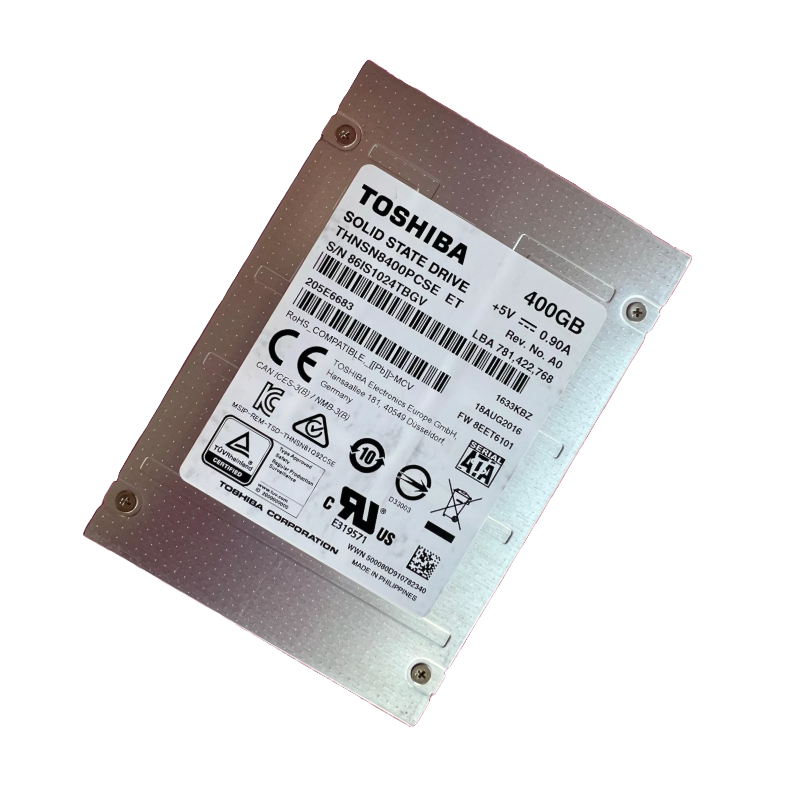
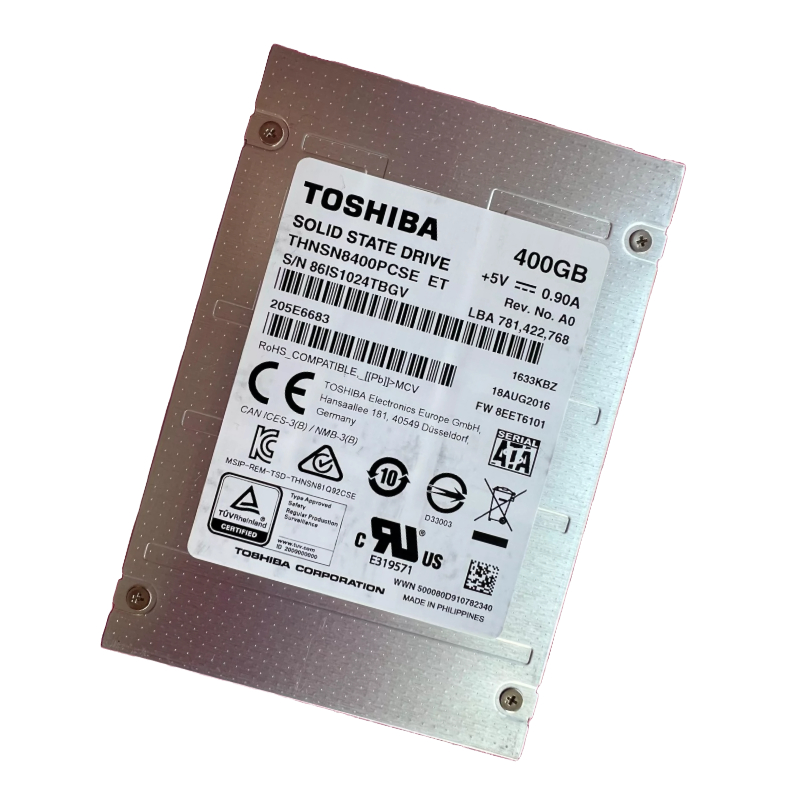
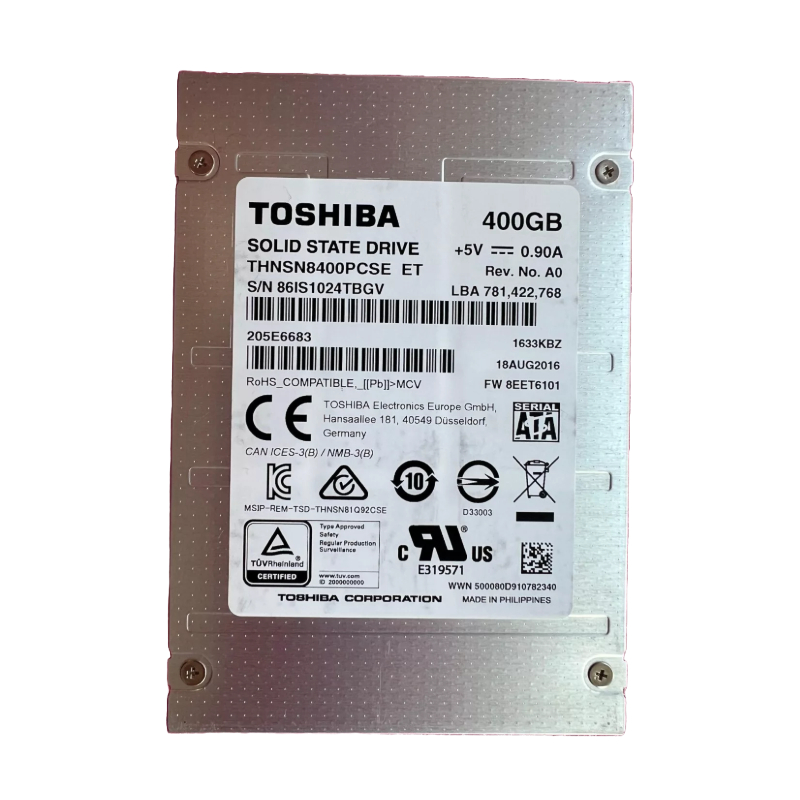
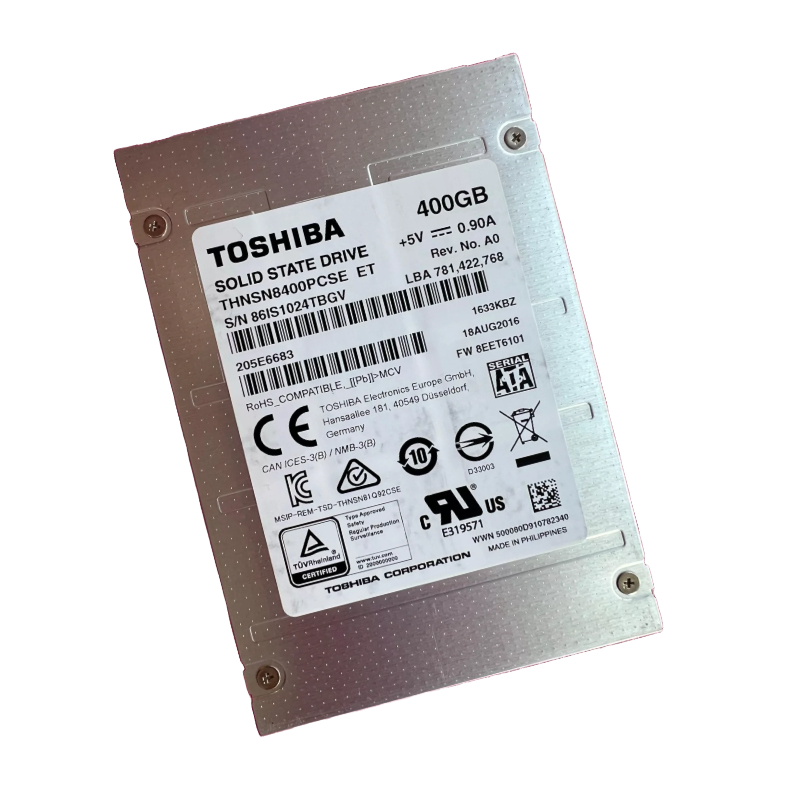
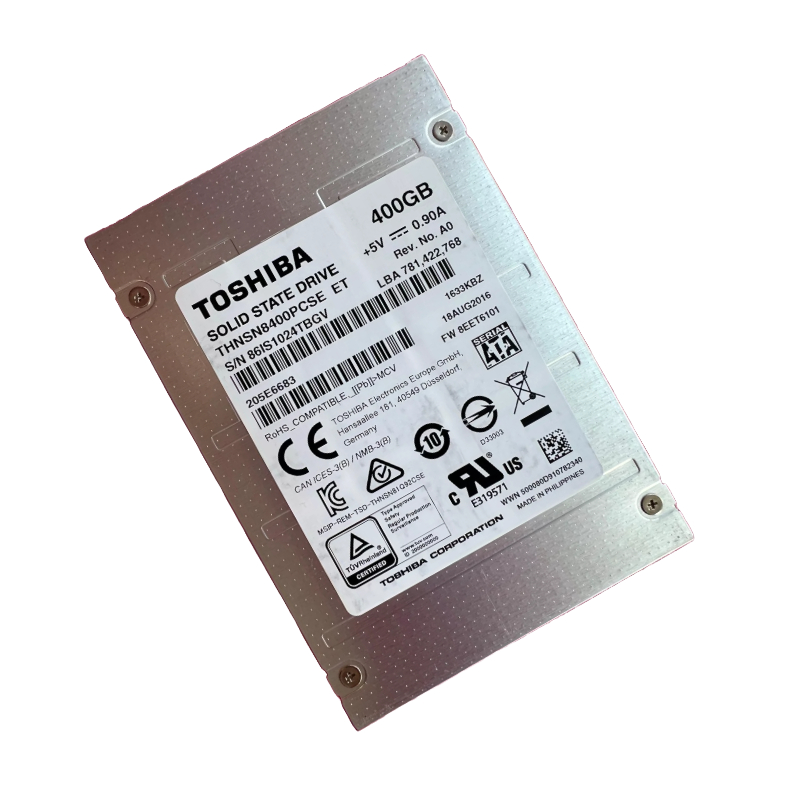
Toshiba THNSF8400CCSE 400GB Mixed Use MLC SATA 6GBPS Internal SSD. Excellent Refurbished with 1 year replacement warranty - Dell Version
The Toshiba THNSF8400CCSE 400GB Mixed-Use MLC SATA-6GBPS SFF internal solid state drive represents a focused intersection of enterprise-class durability, sustained mixed-workload performance, and compact 2.5-inch small form factor convenience. Engineered for mixed-use application scenarios where predictable performance matter, this drive balances NAND endurance and controller efficiency to deliver consistent latency under sustained reads and writes. The SATA-6GBPS interface provides widely compatible throughput for legacy and modern server platforms, storage arrays, and workstation fleets that require a reliable, swappable 2.5" solution without the complexity of NVMe integration.
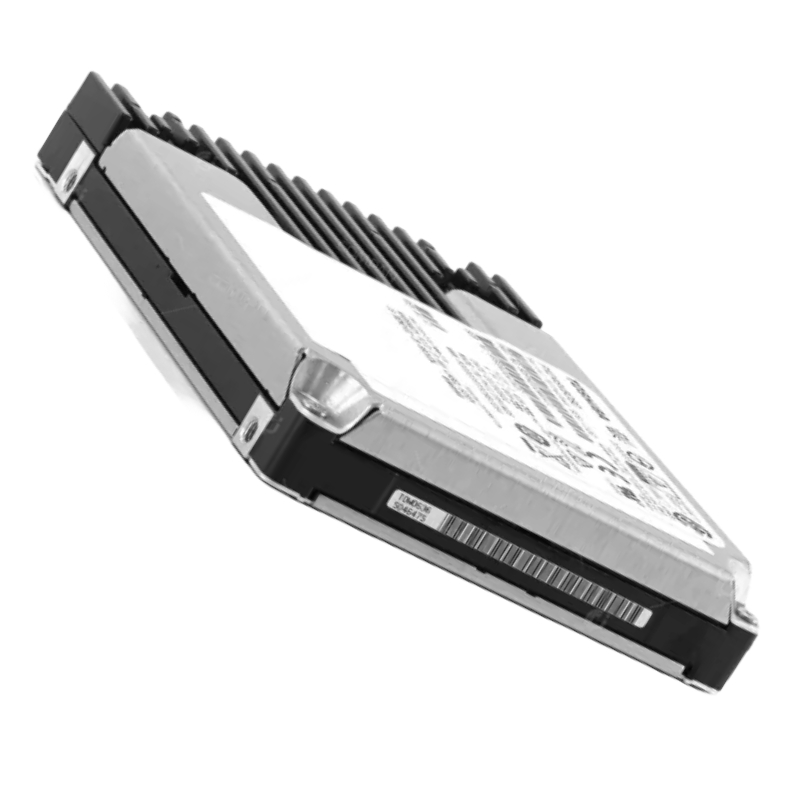
The 2.5-inch small form factor (SFF) used by the THNSF8400CCSE lends itself to versatile deployment. Whether mounted in dense server trays, blade chassis, or high-performance workstations, the SFF footprint supports high bay counts per chassis and simplifies thermal management compared with larger form factors. Mechanically, the drive follows industry-standard mounting points and power pinouts, enabling tool-less carrier integration in many OEM chassis designs. Physically compact but thermally resilient, the drive incorporates thermal throttling safeguards and firmware-level heat management to preserve data integrity during prolonged heavy write bursts. For operations teams, the predictable mechanical profile means easier inventory control, quicker swap outs during maintenance windows, and reduced need for specialized adapters or caddies in mixed vendor environments.
At the heart of this category is multi-level cell (MLC) NAND optimized for mixed-use workloads. Unlike consumer TLC NAND focused on capacity at the expense of write endurance, the MLC in these drives is tuned to withstand frequent write cycles typical of database logging, virtual desktop infrastructure (VDI), and application servers. Mixed-use labeling indicates a firmware and over-provisioning strategy that aims to balance random write performance with long-term durability, delivering more consistent IOPS across the device life. Endurance metrics for mixed-use drives are typically expressed in Drive Writes Per Day (DWPD) or Total Bytes Written (TBW), and these figures help IT planners forecast lifecycle replacement intervals. The MLC architecture combined with enterprise-grade wear-leveling and error correction capabilities reduces the risk of sudden performance degradation, ensuring predictable service levels across hundreds or thousands of deployed units.
The SATA-6GBPS (SATA III) interface continues to serve a broad installed base, offering plug-and-play compatibility with many server motherboards, RAID controllers, and storage backplanes. While NVMe has pushed raw performance boundaries, SATA drives remain highly relevant for tiers that reward predictable I/O patterns and cost per GB efficiency. SATA’s mature driver support and ubiquitous motherboard and enclosure compatibility reduce deployment friction in heterogeneous datacenters. In RAID environments, caution is advised to select controller firmware and RAID firmware combinations that are validated for SSD use to avoid rebuild timeouts or degraded rebuild performance. For mixed-use drives such as the THNSF8400CCSE, SATA delivers a dependable baseline bandwidth while the drive’s internal optimizations handle the majority of I/O refinement.
Performance in this category is best evaluated by the drive’s ability to sustain moderate-to-high random IOPS under a mixture of read and write operations while keeping tail latency low. Synthetic peak numbers may appear attractive, but the practical metric for enterprises is how the drive behaves under mixed transactional loads. Enterprise MLC mixed-use SATA drives distinguish themselves by providing consistent 4K random read and write performance in environments where small-block operations dominate, such as metadata-heavy database workloads and file system journaling. Sequential throughput remains adequate for large file transfers and boot operations, but the drive shines where transactional determinism and endurance are the core requirements. In deployments supporting virtualization hosts and database instances, these drives help reduce storage wait times and increase consolidation ratios without escalating cost dramatically compared with high-end NVMe tiers.
This class of SSD is particularly well-suited to a variety of enterprise and professional use cases. Database acceleration for medium-sized transactional systems gains measurable benefits when primary database files or write-ahead logs are hosted on mixed-use MLC SSDs. Virtual Desktop Infrastructure deployments see faster boot storms and improved user experience when user profile data and paging files are placed on these drives. Email and collaboration servers benefit from the predictable random I/O performance, and web application servers experience lower request latency for small file reads. Mixed-use SATA SSDs are also practical as a high-performance cache layer in hybrid storage arrays, providing a fast tier for hot data while bulk capacity remains on hard disk drives. In each scenario, the goal is to match the drive’s endurance and performance envelope to the workload’s write intensity and latency sensitivity.
When integrated into RAID arrays, mixed-use SATA SSDs offer faster rebuild times and lower overall rebuild stress compared to mechanical disks, but they introduce unique considerations. RAID controllers and firmware must support SSD health reporting and properly handle TRIM and extended SMART attributes. RAID rebuilds that stress multiple drives simultaneously can generate sustained write loads that challenge drive thermal and endurance budgets; therefore, system architects should validate RAID card compatibility and consider staggered rebuild policies or SSD-friendly rebuild algorithms. Enterprise deployments often benefit from vendor guides that map safe operational parameters for array rebuilds and firmware pairings that minimize risk of drive dropouts during heavy maintenance cycles.
Power consumption and thermal behavior are important in dense racks and blade environments. Mixed-use MLC SATA SSDs tend to draw less idle and active power than 2.5" enterprise HDDs at comparable performance levels, resulting in energy savings across large deployments. Still, peak power during sustained writes and controller activity can be non-trivial, and adequate airflow along with temperature-aware firmware settings are necessary to prevent thermal throttling.
Within a broader storage portfolio, mixed-use MLC SATA SSDs are positioned as the workhorse tier for transactional workloads that require dependable random I/O and reasonable endurance without the complexity of NVMe ecosystems. They are not intended to replace high-performance NVMe tiers for the most demanding latency-sensitive applications, nor to match the raw capacity economics of bulk HDD tiers for cold data.


 Contact Us
 Information
 Catalog
 Solid State Drives (SSD)
 Network Switches
 Hard Disk Drives
 HBA & Controllers
 PC & Servers
 PC & Server Memory
 CPU & Processors
 Network Routers
 Power Supplies
 Tape Drives & Libraries
 Network Devices
 Computer & Network Cables