(7% discount is applied at checkout)
Cart is empty
Your go-to destination for cutting-edge server products
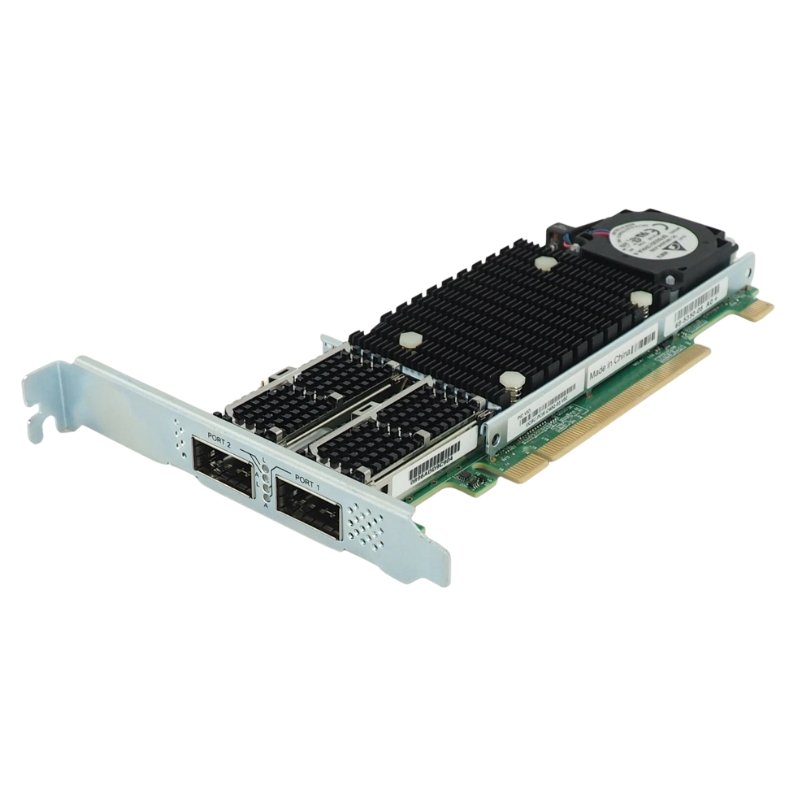


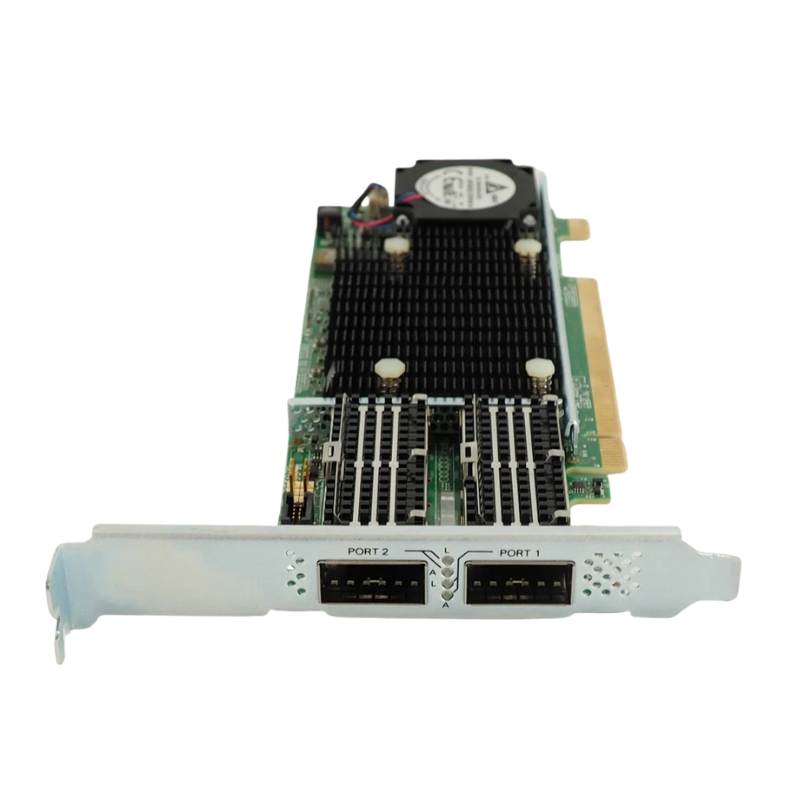
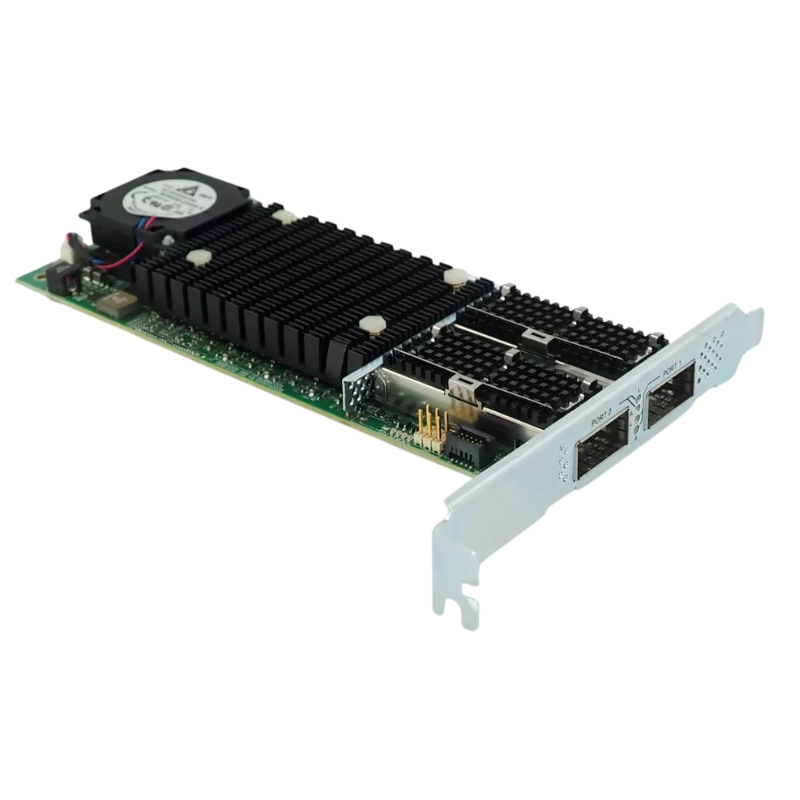
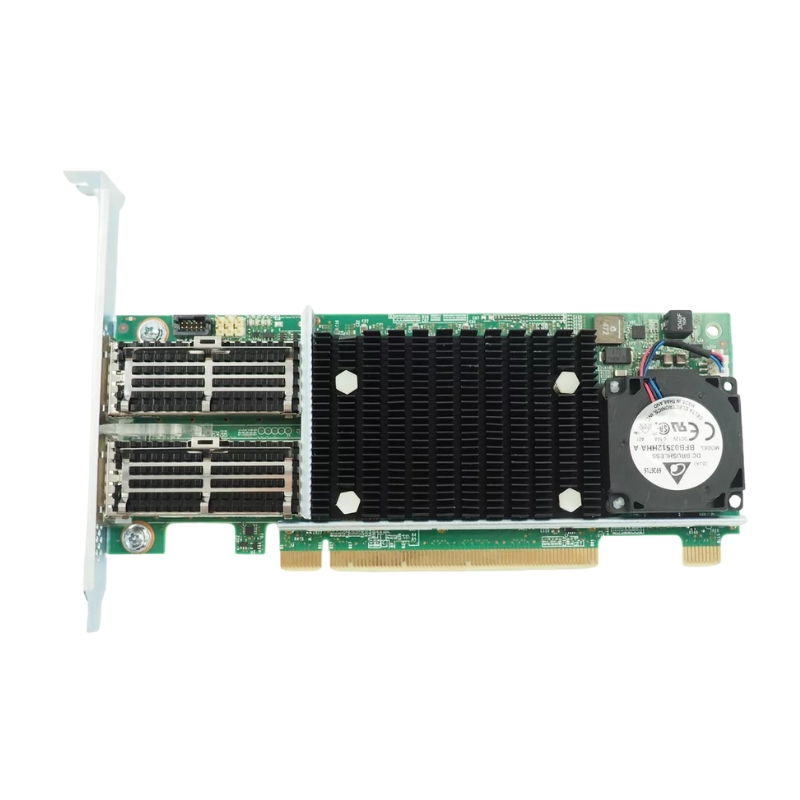
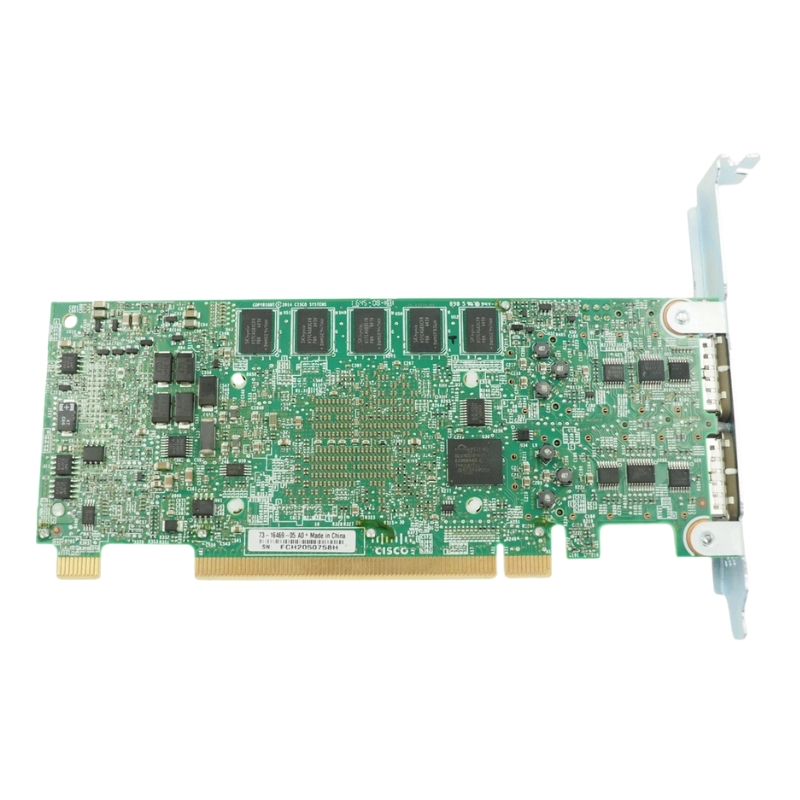
Cisco UCSC-PCIE-C40Q-02 VIC 40Gbps QSFP Network Adapter. Excellent Refurbished with 1 year replacement warranty
The Cisco UCSC-PCIE-C40Q-02 Virtual Interface Card (VIC) is a high-performance dual-port 40 Gigabit Ethernet network adapter designed for enterprise-grade data centers. this PCI Express plug-in module delivers ultra-low latency, high bandwidth, and scalable connectivity for Cisco Unified Computing System (UCS) environments.
The Cisco UCSC-PCIE-C40Q-02 VIC 40Gbps QSFP Network Adapter represents a high-performance converged network interface solution engineered for enterprise-grade data centers, virtualization environments, and cloud-scale infrastructures. Designed to deliver ultra-low latency, high bandwidth throughput, and advanced virtualization capabilities, this Cisco Virtual Interface Card (VIC) is optimized for organizations that demand scalable, reliable, and flexible network connectivity within Cisco Unified Computing System (UCS) deployments. It is widely adopted in mission-critical environments where network performance directly impacts application responsiveness and service availability.
As part of Cisco’s UCS ecosystem, this 40Gbps QSFP-based adapter provides a unified fabric architecture that consolidates networking and I/O operations into a single platform. This significantly reduces hardware complexity while improving operational efficiency, making it a preferred choice for modern data center architectures that rely heavily on virtualization, containerization, and software-defined networking.
The Cisco UCSC-PCIE-C40Q-02 adapter is built around a 40Gbps QSFP interface that enables high-speed data transmission between servers and switching infrastructure. This level of bandwidth is essential for workloads that require rapid data movement such as high-performance computing (HPC), large-scale virtualization clusters, database replication systems, and cloud service platforms. By leveraging 40Gbps throughput, the adapter ensures minimal congestion and efficient handling of heavy traffic loads.
The Quad Small Form-factor Pluggable (QSFP) design allows for compact, scalable connectivity while maintaining high signal integrity. QSFP technology supports high-density deployments, enabling data centers to maximize port utilization without increasing physical rack space. This makes it especially suitable for environments where space optimization and airflow management are critical considerations.
The QSFP architecture ensures stable and consistent data transmission by minimizing signal degradation over high-speed links. This is crucial in enterprise environments where packet loss or latency spikes can lead to performance bottlenecks or service disruptions. The Cisco VIC leverages advanced hardware offloading to maintain stable throughput even under sustained workloads.
The Cisco UCSC-PCIE-C40Q-02 VIC is deeply integrated into the Cisco UCS ecosystem, enabling seamless communication between compute nodes and fabric interconnects. This integration eliminates traditional network interface complexity by consolidating multiple virtual interfaces into a single physical adapter. As a result, administrators can dynamically allocate network resources based on workload demands without requiring physical reconfiguration.
Cisco’s VIC technology allows the adapter to present multiple virtual network interfaces to the host system. These virtual interfaces can be assigned to different applications, virtual machines, or containers, enabling fine-grained control over network traffic distribution and isolation. This capability is essential for multi-tenant environments and cloud infrastructure deployments.
Through advanced virtualization support, the adapter enables efficient traffic segmentation and workload isolation. This ensures that critical applications receive dedicated bandwidth while maintaining performance consistency across shared infrastructure. The VIC architecture also reduces overhead associated with traditional NIC teaming or external switching dependencies.
The Cisco UCSC-PCIE-C40Q-02 is designed for ultra-low latency operations, making it ideal for environments such as financial trading systems, real-time analytics platforms, and high-frequency transaction processing systems. The adapter minimizes packet processing delays through hardware acceleration, reducing CPU overhead and improving overall system efficiency.
Applications that involve large-scale data transfer, such as backup systems, storage replication, and virtualization clusters, benefit significantly from the 40Gbps throughput. The adapter ensures consistent performance even during peak traffic conditions, preventing bottlenecks that could otherwise impact application performance.
The built-in packet processing engine enhances data handling efficiency by offloading compute-intensive networking tasks from the host CPU. This allows server resources to focus on application workloads rather than network processing, improving overall system utilization and reducing latency.
Advanced traffic management capabilities ensure that bandwidth allocation is optimized based on priority rules and workload requirements. This helps maintain consistent application performance even in highly dynamic environments with fluctuating traffic patterns.
The Cisco UCSC-PCIE-C40Q-02 adapter supports Single Root I/O Virtualization (SR-IOV), allowing physical network resources to be partitioned into multiple virtual functions. This enhances performance for virtual machines by providing near-native network speed while maintaining isolation between workloads.
In cloud computing environments, network efficiency plays a critical role in service delivery. This VIC adapter is optimized for cloud-scale deployments where elasticity, scalability, and automation are key requirements. It supports dynamic provisioning of virtual interfaces to match rapidly changing workload demands.
Modern containerized applications benefit from the adapter’s ability to efficiently handle microservice communication patterns. By reducing latency and improving throughput, the adapter enhances performance for distributed applications running across Kubernetes or similar orchestration platforms.
The Cisco UCSC-PCIE-C40Q-02 is commonly deployed in rack-mounted server environments where scalability and density are critical. Its compact design and high-speed QSFP interface allow for efficient integration into high-density server racks without compromising airflow or thermal performance.
Enterprises running mission-critical applications such as ERP systems, CRM platforms, and large-scale databases rely on the stability and reliability of this adapter. Its robust architecture ensures continuous operation even under heavy workloads and extended uptime requirements.
In disaster recovery setups, the adapter plays a vital role in maintaining synchronized data replication across geographically distributed data centers. Its high bandwidth capability ensures minimal replication lag, which is essential for maintaining data integrity and continuity.
Despite its high-performance capabilities, the Cisco UCSC-PCIE-C40Q-02 is engineered for energy efficiency. It utilizes optimized power management techniques to reduce energy consumption while maintaining peak performance levels, contributing to lower operational costs in large-scale deployments.
The adapter is designed with advanced thermal control mechanisms that ensure stable performance under continuous high-load conditions. Effective heat dissipation helps maintain hardware longevity and reduces the risk of thermal throttling in dense server environments.
Built with high-quality components, the adapter ensures long-term reliability and durability. This is essential for enterprise environments where hardware stability directly impacts service-level agreements and operational continuity.
Security is a fundamental aspect of the Cisco UCSC-PCIE-C40Q-02 design. It supports secure data transmission protocols that help protect sensitive information during network transfer. This is particularly important for industries such as finance, healthcare, and government operations.
The adapter enables strong traffic segmentation between virtual interfaces, reducing the risk of unauthorized access or data leakage between workloads. This isolation enhances overall network security in multi-tenant environments.
Organizations operating under strict regulatory frameworks benefit from the adapter’s ability to support secure and compliant networking configurations. This includes controlled access, monitoring capabilities, and structured traffic management.
The Cisco UCSC-PCIE-C40Q-02 integrates with Cisco UCS Manager, allowing administrators to centrally configure and manage network interfaces. This reduces administrative overhead and simplifies large-scale infrastructure management.
Automation is a key advantage of this adapter, enabling rapid provisioning of network interfaces based on predefined policies. This supports agile IT environments where quick deployment and scaling are essential.
By consolidating multiple network functions into a single adapter, organizations can significantly reduce infrastructure complexity. This leads to easier maintenance, lower operational costs, and improved system efficiency.


 Contact Us
 Information
 Catalog
 Solid State Drives (SSD)
 Network Switches
 Hard Disk Drives
 HBA & Controllers
 PC & Servers
 PC & Server Memory
 CPU & Processors
 Network Routers
 Power Supplies
 Tape Drives & Libraries
 Network Devices
 Computer & Network Cables