(7% discount is applied at checkout)
Cart is empty
Your go-to destination for cutting-edge server products
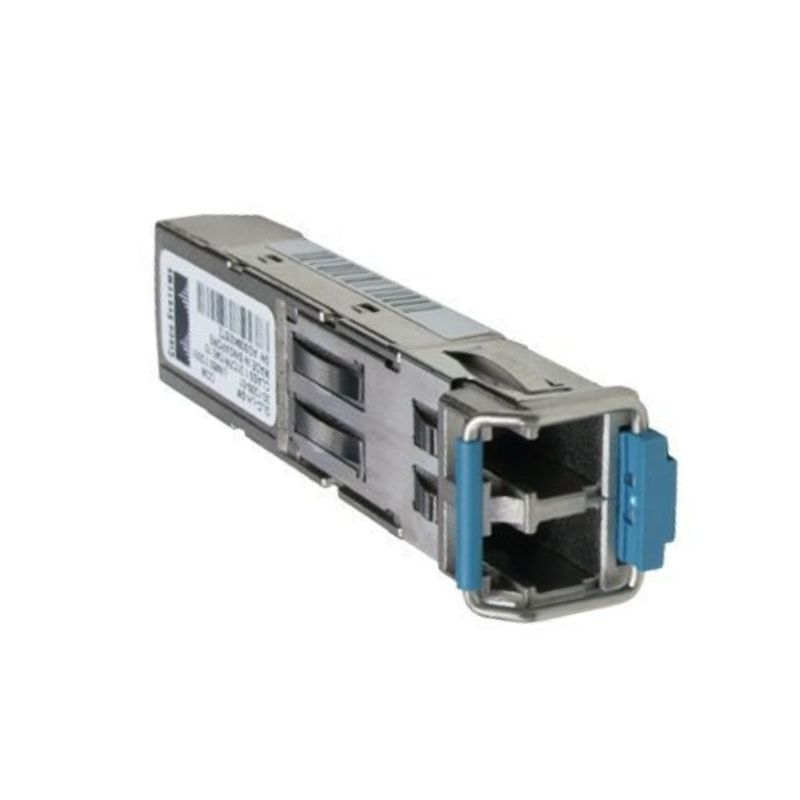


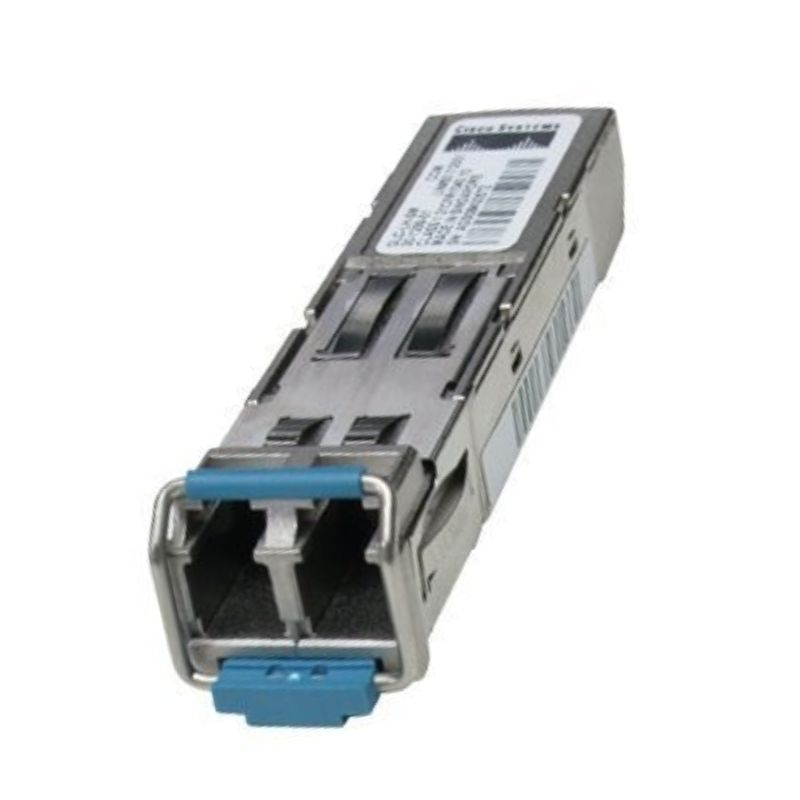
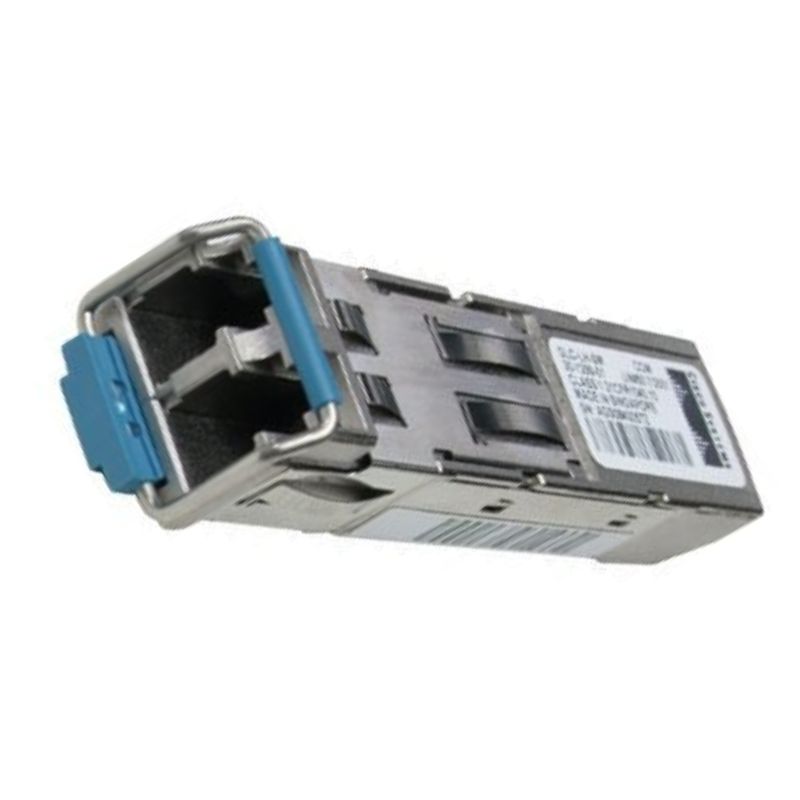
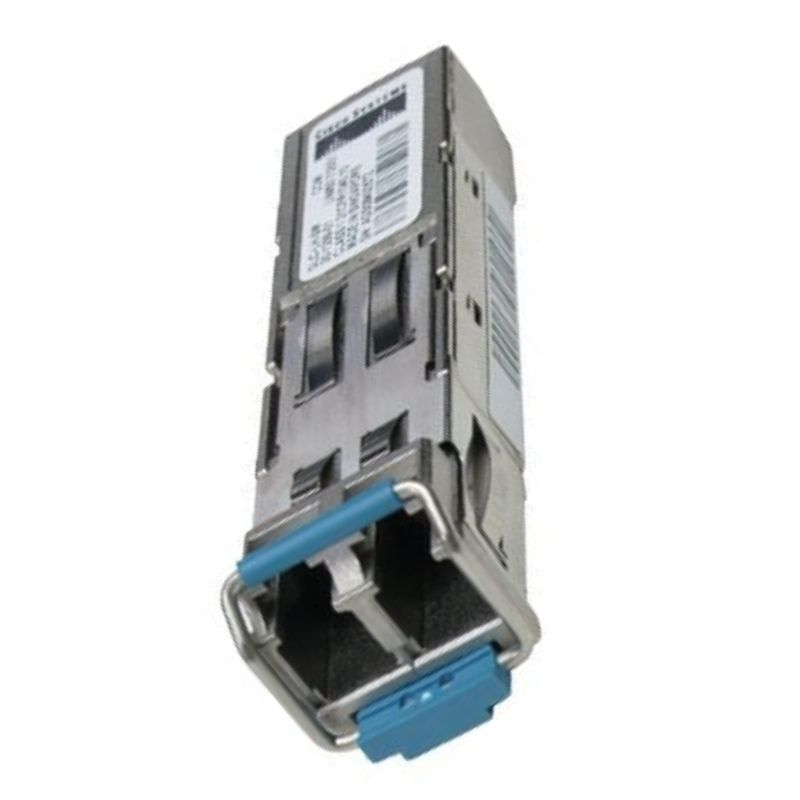
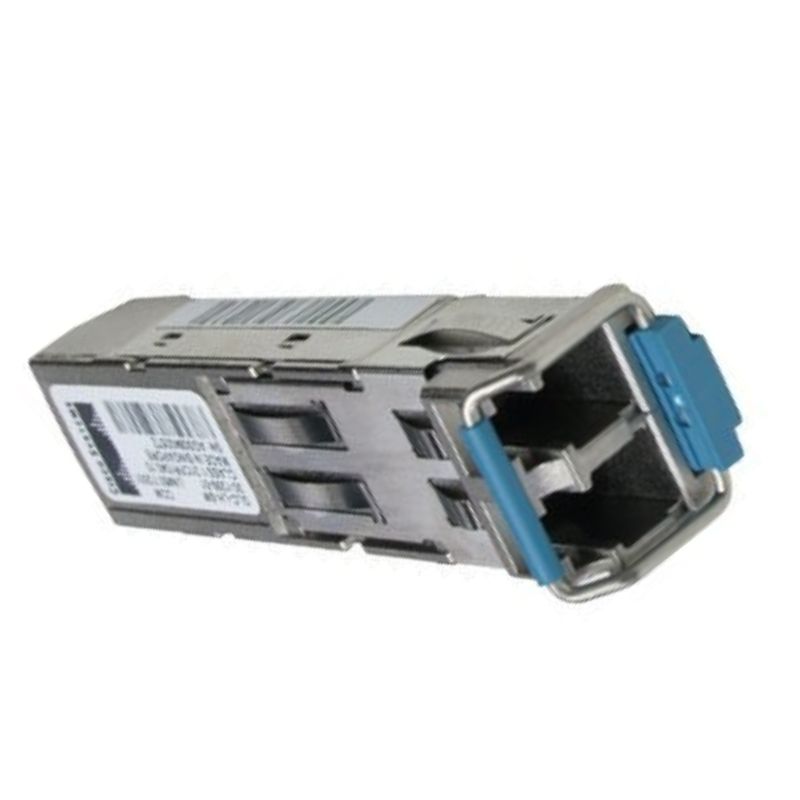
Cisco 10-1969-01 622MBPS SMF 1310nm 15km DDM SFP Transceiver Module. Excellent Refurbished with 1 year replacement warranty
The Cisco 10-1969-01 622Mb/s SMF 1310nm 15km DDM SFP Transceiver is engineered for stable, long-distance optical transmission across single-mode fiber infrastructures. Designed to support demanding network environments, this Small Form-Factor Pluggable module delivers dependable connectivity, refined optical performance, and flexible deployment options suitable for enterprise and service-provider applications. Its compact footprint and hot-swappable format allow rapid installation without service disruption, strengthening overall network efficiency.
The Cisco 10-1969-01 622MBPS SMF 1310nm 15km DDM SFP Transceiver Module is a precision-engineered fiber optic interface designed for reliable, long-distance data transport in modern network infrastructures. Built to Cisco's exacting standards, this small form-factor pluggable transceiver delivers synchronous transmission at the 622 megabits per second rate optimized for single-mode fiber (SMF), operating at the 1310 nanometer wavelength with a reach of up to 15 kilometers. The module includes digital diagnostics monitoring (DDM) functionality to provide real-time visibility into critical optical and electrical parameters. This category addresses buyers, network administrators, and procurement teams seeking robust access-layer and metro network optics that combine performance, interoperability, and field-level observability.
This transceiver is purpose-built for a 622 Mbps line rate, commonly used in Synchronous Digital Hierarchy (SDH) and related timing-sensitive applications. The module's signaling is optimized for consistent bit-level timing and low jitter, making it suitable for networks that require precise synchronization. The 622 Mb/s capability ensures compatibility with legacy STM-4 and related synchronous services where preserving timing integrity is critical.
Operating at a center wavelength of 1310 nm, the transceiver is matched to standard single-mode fiber characteristics where chromatic dispersion is minimized across moderate distances. The 1310 nm wavelength choice balances attenuation and dispersion for distances up to and including the module’s specified 15 km reach, offering deterministic performance for campus interconnects, MAN links, and metro segments.
The module’s optical reach is rated at 15 kilometers under standard single-mode fiber conditions. This distance assumes typical fiber attenuation, connector loss, and sufficient link margin. Network designers will appreciate that the module’s 15 km specification aligns with many urban and campus backbone segments without requiring regeneration or intermediate amplification.
Digital diagnostics monitoring, often abbreviated as DDM, is an essential feature within this category. DDM enables continuous monitoring of transmit power, receive power, temperature, laser bias current, and supply voltage. The real-time diagnostic stream is accessible via industry standard interfaces and provides invaluable data for proactive maintenance, rapid fault isolation, and trend analysis to avoid service interruptions.
The small form-factor pluggable (SFP) design delivers compactness and hot-pluggable convenience, allowing network engineers to add or replace optics without powering down the switch or router. SFP's modular footprint makes this transceiver suitable for high-density chassis and edge devices where port count and flexibility matter. The hot-swappable nature reduces service windows and accelerates field replacement, which is essential for environments demanding high availability.
Cisco qualifies the module to operate across typical commercial and extended temperature ranges depending on the part variant and qualification. Mechanical tolerances are engineered for consistent insertion and retention forces in SFP cages. Environmental resilience covers shock, vibration, and thermal cycling within industry-standard ranges so that the transceiver can be deployed in data centers, wiring closets, and controlled vault environments.
Compatibility is a hallmark of this module category. Compliance with SFP MSA (Multi-Source Agreement) dimensions and electrical signaling ensures interoperability with a broad range of Cisco platforms and many third-party switching and routing products. The optics conform to relevant laser safety classifications and fiber interface standards, making them fit for certified network deployments where adherence to norms matters for procurement and auditing.
Campus networks often require reliable links between wiring closets, aggregation switches, and core-facing distribution elements. The 15 km reach of this transceiver is suitable for connecting different buildings within a metropolitan campus or between neighboring facilities. Its 1310 nm wavelength provides a predictable propagation behavior that simplifies link budgeting for such topologies.
For metropolitan area networks where moderate distances and synchronous services are required, the module provides a cost-effective solution to transport 622 Mb/s channels. Service providers deploying leased lines, dedicated transport services, or legacy STM-4 services can use these modules to maintain service continuity while leveraging existing single-mode fiber infrastructure.
Organizations operating mixed-generation networks can use this transceiver to maintain legacy synchronous circuits during planned migrations. The SFP form factor eases the process of gradual equipment refresh, enabling operators to replace line cards or aggregation devices without immediately reworking the fiber plant. The product category supports a pragmatic approach to network evolution where coexistence and backward compatibility are required.
Products in this category undergo exhaustive optical and electrical testing during manufacturing. Tests typically include transmitter and receiver sensitivity, wavelength verification, eye pattern analysis, and functional DDM verification. Burn-in and reliability stress testing screen modules for early-life failure modes, improving field reliability and lowering return rates for customers who deploy these parts at scale.
Within the SFP optics family, several wavelength and reach options exist. Short wavelength alternatives operating at 850 nm are designed for multimode fiber and shorter distances, whereas 1550 nm modules are used for longer-haul links that can exceed 40 kilometers with appropriate amplification or dispersion compensation. The 1310 nm, 15 km role is a pragmatic middle-ground for many metro and campus deployments where reach and cost efficiency align.
Cisco’s optics are typically validated for Cisco systems; however, SFP MSA compliance permits use in many non-Cisco hosts. When mixing vendor optics and hosts, validate interoperability through lab testing or by checking vendor compatibility lists. Some platform firmware may restrict third-party transceivers, so confirm whether any vendor lock-in or authentication checks are enabled in the target equipment.
Choosing the 622 Mbps module reflects a need for synchronous or lower-rate transport. For networks undergoing upgrades toward gigabit and multi-gigabit Ethernet, plan the optical and fiber plant evolution accordingly. Upgrading to higher-speed optics often requires ensuring fiber plant quality, connector cleanliness, and potential changes in transceiver form factor or lane count, but the phased approach supported by SFPs helps manage capital and operational expenditure.


 Contact Us
 Information
 Catalog
 Solid State Drives (SSD)
 Network Switches
 Hard Disk Drives
 HBA & Controllers
 PC & Servers
 PC & Server Memory
 CPU & Processors
 Network Routers
 Power Supplies
 Tape Drives & Libraries
 Network Devices
 Computer & Network Cables