(7% discount is applied at checkout)
Cart is empty
Your go-to destination for cutting-edge server products
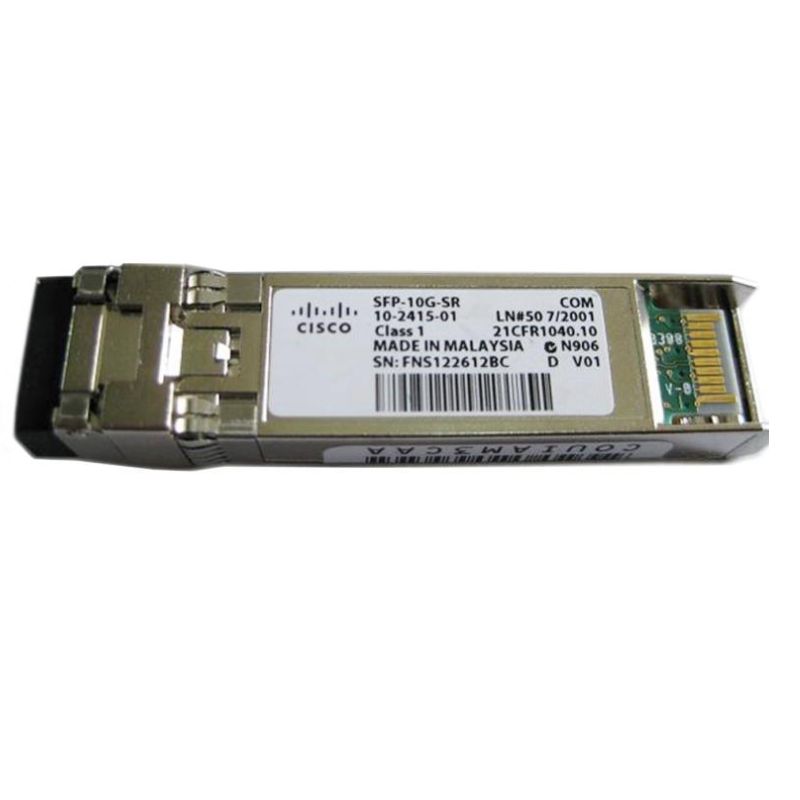


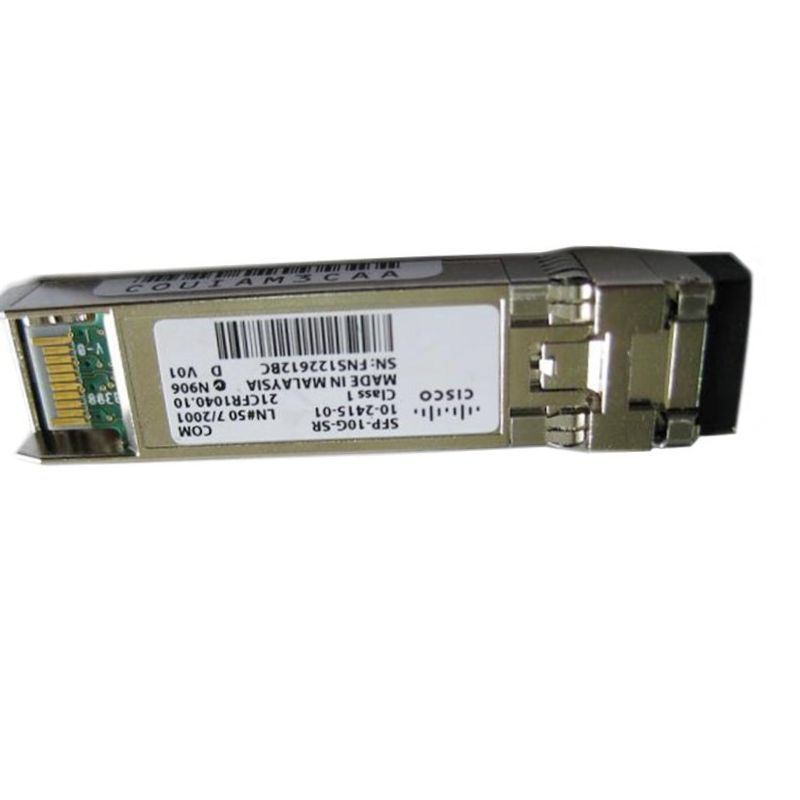
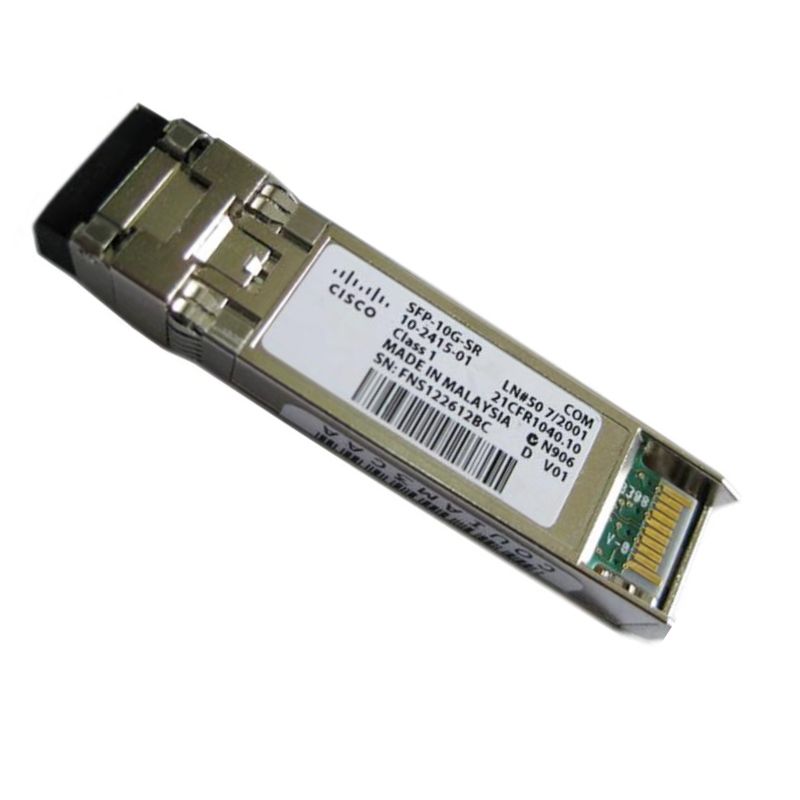
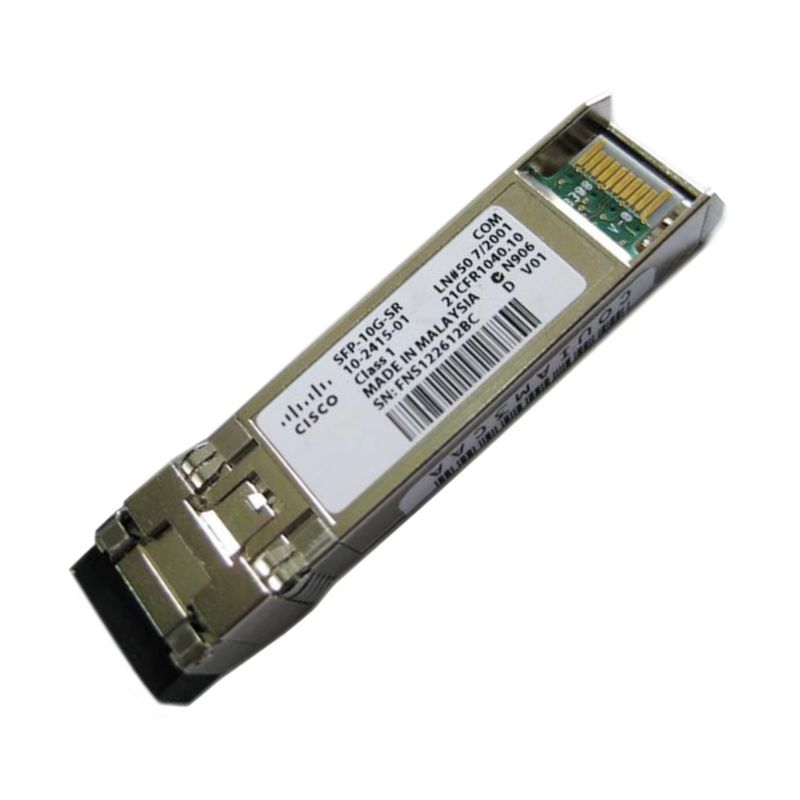
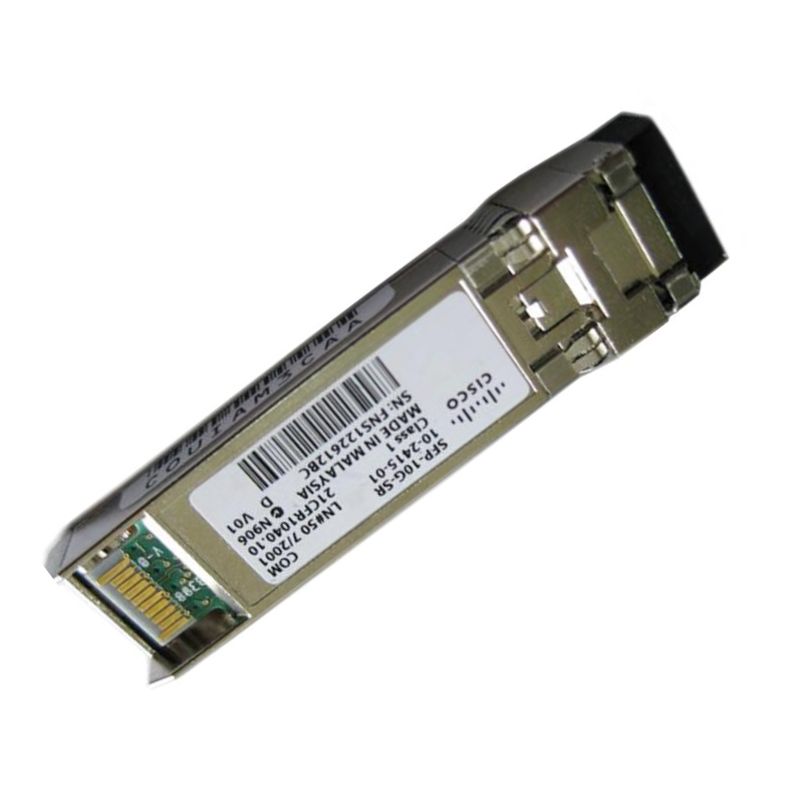
Cisco 10-2415-01 10GBASE-SR LC/PC Multi-Mode SFP+ Transceiver Module. Factory-Sealed New in Original Box (FSB) with 1 year replacement warranty
Overview of Cisco 10GB SFP+ Optical Transceiver Module
The Cisco 10GBASE-SR SFP+ transceiver module delivers dependable 10-Gigabit Ethernet connectivity designed for high-performance data centers, enterprise network backbones, telecom infrastructures, and cloud-driven server clusters. Engineered to handle short-range optical transmission over multimode fiber (MMF), this module blends exceptional bandwidth, energy-efficient operation, and seamless interoperability with a broad range of Cisco networking devices. Its compact SFP+ form factor allows flexible deployment across dense switching environments while maintaining optimized heat dissipation and superior signal integrity.
The Cisco 10-2415-01 10GBASE-SR LC/PC Multi-Mode SFP+ Transceiver Module is a purpose-built optical interface designed for short-range 10 Gigabit Ethernet links over multimode fiber. Engineered to meet the rigorous demands of modern data centers, enterprise aggregation layers, campus backbones, and high-performance switch uplinks, this SFP+ form-factor transceiver combines compact packaging, robust Cisco compatibility, and a cost-effective approach to delivering 10 Gbps throughput using the 850 nm wavelength. The module is hot-pluggable, fits standard SFP+ cages, and uses an LC duplex connector with PC polish—hence LC/PC—making it compatible with the majority of multimode patching infrastructure in production networks. For buyers and specifiers, the Cisco 10-2415-01 10GBASE-SR LC/PC Multi-Mode SFP+ Transceiver Module represents a widely adopted, tested solution that balances performance and predictable interoperability.
At its core, the Cisco 10-2415-01 10GBASE-SR LC/PC Multi-Mode SFP+ Transceiver Module conforms to the IEEE 802.3ae 10GBASE-SR standard. The transceiver transmits and receives on the 850 nm wavelength and supports line rates up to 10.3125 Gbps, enabling full 10 Gigabit Ethernet operation. Typical transmit optical power and receiver sensitivity values are specified to ensure reliable short-range links; when deployed with quality multimode fiber types such as OM3 or OM4, the module supports distances commonly up to 300 meters on OM3 and further on OM4 under ideal conditions. The module includes essential features such as digital optical monitoring (DOM) for real-time diagnostics—reporting parameters like optical power, temperature, and voltage—so operations teams can validate link health without interrupting traffic. Power consumption is low, consistent with SFP+ device profiles, which helps contain heat load in dense switch linecards. The module is also backward-compatible with lower-speed negotiation where applicable, though it is optimized for uninterrupted 10 Gbps operation.
The SFP+ small form-factor pluggable packaging is the de facto standard for high-density optics, and Cisco’s 10-2415-01 model is no exception. The compact housing minimizes rack space while allowing high port density on modern switches and routers. The LC/PC duplex connector choice aligns with industry adoption for duplex multimode links—LC being a small, latch-style connector that simplifies cabling in dense panels. The PC polish (physical contact) improves continuity and reduces back reflections compared to older connector finishes. For installers, the physical handling is familiar: insert the module into an SFP+ slot, connect an LC duplex multimode patch cable to the corresponding LC port on the remote end, and verify link status using switch LEDs or management interfaces. Because of the mechanical and optical standardization, the Cisco 10-2415-01 10GBASE-SR LC/PC Multi-Mode SFP+ Transceiver Module integrates smoothly with pre-terminated trunks, MPO/LC fanouts, and multimode patch panels.
Choosing the correct multimode fiber (MMF) grade is essential for predictable link length and margin. The Cisco 10-2415-01 10GBASE-SR LC/PC Multi-Mode SFP+ Transceiver Module performs best with OM3 and OM4 fibers, which are laser-optimized for 850 nm transmission and designed to support 10 Gbps Ethernet with significant margin. On legacy OM1 and OM2 fibers the supported reach is reduced and may be insufficient for many deployments, while OM3 typically supports distances up to 300 meters and OM4 extends that range under light-link budget conditions. When planning a link, consider cabling topology, number of connectors and splices, and patching points—every mated connector and splice adds attenuation. Designers should use optical loss budgets from datasheets and measure existing links with an optical power meter or OTDR to ensure the Cisco 10-2415-01 10GBASE-SR LC/PC Multi-Mode SFP+ Transceiver Module can meet service-level requirements without margin erosion.
The transceiver operates at the industry-standard 850 nm wavelength for short-range multimode links. This wavelength is well suited to VCSEL-type transmitters used in SFP+ modules and offers dependable performance in data center conditions where thermal and electromagnetic environments are controlled. The modulation scheme is NRZ at 10.3125 Gbps, ensuring compatibility with Ethernet MAC and PHY layers. Latency introduced by the module itself is negligible for most enterprise applications, and modern Cisco optics include tight tolerances for jitter and signal integrity to preserve frame timing and high-level protocols. For latency-sensitive applications—such as storage networking or high-frequency trading—attention to full path performance, including switch ASICs and transceiver specifications, will confirm the Cisco 10-2415-01 10GBASE-SR LC/PC Multi-Mode SFP+ Transceiver Module meets stringent requirements.
One of the practical reasons organizations select the Cisco 10-2415-01 10GBASE-SR LC/PC Multi-Mode SFP+ Transceiver Module is its certified compatibility with a broad range of Cisco switches and routers. Cisco validates these modules with platform firmware and hardware linecards, which reduces the likelihood of vendor lock issues or interoperability quirks when paired with Cisco network equipment. That said, environments often include mixed vendor hardware; careful testing of non-Cisco switches and third-party optics is advisable. Some network operating systems will perform vendor checks at the software level and may restrict third-party optics, so reading platform release notes or conducting a lab interoperability test can prevent surprises. When purchasing, keep the spare part number, product ID, and Cisco ordering code handy—this simplifies warranty and compatibility checks because multiple SKUs or regional variants sometimes exist.
The hot-pluggable design of SFP+ transceivers means technicians can insert or remove the Cisco 10-2415-01 10GBASE-SR LC/PC Multi-Mode SFP+ Transceiver Module without powering down the host device, streamlining maintenance windows and enabling rapid reconfiguration. Despite this convenience, proper handling is essential. Electrostatic discharge (ESD) precautions should be observed—use grounded wrist straps or ESD mats when feasible—and always remove dust caps from the fiber connector only immediately before making the connection. Avoid touching the ferrule endface, and inspect both the module and patch cable endfaces with a fiber inspection microscope to prevent contamination-induced errors. After insertion, allow the link to settle and verify DOM readings and port counters; sudden large temperature shifts or abnormal voltage readings warrant removal and further inspection.
Validating a new Cisco 10-2415-01 10GBASE-SR LC/PC Multi-Mode SFP+ Transceiver Module before putting it into production reduces risk. Standard commissioning steps include visual inspection of the transceiver and mating connectors, power-on checks for link negotiation and speed, verification of DOM readings, throughput testing using industry-standard traffic generators, and error-rate checks with tools that measure frame loss, packet jitter, and CRC counts. For fiber-specific checks, measure end-to-end insertion loss and compare against the expected loss budget for the installed cable type; use an OTDR when suspecting bends or macrobends along trunk segments. Documenting baseline metrics after commissioning provides useful reference points for future troubleshooting and capacity planning.
The Cisco 10-2415-01 10GBASE-SR LC/PC Multi-Mode SFP+ Transceiver Module is commonly deployed in a variety of settings. In data centers it is used for Top-of-Rack (ToR) switch uplinks, leaf-spine interconnects, and connections to server NICs that require short-range, high-bandwidth links. In campus networks the module often bridges building-to-building fiber runs or connects wiring closets to distribution switches. In professional AV and broadcast environments where high-throughput, low-latency links are required for media streams, this transceiver supports the transport of uncompressed or lightly compressed signals when the infrastructure is multimode fiber. The module is also a fit for storage networks that use 10 Gbps Ethernet as an underlying transport for iSCSI or NVMe-oF deployments, provided that link distance and latency constraints are satisfied.
While the Cisco 10-2415-01 10GBASE-SR LC/PC Multi-Mode SFP+ Transceiver Module is optimized for short-range multimode connections, networks evolving toward longer-reach or higher-capacity links may evaluate alternative optics. For longer distances, single-mode SFP+ transceivers operating at different wavelengths (e.g., 1310 nm for 10GBASE-LR) are appropriate. For multi-terabit aggregation or spine-leaf topologies requiring 40G/100G, consider QSFP+/QSFP28 modules and breakout assemblies that aggregate multiple 10G lanes. The transition path often involves staged upgrades: refreshing uplinks first, then migrating server connectivity as workloads and budgets allow. Cisco and ecosystem partners publish migration guides that outline recommended optical and cabling choices to avoid stranded infrastructure investments.
Customers commonly ask whether the Cisco 10-2415-01 10GBASE-SR LC/PC Multi-Mode SFP+ Transceiver Module will work with existing patch panels and whether active monitoring is required. The straightforward answer is that, when installed in compatible SFP+ slots and mated to properly rated multimode fiber, the module will function as expected. Digital optical monitoring simplifies operations but is not mandatory; it is, however, strongly recommended for environments where predictive maintenance and observability reduce downtime. Other frequent questions touch on cross-vendor compatibility, and the practical guidance is to test in lab conditions and consult platform release notes for vendor string checks or firmware requirements before wide-scale deployment.


 Contact Us
 Information
 Catalog
 Solid State Drives (SSD)
 Network Switches
 Hard Disk Drives
 HBA & Controllers
 PC & Servers
 PC & Server Memory
 CPU & Processors
 Network Routers
 Power Supplies
 Tape Drives & Libraries
 Network Devices
 Computer & Network Cables