(7% discount is applied at checkout)
Cart is empty
Your go-to destination for cutting-edge server products
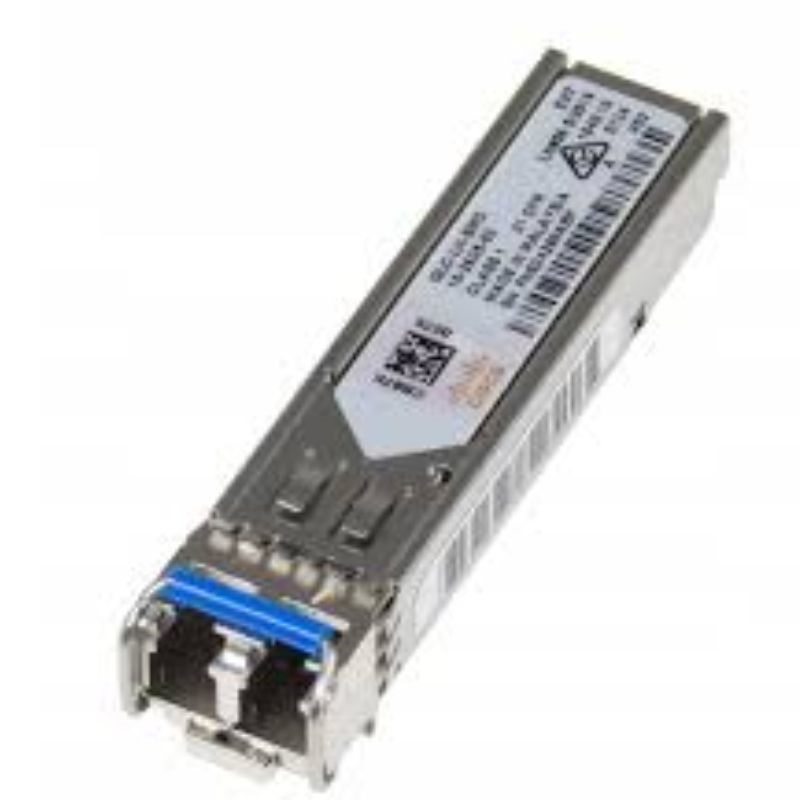


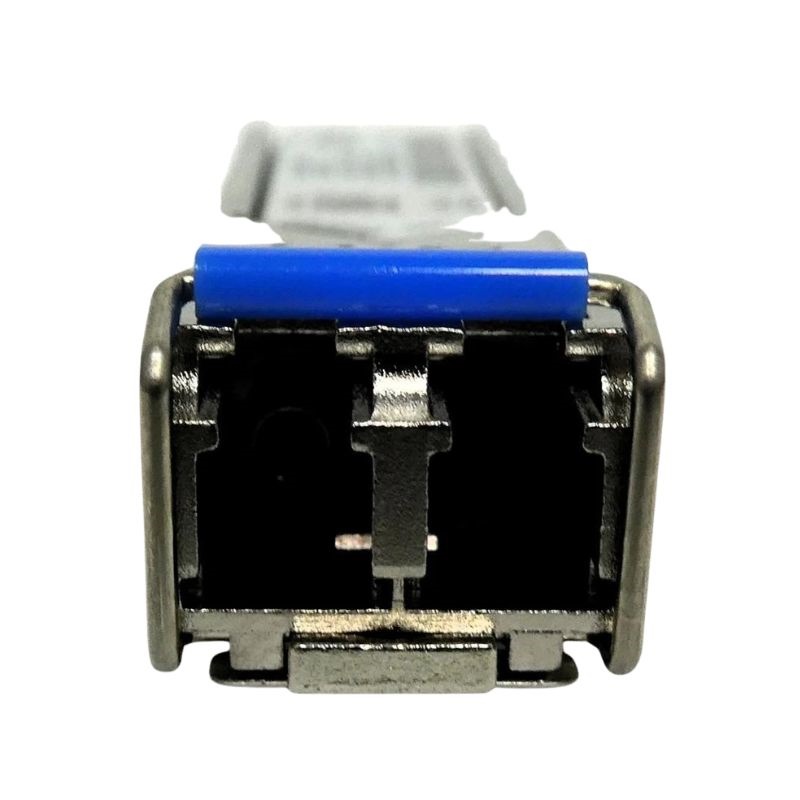
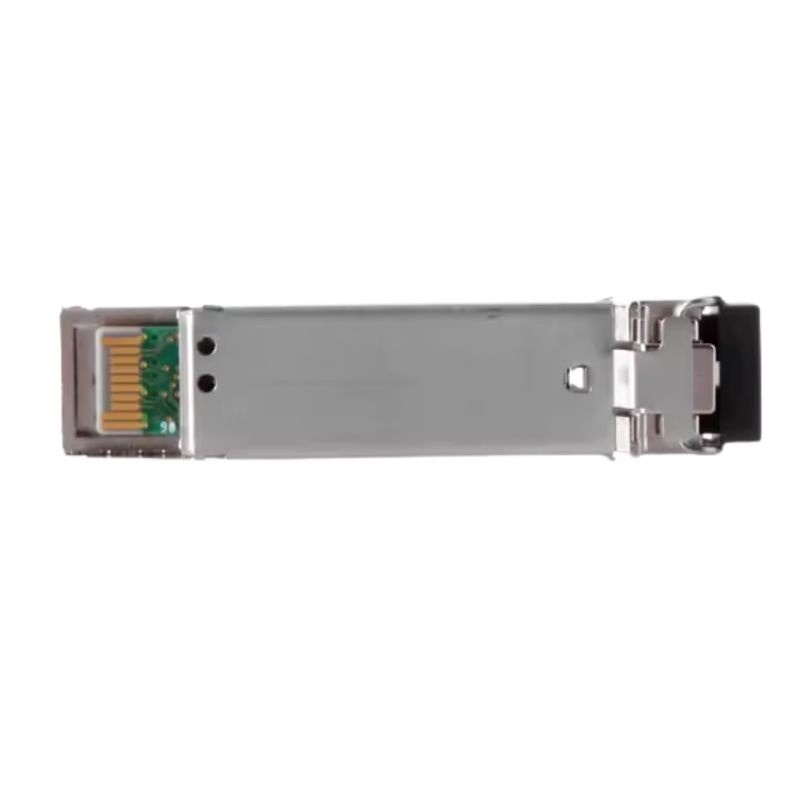
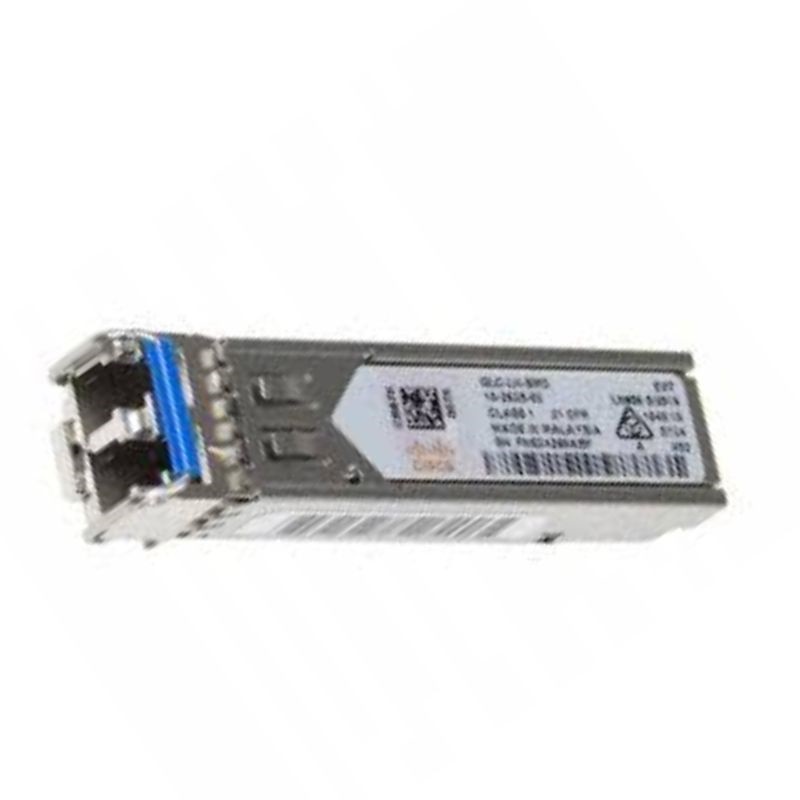
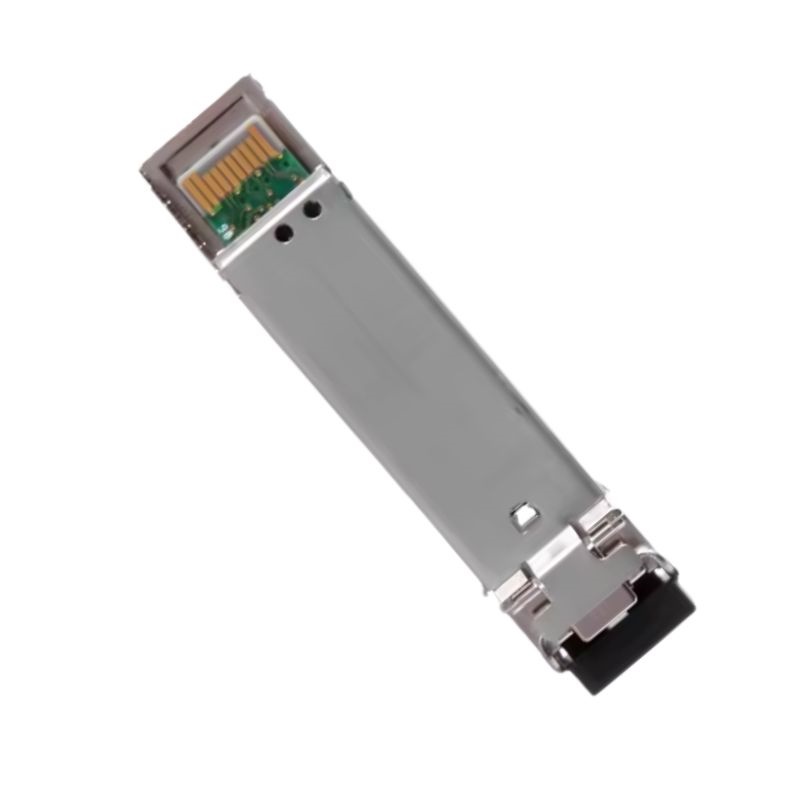
Cisco 10-2625-02 1GBPS SFP(Mini-GBIC) Transceiver Module. Factory-Sealed New in Original Box (FSB) with 1 year replacement warranty
| SKU/MPN | Warranty | Price | Condition | You save |
|---|---|---|---|---|
| 10-2625-02 | 1 Year Warranty | $75.00 | Excellent Refurbished | You save: $26.25 (26%) |
| 10-2625-02 | 1 Year Warranty | $170.00 | Factory-Sealed New in Original Box (FSB) | You save: $59.50 (26%) |
The Cisco 10-2625-02 small form-factor pluggable module delivers dependable 1 Gbps fiber uplinks for enterprise switching and routing. With an LC duplex interface and long-reach optics, it’s engineered for rock-solid campus backbones and distribution layers where stability and range matter.
*Distance depends on fiber type, splice quality, and attenuation budget.
Designed for Cisco platforms that accept SFP (mini-GBIC) plug-in modules. Always match transceiver type to switch/router slot capabilities and align with your fiber plant (single-mode recommended for LX/LH optics).
The Cisco 10-2625-02 1 Gbps SFP (often described as a Mini-GBIC) belongs to the widely adopted class of hot-swappable optical transceivers that bring flexible, standards-based Gigabit Ethernet connectivity to Cisco switches, routers, and network interface cards. As a category, these modules empower network architects to choose the right physical media—multimode fiber (MMF), single-mode fiber (SMF), or copper—on a per-port basis without replacing base hardware. That flexibility reduces total cost of ownership, streamlines sparing, and simplifies lifecycle upgrades. On campus access layers, aggregation blocks, branch routers, and even compact edge devices, 1 Gbps SFPs remain a practical and cost-efficient way to connect users, devices, and distribution layers over distances ranging from in-rack inches to inter-building kilometers.
Positioned within Cisco’s broader optical ecosystem, the 10-2625-02-class modules are designed to slot into SFP ports that negotiate Gigabit Ethernet line rates while providing physical-layer media conversion, signal conditioning, and link monitoring. In everyday terms, that means you can take a spare SFP bay on a Catalyst or Nexus switch—and, by choosing an SFP optimized for your cable plant—create a reliable, standards-based link to another switch, a server, a media converter, or carrier demarcation equipment. Because the SFP form factor was defined to be vendor-agnostic at the electrical interface, these modules also play well in mixed environments when paired with matching optics on the far end that meet the same IEEE Ethernet and MSA guidelines.
An SFP (Small Form-factor Pluggable), historically called a Mini-GBIC in some catalogs, is a compact transceiver that provides the physical interface for Ethernet over fiber or copper. The host system (switch/router/NIC) supplies power and data; the SFP handles laser/LED transmission, optical-to-electrical conversion, and low-level management and diagnostics. Hot-swap capability means you insert or remove the module without shutting down the chassis. The result is modularity: one device, many possible link types, and the freedom to standardize on a chassis family while tailoring the optical interface to each run.
Within a typical Cisco deployment, the 10-2625-02 1 Gbps SFP category is a workhorse for access and distribution interconnects, edge links to carrier equipment, and point-to-point server or storage connections that don’t demand 10 Gbps or higher. It complements SFP+ (10 Gbps) and QSFP (40/100 Gbps) uplinks by providing dependable, economical 1 GbE where it makes operational sense—such as legacy floors, long-tail IoT segments, out-of-band management networks, or DMZ segments where throughput needs are modest but reliability is paramount.
While individual transceivers in the 10-2625-02 category may vary in optical reach or fiber type, the shared value proposition centers on reliability, manageability, and interoperability. The following capabilities illustrate why 1 Gbps SFPs remain a mainstay in enterprise and service-provider environments.
Hot-swapping enables field teams to stage, test, and replace optics without downtime. In multi-tenant facilities or 24×7 campuses, this eliminates maintenance windows for routine changes—simply seat the latch, verify link LEDs, and the host system brings the interface up according to configured policies. This modularity reduces the need to stock multiple line-card variants; the same SFP port can serve MMF, SMF, or copper with the right module.
1 Gbps SFP transceivers adhere to widely recognized optical and electrical specifications defined by IEEE Ethernet standards and SFP Multi-Source Agreements (MSAs). When you deploy a Cisco 10-2625-02-class module at one end and an equivalent, standards-compliant optic at the other, you can form stable links across compliant cable plants. This standards baseline helps ensure that mixed-vendor environments maintain predictable behavior, provided both optics, patch cords, and fiber meet spec.
Most modern 1 Gbps SFPs expose Digital Diagnostic Monitoring (DDM)—sometimes called DOM—so administrators can read laser bias current, transmit power, receive power, temperature, and supply voltage directly from the switch CLI or NMS. These values are invaluable for rapid triage: low RX power can hint at dirty connectors or excessive attenuation; rising temperature might indicate airflow issues. With such telemetry, you can move from “link down” guesswork to targeted remediation.
Gigabit SFPs consume relatively little power compared to higher-speed optics, which means less heat, denser deployments, and lower cooling requirements. In wiring closets or compact IDFs where power budget and thermal headroom are constrained, 1 Gbps SFPs provide dependable connectivity while staying within the safe operating envelope of fanless or low-noise gear.
From a cost-per-port perspective, the 10-2625-02 category delivers affordable connectivity for edge links and aggregation scenarios that don’t justify 10G. For many business applications—VoIP handsets, printers, PLCs, badge readers, building management systems, and branch uplinks—1 Gbps line rate is more than sufficient. That economic sweet spot is why gigabit SFPs continue to be stocked as staples by integrators and enterprise ops teams alike.
Exact specifications depend on the optical variant, but 1 Gbps SFPs commonly share the attributes below. Use these as a planning baseline and always validate against the specific transceiver’s datasheet and your fiber plant test results.
Link budgets vary with fiber quality, patching, splices, and connector condition. In practice, short-reach MMF optics support intra-building distances, while long-reach SMF optics serve inter-building and metro spans. Always provision margin to accommodate aging and environmental factors.
With DOM, you can program alerts and thresholds for RX/TX power or temperature. This enables proactive maintenance—identify a degrading span before it causes traffic loss—reducing mean time to repair and protecting SLAs on critical VLANs or voice traffic.
Reputable 1 Gbps SFPs comply with applicable laser safety classifications and EMC standards. Ensure optics carry markings for recognized safety bodies and that your operating staff follow eye-safety guidelines when inspecting fiber ends or cleaning connectors.
The 10-2625-02 1 Gbps SFP category is broadly used across Cisco Catalyst, Nexus, ISR/ASR, Meraki-managed switches with SFP slots, and select server NICs that accept SFP modules. Compatibility depends on platform software, interface configuration, and transceiver coding; consult platform release notes and hardware compatibility matrices for precise guidance. Below are representative scenarios where these modules shine.
Access switches in IDFs feed distribution layers over existing MMF or SMF. Gigabit SFPs allow seamless extension of VLANs, QoS policies, and security zones across floors or buildings without forklift upgrades to 10G when traffic profiles don’t demand it.
At branch offices, routers or compact switches often leverage 1 Gbps optics to terminate carrier handoffs, connect to managed media converters, or extend to a demarc in another suite. Robust optics with DOM help support field operations where on-site test gear is limited.
OOB networks prioritize reliability, not throughput. Using 1 Gbps SFPs for isolated management fabrics preserves bandwidth for telemetry and maintenance windows, while keeping the optical plant simple and easy to validate.
In manufacturing floors, utilities, or transportation hubs, gigabit SFPs connect PLCs, SCADA gateways, cameras, and sensors to aggregation points. Fiber provides EMI immunity, intrinsic galvanic isolation, and long-run capability where copper would be impractical.
Whether you are modernizing a legacy campus or building a greenfield branch, 1 Gbps SFPs slot into a variety of designs. The key is aligning the optic to the fiber type and ensuring the link budget accommodates expected losses with ample headroom.
Some designs interconnect adjacent access switches over fiber to provide fast reroute paths independent of stack cables. Gigabit SFPs can serve as budget-friendly interconnects, particularly for modest east-west traffic such as printer or VoIP VLANs.
In small server rooms, direct SFP-to-SFP links between top-of-rack switches and legacy servers or storage heads provide predictable 1 Gbps throughput for backup, logging, or management interfaces. DOM helps confirm optical health during maintenance cycles.
Where copper endpoints exist but fiber is required for the run, pair an SFP-based media converter with a matching gigabit SFP to bridge the distance. This is common for security cameras and access control devices mounted far from telecom rooms.
On the distribution layer, gigabit SFPs can participate in ring topologies or dual-homed access designs employing Rapid Spanning Tree (RSTP) or link aggregation. While 10G is often preferred for core aggregation today, 1G still fits resilient edge designs where budget or cable plant constraints apply.
Align the SFP with the port, press gently until fully seated, and then secure the bail latch. An improperly seated optic can cause intermittent link flaps that resemble fiber faults. After seating, insert the cleaned LC connectors—transmit to receive, receive to transmit—observing the strand polarity markings on the patch cord.
Before mating connectors, use a dry fiber cleaning swab or cassette and inspect with a scope if available. A single speck of dust can scatter light and degrade RX power. If a first-pass clean does not yield healthy power levels, inspect both ends of the patch and the adapter sleeve in the bulkhead.
Verify link LEDs, check interface counters for errors, and view DOM values. Record initial RX/TX power and temperature in your as-built documentation—this baseline will be invaluable during future troubleshooting. If your platform supports it, set DOM threshold alerts to catch drift over time.
Transceivers interact with host platforms via EEPROM coding and low-level management interfaces, which means software matters. Confirm that your switch or router software release recognizes the optic and permits it. Keep release notes handy and, if your organization approves third-party modules, document the exact software builds where they are validated. During lifecycle refreshes, re-validate optics on new hardware to avoid surprises—some new platforms are stricter about coding or feature certain DOM interpretations that differ from legacy devices.
Choose 1 Gbps SFP when workloads are modest, budget is constrained, or cable plants limit higher-speed options. Move to SFP+ when aggregation or server uplinks regularly exceed gigabit throughput or when future-proofing mandates higher headroom. SFP+ optics draw more power and often require better airflow; evaluate closets accordingly.
Copper SFPs provide 1 GbE over twisted-pair cabling. They are convenient for short, flexible runs to legacy copper endpoints. Optical SFPs win where EMI immunity, galvanic isolation, or long distance is needed. Copper SFPs can introduce more heat per port; check power and thermal budgets before dense deployments.
MMF is cost-effective for short distances and supports convenient patching in building risers. SMF shines for long spans and future scalability. If your campus expansion plans include new buildings, investing in SMF backbones offers a clean upgrade path to higher speeds later, even if you deploy 1 Gbps SFPs today.
Most LC connectors you encounter will be UPC-polished; APC connectors (angled) are more common in certain PON or specialized deployments. Avoid mixing polish types unless the design explicitly calls for it. Across all types, treat cleaning as non-negotiable—scope, clean, scope again until you see a spotless endface.
Respect bend radius guidelines, especially in tight trays and behind dense patch fields. Use strain-relief boots and ensure adequate slack to avoid stress when moving equipment. Clear, consistent labeling across panels and patch cords speeds troubleshooting and reduces human error during changes.
Design dual-homed links from access to distribution using separate fiber paths when possible. Employ RSTP or link aggregation (LACP) according to your architecture. Even at 1 Gbps, a pair of diverse links can meet availability targets for user access and VoIP.
Leverage VLANs, private VLANs, and ACLs to enforce least privilege between segments carried over 1 Gbps uplinks. Where the platform supports it, 802.1X, DHCP snooping, and dynamic ARP inspection help harden the edge. While encryption (e.g., MACsec) is a feature of the host platform rather than the optic itself, a stable optical link is the foundation for secure control-plane features to operate reliably.
On converged networks, shape and prioritize voice and critical control traffic. Gigabit uplinks often suffice for floor-wide VoIP and surveillance feeds, but QoS ensures jitter-sensitive flows get the treatment they need during congestion.
Tie DOM metrics to your NMS and correlate with interface errors and syslog events. Build dashboards that flag unusual temperature spikes or gradually declining RX power—classic signs of a dirty panel or compromised fiber run. Early warnings can turn a future outage into a scheduled cleaning.
Deploy optics in accordance with local regulations for laser safety and telecommunications. In plenum spaces and secure facilities, ensure your patch cords and panels meet building codes and agency approvals. For sustainability programs, consider remanufactured optics from reputable sources and maintain a take-back stream for end-of-life units to reduce e-waste.
Because optics are easy to swap, unauthorized changes can slip in. Enforce change windows, seal panels when practical, and audit serials periodically. Enable port descriptions and SNMP traps so NOC teams get an alert when a port flaps unexpectedly.
Store optics in anti-static packaging with dust caps in place. Keep them in a climate-controlled environment away from contaminants. Label the box with received date and any internal validation notes; when pulled for field use, record where the unit is installed to maintain traceability.
A single 1 Gbps full-duplex link provides up to 1 Gbps in each direction. On access floors with bursty user traffic, this is often sufficient, particularly when endpoints spend much of their time idle. Where surveillance or backup traffic competes with user data, implement traffic shaping and consider dedicating separate uplinks (or VLANs with strict QoS) for steady-state flows like camera feeds. If regular utilization exceeds 60–70% during business peaks, profile the traffic and evaluate either a second aggregated 1 Gbps link or a step-up to 10 Gbps where feasible.
Optics transmit whatever the host platform forwards. On 1 Gbps SFP-based links, enforce security at the switch/router: enable control-plane policing, configure storm control on access ports that feed media converters, and lock down unused SFP ports administratively. For sensitive segments, pair these links with L2/L3 encryption features supported by the host, and ensure physical security of fiber pathways and patch fields to deter tampering.
Good records turn mysteries into routine fixes. Maintain diagrams showing each SFP port, optic type, fiber path, panel positions, and far-end device. Include DOM baseline snapshots and any peculiarities—such as an older riser panel that tends to attract dust—so future technicians know where to look first. Use durable labels on both cords and bulkheads, and keep digital photos of patch fields within the change record for visual context.
Gigabit optics already strike a favorable balance between cost and capability. You can stretch budgets further by standardizing on a narrow set of module SKUs, buying in sensible volumes, and using remanufactured units when policy allows. However, never economize on cleaning tools, test equipment, or patch cords; a high-quality jumper costs far less than a service outage or repeated truck rolls. Build TCO models that include supportability and downtime risk—not just unit cost—when selecting optics for critical paths.
Many organizations operate mixed environments where legacy 1 Gbps uplinks coexist with newer 10/25/40/100 Gbps fabrics. Plan your migration so that critical paths move first to higher speeds while non-critical or isolated segments continue on 1 Gbps SFPs. Where you anticipate future upgrades, invest in cable plants (especially SMF backbones and quality patch panels) that can accommodate higher-rate optics later with minimal re-work. Document which links are “evergreen” 1G and which are “transitional” so budget cycles align with technical priorities.
Sometimes 1 Gbps SFPs serve specialized roles: feeding low-bandwidth dark fiber runs for telemetry to remote sites, providing temporary links during renovations or cutovers, or extending connectivity to pop-up events. Their small size and hot-swap nature make them ideal for temporary deployments—just ensure change records and labels are updated when the event concludes so stray jumpers don’t become semi-permanent mysteries.
Whether you procure original Cisco-coded optics, certified remanufactured units, or third-party alternatives, implement an intake process. Visually inspect for damage, verify that DOM reads reasonable values on a test switch, and check EEPROM for expected coding where your policy requires specific vendor IDs. Keep a small test rig—compact switch, fiber cleaning kit, and a known-good patch cord—so receiving teams can validate optics before they enter field stock. This upfront diligence reduces DOA scenarios and builds confidence in your supply chain.
New technicians should become comfortable with fiber handling, cleaning, DOM interpretation, and basic optical test procedures. Short, hands-on labs—cleaning and inspecting connectors, observing the effect of a deliberately contaminated jumper on RX power, interpreting DOM thresholds—build intuition. Pair in-house training with concise runbooks that live in your knowledge base. Include photos, common error messages, and “symptom to likely cause” tables to facilitate quick triage when a link goes dark.
The Cisco 10-2625-02 1 Gbps SFP category remains a cornerstone of practical network design. Its strengths—modularity, standards-based interoperability, DOM visibility, low power, and approachable cost—align with the realities of enterprise and service-provider operations. When you match the optic to the fiber plant, enforce cleaning discipline, and integrate DOM telemetry into your monitoring, gigabit SFP links deliver the reliability your users expect. As your network evolves, these modules continue to serve as flexible building blocks—bridging legacy segments, underpinning out-of-band fabrics, connecting hard-to-reach endpoints, and supporting resilient designs—without overextending budgets or complicating operations.


 Contact Us
 Information
 Catalog
 Solid State Drives (SSD)
 Network Switches
 Hard Disk Drives
 HBA & Controllers
 PC & Servers
 PC & Server Memory
 CPU & Processors
 Network Routers
 Power Supplies
 Tape Drives & Libraries
 Network Devices
 Computer & Network Cables