(7% discount is applied at checkout)
Cart is empty
Your go-to destination for cutting-edge server products
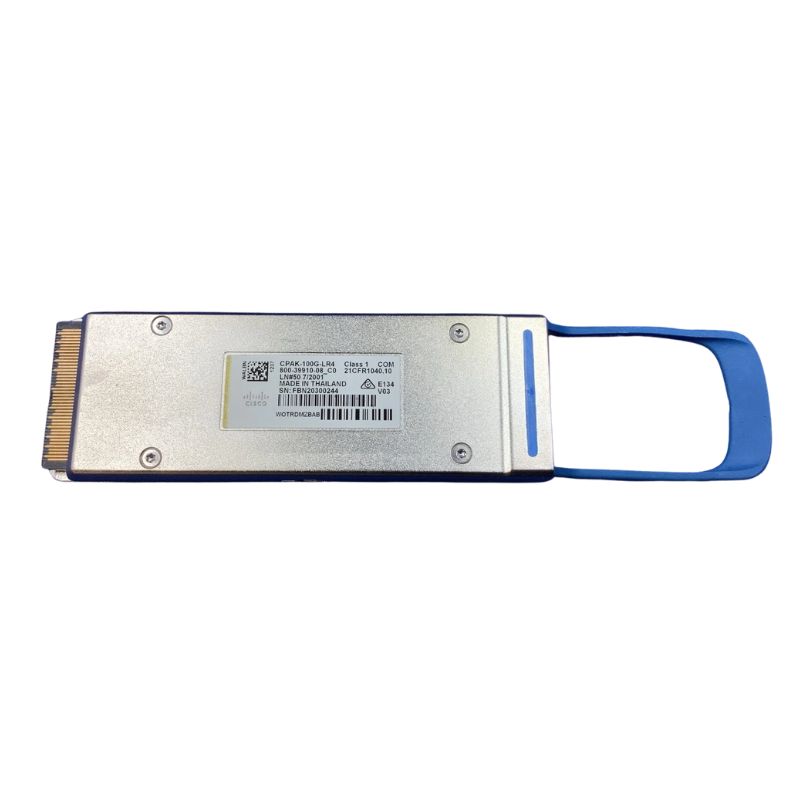


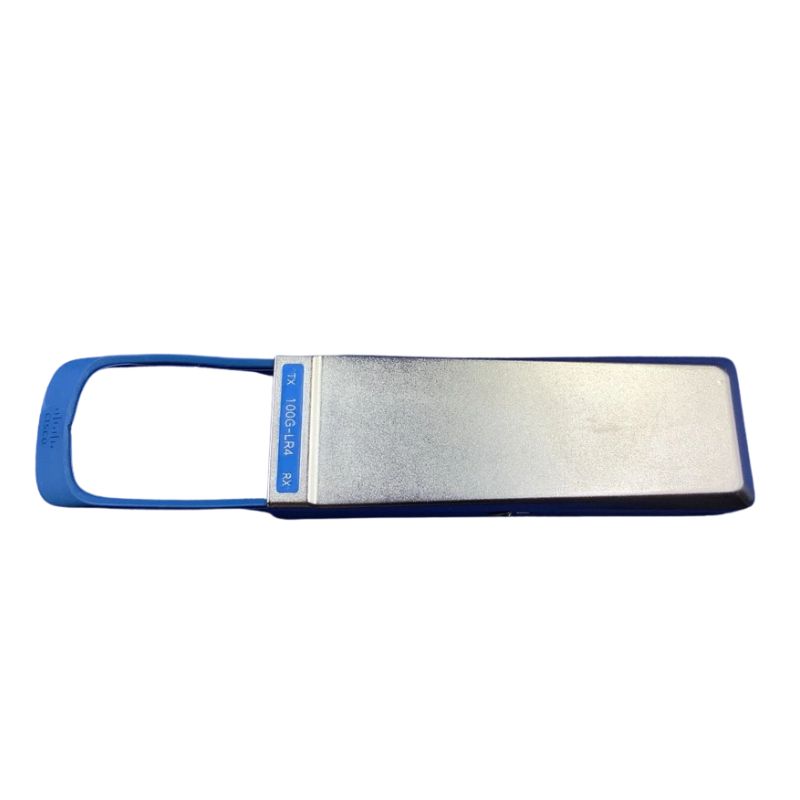
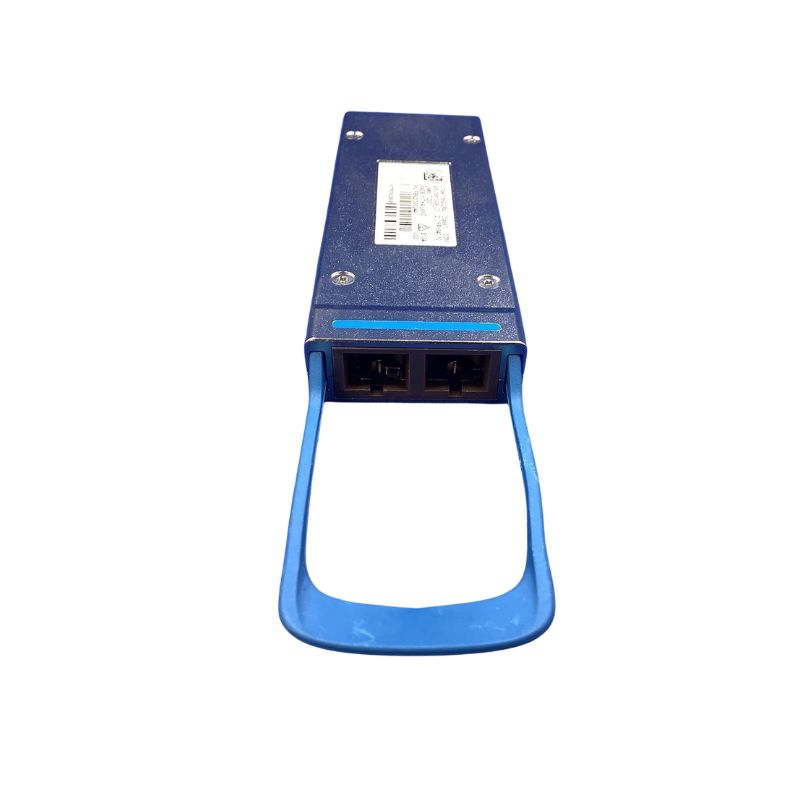
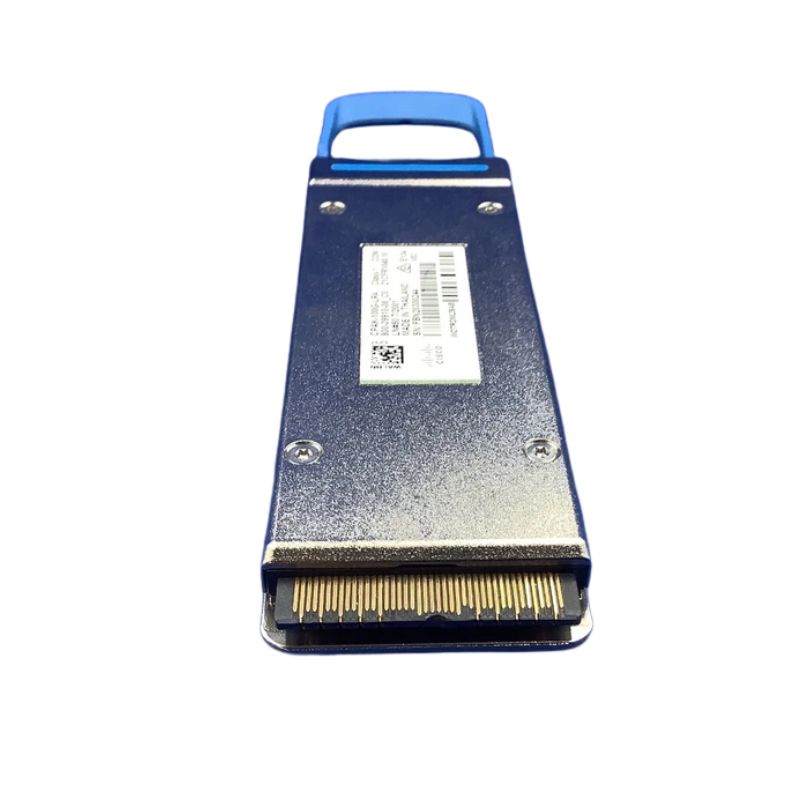
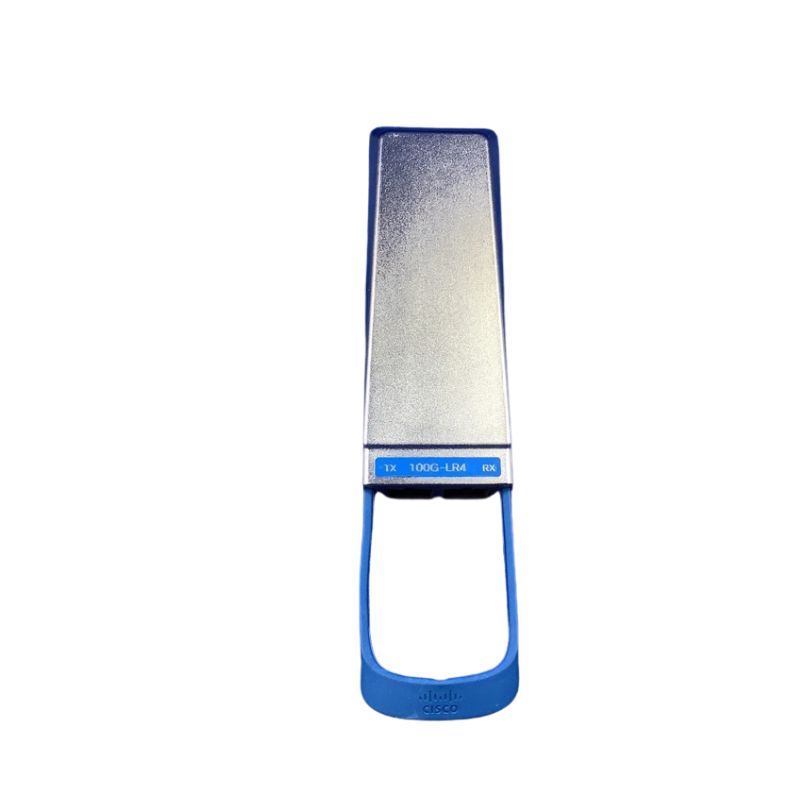
Cisco 10-2840-01 100 GBPS SMF 10km Transceiver Module. Factory-Sealed New in Original Box (FSB) with 1 year replacement warranty
| SKU/MPN | Warranty | Price | Condition | You save |
|---|---|---|---|---|
| 10-2840-01 | 1 Year Warranty | $78.00 | Excellent Refurbished | You save: $27.30 (26%) |
| 10-2840-01 | 1 Year Warranty | $250.00 | Factory-Sealed New in Original Box (FSB) | You save: $87.50 (26%) |
Cisco 10-2840-01 100GBASE-LR4 CPak Optical Transceiver
The Cisco 10-2840-01 CPak transceiver module delivers reliable long-reach 100 Gigabit Ethernet connectivity over single-mode fiber (SMF), making it an excellent solution for expanding bandwidth-intensive infrastructures. Designed for mission-critical data transport, this high-performance transceiver supports 100GBASE-LR4 cabling and offers streamlined interoperability across a variety of enterprise, carrier, and cloud-scale environments. With advanced digital optical monitoring, long-distance transmission capabilities, and IEEE 802.3ba compliance, it ensures exceptional quality and reliability for next-generation networking.
The Cisco 10-2840-01 100 GBPS SMF 10km Transceiver Module represents a class of high-speed optical interfaces designed to extend 100 Gigabit Ethernet links over single-mode fiber (SMF) for distances up to ten kilometers. This category page focuses on that module family and closely related subcategories: 100G single-mode optics, short to medium reach 100G modules, and Cisco-compatible OEM replacements. The description below covers the technical capabilities, real-world deployment scenarios, form factors, interoperability concerns, performance expectations, installation practices, and buyer guidance that network architects, purchasing managers, and operations engineers need to evaluate this transceiver for modern data center and campus backbone environments.
At its core, a 100 Gbps SMF 10 km transceiver like the Cisco 10-2840-01 is engineered to carry aggregate traffic at one hundred gigabits per second over single-mode fiber spans typical in campus interconnects, metro rings, and data center spine links. The module is optimized for links where low latency, high throughput, and predictable signal integrity are critical. Use cases include aggregation between core switches, inter-rack spine connections in large-scale leaf-spine architectures, metro connectivity between colocation facilities, and any point-to-point link where fiber plant distance approaches but does not exceed the 10-kilometer threshold.
Choosing a 10 km single-mode transceiver balances cost and reach. Compared with short-reach multimode options, SMF 10 km modules typically provide a lower total cost of link ownership for longer runs because single-mode fiber has lower attenuation and higher optical budget headroom. For organizations planning modest growth in link distance or anticipating slight increases in attenuation from splices and connectors, a 10 km-rated transceiver provides the headroom required for reliable operation without stepping up to more expensive long-haul optics.
Modules labeled as 100 Gbps for 10 km often come in standard form factors that are widely adopted across network vendors. The QSFP28 family is the most common physical form factor for 100G Ethernet today, offering a compact, hot-pluggable package and direct compatibility with QSFP28 ports on modern switches and routers. However, alternative form factors exist and are sometimes used in legacy or vendor-specific platforms. When evaluating a Cisco-branded SKU or third-party equivalent, confirm the module’s physical form factor and compliance with Multi-Source Agreements (MSAs) and IEEE standards to ensure seamless integration into your infrastructure.
Standards compliance ensures predictable electrical and optical behavior. Modules in this category typically adhere to IEEE Ethernet specifications for 100GBASE interfaces and follow MSA-defined pinouts and optical lane assignments. Compliance reduces the risk of compatibility issues, and buyers should look for explicit references to the relevant IEEE or MSA documents in product datasheets. When Cisco branding is present, the module also typically undergoes vendor validation against Cisco hardware platform firmware and diagnostics, which can be an important operational advantage.
Understanding optical performance metrics is essential when planning a 100G SMF link. Key parameters include transmitter output power, receiver sensitivity, wavelength plan, optical return loss (ORL), dispersion tolerance, and total link loss budget. For a 10 km single-mode link, attenuation from the fiber itself is minimal, but connectors, splices, and patch panels contribute measurable loss. A well-specified transceiver will provide an optical budget that covers the expected loss plus margin for aging and future re-terminations. Performance specifications also include bit error rate expectations, with network designers commonly planning around a BER of 10^-12 or better for production links.
Chromatic dispersion and polarization mode dispersion are wavelength-dependent phenomena that can degrade signal quality over distance. At 100 Gbps, transceivers incorporate digital signal processing (DSP), forward error correction (FEC), and lane management techniques to mitigate dispersion effects. When deploying over older fiber plants or over routes with many mechanical splices, validate that the module’s dispersion tolerance aligns with the fiber characteristics and that FEC options are enabled where supported by the active switching equipment.
Cable and connector selection influences installation flexibility and future upgrades. Single-mode 100G transceivers may use MPO/MTP, duplex LC, or other connector types depending on the optical architecture they implement. MPO-style connectors enable multi-lane solutions and can simplify ribbon fiber management for parallel optics, while duplex connectors are often associated with wavelength-multiplexed designs. When specifying cabling, always reference the transceiver datasheet to confirm required connector polarity, patching conventions, and any pre-terminated cable assemblies that simplify installation.
Route planning should account for minimum bend radii, cable restraint points, and the physical accessibility of patch panels. Carefully document the patching scheme and labeling to ensure consistent maintenance and to avoid accidental fiber swaps that can cause traffic outages. For installations that might later be upgraded to denser form factors or different wavelength plans, maintain spare fiber pairs in trunks to reduce forklift-style changes in the future.
Compatibility is a recurring theme when evaluating Cisco 10-2840-01 equivalents. Modules marketed as Cisco-compatible or Cisco-branded typically include vendor firmware signatures intended to encourage use within Cisco hardware ecosystems. However, certified third-party optics that conform to industry standards can provide equivalent performance at lower cost. To avoid interoperability surprises, operators should validate that the transceiver’s firmware, I²C EEPROM data, and diagnostic reporting features align with the switch or router firmware. Many modern platforms provide optics diagnostics through transceiver telemetry; ensure the module exposes SFF or QSFP EEPROM fields in a recognized format so monitoring and alarms function correctly.
Prior to broad deployment, perform staged interoperability testing on representative equipment. Validate link establishment, optical power levels, error counters, and the behavior of management features such as Digital Optical Monitoring (DOM). Pay particular attention to platform-specific behaviors like automatic port negotiation, supported FEC modes, and any vendor-specific configuration knobs. Document the results so teams can quickly reproduce known-good configurations in other deployment zones.
Network design choices influence the real-world performance of 100G links. Decide whether to use direct 100G links or break traffic into parallel lower-rate lanes with aggregation. Where jitter or microbursts are a concern, configure buffer and QoS parameters on adjacent switching gear. Take advantage of FEC settings when supported by both ends to increase link margin under noisy conditions. When building redundant topologies, use link aggregation or equal-cost multipath strategies to distribute traffic across available 100G paths while maintaining deterministic failover behavior.
For latency-sensitive applications such as high-frequency trading or financial market data feeds, minimize intermediate conversions and repeater points. Choose optics with minimal serialization delay and design the physical path to be as direct as possible. When network equipment offers hardware timestamping and latency measurement features, enable them during testing to demonstrate compliance with application SLAs.
The typical deployment scenarios for Cisco 10-2840-01 100G SMF 10 km optics include campus backbone uplinks, data center interconnects between adjacent facilities, aggregation links in carrier networks, and private metro rings. These modules are also useful in hybrid cloud architectures where consistent and high-capacity links between on-premises data centers and nearby cloud edge facilities are necessary. Their combination of bandwidth and reach is suited to environments where multi-gigabit consolidation is required without the expense or complexity of wavelength-division multiplexing solutions.
In a multi-pod data center architecture, spine-to-spine links often require non-blocking, high-throughput connections. Deploying 100G SMF 10km transceivers between spine nodes in separate rooms or adjacent buildings provides the throughput needed for east-west traffic while preserving a simple physical layer. When properly provisioned, these links support large-scale virtualization and microservices architectures that generate bursty and highly synchronized flows.
For service providers and carriers, 100G optics rated for 10 km are a pragmatic choice for metro aggregation and enterprise-grade services. They enable high-capacity circuits for business customers and feed into higher-capacity DWDM systems when necessary. Carriers often prioritize optics that support telemetry and in-band management so that field operations teams can perform remote diagnostics and expedite troubleshooting for service-affecting incidents.
When evaluating this category, consider alternatives such as 100G short-reach multimode optics for intra-rack and intra-pod links, or 100G long-reach DWDM optics for links well beyond 10 km. For scenarios where fiber plant investment is a concern, explore breakout approaches that use multiple 10G or 25G lanes aggregated to form a 100G service. Each alternative carries tradeoffs in cost, complexity, and scalability; document the assumptions for each choice and align the selection with your organization’s roadmap for bandwidth growth.
DWDM becomes attractive when you need to multiplex many high-capacity channels over a single fiber pair across tens to hundreds of kilometers. If your architecture anticipates long-distance interconnects or you must maximize fiber utilization across a metro or regional footprint, DWDM transceivers and line systems provide better spectral efficiency but at higher capital and operational costs.
For most campus and short metro links, a 100G SMF 10 km transceiver is the simplest, most cost-effective option. It preserves straightforward point-to-point connectivity without the need for complex wavelength management, making it a preferred choice for many enterprises and smaller carriers.


 Contact Us
 Information
 Catalog
 Solid State Drives (SSD)
 Network Switches
 Hard Disk Drives
 HBA & Controllers
 PC & Servers
 PC & Server Memory
 CPU & Processors
 Network Routers
 Power Supplies
 Tape Drives & Libraries
 Network Devices
 Computer & Network Cables