(7% discount is applied at checkout)
Cart is empty
Your go-to destination for cutting-edge server products
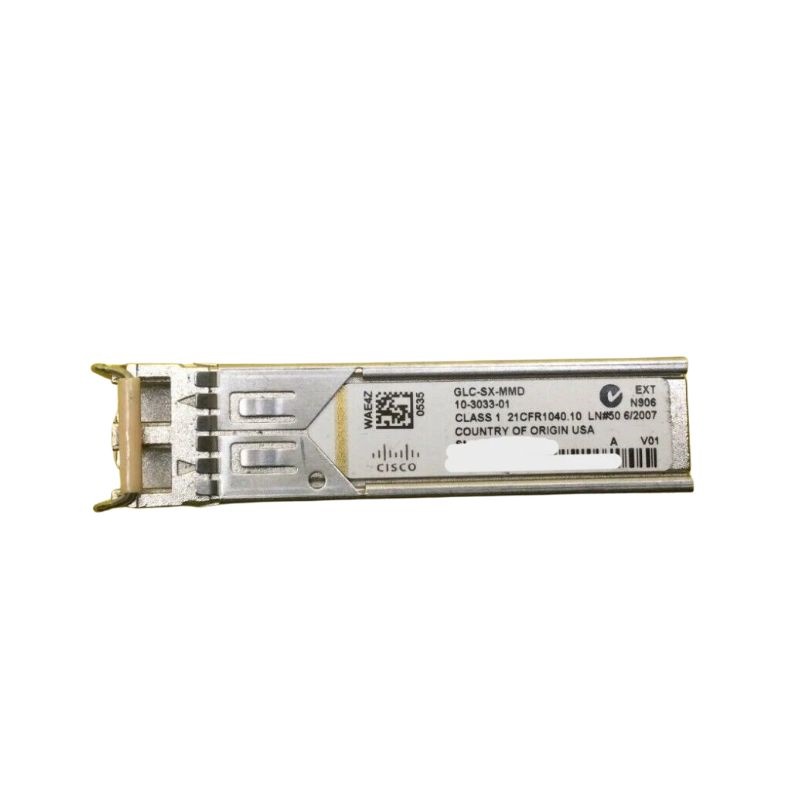


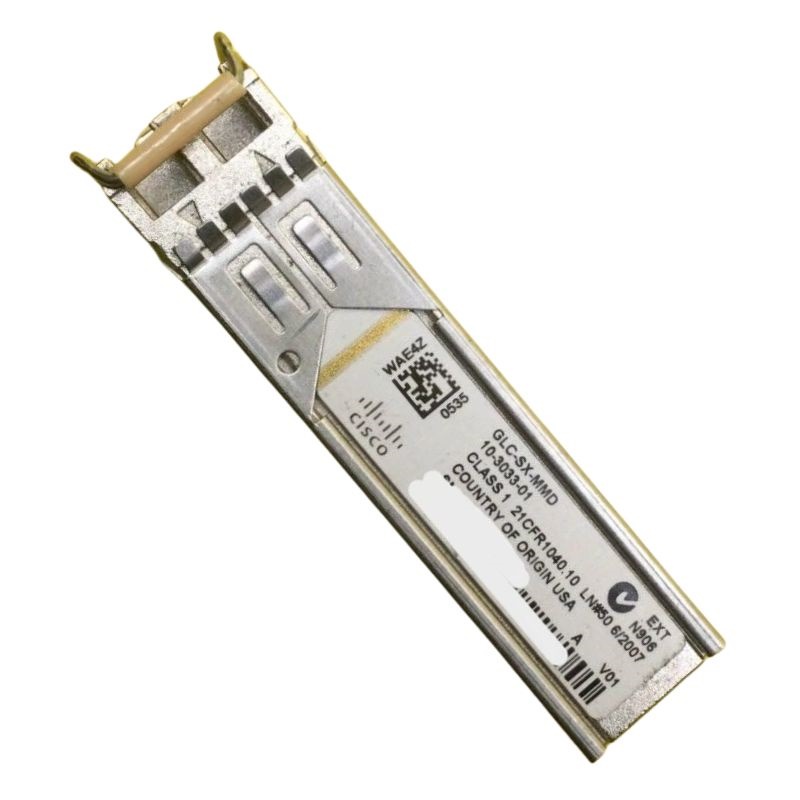
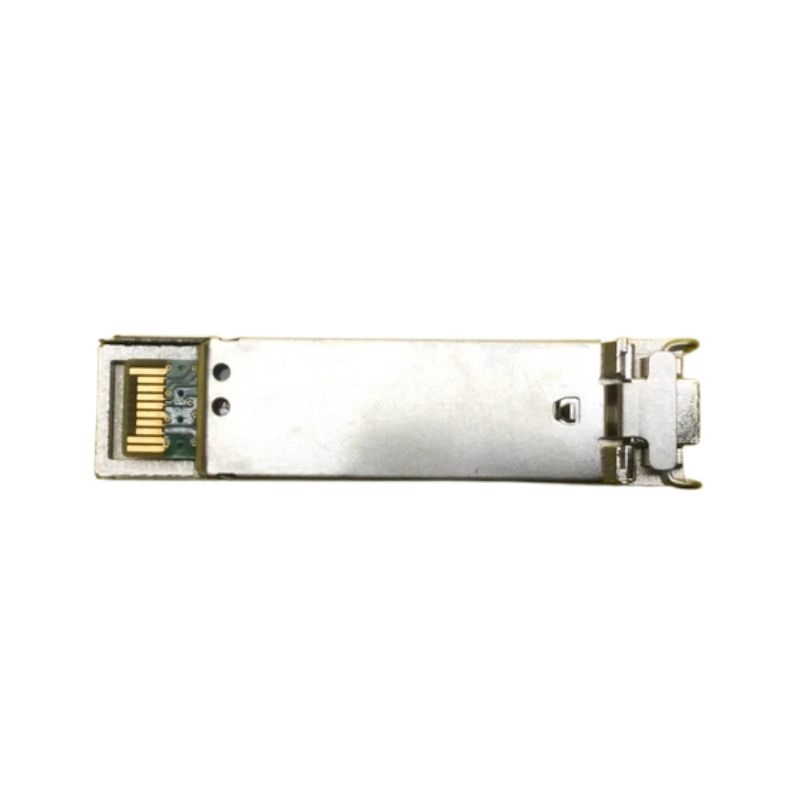
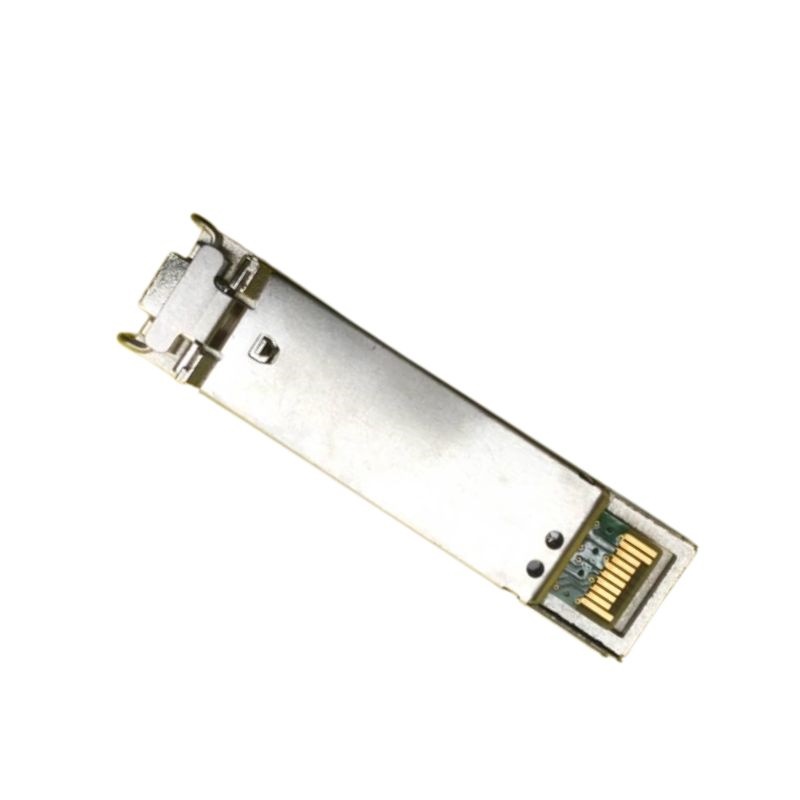
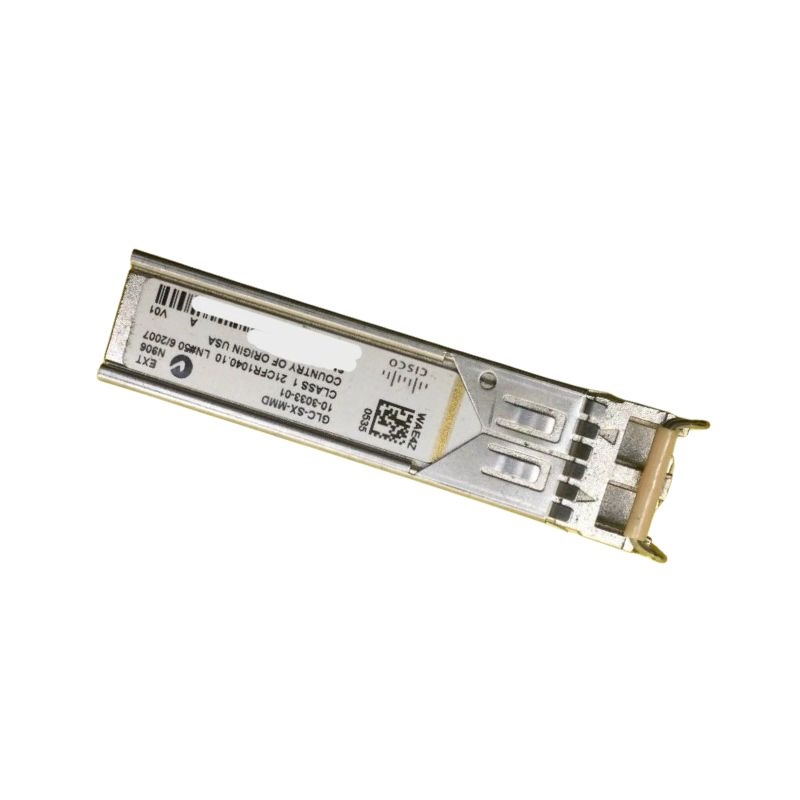
Cisco 10-3033-01 1GBPS SFP Transceiver Module. Excellent Refurbished with 1 year replacement warranty
| SKU/MPN | Warranty | Price | Condition | You save |
|---|---|---|---|---|
| 10-3033-01 | 1 Year Warranty | $50.00 | Excellent Refurbished | You save: $17.50 (26%) |
| 10-3033-01 | 1 Year Warranty | $147.00 | Factory-Sealed New in Original Box (FSB) | You save: $51.45 (26%) |
Cisco 10-3033-01 is a compact, hot-swappable Small Form-factor Pluggable (SFP) optical transceiver designed for short-reach Gigabit Ethernet over multimode fiber. Frequently referred to as a “mini-GBIC,” this module enables network administrators to add or replace fiber uplinks on demand, deliver predictable 1 Gigabit connectivity in campus, branch, and data center networks, and scale uplink capacity without taking the host device offline. With its LC/PC duplex interface, 850 nm optical wavelength, and multi-mode fiber optimization, the 10-3033-01 sits at the sweet spot of affordability, energy efficiency, and reliable performance for distances that typically span wiring closets and building risers.
Whether you are refreshing legacy Catalyst access layers, aggregating wireless controllers, connecting server farms to aggregation switches, or extending a VLAN between adjacent buildings, the 1000BASE-SX optics profile embodied in the Cisco 10-3033-01 provides a standards-based, interoperable option that keeps costs under control while meeting the most common short-range fiber requirements.
The 1000BASE-SX SFP category covers short-range Gigabit optical transceivers that operate around the 850 nm wavelength and use multimode fiber. These modules are ideal for intra-building and inter-closet links where fiber is already present and distances are modest. The LC/PC connector presents a small footprint that densely populates switch or router SFP cages, while the PC (physical contact) polish—often equivalent to UPC in modern LC assemblies—delivers low insertion loss and predictable return loss for duplex transmission.
Within this category, SKUs like Cisco 10-3033-01 stand out because they balance adherence to open standards with Cisco’s rigorous hardware qualification. This makes them especially suitable for long-lived enterprise deployments where stability and multivendor interoperability matter.
The Cisco 10-3033-01 1000BASE-SX module is tuned for 850 nm operation and designed to work over duplex LC multimode fiber pairs. The achievable distance depends on fiber core size, modal bandwidth, splicing quality, patch cord count, and cleanliness of connectors. Typical guidance includes:
Because link budgets can vary with patch count and aging fiber, it is best practice to model total loss—including connectors (typically 0.2–0.5 dB each), splices (~0.1 dB), and fiber attenuation (~3.0 dB/km around 850 nm)—to confirm adequate margin for both transmit and receive specifications.
SFP modules connect to host platforms through an MSA-defined electrical edge connector. The 10-3033-01 communicates 1000BASE-X signals at a 1.25 Gbaud line rate and exposes the standard two-wire serial interface (I²C) for EEPROM, vendor ID, and optional diagnostic monitoring (if supported by the specific hardware revision). Cisco switching and routing families that provide SFP ports for 1G include a wide range of Catalyst, Nexus, ISR/ASR edge routers, and industrial Ethernet platforms. Always validate device compatibility matrices and software release notes for your exact platform and code train.
The LC (Lucent Connector) is a small-form optical connector with a 1.25 mm ferrule, chosen for its high port density and latch stability. The “PC” suffix indicates a physical contact polish. In practice, LC/PC and LC/UPC are commonly used interchangeably in modern patch cords, both offering low insertion loss and good return loss for multimode applications. Pair the transceiver with high-quality duplex LC patch cords rated for MMF at 850 nm to maintain optimal performance.
Most enterprise campuses rely on short runs of multimode fiber between IDFs (Intermediate Distribution Frames) and MDFs (Main Distribution Frames). The Cisco 10-3033-01 is well suited for uplinking access switches to distribution layers, interconnecting floors, and aggregating IP phones, printers, and desktop VLANs into higher-capacity cores. With hot-swap capability, upgrades are straightforward and downtime minimal.
As wireless access points (APs) generate significant east-west and north-south traffic, access switches need resilient uplinks. Deploying paired 1000BASE-SX SFPs lets you build redundant fiber uplinks with link aggregation (LACP) or spanning-tree-based failover, balancing reliability and cost.
For VMware, Hyper-V, or KVM clusters, management and vMotion networks often use 1G links separate from 10G/25G data paths. The 10-3033-01 provides an economical, low-latency optical uplink for out-of-band management, IPMI/Redfish, or backup replication between racks within the same room or building.
Video surveillance and physical security systems frequently backhaul camera traffic to aggregation switches. Multimode fiber’s immunity to electromagnetic interference and the SFP’s compact footprint make 1000BASE-SX optics a dependable choice for IP camera aggregation, NVR connectivity, and inter-closet security infrastructure links.
Institutions and venues with expansive floor plans benefit from fiber uplinks that traverse long corridors and multiple IDFs. The Cisco 10-3033-01 simplifies standardized spares management across buildings and supports the churn of seasonal expansions and remodels common to schools, hospitals, hotels, and convention centers.
Within a Gigabit campus or edge topology, the Cisco 10-3033-01 provides a consistent 1 Gbps full-duplex link with low latency, ideal for time-sensitive applications such as IP voice signaling, building automation backbones, and supervision networks. The 850 nm multimode approach reduces susceptibility to EMI, and hot-plug operation ensures uptime when replacing optics during routine maintenance.
Compared to higher-speed optics, 1000BASE-SX SFPs draw modest power—helpful in dense line cards and fan-constrained access closets. Ensure adequate airflow around the SFP cages, avoid blocking ventilation with cable bundles, and keep dust filters clean to maintain thermal headroom.
While 10GBASE-SR offers higher bandwidth, it requires 10G-capable host ports and optics. Many access layers still leverage 1G for management, PoE camera backhaul, or low-duty uplinks. The 10-3033-01 remains a pragmatic choice when cost per port, power draw, and legacy compatibility are primary considerations.
Some environments favor single-fiber (BiDi) SFPs to conserve fiber strands. However, 1000BASE-SX with duplex LC is simpler, widely supported, and easier to troubleshoot. If you require BiDi, ensure both ends use matched wavelength pairs and verify platform support.
The 10-3033-01 adheres to the IEEE 802.3z 1000BASE-SX standard and follows the SFP Multi-Source Agreement (MSA) for physical and electrical specifications. This promotes interoperability with compliant peer optics from other vendors when properly matched by wavelength and type. In mixed environments, always test representative links in a lab or staging rack before broad deployment.
Digital Diagnostics Monitoring—also called DOM or DDM—can expose real-time telemetry, including transmitter bias current, supply voltage, temperature, and optical Tx/Rx power. Platform and hardware revision determine visibility; confirm on your device whether DOM is supported for Cisco 10-3033-01. Where available, set thresholds and SNMP traps to catch drift early.
Optical uplinks like those enabled by the 10-3033-01 are foundational to secure campus architectures. Pairing the SFP with 802.1X, MACsec (if supported on the host port), and ACLs hardens the edge. Physical security—locking patch panels and controlling MPOE/IDF access—prevents tampering. For regulated industries, maintain an optical plant log documenting routes, panel IDs, and port mappings to support audits.
Because SX optics are ubiquitous, keeping a stock of Cisco 10-3033-01 modules streamlines break/fix support and enables rapid capacity adds. Label each optic with install date and device/port metadata. Use a simple RMA workflow: failed link isolation, swap test, DOM capture (if available), and return authorization through your standard vendor channel.
While SFPs themselves do not carry upgradable firmware in the conventional sense, host devices interpret optical diagnostics and transceiver identification. Aligning switch/router software versions with vendor recommendations can resolve interpretability quirks or enforce supported transceiver lists. Always review release notes for SFP-related fixes.
To validate feasibility, sum expected losses and compare to the module’s typical transmit power and receiver sensitivity ranges (consult platform documentation for exact values):
Example: A 300 m OM3 link with four connector pairs (8 connectors total) might present ~0.9 dB fiber loss + ~2.4 dB connector loss = ~3.3 dB, before adding safety margin—typically within the comfort zone for 1000BASE-SX.
Maintain consistent A-to-B labeling across panels. On duplex LC, Tx from device A should arrive at Rx on device B. If the link fails to come up, the most common first check is a simple polarity swap at one end.
Typical enterprise SFPs operate in standard ambient ranges (often around 0°C to 70°C for commercial temp variants). Keep closets within recommended environmental envelopes. Excessive humidity and dust can accelerate contamination; filtered ventilation and regular maintenance extend optical life.
In manufacturing floors or transportation hubs, consider rack stabilization and strain-relief bars. Ensure LC connectors click firmly into the transceiver; loose latches can produce intermittent errors under vibration.
OM1 (62.5/125 μm) is common in older buildings and offers adequate bandwidth for short SX links. OM2 (50/125 μm) improves reach. OM3 and OM4 are laser-optimized for 850 nm VCSELs, providing higher effective modal bandwidth that stabilizes performance at longer distances and through more patch panels.
Use labeled LC patch panels and, where density is high, MPO-to-LC cassettes for structured cabling. Follow bend radius guidelines and route cords along dedicated managers to avoid pinching and induced micro-bends that degrade signal quality.
An affordable fiber toolkit—click cleaners, lint-free swabs, inspection scopes, and simple power meters—pays for itself quickly by reducing truck rolls and mean time to repair. Incorporate cleaning into every patching event.
Consistent labeling (site-ID, rack-U, panel-port, device-port) minimizes human error. Keep a living diagram of fiber routes and patch mappings in your CMDB or network documentation system.
Maintain a minimum spare count calculated from your installed base and criticality. Track SFP serials and installation dates to correlate failure rates and manage warranty claims efficiently.
A compact transceiver standard used for network interfaces. Supports hot-swap and a variety of optical/copper types.
Gigabit Ethernet over short-wavelength optics at 850 nm, optimized for multimode fiber and distances typically up to a few hundred meters.
LC connector with physical-contact polish, commonly used for duplex multimode and single-mode connections; offers low insertion loss.
Digital Optical Monitoring or Digital Diagnostics Monitoring; provides telemetry like Tx/Rx power and temperature when supported.
Categories of multimode fiber characterized by core size and modal bandwidth; OM3/OM4 are laser-optimized and preferred for new 850 nm deployments.
Multi-Source Agreement defining mechanical and electrical interoperability for pluggable modules like SFPs.


 Contact Us
 Information
 Catalog
 Solid State Drives (SSD)
 Network Switches
 Hard Disk Drives
 HBA & Controllers
 PC & Servers
 PC & Server Memory
 CPU & Processors
 Network Routers
 Power Supplies
 Tape Drives & Libraries
 Network Devices
 Computer & Network Cables