(7% discount is applied at checkout)
Cart is empty
Your go-to destination for cutting-edge server products
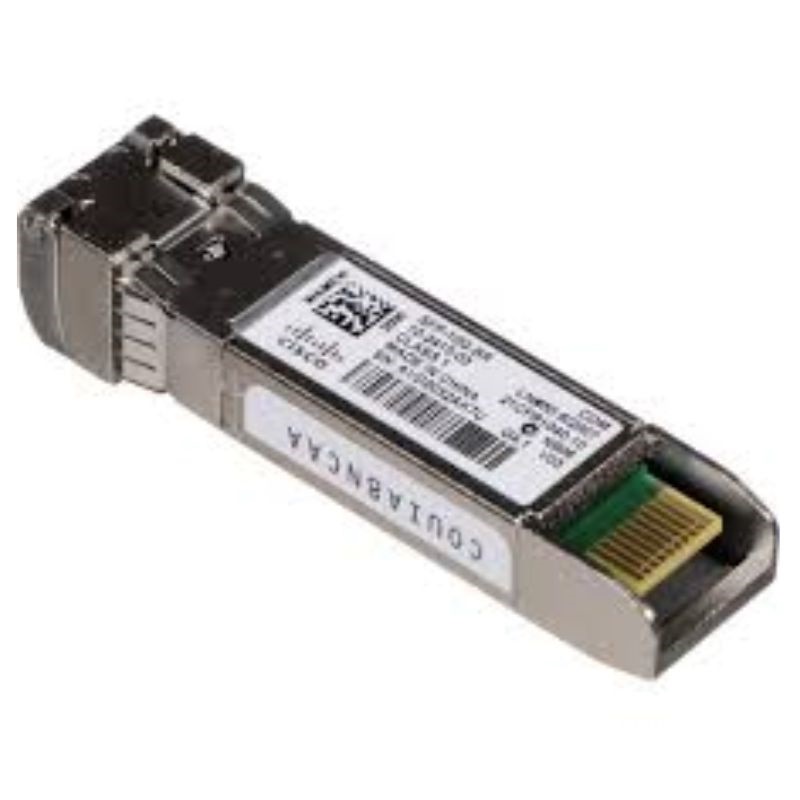


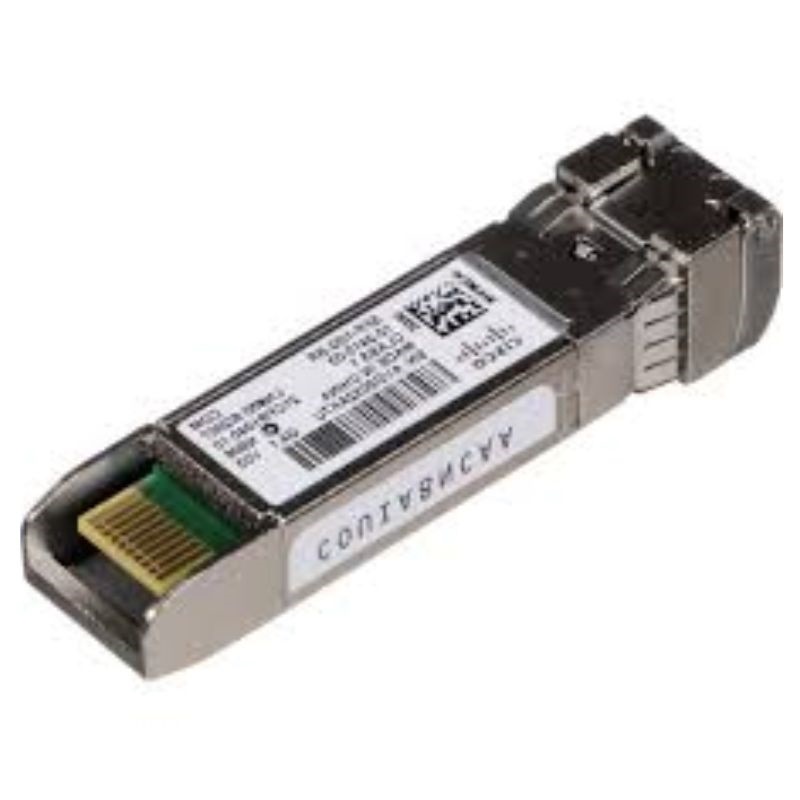
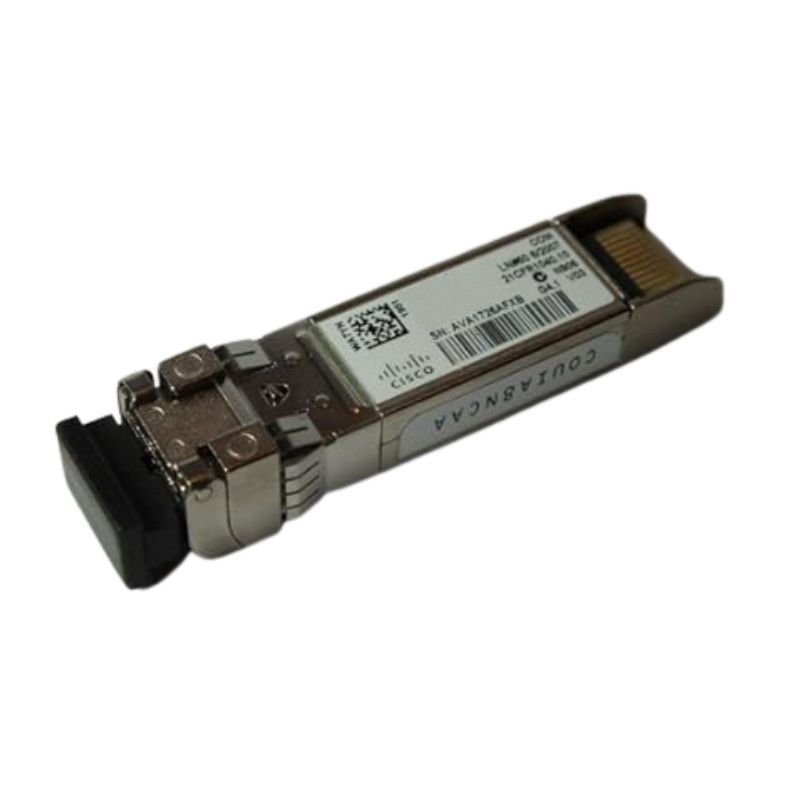
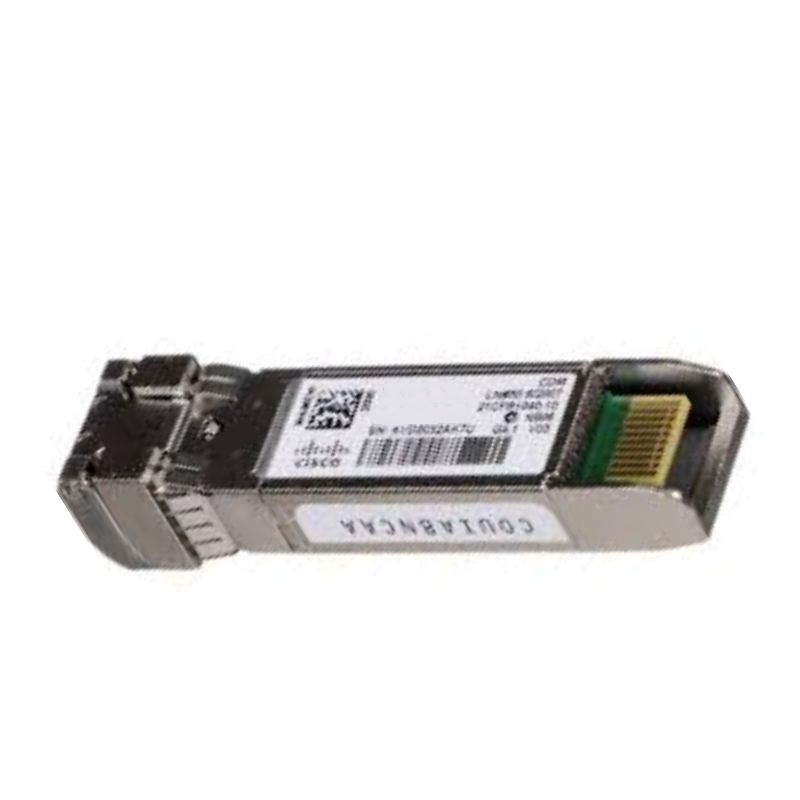
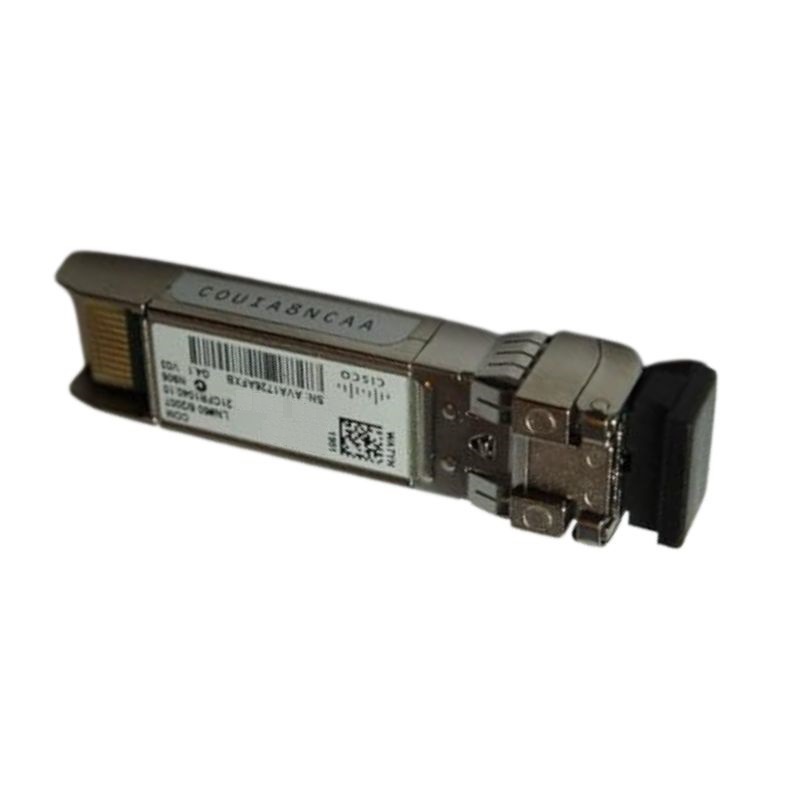
Cisco 10-3105-02 SFP+ 10GBPS LC/PC Multi-Mode Transceiver Module. Factory-Sealed New in Original Box (FSB) with 1 year replacement warranty
A compact, hot-swappable optical transceiver engineered for short-reach 10 Gigabit Ethernet links over multimode fiber (MMF). Optimized for LC/PC duplex connections and built to Cisco’s stringent reliability standards.
The Cisco 10-3105-02 10GBASE-SR LC/PC multimode transceiver module addresses one of the most common needs in modern enterprise, campus, and data center networks: efficient, cost-effective 10 Gigabit connectivity over short distances. Operating at a nominal wavelength of 850 nm and optimized for duplex multimode fiber (MMF) with LC/PC connectors, this optics form factor enables wire-speed 10 GbE links with low power draw and simple, hot-swappable installation. Typical reach profiles span fiber types from legacy OM2 to high-performance OM4/OM5, allowing well-planned cabling plants to achieve distances of up to approximately 1310 ft (≈ 400 m) under ideal conditions. Whether you are equipping top-of-rack (ToR) switches, building aggregation layers, or upgrading server uplinks, a short-range 10 GbE optic like the Cisco 10-3105-02 streamlines deployment and standardizes spares across teams.
Short-Range 10 GbE Optics Fit in the Broader Optical Landscape
Not every 10 Gigabit application requires the long-haul reach of single-mode solutions. Inside buildings, between rows in a data hall, or across a floor in an office tower, most fiber runs are well under half a kilometer. 10GBASE-SR is purpose-built for these scenarios, leveraging 850 nm vertical-cavity surface-emitting lasers (VCSELs) to drive cost-effective multimode links. The Cisco 10-3105-02 belongs to this short-reach category, pairing compact optics and LC/PC connectors to minimize capex, simplify cable management, and keep thermals in check. Compared with twinax DACs, SR optics provide greater flexibility and extended distance; compared with LR single-mode modules, they reduce fiber costs and loosen tolerances for tight-radius, high-density cable routing.
The Cisco 10-3105-02 embodies the expected characteristics of an SR-class 10 GbE optic while aligning with the physical and electrical behaviors required for seamless integration in Cisco switching and routing platforms. The following attributes summarize what to expect during planning and deployment.
Operating at 850 nm, the module targets duplex multimode fiber with LC/PC connectors. The “PC” denotes physical contact end-face geometry—standard in enterprise LC connectors—designed to reduce back reflection compared with older flat-polish styles. The module uses two fibers (transmit and receive) and relies on the modal bandwidth characteristics of OM-class MMF to achieve its maximum distances.
Real-world reach depends on fiber core size, modal bandwidth, connector quality, and installation practices. A common planning baseline for 10GBASE-SR links is:
Hot-swap behavior is essential in environments where downtime must be minimized. The Cisco 10-3105-02 supports tool-less insertion/removal from compatible cages, allowing maintenance teams to replace optics without shutting down chassis or line cards. This property also facilitates rapid troubleshooting: swap a suspected optic with a known good spare, re-test, and restore service in minutes.
Digital optical monitoring—frequently referred to as DDM or DOM—exposes telemetry such as transmit optical power, receive optical power, module temperature, and supply voltage. Surfacing these values through the network OS (for example, via CLI or streaming telemetry) allows operations teams to:
SR optics are favored for their relatively low power draw compared with longer-reach modules. In high-density rows—particularly when every slot is populated—thermal headroom becomes just as critical as port count. Using short-range 850 nm modules helps maintain airflow targets and power budgets while delivering full 10 Gbps performance.
Designing around SR modules requires attention to cabling topology, patching density, channel loss, and future migration paths. The subsections below provide prescriptive patterns that work well in both greenfield and brownfield environments.
In a leaf/spine architecture, 10 GbE SR optics are commonly used for server access and sometimes for leaf-to-spine uplinks when distances are modest. Where spine uplinks approach 100 m or when oversubscription is low, SR remains viable and cost-effective. For longer spine distances or when cabling traverses pathways with limited MMF availability, plan for LR single-mode on those particular links while keeping SR at the access layer.
SR optics are ideal for connecting servers to their ToR switch when fiber is preferred over copper. Typical motivations include tighter bend radii, cleaner cable dressing, reduced electromagnetic interference (EMI), and the need to route links through crowded trays where twinax DAC stiffness is a liability. The Cisco 10-3105-02 provides the simplicity and reliability needed in these dense server bays, supporting predictable, uniform cabling across different vendors’ NICs and switch ports that accept Cisco-compatible 10GBASE-SR modules.
Many enterprise buildings already host OM3/OM4 cabling between IDFs. Deploying the Cisco 10-3105-02 into these fiber paths can unlock immediate 10 GbE upgrades without re-pulling cable. Verify link length, connector count, and cleanliness to ensure the installed base meets SR link budgets; when in doubt, clean and test both ends before turn-up.
The physical plant is commonly the difference between a plug-and-play project and an extended troubleshooting session. Even though 10GBASE-SR is forgiving compared with long-haul optics, the following practices will improve first-time-right outcomes.
Always protect LC ferrules with dust caps when not in use. Before mating any connector, inspect with a scope and clean if necessary using dry, lint-free cleaning tools. Repeat the process for both ends of the channel—including any intermediate panels. Contamination or residue can introduce insertion loss and back reflection, degrading receive power and signal integrity. A preventive cleaning routine is faster than reactive remediation after a link fails.
Respect the minimum bend radius of duplex patch cords and trunk cables. Avoid tightly cinched Velcro ties; use multiple loose ties instead of a single tight one. In ladder racks and underfloor trays, route MMF away from high-heat zones and power feeds to reduce thermal stress. Where fiber trays are congested, stagger patch lengths to create smooth cable waterfalls toward the switch ports and prevent pinch points that can create micro-bends.
10GBASE-SR offers a modest link budget, so each mated pair matters. Keep a running tally of expected losses per connector and per splice in your channel documentation, then compare with optical test results. When design distances are near the SR limits for a given OM grade, favor fewer panels and premium components rated for low insertion loss.
At the MAC layer, 10GBASE-SR delivers full-duplex 10 Gbps line rate. Real-world throughput is shaped by switch silicon, NIC offloads, jumbo-frame configuration, and upstream buffering policies. From a physical standpoint, SR optics add negligible latency—on the order of nanoseconds for the optical conversion—so end-to-end delay is dominated by switching and queuing. Reliability depends primarily on fiber plant quality, ambient temperatures, and adherence to handling practices.
Many data center designs enable jumbo frames (e.g., MTU 9000) to improve efficiency for storage and virtualization traffic. SR optics readily support jumbo frames; ensure both ends of the link and any intermediate VLAN bridges are configured consistently to avoid fragmentation or drops.
If a link intermittently flaps, isolate layers methodically:
The Cisco 10-3105-02 is engineered for use in Cisco platforms offering 10 GbE short-reach optical ports. Always match the optic form factor to your equipment’s cages (for example, SFP+, X2, XENPAK, or other depending on platform generation), ensure that the network OS release supports the optic, and confirm that the remote end uses a standards-compliant 10GBASE-SR module. Interoperability is generally straightforward when both sides adhere to IEEE 802.3ae specifications and MSA behaviors, but platform software may restrict unsupported third-party optics or require administrative commands to enable them.
It is common to mix SR optics with DACs and LR optics within the same switch. SR links can terminate on patch panels and structured cabling, while DACs handle ultra-short intra-rack hops to reduce optic count. Longer inter-building or inter-row runs can use LR single-mode optics on dedicated ports. Document every media type and color-code jumpers where practical to help technicians avoid cross-patching between MMF and SMF infrastructure.
Scaling from a handful of SR links to thousands introduces new considerations. Beyond link budget math, operators must account for operations workflows, spare strategies, and growth paths to 25/40/100 Gbps.
Keep a structured spare pool for SR optics distributed across data halls and wiring closets. A common ratio is 3–5% spares for the total installed base, adjusted for lead time and vendor maintenance contracts. Implement RMA procedures and an optics quarantine shelf for modules removed due to suspected faults; label quarantine items with the port, time, and observed symptoms to support failure analysis.
Accurate documentation eliminates guesswork during incidents. Maintain a live map of patch panel positions, fiber routes, and switch port assignments. Tag each link with unique IDs at both ends. Where supported, integrate DOM telemetry into your NMS/monitoring stack and tie alerts to the documented path so that an RX power alarm automatically identifies its physical route for on-site technicians.
Choosing OM4 or OM5 trunking at the outset makes later transitions smoother. 25G SR, 40G SR4, and 100G SR4/SR10 families can reuse multimode infrastructure with MPO-to-LC breakouts or trunk upgrades, depending on the target topology. When planning for future 25G or 100G, minimize connector counts and choose components rated for tighter insertion-loss budgets to preserve headroom.
A disciplined test plan turns installation confidence into operational certainty. Before accepting a build, verify physical and logical parameters thoroughly.
After optics insertion and cabling, enable the ports and confirm link status and DOM readings. Perform burn-in traffic using line-rate test tools or production traffic simulation, ideally with jumbo frames and mixed packet sizes. Monitor for CRC errors, drops, and latency spikes. If any anomalies present, isolate using the swap-and-test method described earlier.
SR optics are generally robust across typical data center and enterprise ranges. Still, environmental discipline protects performance and lifespan.
Ensure switch intake temperatures adhere to platform specifications; optics sit on the thermal path and can experience higher local temperatures than the ambient intake. Leave sufficient clearance for fiber bends; crowded bundles immediately in front of port cages can impede airflow and raise component temperatures. Use angled LC connectors or right-angle strain reliefs where appropriate to relieve stress and improve cooling.
While typical office environments pose little risk, mobile racks and seismic-rated spaces may require additional strain relief. Avoid pulling on the fiber to remove the module; always use the module’s bail latch. Store removed optics in anti-static clamshells with dust caps secured.
Optics themselves don’t process user data, but physical-layer hygiene and secure operations are still relevant. Inventory control prevents loss, and change-management rigor ensures that moves/adds/changes are audited and reversible.
Track each Cisco 10-3105-02 module by serial number. Associate it with its switch slot/port and the circuit ID. This mapping supports rapid RMA and root-cause analysis and helps reconcile stock during audits. Some operators serialize patch cords too, particularly in regulated environments where chain-of-custody matters.
Even with hot-swappable SR optics, schedule migrations and bulk turn-ups during maintenance windows appropriate to the affected services. Prepare a simple rollback: retain the previous optic or cable route until validation completes. Document the pre-change and post-change DOM readings for a trustworthy audit trail.
Short-range optics are one of the most budget-friendly paths to 10 GbE. Savings compound when standardized across a fleet and when the MMF plant is reusable for future generations. Consider the following levers:
While OM3 supports many SR deployments, OM4 extends distance and boosts signal margins for higher-speed upgrades. The incremental cable cost is usually offset by operational flexibility and risk reduction across the lifecycle of the build.
Stocking a rational set of patch lengths—e.g., 1 m, 2 m, 3 m, 5 m—prevents slack coils that clutter the front of racks. Shorter, purpose-fit jumpers improve airflow and aesthetics and reduce accidental disconnection risk during maintenance.
Consolidate procurement to a single SR module type when possible. Shared spares between the data center and campus reduce inventory overhead and speed time-to-repair. Confirm that the chosen SR optics are supported across your switch families to avoid fragmentation.
A headquarters facility may use OM4 trunks between an MDF core and multiple IDFs on the same floor. Each IDF switch stack uplinks to the core using pairs of Cisco 10-3105-02 modules. By keeping each channel to two mated pairs (panel at each side) and under 300 m, operators ensure strong margins. Redundant paths route through separate trays to maintain availability during maintenance or localized incidents.
In a 40-rack row, each ToR has four 10 GbE uplinks via SR optics to an end-of-row aggregation switch. Using color-coded aqua OM4 patching and pre-terminated trunks, technicians can quickly identify links and re-patch during expansions. Ports are labeled by rack-unit (RU) coordinates; monitoring collects RX/TX power for proactive alerts if a connector degrades.
A cluster of hyperconverged nodes uses dual 10 GbE SR links per node—one for primary data, one for management/storage replication. Jumbo frames are enabled end-to-end. PFC/ETS are configured on higher-speed spine uplinks, but the SR access layer delivers predictable 10 GbE throughput and maintains tight optics power budgets with minimal heat.
While the Cisco 10-3105-02 10GBASE-SR module focuses on 10 GbE today, design choices can position your plant for tomorrow’s expansions.
If higher-speed uplinks are on the roadmap, choose MPO/MTP backbone trunks now and land them on LC cassettes for current SR use. Later, you can replace the cassettes with MPO-to-MPO connections for SR4 or SR10 variants at 40G/100G, minimizing re-cabling and downtime.
Design with lower than maximum allowed insertion loss. The cushion pays dividends when optics age, temperatures fluctuate, or maintenance temporarily introduces additional mated pairs. Conservative loss targets also aid future migrations that may have tighter budgets.
Export DOM data to your observability platform. Build dashboards that plot RX power trends and temperature histograms by device, room, and rack zone. Alerting on deviations from baselines helps catch fiber pinch points after rack moves or patch panel reorganizations.
Use durable, legible labels on both LC boots and panel ports. Match the naming convention in your DCIM or network source of truth. If your organization manages multiple facilities, adopt a global scheme to reduce confusion when teams support each other remotely.
On access ports that terminate end hosts, apply appropriate security features (e.g., port security, storm control, or IEEE 802.1X in campus use) and ensure spanning-tree protections are in place where relevant. While these operate above the physical layer, a clean SR link is foundational to their effectiveness.
Stock each closet and row with a small kit: several lengths of duplex OM4 jumpers, an LC cleaning pen, lint-free wipes, and a basic inspection scope. This local tooling turns a potential hours-long incident into a quick, on-site fix.
While exact specifications can vary by platform and revision, the following planning highlights reflect common expectations for a Cisco-class 10GBASE-SR transceiver using LC/PC multimode interfaces:
Structured cabling is the backbone of reliable SR deployments. By treating fiber not as an afterthought but as a planned system, operators can increase uptime and reduce MTTR.
Start with OM4 trunks between spaces (MDF ↔ IDF, row ↔ row). Land the trunks on LC panels or on MPO cassettes that break out to LC. From there, short duplex jumpers connect to active gear. Keep lengths appropriate; the goal is to avoid slack loops that obstruct ports. Where trunks must pass through high-vibration zones or tight conduits, spec bend-insensitive variants and armored options if needed.
Consider a 280 m OM4 link with two panels (one in each room) and one patch cord at each end. Using low-loss components, the channel might include four mated pairs. If each mated pair contributes roughly 0.2 dB and the fiber contributes about 0.8 dB total over the run, the entire channel could sit comfortably within the SR budget. Measure the actual values; component tolerances vary, and clean ferrules often perform better than catalog worst-case numbers.
During rack relocations, a previously healthy SR link fails to come up. First, verify polarity—cables may have been reinserted TX-to-TX by mistake. Then, inspect and clean connectors; dust introduced during rerouting is a frequent culprit. If DOM shows good TX but no RX, swap the far-end patch cord. Finally, test with a loopback to isolate the optic versus plant.
Intermittent CRC errors indicate marginal signal integrity. Inspect for tight bends, crushed cable bundles, or connectors not fully seated. Check DOM for temperature spikes (blocked airflow). Replace jumpers with new, factory-cleaned cords and retest. If issues persist, certify the link with a meter and investigate panel adapters for wear.
Extending a link to a new closet pushes the design toward the edge of SR reach. If the link won’t stabilize, reduce connector count by bypassing intermediate panels, or re-pull with OM4 if you’re on OM3. As a last resort for that path, consider a single-mode LR pair for the extended segment.
The Cisco 10-3105-02 10GBASE-SR LC/PC multimode 850 nm transceiver module provides a dependable foundation for short-range 10 GbE connectivity in modern networks. By pairing best-practice cabling, disciplined cleanliness, and proactive telemetry with this class of optic, organizations achieve consistent performance, scalable density, and operational simplicity. Align your cabling standards to OM4, keep connector counts low, document meticulously, and you will realize the full value of SR optics across access, aggregation, and campus domains.
Always consult your platform’s hardware compatibility listings to confirm support for specific transceiver PIDs and revisions. When building a bill of materials, include adequate spares, cleaning tools, and a labeling kit. Where SLAs are stringent, deploy redundant paths using separate cable routes and diverse panels to eliminate single points of failure. Lastly, train all hands—network engineers and facilities staff alike—on proper fiber handling so every touch respects the integrity of your SR plant.


 Contact Us
 Information
 Catalog
 Solid State Drives (SSD)
 Network Switches
 Hard Disk Drives
 HBA & Controllers
 PC & Servers
 PC & Server Memory
 CPU & Processors
 Network Routers
 Power Supplies
 Tape Drives & Libraries
 Network Devices
 Computer & Network Cables